




Schedule a Call Back


Automation is transforming India's manufacturing landscape: Ramesh Bhorania
 Articles
- Dec 01,25
In this interview, Ramesh Bhorania, Vice President, Robotics & FA Division at Prama Hikvision India, shares how advanced robotics, AI, and digitalisation are transforming India’s smart manufacturing landscape.

In your view, how are advanced automation technologies—robots, cobots, AI, and digitalisation—reshaping the smart manufacturing landscape in India?
Automation is transforming India's manufacturing landscape in several ways. AI-powered machines and robots optimise production lines, minimising human error and maximising output. Automation is being adopted at very high rate in all manufacturing domains. The leading automotive companies are leveraging automation to improve productivity.
Automation ensures consistent product quality by reducing variations and defects. For instance, robotic welding improves vehicle safety, while AI systems analyse data patterns to identify defects early in the production cycle.
Automation reduces labor costs by automating repetitive tasks, allowing skilled workers to focus on complex activities. This is particularly beneficial for industries with high labor costs and skill shortages.
AI enables real-time monitoring of manufacturing processes, allowing for timely interventions and better decision-making. This is evident in leading FMCG companies, which uses AI algorithms for demand forecasting and robotic process automation.
What are the challenges that Indian enterprises encounter when integrating automation into their operations?
The key hurdles in adopting industrial automation include?high initial investment, the complexity of integrating new systems with legacy ones, and a shortage of skilled worker and cyber security concerns. Other challenges involve workforce resistance to job changes, difficulties in demonstrating a clear return on investment (ROI), and the need for reliable and high-quality data to train automated systems effectively.?The cost of purchasing, installing, and integrating new equipment, software, and infrastructure can be a significant barrier, especially for small and medium-sized enterprises (SMEs).
It can be challenging to build a compelling business case and accurately measure the return on investment, making it difficult to justify the expense to stakeholders.?Integrating new automation solutions with existing legacy systems is often complex and can lead to compatibility issues. Automation generates large volumes of data, which requires advanced systems for management, security, and analysis. Issues with data quality, availability, and bias can also hinder effectiveness.
As systems become more interconnected, they become more vulnerable to cyber threats, which requires robust security measures.?There is often a lack of internal expertise to implement and operate new technologies, and a need for extensive employee training. Employees may fear job displacement or struggle to adapt to new automated processes, leading to resistance from the workforce and a negative impact on the organisational culture. Navigating the complex and evolving landscape of regulations, standards, and compliance requirements for automated systems adds another layer of difficulty.?
What key automation trends — across both hardware and software — are emerging on today’s shopfloors and at the individual machinery level?
Automation trends on shop floors and machinery levels are rapidly evolving, driven by technological advancements and the need for increased efficiency. Some key trends include:
Artificial Intelligence (AI) and Machine Learning (ML): AI-powered automation is revolutionising shop floor management by optimising machine utilisation, predicting maintenance needs, and improving product quality. AI-driven solutions enable real-time monitoring, predictive analytics, and autonomous decision-making.
Industrial Internet of Things (IIoT): IIoT connects machines and devices, enabling real-time data monitoring and smart operations. This facilitates predictive maintenance, advanced quality control, and adaptive production.
Edge Computing: Edge computing processes data closer to its source, reducing latency and enabling real-time analysis. This is particularly useful for industrial firms lacking on-site IT expertise.
Robotics and Automation: Robots are becoming increasingly sophisticated, with advanced sensors and 3D vision systems enabling complex tasks like product assembly and mass customisation. Collaborative robots (cobots) work alongside humans, improving efficiency and safety.
Digital Twins: Digital twins simulate production environments, allowing for real-time monitoring, predictive maintenance, and optimised production processes.
Wireless Private 5G Connectivity: This technology provides fast and reliable data transmission, enabling real-time monitoring and control of production processes.
Smart Shop Floor Solutions: These solutions leverage technologies like AI, IIoT, and edge computing to optimise production processes, improve efficiency, and reduce costs. Examples include real-time monitoring, inventory management, and predictive maintenance.
Manufacturing Execution Systems (MES): MES software provides real-time insights and control over production processes, enabling optimised resource allocation, scheduling, and quality control.
Virtualisation and Software-Defined Automation: Virtualising shop floors with software-defined automation enables greater flexibility, scalability, and efficiency in production processes.
These trends are transforming the manufacturing landscape, enabling companies to improve efficiency, productivity, and competitiveness while reducing costs and environmental impact.
Looking ahead, how do you foresee industrial automation evolving in India?
The future of industrial automation in India looks promising, with the market expected to reach $15.96 billion by 2033, growing at a CAGR of 8.60 per cent from 2025 to 2033. Several factors are driving this growth, including:
Government Initiatives: Programs like "Make in India" and "Digital India" are promoting automation and manufacturing in the country.
Industry 4.0 Adoption: The integration of AI, IoT, and robotics is revolutionising industrial processes, enabling smart manufacturing and improving efficiency.
Increasing Labor Costs: Automation is becoming more attractive as labor costs rise, making it a cost-effective solution for industries.
Technological Advancements: Advancements in AI, ML, and IoT are enabling real-time monitoring, predictive maintenance, and optimised production.
Smart Manufacturing: Industries are adopting smart manufacturing practices, leveraging technologies like IIoT, AI, and robotics to optimise production processes.
Predictive Maintenance: AI-powered predictive maintenance is becoming increasingly popular, enabling industries to reduce downtime and improve overall efficiency.
Robotics and Automation: Robotics is being widely adopted in industries like automotive, electronics, and food processing, improving efficiency and reducing costs.
Private 5G Networks: The adoption of private 5G networks is expected to enhance automation deployments, providing faster data exchange and improved remote monitoring.
Smart manufacturing
Automation
India
Ramesh Bhorania
Prama Hikvision
Advanced robotics
AI
Digitalisation
Automation trends
Digital transformation in India
Related Stories
Other Industrial Products
How to successfully retrofit aging plants with modular skids
In this article, Emily Newton explores how modular skids modernise aging plants through safer retrofits, control integration, and efficient industrial upgrades.
Read moreSmart Manufacturing

Gautam Solar earns EcoVadis Silver Medal for sustainable manufacturing practices
Gautam Solar has received the EcoVadis Silver Medal with a score of 78/100, placing it among the Top 15 per cent of companies assessed for sustainability performance.
Read moreAuto & Auto Components
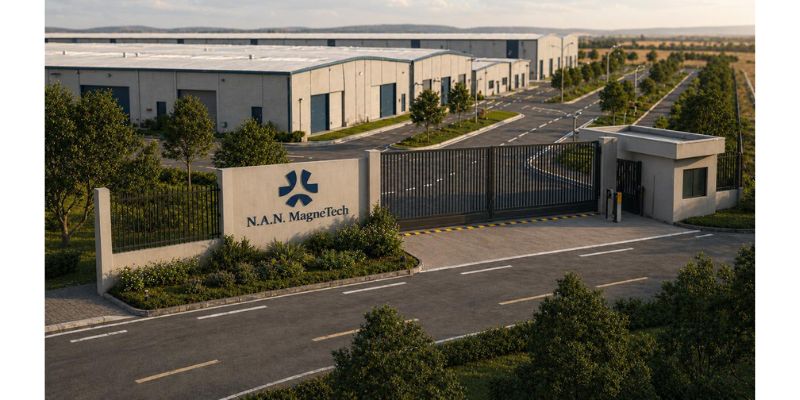
N A N MagneTech to establish India’s first integrated NdFeB magnet facility
N A N MagneTech will establish India’s first fully integrated high-performance NdFeB magnet manufacturing facility in Andhra Pradesh with a Rs 12.5 billion Phase I investment.
Read moreRelated Products
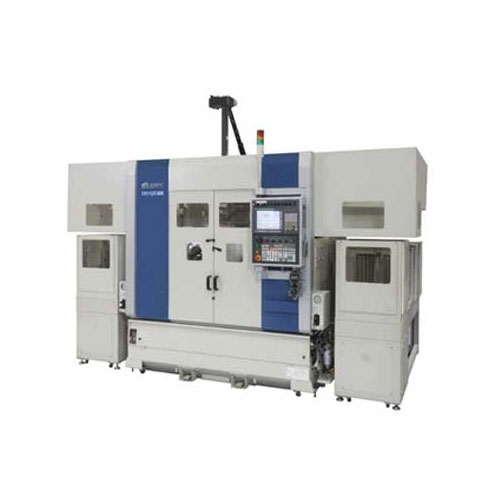
Compact Fmc - Motorum 3048tg With Fs2512
INDUSTRIAL AUTOMATION & TECHNOLOGY CONSULTANCY
Meiban Engineering Technologies Pvt Ltd offers a wide range of Compact FMC - Motorum 3048TG with FS2512.
Digital Colony Counter
INDUSTRIAL AUTOMATION & TECHNOLOGY CONSULTANCY
Rising Sun Enterprises supplies digital colony counter.

Robotic Welding SPM
INDUSTRIAL AUTOMATION & TECHNOLOGY CONSULTANCY
Primo Automation Systems Pvt. Ltd. manufactures, supplies and exports robotic welding SPM.
latest News
Subscribe to iNoW

For Industry News on WhatsApp, Give a Miss Call on: +91 84228 74016