





Schedule a Call Back


AI will power the next leap in manufacturing efficiency: Prateek Jain
 Articles
- Dec 01,25
In this interview with Rakesh Rao, Prateek Jain, COO & Co-Founder, Addverb, elaborates on the changing dynamics of manufacturing sector and role played by automation in driving efficiency.

India’s manufacturing sector is undergoing rapid automation, with rising robot installations, AI-driven optimisation and expanding adoption across production and post-production environments. Addverb is supporting this transition through locally manufactured robotics and modular automation systems tailored for brownfield and greenfield requirements. In this interaction with Rakesh Rao, Prateek Jain, COO & Co-Founder, Addverb, elaborates on the changing dynamics of manufacturing sector and role played by automation in driving efficiency.
As a leading automation supplier, what shifts are you observing in India’s manufacturing landscape?
Manufacturers have moved beyond basic mechanisation toward technology-led optimisation. India installed 8,510 industrial robots in 2023—a 59 per cent rise over the previous year—demonstrating the speed of modernisation. The emphasis has shifted to traceability, uptime and data-driven operations, especially as India now ranks sixth globally in annual robot installations. Companies increasingly prefer end-to-end, integrated automation rather than isolated equipment upgrades.
Across pre-production, production and post-production stages, where is automation adoption the highest?
Production lines continue to lead adoption, driven primarily by the automotive and electronics industries. The automotive sector alone deployed 3,551 robots in 2023, contributing over 40 per cent of the country’s annual installations. The fastest-growing adoption, however, is in post-production. Warehousing and dispatch zones are rapidly adopting intelligent movement technologies and AI-enabled robots as manufacturers seek seamless flow beyond the assembly line. Digital twins are now being used to simulate entire material paths, helping planners optimise layouts and prevent congestion even before operations begin.
How is Addverb contributing to India’s industrial automation transformation?
We design, manufacture and deploy robotics, automated storage and retrieval system (ASRS), automated guided vehicles (AGVs), sorting systems and warehouse software that manage end-to-end material movement across factories and distribution centres. In India, our growing focus is on brownfield modernisation, where plants seek modular and scalable automation that enhances throughput without disrupting existing operations. By manufacturing our robotics portfolio locally, we also support India’s objective of strengthening home-grown automation capabilities.
Which industries are leading the adoption of automation, and which remain slower to adopt?
Automotive, electronics, FMCG, retail and third-party logistics (3PL) are the fastest adopters because they operate at high scale and require predictable, high-throughput operations. These industries account for a major share of India’s robot installations and automation spend. Traditional MSME-dominated sectors—such as textiles and small metalworking—are slower to adopt due to longer investment cycles and limited access to skilled resources. India’s robot density stands at just 7 robots per 10,000 workers, compared with a global average of 141, underscoring the considerable headroom for growth.
How central is AI to the next phase of automation in India? Are its effects already visible?
AI will drive the next leap in speed, reliability and consistency. Many plants already use AI for visual inspection, predictive maintenance and real-time flow optimisation. With India’s industrial automation market expected to grow from $ 7.5 billion in 2024 to nearly $ 16 billion by 2033, AI will be indispensable to deriving full value from automation investments. We see rising interest in edge AI models, which enable instant, on-site decision-making.
What are the main hurdles to automation adoption, especially for SMEs?
The biggest barrier is integrating advanced systems into legacy plants that use varied protocols and lack digital readiness. Many companies underestimate the effort needed to standardise data and connect equipment. SMEs face additional challenges—limited capital, lean maintenance teams and uncertainty about long-term ROI. They also struggle to source solutions tailored to their scale. The industry is responding with modular automation, lighter digital layers and financing-linked deployment models. Adoption becomes smoother when automation is phased, outcome-led and supported by accessible training.
How significant are component availability challenges—chips, sensors, drives—for automation companies?
Supply conditions have improved since the disruption years, but availability of critical components such as advanced chips, high-precision drives, sensors and specialised communication modules remains inconsistent. Lead times are still longer than pre-2020 norms, prompting manufacturers and automation providers to diversify sourcing and strengthen supplier networks. Localisation of sub-assemblies is rising, but India continues to depend on global supply chains for high-end electronics and electromechanical parts. Building a resilient component ecosystem will be vital as India expands its automation footprint.
What hardware and software automation trends are emerging on modern shopfloors?
Factories are shifting toward flexible, software-defined operations. AI-enabled robots, collaborative systems, shuttle-based storage and sensor-rich AGVs are becoming mainstream. Digital twins are increasingly used to model line behaviour, optimise inventory flow and validate layout changes. On the software front, unified operating layers and edge analytics enable machines to self-correct in real time, reducing downtime and improving consistency. The strongest trend is the transition from static automation to dynamic, self-optimising systems that blend robotics, AI and data into a unified decision loop.
How do you see the future of industrial automation in India?
The outlook is highly promising as India positions itself as a global manufacturing and warehousing hub. Automation demand will grow steadily across factories, distribution centres and e-commerce supply chains. Local manufacturing of robotics and sub-systems is expected to accelerate, supported by engineering talent and policy incentives. Over the coming decade, Indian factories will evolve into connected, self-optimising environments that rely on integrated hardware, AI and real-time software—prioritising continuous improvement rather than periodic upgrades.
Prateek Jain
Addverb
industrial automation
robotics India
AI in manufacturing
warehouse automation
MSME automation
digital twins
robot installations
Related Stories
Machine Tools & Accessories
AMTEX 2026 and Fastener Fair India to Showcase Next-Gen Manufacturing Technologies
AMTEX 2026 and Fastener Fair India 2026 will bring together 650+ exhibitors and 4,000+ visitors at India Expo Mart, Greater Noida, showcasing advanced manufacturing and fastening solutions.
Read moreElectrical & Electronics
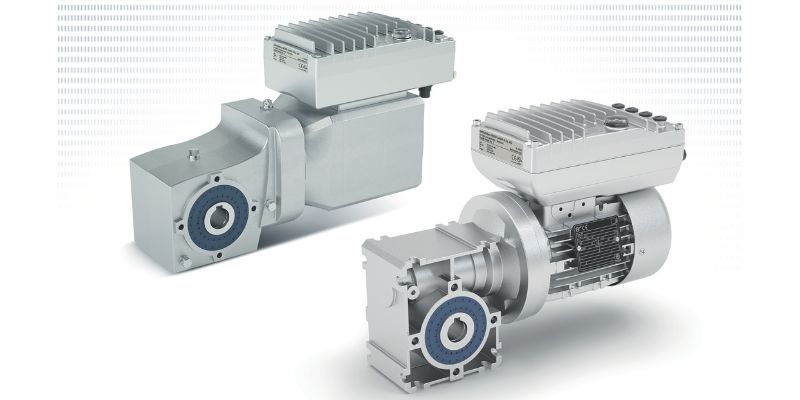
Nordac On Gains Expanded Functional Safety for Automation
Nord Drivesystems has expanded the Nordac On inverter with new safe motion functions for improved control and monitoring in automated production environments.
Read moreAutomation & Robotics
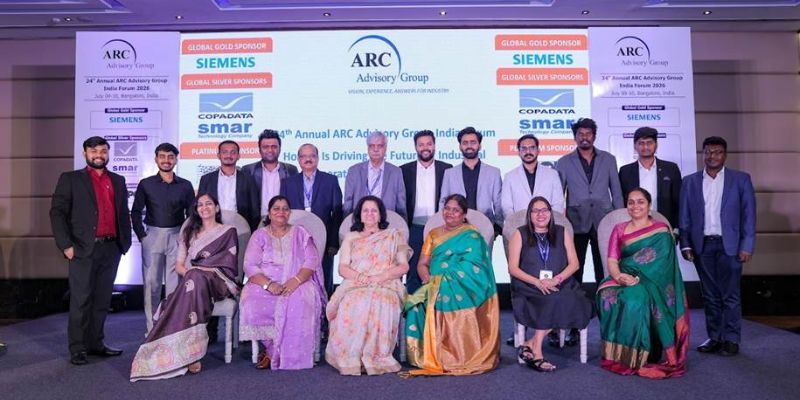
ARC India Forum Spotlights AI-Led Industrial Transformation
ARC Advisory Group’s 24th India Forum brought together 300-plus leaders to examine how AI is transforming industrial operations, manufacturing and supply chains.
Read moreRelated Products
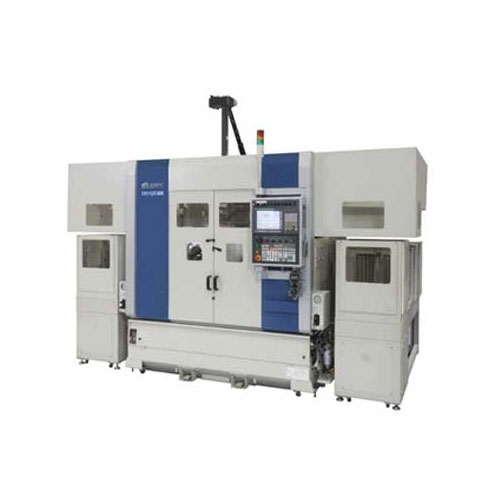
Compact Fmc - Motorum 3048tg With Fs2512
INDUSTRIAL AUTOMATION & TECHNOLOGY CONSULTANCY
Meiban Engineering Technologies Pvt Ltd offers a wide range of Compact FMC - Motorum 3048TG with FS2512.
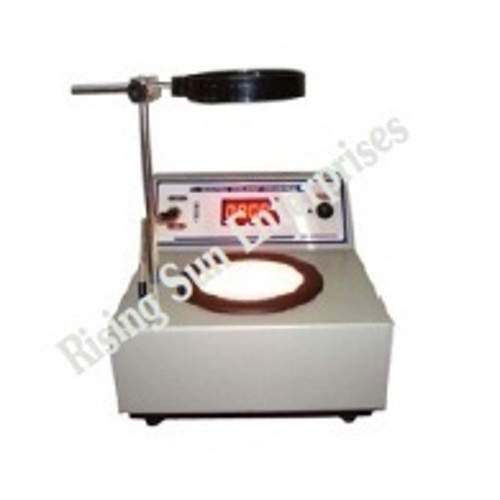
Digital Colony Counter
INDUSTRIAL AUTOMATION & TECHNOLOGY CONSULTANCY
Rising Sun Enterprises supplies digital colony counter.

Robotic Welding SPM
INDUSTRIAL AUTOMATION & TECHNOLOGY CONSULTANCY
Primo Automation Systems Pvt. Ltd. manufactures, supplies and exports robotic welding SPM.
latest News
Subscribe to iNoW

For Industry News on WhatsApp, Give a Miss Call on: +91 84228 74016