






Schedule a Call Back


AI Anomaly Detection Enhances Smart Factory Reliability
 Articles
- Feb 28,26
AI-powered anomaly detection enables manufacturers to identify equipment issues early, reduce downtime and improve maintenance efficiency by analysing complex sensor data beyond traditional monitoring methods, notes Rachel Johnson, Principal Product Manager, MathWorks.

Manufacturers depend on predictable factory operations, requiring machinery and ancillary equipment to function reliably through preventive and reactive maintenance schedules.
Digitalisation has equipped most machines with connected sensors that continuously capture and transmit data across multiple parameters. Unexpected patterns in this data can signal faulty components, undesirable operating conditions, or degraded sensors. If undetected, such anomalies can lead to breakdowns and disrupt production.
Manufacturers increasingly recognise the role of AI in anomaly detection. According to a Deloitte report, 86 per cent of manufacturing executives believe smart factories will drive competitiveness over the next five years, with AI playing a critical role.
Traditional anomaly detection methods, manual inspection or alerts triggered by threshold breaches, are no longer sufficient. Modern factories generate vast volumes of sensor data, making real-time monitoring by engineering teams impractical. Many failures emerge from subtle patterns across multiple signals rather than isolated parameter fluctuations, making them difficult to detect manually.
AI-based anomaly detection addresses these challenges. Advanced manufacturers, including BMW, Foxconn and Bosch, use AI to analyse large-scale sensor data and identify complex anomalies. By combining AI’s analytical capabilities with engineering expertise, organisations can develop effective anomaly detection systems.
Designing an AI-based anomaly detection system
An effective system begins with clear problem definition. Organisations must identify which assets to monitor, prioritise relevant anomalies, and determine how detection results will support operations. Focusing on anomalies with real operational or financial impact ensures practical implementation.
Starting with a focused proof of concept enables organisations to test assumptions, demonstrate value, and build confidence before scaling deployment.
Data quality is essential. Industrial anomaly detection relies on time-series sensor data such as temperature, pressure, vibration, current and voltage, enriched with contextual information like operating modes and maintenance history. Establishing normal behaviour requires careful analysis, especially in systems with variable operating conditions.
Before modelling, engineers must prepare the data by restructuring datasets, handling missing values, filtering noise and correcting errors. Reliable models depend on well-prepared data.
Choosing the right learning approach
Anomaly detection methods typically use supervised or unsupervised learning.
Supervised learning is effective when labelled historical data is available. Maintenance records and expert input allow models to associate sensor patterns with known failures. This approach has been used to predict faults in industrial machinery such as plastics processing equipment.
Tools such as the Classification Learner in MATLAB® allow engineers to evaluate multiple machine learning models and select the most effective one. For example, Mondi Gronau used this approach to predict failures in plastics manufacturing machines.
However, labelled datasets are often unavailable, as failures may be rare or poorly documented. In such cases, unsupervised learning is more suitable. These models learn normal operating patterns and identify deviations as anomalies, enabling detection of previously unseen failure modes.
Role of feature engineering and advanced techniques
While AI models can analyse raw sensor data, performance improves when relevant features are extracted. Feature engineering converts raw signals into meaningful characteristics such as statistical measures or frequency-domain information.
Human expertise remains essential in identifying relevant features. Software tools help extract, evaluate and prioritise critical information. For instance, Predictive Maintenance Toolbox™ in MATLAB provides tools to improve model accuracy while maintaining interpretability and computational efficiency.
Some organisations combine sensor data with image-based inspection for enhanced anomaly detection. Deep learning has been used to identify defects in underground power cables by analysing electrical signals and visual inspection data, although such approaches require larger datasets and greater computing resources.
Validation, testing and deployment
AI models must be validated to ensure reliability in real-world conditions. Engineers typically divide data into training, validation and test sets. Validation data helps optimise models, while test data evaluates performance on unseen conditions.
Performance metrics such as precision, recall and false alert rates are critical. Excessive false positives can overwhelm operators, while missed detections can lead to costly failures. Iterative testing helps balance accuracy and reliability.
Deployment depends on system requirements such as latency, scalability and infrastructure. Models may run on edge devices, local servers or cloud platforms. Aerzen Digital Systems deployed a cloud-based anomaly detection solution to monitor critical industrial systems, including wastewater treatment plants. Tools are available to help engineers integrate deployable AI applications into industrial software environments.
Enabling resilient manufacturing operations
AI-driven anomaly detection enhances maintenance and monitoring by enabling earlier intervention, reducing downtime and improving maintenance decisions. It transforms industrial data into actionable insights.
According to the 2025 State of Smart Manufacturing report, 95 per cent of manufacturers have invested or plan to invest in AI and machine learning within five years. Additionally, 48 per cent plan workforce adjustments to support smart manufacturing initiatives.
By combining AI with engineering expertise, manufacturers can reduce defects, optimise maintenance and improve productivity. While implementation requires careful planning, AI-driven anomaly detection offers significant efficiency, cost and competitiveness benefits as manufacturing continues to evolve.
About the author:
Rachel Johnson is the Principal Product Manager at MathWorks, she previously worked as an application engineer supporting customers on predictive maintenance projects in MATLAB. Prior to MathWorks, Rachel was an aerodynamics and propulsion simulation engineer for the US Navy. Rachel holds an M.S. in Aerospace Engineering from the University of Maryland, an M.A.T. in Mathematics Education from Tufts University, and a B.S.E. in Aerospace Engineering from Princeton University.
AI anomaly detection
smart manufacturing
predictive maintenance
industrial AI
sensor data analytics
machine learning manufacturing
factory automation
smart factory technology
Rachel Johnson
MathWorks
Related Stories
Automation & Robotics

Future Factory Expo CXO Roundtable Charts Smart Transformation for SMEs
During the roundtable, hosted by Smart Manufacturing & Enterprises (SM&E) and The Future Factory Expo 2026, industry leaders outlined how SMEs can use practical digitisation, automation, skilling an..
Read moreAutomation & Robotics

ARC India Forum Spotlights AI-Led Industrial Transformation
ARC Advisory Group’s 24th India Forum brought together 300-plus leaders to examine how AI is transforming industrial operations, manufacturing and supply chains.
Read moreSmart Manufacturing

Hitachi Vantara’s Norman Plant Named WEF Lighthouse Facility
Hitachi Vantara’s Norman manufacturing site has earned WEF Lighthouse status for using AI to reduce lead times, inventory and carbon emissions.
Read moreRelated Products
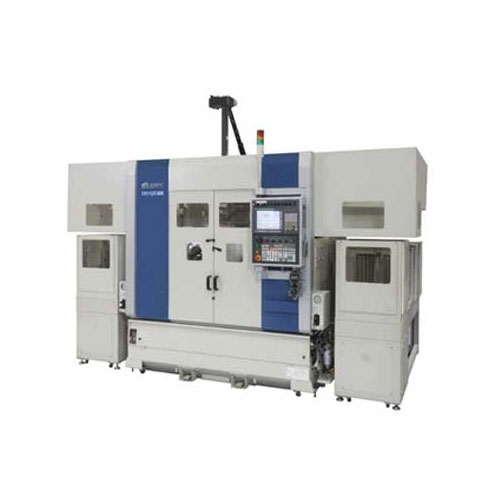
Compact Fmc - Motorum 3048tg With Fs2512
INDUSTRIAL AUTOMATION & TECHNOLOGY CONSULTANCY
Meiban Engineering Technologies Pvt Ltd offers a wide range of Compact FMC - Motorum 3048TG with FS2512.
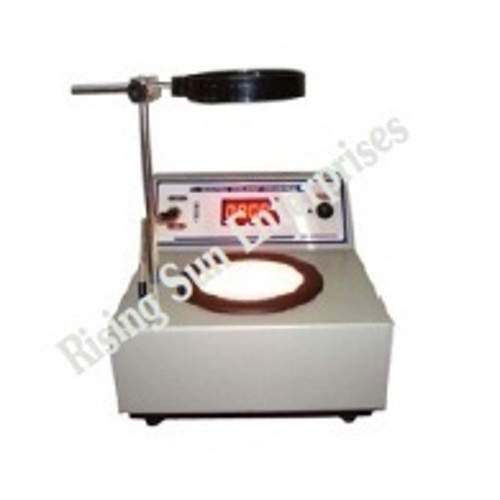
Digital Colony Counter
INDUSTRIAL AUTOMATION & TECHNOLOGY CONSULTANCY
Rising Sun Enterprises supplies digital colony counter.

Robotic Welding SPM
INDUSTRIAL AUTOMATION & TECHNOLOGY CONSULTANCY
Primo Automation Systems Pvt. Ltd. manufactures, supplies and exports robotic welding SPM.
latest News
Subscribe to iNoW

For Industry News on WhatsApp, Give a Miss Call on: +91 84228 74016