






Schedule a Call Back


Digitalisation will drive the instrumentation industry: K Nandakumar
 Articles
- May 13,26
In this interview with Pratap Padode, Managing Director & Editor-in-Chief, ASAPP Info Global Group, K Nandakumar, Chairman & Managing Director, Chemtrols Industries Ltd discusses why a modernised manufacturing sector is vital to India’s sustainable economic growth.

Drawing on nearly five decades of experience across refinery operations, project management, strategic planning and corporate leadership, K Nandakumar, Chairman & Managing Director, has shaped Chemtrols Industries Ltd with a strong solution led and future-focused approach. Founded in 1975, the company chose to focus on instrumentation as a critical enabler of industrial growth and technological progress. Over the years, Chemtrols has steadily diversified in line with evolving industry needs. In this interaction with Pratap Padode, Managing Director & Editor-in-Chief, ASAPP Info Global Group, Nandakumar discusses why a modernised manufacturing sector is vital to India’s sustainable economic growth.
Chemtrols has established capabilities across process analytics, emission monitoring, terminal automation and utility management systems. How is the company positioning itself to capture emerging opportunities in India and international markets amid rising demand for automation and smart industrial solutions?
We have integrated our product portfolio into several groups. One major segment is On-Line analytical solutions, which includes process analytical, environment monitoring, continuous ambient air quality monitoring and water quality monitoring. At the same time, Chemtrols has maintained strong capabilities in product manufacturing, because every system or solution ultimately depends on reliable products. In addition, the company has diversified into areas such as steam engineering, petroleum products, terminal automation system and SCADA based energy transmission and distribution.
India’s industrialisation began much later than many countries. Although we gained Independence in 1947, large-scale industrial growth began only in the early 1990s. During the earlier period of a controlled economy, there were limited opportunities for global technology collaborations. Technical collaborations were allowed only in restricted forms and often without significant investment participation. Despite these constraints, we pursued International collaborations. In 1983, Chemtrols partnered with M/s Eckardt, AG one of Germany’s the then leading instrumentation & automation companies. Through this collaboration we began producing their products in India. Even today Chemtrols manufacture that product, despite the fact that M/s Eckardt itself has changed ownership several times. These products continue to add value to Indian industry and are also exported to specific Customers.
Our strategy has always been to provide integrated solutions. Alongside process analytics and automation systems, we have expanded into steam engineering solutions and other emerging product lines as industries evolved. This diversified structure allows us to respond to new opportunities as industrial requirements change.
Indian manufacturing, particularly in process industries such as oil & gas, power, cement and chemicals, is undergoing significant transformation. In your view, what are the most defining structural changes shaping this shift?
Several industries, especially oil and gas, are undergoing transformation as India focuses on energy security and its long-term net-climate goals. The government’s Net-Zero @2070 and pollution reduction policies are influencing the direction of many industries, including thermal power, petrochemicals, oil refineries, fertilisers, etc. At Chemtrols, we have always focused on emerging areas. Beyond traditional business, we are also exploring into energy transition technologies such as bio-fuels and green hydrogen. In fact, we began studying fuel cells as early as the 2000s, well before they became widely discussed, but at that time the market was still on fossil fuel.
We regularly attended global technology forums such as ACHEMA every three years, which gave us access to emerging technologies and global innovation networks. These exposures helped us understand where industries were then heading. Another major change has been the scale of industrial facilities. Earlier, refineries operated at capacities of three or five million tonnes. Over time, capacities increased to 10, 20 and even 30 million tonnes. With such scale, refineries had necessity to meet global quality standards. Small Capacity refineries could rely on laboratory analysis that took up to 24 hours to get results. However, a refinery with 20 or 30 million tonnes capacity requires real-time data. This need for instant monitoring drove the adoption of advanced process analytics and integrated digital solutions.
Environment monitoring also became critical as pollution concerns grew. As a result, we structured our activities into five business units covering areas such as process analytics, Continuous Water Monitioring Station (CEMS), Continuous Air Quality Monitoring, automation and energy systems. We also worked on energy transmission and distribution automation. In India, there is often a gap between energy produced and energy delivered. Through SCADA-based automation systems deployed across several states, we helped identify losses enabling electricity distribution companies take appropriate decisions. Our overall approach has been to anticipate what the country will require as industrialisation progresses and align our capabilities accordingly.
What are the key drivers of the Indian instrumentation industry? What is the expected growth trajectory over the next five to ten years?
The Indian instrumentation industry will increasingly move towards digitalisation. The integration of IT with operational technology and instrumentation systems combined with digital platforms, will be a major driver.
Indian industries will also adopt industry 4.0 practices to improve productivity and compliance with global standards. At the same time, global expectations around ESG: Environment, Society and Governance, are becoming increasingly important.
Today, companies must address energy efficiency, environmental responsibility and governance practices not only for compliance but also for access to global funding and international markets, ESG is a set of standards measuring a business impact on environment, society and how transparent and how accountable it is, carbon-related regulations are also emerging as a major factor. For example, exports to Europe require compliance with mechanisms such as the Carbon Border Adjustment Mechanism (CBAM). This means industries must demonstrate how they reduce carbon emissions, whether through renewable energy adoption or improved energy efficiency or any other.
As a result, technologies such as Carbon Capture, Utilisation and Storage (CCUS) are becoming critical. These developments, combined with the broader energy transition, will drive growth in the instrumentation and automation sectors. Our product lines are designed to support these evolving requirements across Process industries.
How critical is advanced instrumentation and automation in enabling competitiveness, safety and regulatory compliance in India’s Process industries?
The sustainability of any industry today depends on three fundamental pillars: Environment, Society and Governance, ESG.
Environment responsibility and safety are central to industrial sustainability. Increasingly, companies now evaluate performance based on “four Ps”: People, Planet, Profit and Purpose. Earlier, the focus was mainly on three Ps, but purpose, meaning broader societal benefit, has now become equally important.
Without social responsibility and environmental compliance, companies cannot sustain long term growth. Instrumentation, automation and digital monitoring systems play a crucial role in enabling industries to achieve these objectives.
With India signing a free trade agreement (FTA) with the EU and anticipating a possible agreement with the US, how do you see such deals influencing the competitiveness of Indian manufacturing?
Free Trade Agreements are never one-sided; they involve mutual benefits. Negotiations often take two to three years because the Government of India carefully evaluates whether the agreement will benefit Indian industries and society.
These agreements cover much more than trade. They include technology collaboration, R&D partnerships, skill development, energy cooperation and educational exchanges across the entire value chain, including Legal services.
In some regions they are called FTAs, while somewhere else they are known as Comprehensive Economic Partnership Agreements (CEPAs). Regardless of terminology, they aim to integrate economies into global supply chains and raise standards across industries.
What are the most pressing constraints in front of the Indian manufacturing sector? How can they be addressed?
India is well positioned due to its demographic advantage. With a population of 1.4 billion and around 65 per cent below the age of 35, the country has a vast workforce that can contribute to industry.
However, skill development remains critical. Skilling must be continuous because technologies evolve rapidly, whether in artificial intelligence, robotics, cloud computing or blockchain. Governments and industries worldwide recognise that workforce development is an ongoing process.
One area requiring improvement is the education curriculum. Traditionally, Indian education has emphasised academic knowledge rather than vocational training. The new education policy is beginning to address this by integrating vocational skills right from school days but such transitions take time.
Infrastructure development is another essential factor. Industrial growth depends on strong transport networks, land, sea and waterways, as well as communication infrastructure. Although challenges remain, many of these issues are being addressed through government policies, industry collaborations and international partnerships.
What are the stumbling blocks in your opinion which are holding back India’s manufacturing ecosystem, and what support does it require to scale globally?
Manufacturing currently contributes around 13 per cent to India’s GDP. For a country of India’s scale, this share should ideally reach 25 per cent. Countries such as Korea and China have significantly higher manufacturing contributions.
One challenge is the ecosystem supporting MSMEs. While India has a large number of micro, small and medium enterprises, the broader economic environment i.e handholding is missing which needs to be pushed across sectors.
Another issue is the customer base. Nearly 70 per cent of major industrial customers are in the public sector, where procurement systems differ significantly from those of private companies. These differences can create operational challenges for smaller manufacturers.
Financial regulations also play a role. If a company fails to meet financial obligations within a short period, such as 90 days, it is classified as a Non-Performing Asset (NPA). Such risks in a span of 90 days discourage entrepreneurs from entering into manufacturing; since manufacturing has over a dozen value chains to fulfil and anyone value chain cannot drag the entity into stress.
However, the government has begun addressing these concerns and is actively promoting manufacturing through policy reforms and industry collaborations.
What are your recommendations for changes in policies that can help boost share of Indian manufacturing sector’s contribution to 25 per cent of GDP?
Financial regulations related to NPA are one area that needs immediate reconsideration. Manufacturing investments has longer gestation period and entrepreneurs hesitate to enter the sector when a Defaulter tag can fall on him any time for any reason.
Skill development is another key area; even today, many graduates are educated but not fully employable because their training does not match industry requirements. Institutions such as ITIs are increasingly focusing on vocational training, which is helping address this gap. Talent retention is also a challenge, particularly for MSMEs. Smaller companies often invest in training employees, only to lose them to larger companies offering higher compensation.
Research and development is another area where government should focus providing support to industries. Historically R&D investment has been very small. Continuous innovation is also essential for manufacturing competitiveness, encouraging innovation and applied research will be crucial for long-term growth.
Finally, the cost of capital remains relatively high in India, around 10 to 11 per cent, while global companies often operate with borrowing costs at around one per cent. Addressing such structural issues will significantly strengthen India’s manufacturing sector.
The adoption of automation and digit solution are still low in India’s manufacturing sector. What can be done to accelerate this?
The primary challenge relates to skill development and retention, particularly for smaller industries. Large companies can adopt advanced technologies such as robotics relatively easily, but smaller manufacturers often struggle to maintain a sustainable cash flow and maintain skilled workforce.
Accelerating training programmes on skilling, focussing on quality and safety and creating stable employment ecosystems will help overcome the barriers. Global companies are increasingly collaborating with Indian industries in areas such as technology transfer and skill development, which should support Indian economy’s transition to manufacturing super power.
Ease of doing business is another critical factor. India has improved significantly in global ranking over the past decade. World bank has over the time revised its methodology; the new business ready assessment framework will provide updated insights into India’s comprehensive ranking in doing business in India; B-Ready.
Improved infrastructure, streamlined regulations and stronger global integration will further strengthen India’s position as the global manufacturing hub.
What are your growth plans for Chemtrols in the next two-three years?
Energy transition will be one of our primary focus areas. We have been working extensively in renewable energy solutions, including compressed biogas (CBG).
We are also exploring hydrogen and hydrogen fuel cell technologies, which we believe will play an important role in intercity sustainable transportation in the near future.
While our conventional businesses will continue, technology changes mean that companies must expand into global markets and new sectors like CCUS (Carbon Capture Utilisation & Storage) and ESS (Energy Storage Systems) for sustainable growth.
We are also exploring opportunities in defence, particularly in areas related to ammunition. However, energy transition, especially renewable energy and green hydrogen technologies, will remain our central growth focus in the coming years.
Chemtrols
industrial automation India
process analytics solutions
emission monitoring systems
SCADA energy systems
Industry 4.0 India
ESG compliance automation
smart manufacturing solutions
K Nandakumar
instrumentation industry
digitalisation
Related Stories
Auto & Auto Components
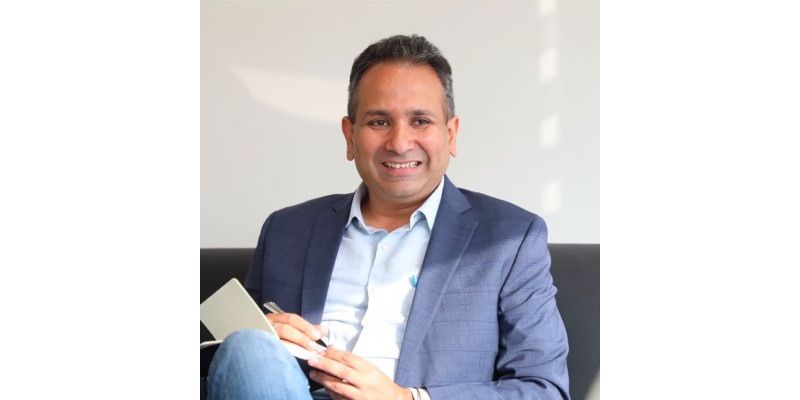
JSW Motors appoints Pankaj Doval as SVP – Corporate Affairs & Public Policy
Pankaj Doval will lead JSW Motors’ government, regulatory and policy engagement as the company prepares to launch new energy vehicles and scale up its Bidkin facility.
Read moreAuto & Auto Components

Godrej Tooling strengthens local manufacturing for next-gen mobility
Godrej Enterprises expands advanced tooling capabilities to support localisation and next-generation automotive manufacturing.
Read moreAuto & Auto Components

ASK Automotive Q1 FY27 income rises 52.1% to Rs 13.61 billion
ASK Automotive reported its highest-ever quarterly revenue, EBITDA and PAT in Q1 FY27, with total income rising 52.1 per cent YoY to Rs 13.61 billion and PAT growing 28.8 per cent.
Read moreRelated Products
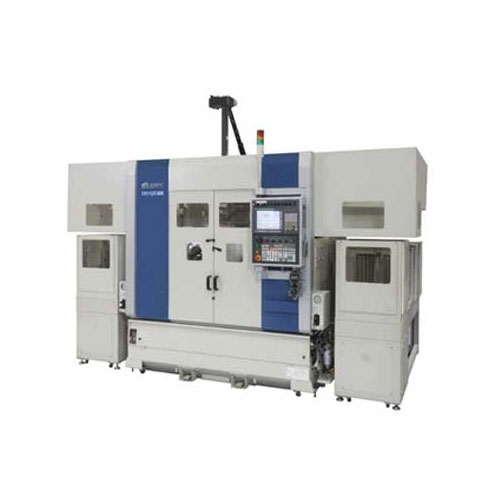
Compact Fmc - Motorum 3048tg With Fs2512
INDUSTRIAL AUTOMATION & TECHNOLOGY CONSULTANCY
Meiban Engineering Technologies Pvt Ltd offers a wide range of Compact FMC - Motorum 3048TG with FS2512.
Digital Colony Counter
INDUSTRIAL AUTOMATION & TECHNOLOGY CONSULTANCY
Rising Sun Enterprises supplies digital colony counter.

Robotic Welding SPM
INDUSTRIAL AUTOMATION & TECHNOLOGY CONSULTANCY
Primo Automation Systems Pvt. Ltd. manufactures, supplies and exports robotic welding SPM.
latest News
Subscribe to iNoW

For Industry News on WhatsApp, Give a Miss Call on: +91 84228 74016