




Schedule a Call Back




Is your facility ready to handle the energy demands of full automation?
 Articles
- Jan 19,26
As warehouses scale AI-driven automation, energy demand is emerging as a critical constraint alongside productivity gains. Strategic power planning is now essential, writes Emily Newton.

The modern supply chain faces significant pressures amid higher e-commerce demand, labor shortages, variable pricing, complicated logistics and a need for enhanced inventory control. As a result, the automated facilities market is experiencing substantial growth.
The adoption of artificial intelligence (AI) in warehouse management has proven itself invaluable to overcoming workforce challenges and achieving customer satisfaction. Yet, while the industry concentrates on the operational return on investment of these technologies, many have disregarded the energy required to power them. Industrial leaders must determine whether their facilities are prepared to meet the full energy demands of AI implementation.
The unchecked energy demands of the intelligent warehouse
Investments in AI automation have enabled intelligent warehouses to enhance the speed and efficiency of their facilities. According to McKinsey, 70 per cent of the top 65 logistics and supply chain enterprises plan to invest $100 million in automation within the next five years.
While one executive says they could always hire more people, automation in distribution centers is more conducive to completing order shipments with next-day delivery. Another leader predicts that over 75 per cent of companies will adopt cyber-physical automation in their warehouse operations by 2027. This could include automated storage and retrieval systems (AS/RS), conveyors, palletizing robots, guided vehicles, and specialized software for dock and shipment management.
However, the need for significant expansion of energy infrastructure comes with these advancements. In 2024, U.S. data centers accounted for 4 per cent of the country's electricity use, consuming 183 terawatt-hours (TWh). Projections indicate a 133 per cent growth to 426 TWh by 2030.
With warehouses reaching a powerful data intersection, professionals must shift their attention from strictly robotics toward creating a vigorous and resilient power plan.
The new power-density paradigm in warehouse operations
Transitioning to a fully automated warehouse system enhances a facility's energy profile by intensifying its operational framework. It is as much about higher electricity costs as it is about a structural evolution in demand.
For example, AS/RS cranes and sortation mechanisms enhance safety and efficiency, but they consume a tremendous amount of power, resulting in high carbon dioxide (CO2) emissions. Charging an entire autonomous mobile robot fleet compounds these loads.
Likewise, servers are the foundation of AI in warehouse management, enabling the execution of predictive analytics and machine learning models. The demand for 24-hour power and cooling generates a high, constant consumption. The combination of peak loads from machinery and information technology baseloads creates remarkable strain on existing systems, including switchgear, transformers and panelboards.
Auditing your facility for high-density automation
With a growing emphasis on cultivating a sustainable warehouse sector, addressing the environmental impact of energy-hungry processes is crucial. Before investing in cutting-edge automation, a detailed audit of your facility can establish an accurate energy baseline.
Leaders should conduct a power systems analysis that includes thorough load studies and power quality assessments. The findings will inform investment decisions and resilience strategy. Uninterruptible power supplies are crucial for protecting robotics and AI servers from damaging power fluctuations via the grid.
It is equally paramount that you consider scalable solutions and modular power distribution units that are more accommodating to future automation without significant infrastructural changes.
The dual role of AI: From energy consumer to efficiency driver
Although AI demands extreme computational loads on a warehouse's energy makeup, it may be a key solution to remedying the problem. Advancements make AI a strategic optimizer, with the ability to collect and analyze energy consumption insights and create thousands of power reduction decisions within seconds.
For example, current port automated guided vehicle (AGV) systems are highly inefficient due to unstructured scheduling and recharging. The AGVs rely on the grid, with less than 40 per cent clean energy integration, placing a strain on power distribution networks. AI-driven intelligent scheduling ensures that AGV fleets follow charging cycles that align with off-peak utility rates, optimizing port energy consumption.
Facilities can also utilise AI to adjust their heating, ventilation and air conditioning systems according to real-time operational temperatures and indoor occupancy. Meanwhile, applying predictive analytics as a screening tool uncovers potential risks and malfunctions in equipment. The ability to respond proactively can reduce downtime and help warehouses maintain productivity.
The impact of AI in warehouse management extends beyond the facility's walls. Oftentimes, logistics account for the most significant part of their carbon footprint, and supply chain emissions are almost 11.5 times higher in the shipping sector. This is where utilising AI to form a truly sustainable supply chain becomes vital.
AI is also revolutionising the emissions of freight transportation. One study found that fleet management and dynamic routing can result in 30 per cent fewer carbon emissions, while the use of genetic algorithms can reduce energy consumption and CO2 emissions by over 10 per cent. Digital twin systems further improve delivery and fuel efficiency.
Integrating AI in warehouse management for optimal automation planning
A fully automated warehouse system is more than a technology or operational upgrade. AI can transform a facility's power demands for better or for worse. Industry professionals must carefully plan these system integrations and their energy needs from day one to protect their investment and ensure continuous operational efficiency in the future.
About the author:
Emily Newton is a tech and industrial journalist and the Editor-in-Chief of Revolutionized magazine. Subscribe to the Revolutionized newsletter for more content from Emily.
Image Courtesy: www.freepik.com
Warehouse automation
AI in logistics
energy demand
power infrastructure
intelligent warehouses
sustainability
robotics
supply chain efficiency
Emily Newton
Related Stories
Automation & Robotics
Is your facility ready to handle the energy demands of full automation?
As warehouses scale AI-driven automation, energy demand is emerging as a critical constraint alongside productivity gains. Strategic power planning is now essential, writes Emily Newton.
Read moreAuto & Auto Components

CEAT Partners CleanMax for 59 MW Hybrid Wind–Solar Power Project
CEAT has partnered with CleanMax to source ~59 MW of hybrid wind–solar power for its Halol and Kanchipuram plants, boosting clean energy use to around 60 per cent and cutting emissions significant..
Read moreAutomation & Robotics

Bharat Forge and Agile Robots sign MoU to Advance AI-Led Industrial Automation
The MoU brings together Bharat Forge’s manufacturing expertise and Germany-based Agile Robots’ AI-led robotics capabilities to accelerate intelligent automation across key civilian industrial se..
Read moreRelated Products
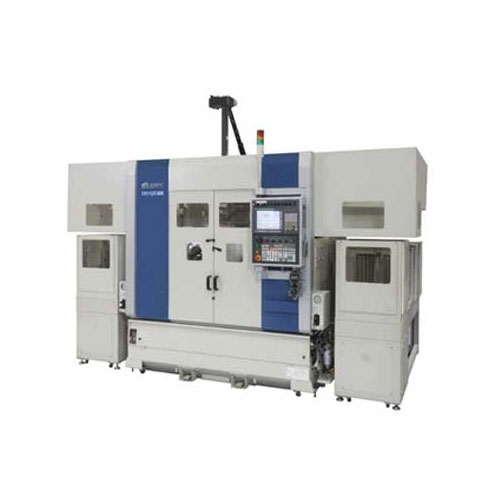
Compact Fmc - Motorum 3048tg With Fs2512
INDUSTRIAL AUTOMATION & TECHNOLOGY CONSULTANCY
Meiban Engineering Technologies Pvt Ltd offers a wide range of Compact FMC - Motorum 3048TG with FS2512.
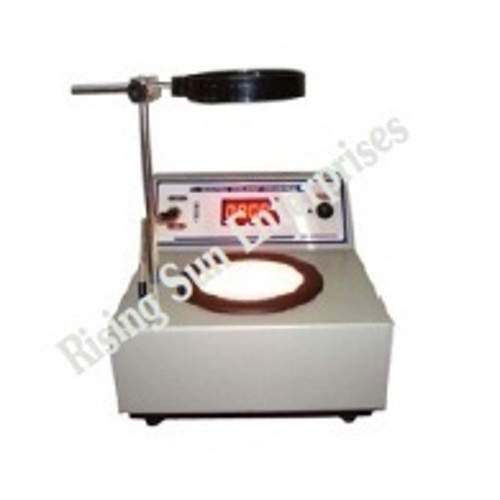
Digital Colony Counter
INDUSTRIAL AUTOMATION & TECHNOLOGY CONSULTANCY
Rising Sun Enterprises supplies digital colony counter.

Robotic Welding SPM
INDUSTRIAL AUTOMATION & TECHNOLOGY CONSULTANCY
Primo Automation Systems Pvt. Ltd. manufactures, supplies and exports robotic welding SPM.
latest News
Subscribe to iNoW

For Industry News on WhatsApp, Give a Miss Call on: +91 84228 74016