




Schedule a Call Back


India–Japan Partnership: Catalysing the Next Phase of Railway Innovation
 Articles
- Jul 28,26
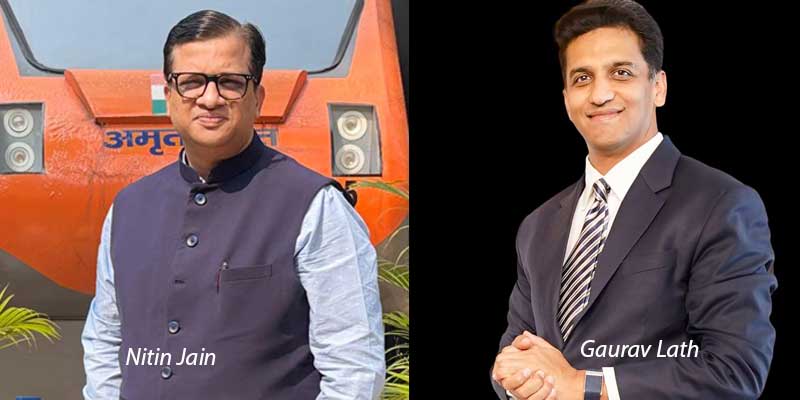
Gaurav Lath and Nitin Jain, Founders, of Concord Control Systems discuss how India-Japan high-speed rail collaboration, advanced technologies and AI can transform India's railway ecosystem for the future.
The recent visit of Japanese Prime Minister Sanae Takaichi to India for the India–Japan Annual Summit, where both nations reaffirmed their commitment to cooperation in high-speed rail and next-generation technologies, marks an important milestone in India's railway transformation journey. Building on the momentum of the Mumbai–Ahmedabad High-Speed Rail Corridor, the renewed partnership reflects a shared vision of harnessing advanced railway technologies, precision engineering, innovation and knowledge exchange to shape the future of mobility. As India progresses towards its vision of Viksit Bharat 2047, the conversation is no longer confined to building new rail corridors, it is about creating an intelligent, resilient and globally competitive railway ecosystem powered by next-generation high-speed rail technologies. In this evolving landscape, high-speed rail is not merely an infrastructure project; it is a catalyst for technological advancement, operational excellence and the development of capabilities that will define the future of Indian railways.
Technology as the engine of railway transformation
Railway transformation has never been driven by infrastructure alone; it has always been propelled by technological advancement. Every major milestone from electrification and digital signalling to automation and intelligent control systems has fundamentally changed the way railway networks are designed, operated and maintained. Today, next-generation high-speed rail technologies represent the next frontier of railway innovation. While they are often associated with speed and passenger convenience, their real value lies in creating safer, smarter and more efficient railway systems capable of supporting India's rapidly expanding mobility needs.
Modern high-speed rail is far more than a fast-moving train it is an integrated technology ecosystem. Advanced signalling, intelligent train control systems, Automatic Train Protection (ATP), AI-powered diagnostics, predictive maintenance, digital twins, real-time communication networks and integrated operations control centres work together to deliver exceptional levels of safety, precision and reliability. These technologies enable trains to operate with minimal disruptions, optimise traffic movement, improve scheduling accuracy, increase network capacity and significantly reduce operational failures. More importantly, they create a culture of operational excellence where punctuality is not merely an aspiration but an engineered outcome.
Building climate-resilient railways for India's diverse operating environment
India's railway network is among the most diverse and complex in the world, operating across extreme climatic and geographical conditions. From the intense summer heat of Rajasthan and Gujarat, where track temperatures can soar beyond 60°C, to the heavy monsoon conditions of Maharashtra, Kerala and the Konkan region, the dense winter fog across northern India and the challenging mountainous terrain of Jammu & Kashmir and the Northeast, maintaining safe and reliable operations requires technologies that are intelligent, adaptive and resilient. Climate-resilient signalling, automated monitoring systems, advanced sensors, predictive diagnostics and real-time asset monitoring will play a critical role in ensuring consistent performance across these varied operating environments.
The Mumbai–Ahmedabad High-Speed Rail Corridor should therefore be viewed not merely as India's first bullet train project, but as the country's first large-scale technology demonstrator. It is introducing globally benchmarked engineering standards, advanced signalling systems, precision construction methodologies and specialised workforce capabilities that will shape future high-speed rail corridors across the country. More importantly, it is accelerating technology transfer, strengthening localisation, nurturing domestic manufacturing capabilities and creating a robust ecosystem of suppliers, engineers and technology partners who will support India's long-term railway modernisation.
The next frontier: AI, digital twins and data-driven railways
Looking ahead, the future of Indian railways will be defined by intelligence as much as infrastructure. Artificial intelligence will enable predictive maintenance by identifying potential equipment failures before they occur. Digital twins will simulate railway assets in real time to optimise performance and maintenance planning. Intelligent signalling and integrated traffic management systems will improve safety, enhance capacity and ensure greater operational efficiency, while data-driven decision-making will enable faster, more reliable and cost-effective railway operations. These technologies will not only transform passenger experience but also strengthen freight movement, improve asset utilisation and increase the overall resilience of India's railway network.
The benefits of this transformation extend well beyond the railway sector. High-speed rail technologies act as catalysts for innovation across manufacturing, electronics, automation, communication systems, testing, research and advanced engineering. They encourage indigenous innovation, strengthen domestic supply chains and create opportunities for Indian companies to design, manufacture and eventually export globally competitive railway technologies. This aligns seamlessly with the national vision of Make in India, Atmanirbhar Bharat and Viksit Bharat 2047, positioning India not only as one of the world's largest railway markets but also as a future hub for railway technology and innovation.
Conclusion: Engineering a smarter, safer railway future
The true legacy of the India–Japan partnership will not be measured by the kilometres of high-speed track laid or the number of trains introduced. It will be measured by the technology ecosystem it helps create the engineering capabilities it nurtures and the innovation it inspires across the railway value chain. By combining Japan's globally recognised expertise in precision, safety and operational excellence with India's scale, engineering talent and manufacturing strength, this partnership has the potential to redefine the future of Indian railways. High-speed rail is therefore not simply about travelling faster - it is about engineering a smarter, safer, more resilient and globally competitive railway network for generations to come.
About the authors:
Gaurav Lath is the Founder and Joint Managing Director of Concord Control Systems Ltd. With more than two decades of experience in this field, his vision is to supply quality and innovative products to the industry. He is an experienced Director with a demonstrated history of working in the oil & energy industry as well.
Nitin Jain is the Founder and Joint Managing Director of Concord Control Systems Ltd. He is a profound mechanical engineering professional, having involved himself for decades in this field to serve the nation. He is well-equipped in providing top-notch leadership and services within the organisation with expertise in planning and setting long-term strategic goals.
Viksit Bharat 2047
Gaurav Lath
Nitin Jain
Concord Control Systems
Digital Twins Railways
Mumbai Ahmedabad Bullet Train
India Japan Partnership
AI in Railways
Mumbai–Ahmedabad High-Speed Rail Corridor
Railway Technology Transformation
Related Stories
Railways
India–Japan Partnership: Catalysing the Next Phase of Railway Innovation
Gaurav Lath and Nitin Jain, Founders, of Concord Control Systems discuss how India-Japan high-speed rail collaboration, advanced technologies and AI can transform India's railway ecosystem for the f..
Read moreRailways

Concord Associate Wins Rs 2,799 Mn KAVACH Order
Progota India has received a Rs 2,799 million Indian Railways order for on-board KAVACH 4.0 loco equipment.
Read moreRailways

Concord Control Systems Wins Rs 1.85 bn KAVACH 4.0 Rail Safety Order
Concord Control Systems has secured a Rs 1.85 billion order for KAVACH 4.0, India’s indigenous ATP system, to be executed over 12 months, reinforcing its role in railway safety modernisation.
Read moreRelated Products

Ball Rail Systems
Railways
Jinisha Electrolites offers a wide assortment of ball rail systems
latest News
Subscribe to iNoW

For Industry News on WhatsApp, Give a Miss Call on: +91 84228 74016