




Schedule a Call Back


How Digitalisation Is Transforming New Product Introduction
 Industry News
- Mar 20,26
Digitalisation is transforming new product introduction by enabling faster collaboration, real-time monitoring and reduced time-to-market across manufacturing value chains, write R Jayaraman and Rasika G Joshi.

The New Products Introduction (NPI) process, a key function in manufacturing companies, has seen several developments. The automotive industry has led these changes. It was Alfred Sloan, the CEO of General Motors (GM), who pushed this process into importance. After the famous ‘any colour as long as it is black’ of Henry Ford, the application of industrial engineering principles, using the then new ‘assembly line production’, it was the turn of GM to enter the fray with its ‘a product at every price point’, as described in the book ‘My years with GM’.
This new situation in the auto industry in Detroit meant that many new models and products needed to be introduced to the market, to not only meet customer appetites, but also to capture new market segments, to help the market grow speedily, and to establish a superior competitive position. The auto industry has always had a keen following, as it was the fountainhead of new innovations, designs, processes, with the assembly line leading the ‘revolution on wheels’.

Although Sloan introduced the new concept, he couldn’t do much about the end-to-end time required to launch new models. This was mainly due to the predominance of design engineers and ICE engineers, who often dominated the NPI process. New models were launched based on their perceptions of what was ‘better’, an improvement over the previous, with not much scope for considering customer requirements.
As the product itself was new, and many customers were very happy to hold the steering of anything that moved on four wheels, this dominance meant delayed launches, and a time-to-market of about 6 to 7 years. It was left to Toyota to make the big change, based on Taichi Ono’s lean management principles. It is known that Taichi was a stern master, and reportedly wanted to completely change the wasteful methods in practice, and replace them with a newly designed NPI, the main feature of which was ‘concurrent engineering’ and ‘concurrent working’. What was being done in a sequential manner, with frequent re-engineering and design changes, based on the feedback and opinions of the stakeholders in the design chain – starting with the design engineers (the dreamers of the new model), the materials specialists, the materials procurement department, the production lines, and, finally, the marketing and sales teams – which led to the long end-to-end timelines of about 6 to 8 years.
Taichi wanted an end-to-end time of about 3 to 4 years, to be reduced to 18 months at some future point. And he did a BPR (although this term was not in use in those days), Business Process Reengineering, and succeeded in achieving some success. In modern terms, he replaced a ‘waterfall’ process with a ‘scrum+agile’ process, and reaped the benefits.
The business excellence movement put a different spin on this. The NPI was redefined as a stage-gate process, where, at each stage, all the necessary inputs and results are achieved in a sequential manner, but what is emphasized, is the feedback loop type of working, which is characterised by collaborative team working across all functions, at each stage of the NPI.
Back-and-forth iterations are adopted quickly when necessary, so that rework and waste can be avoided. Since the advent of this NPI, templates have been developed, using the help of software, to administer the methodology through a computer. This has helped many software companies to reduce the usual delays of 150%-250% and more which used to be the norm in these projects in the 80’s and 90’s. The good thing about this development was that computerized monitoring and follow-up made the attention to details easier, which then led to reduced delays. However, in the case of manufacturing, the arrival of IIoT and digitalisation have introduced new improvements in the NPI, which has improved the effectiveness. The new ‘centralized panel control’ model or SCADA based process management model is the fulcrum of the digitalization phenomenon, see Figure 1.

Digitalization enables a completely connected value chain in manufacturing. The efficiencies of lean management, JIT, data-based decision making and distributed data collection and processing data rapidly to enable real-time, continuous monitoring of operations from end to end (i.e., supply chain to the distribution chain) can all be realized seamlessly. It is now up to manufacturing companies to apply the digitalization process to move into Industry 4.0 operations.
Oil and gas companies have been using the centralized control process using digitalization, but it was only intra-organisation rather than inter-organisational. Same is the case in the iron and steel industry. The one industry which has moved the farthest in this direction is auto manufacturing. Using JIT, lean principles, IOT, strategic sourcing, and a well-designed and operated product distribution system, this industry has led the Industry 4.0/ digitalization movement. Now, more examples are appearing on the horizon.
The 40 billion USD multinational Schneider Electric is a good example of this transformation. Schneider Electric has multiple brands in energy domain. Lauritz Knudsen is one of the renowned brands of Schneider Electric, which offers a wide range of electrical products and solutions, including switchgears, energy management systems, and industrial automation solutions. With manufacturing facilities across India and a global presence, the company is poised to lead the switchgear market.
The Electronics Excellence Centre (EEC) of Lauritz Knudsen focuses on advanced infrastructure and manufacturing processes for electronics products. The EEC supports various manufacturing strategies and emphasizes continuous improvement and adoption of new technologies and new product launches. The EEC recognised that the absence of interlocks between NPI processes led to non-robust products, rework, excess expenses, and project delays. Additionally, high attrition rates increased the need for digitalized, human-independent processes. The EEC thus started a movement to introduce robust, digitalized processes to contribute to the improvement of quality and delivery parameters for excellent product offers in both Indian and global markets.

Using the proprietary ‘primary – secondary’ research methodology, pioneered by the PGEMP of SPJIMR, the EEC team identified the need for a centralized digital platform to manage documentation and project tracking of NPI through primary research. Using the secondary research methodology, it was found that manufacturing clients are quite keen on shifting from digitisation to digitalisation to strengthen cross functional collaboration.
The EEC team also found the way forward to serve the customers using digitalisation, by addressing multiple documentation issues, developing a common platform with standardized template for digitalisation and feedback loops and auto-reminders integrated to enhance usability and efficiency. The implementation plan included feasibility studies, resource allocation, and phase-wise execution. Feedback from users was incorporated to refine the platform, and training was provided to ensure sustainability and future enhancements.
The implementation of the common digitalisation platform resulted in several key outcomes:
- Improved documentation and project tracking.
- Enhanced collaboration across locations.
- Easier onboarding and knowledge transfer.
- Centralized storage of training records and departmental achievements.
- Real-time dashboards and auto-reminders for task management.
Feedback from team members and leaders indicated increased efficiency, reduced manual follow-ups, and better visibility into new product launch project progress. The platform also supported scalability and future enhancements.
The results aligned with initial expectations and addressed the identified challenges. The digitalised platform reduced human dependency, standardized documentation, and facilitated remote collaboration. Lessons learned include the importance of user-friendly interfaces, continuous feedback loops, and phased implementation. The comparison with prior manual processes highlighted significant improvements in efficiency and data accessibility. The platform serves as a foundation for continuous improvement and digital transformation within the organization.
Future work includes expanding the platform across departments, building internal competencies for maintenance, and integrating innovative applications. The project sets a benchmark for digital transformation in the NPI process and contributes to the organization's growth and sustainability.
Long-term implications include data-driven analytics for future projects, improved resource planning, and strengthened product reliability. The platform serves as a foundation for continuous improvement and digital transformation within the organization. In successfully completing this work, the EEC team has set a benchmark for digital transformation in industrialisation and contributes to the organisation’s growth and sustainability.

There are many such applications in digitalisation which are being implemented by other companies as well in India. One example is the work being done by an L&T company based in Bengaluru in water treatment. In the next few years, more such developments will be seen in digitalisation, benefitting the manufacturing industry in the area of NPI.
About the authors:
R Jayaraman is the Head, Capstone Projects, at Bhavan's S P Jain Institute of Management & Research (SPJIMR). He has worked in several capacities, including Tata Steel, for over 30 years.
Rasika G Joshi is the Project Technical Lead - R&D at Schneider Electric Pvt Ltd
(Parts of this article are based on the research work done in the Capstone Project of PGEMP, SPJIMR, by Rasika.)
Digitalisation
New Product Introduction (NPI)
Industry 4.0
IIoT
Smart Manufacturing
Concurrent Engineering
SCADA
Product Development
Manufacturing Efficiency
Process Automation
R Jayaraman
Capstone Projects
S P Jain Institute of Management & Research
Tata Steel
Rasika G Joshi
Schneider Electric
Related Stories
Machine Tools & Accessories
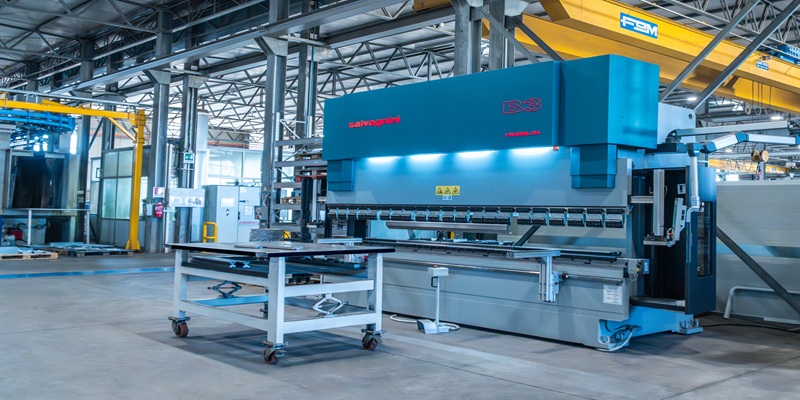
Salvagnini Introduces B3 Press Brakes with AU-TO FAST
Salvagnini has expanded its B3 press brake range with AU-TO FAST, a new automatic tool identification system that cuts set-up times by up to 30 per cent while improving safety and reliability.
Read moreAutomation & Robotics
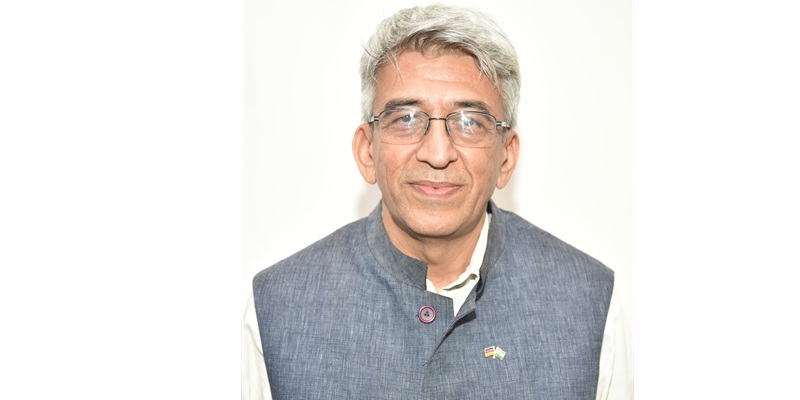
India is an important market for German engineering firms: Rajesh Nath
In this interview with Rakesh Rao, Rajesh Nath, Managing Director, VDMA India, highlights how the evolving Indo-German partnership is expected to play a pivotal role in shaping future industrial eco..
Read moreSmart Manufacturing
Future Factory Expo 2026 to Drive India’s Smart Manufacturing Shift
Organised by Smart Manufacturing & Enterprises (SM&E) and ASAPP Info Global Group, Future Factory Expo 2026 (FFE 2026) will bring together India’s manufacturing ecosystem to accelerate adoption of..
Read moreRelated Products
Compact Fmc - Motorum 3048tg With Fs2512
INDUSTRIAL AUTOMATION & TECHNOLOGY CONSULTANCY
Meiban Engineering Technologies Pvt Ltd offers a wide range of Compact FMC - Motorum 3048TG with FS2512.
Digital Colony Counter
INDUSTRIAL AUTOMATION & TECHNOLOGY CONSULTANCY
Rising Sun Enterprises supplies digital colony counter.

Robotic Welding SPM
INDUSTRIAL AUTOMATION & TECHNOLOGY CONSULTANCY
Primo Automation Systems Pvt. Ltd. manufactures, supplies and exports robotic welding SPM.
latest News
Subscribe to iNoW

For Industry News on WhatsApp, Give a Miss Call on: +91 84228 74016