



Schedule a Call Back


Casting industry: An investment that is worth
 Industry News
- Apr 01,19
The Indian foundry industry has a turnover of about $19 billion with 60 per cent demand for the casting production coming from the automobile sector

The Indian foundry industry has a turnover of about $19 billion with 60 per cent demand for the casting production coming from the automobile sector. Casting production in India is expected to expand at a CAGR of 12.7 per cent from 2018 until 2023. In this scenario, government initiatives such as ‘Make in India’, ‘Ease of Doing Business’, and its focus on infrastructure and easing FDI norms has helped to promote investments in manufacturing, says Neellohit Banerjee.
India has emerged as the third largest castings manufacturer in the world only after China and USA. With its installed capacity of 15 million tonne, actual annual production works out to between 6-9.5 million tonne. This indicates the capacity utilisation of up to 40-60 per cent. Casting production in India is expected to expand at a compound annual growth rate (CAGR) of 12.7 per cent from 2018 until 2023.
The Indian foundry industry manufactures metal cast components which can be applied in automobile, tractor, railways, machine tools, sanitary, pipe fittings, defence, aerospace, earth moving equipment, textile, cement, electrical, power machinery, pumps, valves, wind turbine generators, among others. There are approximately 5,000 units out of which 90 per cent can be classified as MSMEs. Approximately 1,500 units have International Quality Accreditation.
Many foundries resort to cupolas using LAM coke, but these are gradually shifting to induction melting. There is growing awareness about environmental hazards and many foundries are switching over to induction furnaces; some units in Agra are changing over to cokeless cupolas. The foundry industry has a turnover of about $19 billion with export nearing $2.5 billion.
Moreover, the government is focusing on ‘Make in India’, ‘Ease of Doing Business’, infrastructure and easing FDI norms to promote investments in manufacturing, and new initiatives & co-operations in skill development. The growth is almost around 45 per cent in the domestic market. The future seems bright due to many new projects and rising demand in the overseas market.
Major foundry clusters
Each foundry cluster is known for its products. The major foundry clusters are located in Batala, Jalandhar, Ludhiana, Agra, Pune, Kolhapur, Sholapur, Rajkot, Mumbai, Ahemdabad, Belgaum, Coimbatore, Chennai, Hyderabad, Howrah, Kolkata, Indore, Chennai, Ahemdabad, Faridabad, Gurugram, among others.
“Typically, each foundry cluster is known for catering to some specific end-use markets. For example, The Coimbatore cluster is famous for pump-sets castings, the Kolhapur and the Belgaum clusters for automotive castings, the Rajkot cluster for diesel engine castings, the Howrah cluster for sanitary castings and so on,” informed Niteen Inamdar, Executive Vice President and COO, Global Operations, Sigma Electric Manufacturing Corporation.
Demanding sectors
Automobile, auto components and capital goods industry have drawn up ambition plans to grow three folds in the next 10 years which will drive the demand for metal casting industry. The capital goods policy of government envisages the sector to grow from $35 billion to $115 billion industry by 2025. Whereas the auto sector as per Automotive Mission plan 2016-26 envisages auto sector to grow 3.5 to 4 times of the current value of $74 billion to $260 to $300 billion. Even if these plans are realised by 75-80 per cent, it will augur well for the Indian foundry industry. The casting demand for iron and aluminium castings could grow considerably by 2020 from current levels.
Currently, the engineering industry is seeing high demand. The reason being that machinery require parts and spares, without which one cannot manufacture a machine. “Valves, pumps, automobile, defence and machinery parts have highest demands to get good surface finish, intricate shapes, avoid machining process cost, process time, less rejection and to get high accuracy in casting,” says Bharat Ghedia, Proprietor, BK Tech Enterprise.
According to a report by Research and Markets, 60 per cent demand for the casting production in the country comes from the automobile sector. Demand from sectors such as infrastructure, oil and mining has not been as impressive as the automobile industry. The automobile sector has progressed in a positive direction in India since 2014. The foundries are also expected to grow for both ferrous and non-ferrous castings in defence procurement.
Widely used casting methods
Opportunities for precision investment casting is bright. “One can easily achieve very intricate shapes and high accuracy
by lost wax process. Precision investment casting is used in wide applications worldwide in many sectors,” says Ghedia.
Precision investment casting is commonly known as lost wax casting process. Very intricate shapes with high accuracy can be made in this process. Additionally, metals which are hard to machine or fabricate can be cast with this process. Parts that cannot be produced otherwise by normal manufacturing processes like turbine blades with complex shapes, or airplane parts that needs to withstand high temperatures are examples of this process.
A) The pattern assembly is covered with ceramic to produce a monolithic mould.
B) Melting the assembly for a precise mould cavity: Firing the mould to remove residues of the patterns developing the bond and preheating the mould ready for casting pouring.
C) Finally knockout, cutoff and finishing processes.
Firstly an aluminium mould is made to make wax patterns, which can be melted away. The wax pattern is dipped in refractory slurry, which coats the wax pattern and a skin is subsequently formed; it is then dried for at least 4-5 hours. The process of dipping in the slurry and drying is continued till a firm thickness is achieved. The pattern is placed in an oven and the wax is melted. This leads to a mould which can be easily filled with molten metal. The wax pattern can me made by a duplicating process using a stereo lithography or a similar model that has been fabricated by a computerised solid model master.
The slurry materials used are a mixture of plaster of paris, a binder and a refractory material. Powdered silica is used for low temperature melts and for higher temperature melts, alumina-silicate is used as the refractory material, while silica is used as a binder. Additional coatings of sillimanite and ethyl silicate may be applied to increase the quality of the casting. "The mould thus produced is ready for use as light castings. It may be reinforced by placing it in a bigger container and adding more slurry," informs Ghedia.
Before the pouring operation, the mould is pre-heated to remove traces of wax. Pouring can be done in gravity, pressure or vacuum condition. Mould permeability factor is to be kept in mind when using pressure, to allow the air to escape as the pouring is made.
Features of investment casting:
- Allows undercuts in pattern.
- Tolerance of 0.5 per cent of length is possible and for small dimensions, it can be as low as 0.15 per cent.
- Weight of casting can range between 0.002 kg upto 220 kg.
- Minimum wall thickness can be 3 mm according to shape and size of component.
- Parts do not require machining due to its close tolerances.
- Smooth surface finish.
- Excellent production rates, particularly for small components.
- High integrity castings and machining can be eleminated.
Investment casting is the lengthiest and costliest casting process. “It is definitely one of the most widely used process due to its easy way to cast any intricate shape and design,” Ghedia explains. But some of the other widely used methods are steel casting, static casting or sand casting. Greensand casting is also widely used in industries. Generally, grey cast iron and ductile iron are manufactured by the process of greensand casting.
At present, some of the foundries are going for automation and robotics. But automation is not generally preferred in investment casting. The reason being that robotics can only be used if one is familiar with only one-item production. But this is a customer-oriented business, and based on customer requirements, companies develop varieties of products. If a company has more than 2,000 products, it is not possible to give the robots those many commands. Some of the foundries resort to robotics only for one or two items, but the rest is being done manually.
Obstacles to the industry
According to Ghedia, there lie financial challenges to the industry. “There is the issue of prices of raw materials fluctuating day by day and some of the imported raw materials, which are being used in investment casting process, are costlier.”
The report by Research and Markets states that one major challenge in the market is environmental issues leading to increasing environmental cost. The government has made strict regulations on the release of waste produced by foundries. As a result, this has led to jump in investment in waste recycling processes and technologies. This is majorly one of the obstacles to the growth of the Indian foundry market, as the majority of the Indian foundries are MSMEs with low market capitalisation.
Lack of investment in infrastructure has dampened demand of metallic castings. Facing skilled manpower shortage and lack of technology upgradation to compete with China is another area where there is a void.There are clear indications
in the policies of government focusing on increasing GDP, which will require scaling up of manufacturing and skill development. There is need to promote investments in productive and environment-friendly technologies and equipment. Duty-free imports of equipment not manufactured in India should be considered and accelerated depreciation could be allowed in such sector specific machinery selectively.
Quote
Valves, pumps, automobile, defence and machinery parts have highest demands to get good surface finish, intricate shapes, avoid machining process cost, process time, less rejection, and to get high accuracy in casting.
Bharat Ghedia, Owner, BK Tech Enterprise
Related Stories
Fabrication
Casting industry: An investment that is worth
The Indian foundry industry has a turnover of about $19 billion with 60 per cent demand for the casting production coming from the automobile sector
Read moreRelated Products
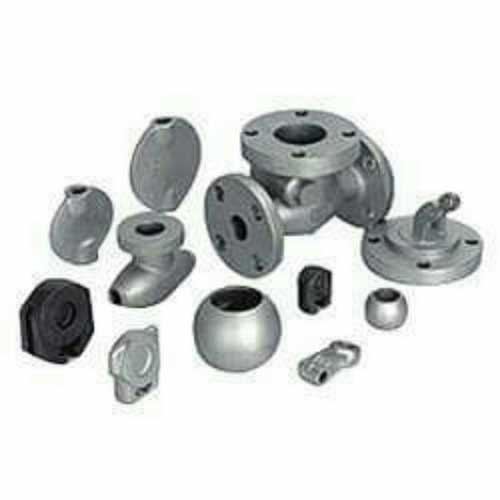
Auto Casting Components
CASTINGS & FORGINGS
Micro Melt offers a wide range of auto
parts casting components.
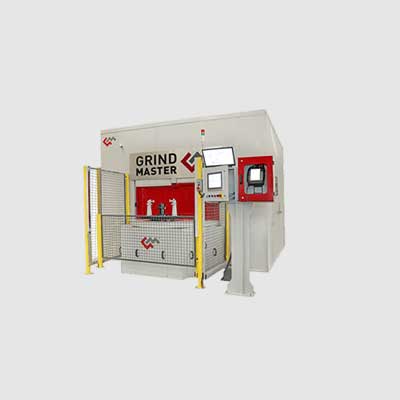
Robofinish Iron Casting Fettlingrcf
CASTINGS & FORGINGS
Grind Master Machines Pvt Ltd offers a wide range of robofinish iron casting fettling CF-HD series.
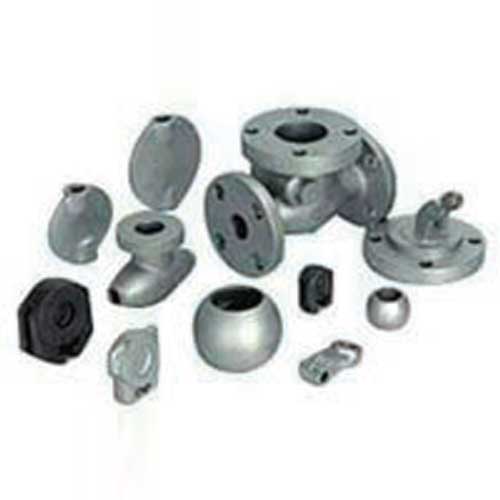
Casting Components
CASTINGS & FORGINGS
Micro Melt offers a wide range of auto parts casting components. Read more
latest News
Subscribe to iNoW

For Industry News on WhatsApp, Give a Miss Call on: +91 84228 74016