









Schedule a Call Back


How AI and Automation Are Transforming the Future of Chemical Manufacturing
 Articles
- Jul 27,26
From connected plants to autonomous operations, digital technologies are transforming chemical manufacturing into a more predictive, efficient and sustainable industry, writes Rakesh Rao.
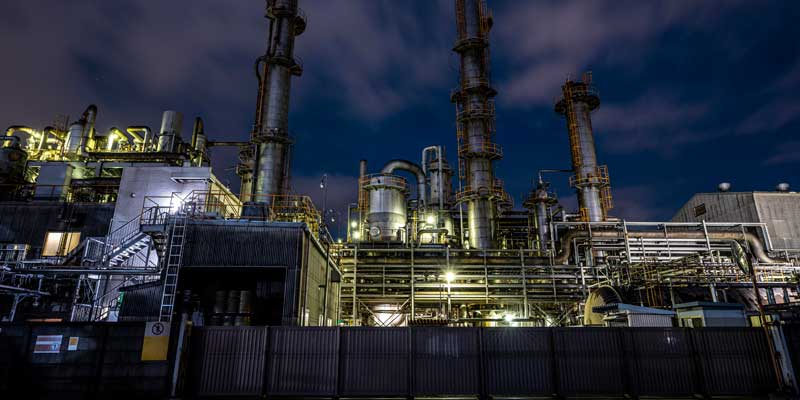
The chemical industry has always been at the centre of global industrial growth, powering sectors ranging from agriculture and pharmaceuticals to automotive, construction, energy and consumer goods. However, the industry is now undergoing a fundamental transformation.
India’s chemical market is projected to grow from the current $155–165 billion to $230–255 billion, growing at a CAGR of 8–9 per cent over the next five to six years. Rising operational complexities, stricter safety regulations, sustainability commitments, volatile energy costs and increasing market expectations are pushing Indian chemical manufacturers to rethink how plants are designed, operated and managed.
Swapnil Deosthali, Executive Vice President and Head – Digital Industries, Siemens India, explains, "Chemical manufacturers are facing a difficult mix of energy and feedstock volatility, margin pressure, rising operating costs, supply chain disruption and stricter environmental expectations. Global overcapacity in some segments, regional shifts in production and weak demand in certain markets are adding to profitability pressures. At the same time, ageing assets, fragmented data systems and shortages of experienced operators and engineers are affecting productivity, reliability and knowledge retention."

Automation, once viewed primarily as a tool for improving productivity and reducing manual intervention, has evolved into a strategic enabler of intelligent manufacturing. Today, connected systems, industrial data platforms, artificial intelligence (AI), advanced analytics, digital twins and predictive technologies are helping chemical plants achieve higher levels of safety, efficiency, quality and sustainability.
Bappa Bandyopadhyay, Director Operations & Projects - India, Henkel Adhesive Technologies, observes, “The chemical industry is evolving rapidly as manufacturers balance growth, operational excellence and sustainability while responding to changing customer expectations and an increasingly dynamic manufacturing environment. As production processes become more sophisticated and industries demand higher levels of quality, efficiency and transparency, manufacturers are increasingly focused on building smarter and more connected operations.”
The shift is not merely about replacing human effort with machines. It is about creating a collaborative ecosystem where human expertise and digital intelligence work together to optimise processes, improve decision-making and build resilient operations.
According to industry leaders, the next phase of chemical manufacturing will be defined by the ability to transform vast amounts of operational data into actionable insights, enabling plants to become more predictive, adaptive and increasingly autonomous.
“Automation has moved beyond its traditional role of improving throughput. Automation initially focused on replacing manual operations to enhance throughput. Today, with the integration of digital technologies and sensors, it transcends simple replacement, creating synergy between productivity, safety and quality,” explains Rino Raj, VP Manufacturing and Site Head – Mithapur, Tata Chemicals Ltd.
This evolution represents a broader change in how chemical manufacturers view technology investments. Automation is no longer an isolated engineering initiative but a business transformation strategy integrating operations, sustainability, safety and long-term competitiveness.
Automation as a driver of safety and quality
Chemical manufacturing involves complex processes, hazardous materials and highly sensitive operating conditions. Even minor deviations in temperature, pressure, composition or process parameters can impact safety, product quality and operational performance.
Traditionally, automation investments were justified through efficiency improvements and increased production capacity. However, modern automation systems are expanding their role by creating safer and more controlled manufacturing environments. “Continuous monitoring through interlocks, automated trips, and real-time hazardous gas detection ensures plants operate safely at optimal design conditions. Inline analysers prevent defects by fine-tuning parameters such as particle size distribution, allowing multiple product variants without compromising quality,” says Raj.
The integration of automated data collection, historians and compliance reporting systems has also reduced the complexity of regulatory adherence. Instead of relying heavily on manual reporting and inspections, manufacturers can now access real-time operational visibility.
Beyond improving process efficiency, automation is helping reduce human exposure to hazardous areas. Dangerous tasks can increasingly be monitored or controlled remotely, improving workforce safety while maintaining operational reliability. “Automation minimises human exposure to hazardous environments, creating a cohesive system that integrates safety, efficiency, quality and operational visibility directly into plant processes,” Raj adds.
This changing role of automation highlights a key industry trend: the best-performing chemical plants are not those with the highest degree of machine deployment, but those that successfully integrate technology into everyday operational decision-making.
From legacy systems to connected plants
While automation adoption is accelerating, many chemical manufacturers continue to operate plants with legacy control systems developed decades ago. These systems often perform critical functions but were not designed for today’s connected digital environment. Modernising such facilities requires a balanced approach that protects existing investments while gradually introducing advanced digital capabilities.
Dr Subhash Singh Punjabi, CISO & Head Enterprise Architect, Deepak Fertilisers and Petrochemicals Corporation Ltd, emphasises, “Transformation should not involve disruptive replacement of existing infrastructure. Modernising legacy plants requires a structured, phased approach rather than a disruptive, full-scale replacement.”
G Balaji, Senior Vice President, Energy Industries, ABB India, adds, “Digital transformation does not have to begin with a large-scale rip-and-replace project. Manufacturers should consider a phased approach, focusing first on high-impact areas where modernisation can deliver measurable business value. The goal is not a one-time transformation project, but a continuous journey of improvement that delivers value at every stage and creates a foundation for more autonomous, sustainable operations in the future.”
According to Dr Singh, the first priority is protection — assessing existing operational technology (OT) assets, securing networks and addressing vulnerabilities. The next stage involves connecting fragmented systems through standardised protocols and industrial data platforms to make plant information actionable. “The modernisation phase focuses on upgrading critical control systems, while enabling analytics and AI to deliver operational insights and predictive optimisation,” he says.
He highlights a five-dimensional framework — People, Process, Platform, Protection and Partnership — as essential for successful transformation. This approach ensures that digitalisation progresses without affecting production continuity, safety requirements or regulatory compliance.
For chemical manufacturers, the challenge is not simply adopting new technologies but creating a reliable digital foundation capable of supporting future innovations such as AI-driven optimisation, autonomous operations and advanced sustainability management.
Unlocking the power of data and AI
Chemical plants generate enormous volumes of operational data from sensors, control systems, equipment monitoring platforms and production processes. However, collecting data alone does not create value. The ability to contextualise, analyse and act upon that information is becoming the differentiating factor.
NC Chakrabarti, VP – Smart Manufacturing Technologies, Reliance Industries Ltd, believes artificial intelligence and advanced analytics are fundamentally changing how chemical manufacturers manage processes. “AI and advanced analytics have shifted the industry from reactive troubleshooting to predictive and prescriptive process management,” he says.
Traditional manufacturing approaches often relied on operators identifying problems after deviations occurred. AI-driven systems are changing this model by identifying patterns, predicting failures and recommending corrective actions before issues impact production.
Hybrid models combining physics-based understanding with machine learning (ML) can detect process deviations earlier, helping maintain stability in complex operations such as chemical reactions and separation processes. Chakrabarti elaborates, “For asset reliability, unsupervised autoencoder models evaluate multivariate correlations across process and equipment parameters, identifying potential failures in compressors, heat exchangers and other critical assets before they occur.”
AI-based optimisation is also improving energy management by dynamically adjusting operating parameters, fuel consumption and utility usage. “These tools provide real-time, holistic insights that directly improve efficiency, safety and EBITDA margins,” he adds.
However, successful AI adoption depends on the availability of high-quality contextual data. Chakrabarti points out that while significant amounts of plant data are captured, only a limited portion is currently converted into business value.
Manufacturers, therefore, need integrated data architectures connecting operational systems, engineering information and enterprise platforms to unlock the full potential of digital transformation.
Human factor key to driving digital transformation
While technologies such as artificial intelligence, machine learning, industrial IoT and advanced analytics are transforming chemical manufacturing, industry leaders believe that technology alone cannot guarantee successful transformation. One of the biggest challenges faced by chemical manufacturers is scaling digital initiatives beyond pilot projects and ensuring that solutions deliver consistent value across multiple plants and locations.
According to Abhishek Srivastava, AVP & Head – Agentic AI, Industry 4.0 & Digital Platforms, Aditya Birla Group (ABG), the key challenge is not technology availability but organisational adoption. “The primary challenge is adoption and sustained utilisation rather than technology itself,” he says.
Chemical processes are highly interconnected, and even small parameter changes can influence multiple outcomes. Therefore, successful organisations must build a common digital foundation that allows knowledge and best practices from one facility to be shared across the enterprise.
“Scaling requires a common data foundation across sites, ensuring lessons learned in one plant inform others,” Srivastava explains.
However, the human dimension remains equally important. Employees need to understand that automation and AI are not replacing their expertise but enhancing their ability to make better decisions.
Organisations that successfully implement digital transformation focus on structured training, continuous communication and change management. By building trust among employees and encouraging adoption, companies can convert isolated technology experiments into enterprise-wide improvements.
Srivastava believes organisations must address cultural and behavioural barriers, including concerns around job displacement and resistance to new ways of working.
“Employees must overcome fear of failure or job loss and embrace digital tools,” he says. Companies that create a supportive environment for learning and experimentation are better positioned to achieve sustainable digital transformation.
Driving efficiency while reducing carbon footprint
Sustainability has become a strategic priority for chemical manufacturers as industries face increasing pressure to reduce emissions, optimise resource consumption and improve energy efficiency. “The transition towards lower-carbon manufacturing also presents an opportunity to rethink how facilities operate. Automation, digital technologies and intelligent manufacturing are enabling greater operational visibility, improved resource efficiency and more informed decision-making, helping manufacturers enhance productivity while advancing their sustainability ambitions,” states Bandyopadhyay.
Automation is playing an important role in helping companies achieve sustainability objectives by providing real-time visibility into energy usage, resource consumption and process performance. NC Chakrabarti highlights, “Sustainability and profitability are no longer conflicting objectives. Advanced automation technologies can help manufacturers reduce environmental impact while improving operational performance. Dynamic thermodynamic digital twins run in parallel with live processes, modelling the behaviour of heat exchangers, distillation columns and other energy-intensive systems in real time.”
These digital models allow manufacturers to simulate operating conditions, identify inefficiencies and optimise processes before implementing changes on the shop floor. By continuously analysing factors such as energy consumption, production parameters and utility requirements, digital systems can recommend optimal operating strategies.
“Advanced automation systems further stabilise operations during transient states, preventing process upsets that would otherwise increase energy demand,” says Chakrabarti.
The result is a more predictive manufacturing environment where sustainability goals and business performance reinforce each other.
Henkel Adhesive Technologies is also focusing on the integration of digitalisation and sustainability across its manufacturing operations. Bandyopadhyay believes connected manufacturing technologies are helping companies improve operational visibility while supporting environmental goals. “Digital technologies provide valuable operational insights that help optimise resource utilisation, improve process efficiency and support more informed decision-making across manufacturing operations,” he says.
Connected manufacturing systems and data-driven insights continue to improve resource efficiency, energy management and operational performance.
Protecting the Connected Chemical Plant
As chemical plants become increasingly connected, cybersecurity has emerged as a critical component of operational resilience. The integration of industrial networks, cloud platforms, remote monitoring systems and advanced analytics creates new opportunities for efficiency but also increases exposure to cyber risks. For chemical manufacturers, cybersecurity is no longer only an IT concern. A cyber incident can impact plant operations, safety systems, production continuity and regulatory compliance.
Dr Subhash Singh highlights that cybersecurity must evolve alongside automation. “Automation and cybersecurity are two sides of the same coin, and achieving operational excellence requires advancing them in tandem,” he says.
Chemical plants need to adopt a security-by-design approach where cybersecurity considerations are embedded into every stage of digital transformation. The most vulnerable areas include legacy OT systems, IT-OT convergence points, remote access systems and interactions with third-party vendors. “A structured approach begins with asset protection and network segmentation, implementing zero-trust principles and continuous monitoring,” explains Dr Singh.
Deosthali adds, “IT/OT convergence, remote access, legacy control systems and data-driven operations have expanded the attack surface. A cyber incident can affect not only data but also plant availability, process safety, product quality and regulatory compliance. Manufacturers need a defence-in-depth strategy across IT and OT, securing every layer from enterprise systems and engineering workstations to DCS, PLCs, HMIs, industrial networks, field devices and remote access points.”
Employee awareness is another critical factor. Even advanced security systems can be compromised through human errors if personnel are not trained adequately. By integrating cybersecurity into process safety frameworks, manufacturers can protect operations, employees, intellectual property and business continuity. Industry experts also emphasise that cybersecurity should not slow down digital transformation. Instead, it should become a foundation that enables secure adoption of advanced technologies.
The chemical industry is moving towards a future where plants are not only automated but intelligent, adaptive and capable of making real-time decisions. Henkel’s Bappa Bandyopadhyay believes future manufacturing will depend on connected operations supported by AI, IIoT and advanced analytics.
“Automation, supported by AI, IIoT and advanced analytics, provides real-time insights into production performance, equipment health and resource utilisation,” he says. These capabilities allow manufacturers to improve predictive maintenance, optimise production planning and respond faster to changing market requirements.
The road towards autonomous chemical manufacturing
Autonomous operations represent the next stage of industrial transformation, where plants can continuously monitor, analyse and optimise themselves with minimal human intervention. However, industry leaders believe that autonomous manufacturing will not happen overnight. It requires a structured roadmap involving digital maturity assessment, data integration, process optimisation and workforce development.
Deosthali explains that chemical manufacturers must first understand their current digital maturity before defining their transformation journey. A step-by-step approach includes assessing existing systems, identifying high-impact opportunities, developing an industrial IoT roadmap and implementing solutions aligned with business priorities.
“The path towards fully automated systems requires foresight and commitment from decision-makers,” he says.
The transition towards autonomous operations will vary across companies depending on their existing infrastructure, objectives and operational priorities. However, the foundation remains consistent: purposeful automation, digitalisation and AI deployment focused on measurable business outcomes.
Balaji also highlights the shift towards intelligent automation. According to him, the next generation of automation moves beyond isolated applications, embedding intelligence directly across the plant floor and enabling operations that are not just controlled, but predictive, adaptive and autonomous.
In this future scenario, AI systems could detect process deviations, recommend corrective actions and, where appropriate, automatically implement adjustments.
Digital twins will also become increasingly important by allowing manufacturers to simulate processes, optimise formulations and reduce trial-and-error during production. “They are becoming intelligent, data-driven models that continuously learn from real-time operations. A chemical manufacturer developing a new formulation can simulate different process parameters, predict product quality and optimise production before implementation, reducing trial and error, minimising off-spec batches and accelerating time to market,” states Balaji.
The companies that successfully convert intelligence into operational advantage will lead the next decade of chemical manufacturing.
From automated plants to intelligent ecosystems
The future of chemical manufacturing will be defined by the convergence of automation, artificial intelligence, data analytics and human expertise. According to Srivastava, the strategic priority should focus on knowledge engineering—transforming data and contextual insights into actionable knowledge. "This approach combines data, context and domain expertise, enabling chemical manufacturers to capture institutional know-how even as experienced engineers retire or are not physically present on-site. Knowledge engineering facilitates the practical application of AI and large language models (LLMs) to optimise processes, improve decision-making, and maintain operational continuity across plants," he says.
The industry is moving beyond the traditional view of automation as a productivity-enhancement tool. Instead, it is becoming the backbone of safer, more sustainable and more resilient manufacturing ecosystems.
The journey towards intelligent factories will require more than technology investments. Companies must develop strong digital foundations, secure their connected infrastructure, empower employees and create cultures that embrace continuous innovation.
As Rino Raj explains, building confidence in digital systems among plant personnel will be essential for unlocking the full potential of AI and analytics. “Employees must move from tentative use of digital tools to confident application, questioning, validating and improving AI recommendations themselves,” he says.
AI and advanced analytics can help bridge the gap between machine intelligence and human decision-making by making complex models easier to understand and apply. Over the next few years, chemical manufacturers that successfully combine technology, people and processes will be better positioned to achieve operational excellence.
“Looking ahead, manufacturers that successfully integrate innovation, digitalisation and sustainability while building resilient operations and empowering a skilled workforce will be better positioned to drive long-term growth and strengthen competitiveness,” opines Bandyopadhyay.
The factories of tomorrow will not simply be automated. They will be intelligent ecosystems capable of learning, adapting and continuously improving — creating a safer, cleaner and more competitive chemical industry.
Bappa Bandyopadhyay, Director Operations & Projects - India, Henkel Adhesive Technologies
Future manufacturing will depend on connected operations supported by AI, IIoT and advanced analytics.
==================================================================
Swapnil Deosthali, Executive VP and Head – Digital Industries, Siemens India
The path towards fully automated systems requires foresight and commitment from decision-makers.
==================================================================
Rino Raj, VP Manufacturing and Site Head – Mithapur, Tata Chemicals Ltd
Continuous monitoring ensures plants operate safely at optimal design conditions.
==============================================================
NC Chakrabarti, VP – Smart Manufacturing Technologies, Reliance Industries Ltd
While significant amounts of plant data are captured, only a limited portion is currently converted into business value.
==================================================================
Abhishek Srivastava, AVP & Head – Agentic AI, Industry 4.0 & Digital Platforms, Aditya Birla Group
Scaling requires a common data foundation across sites, ensuring lessons learned in one plant inform others.
==================================================================
Dr Subhash Singh Punjabi, CISO & Head Enterprise Architect, Deepak Fertilisers and Petrochemicals Corporation Ltd
Modernising legacy plants requires a structured, phased approach rather than disruptive, full-scale replacement.
===============================================================
G Balaji, Sr VP, Energy Industries, ABB India
Digital transformation does not have to begin with a large-scale rip-and-replace project.
=================================================================
Challenges facing chemical manufacturers
- Rising energy costs and volatile feedstock prices
- Pressure from stricter environmental and regulatory expectations
- Ageing assets limiting productivity and reliability
- Fragmented data systems restricting digital transformation
Automation & sustainability: Driving efficiency
- Enhances safety through continuous process monitoring
- Reduces energy consumption and resource wastage
- Improves operational visibility and decision-making
- Supports lower-carbon and sustainable manufacturing
- Balances profitability with environmental responsibility
Future-ready factory blueprint
- Integrated automation across plant operations
- Advanced analytics driving continuous improvement
- Cybersecure connected manufacturing infrastructure
- Human expertise combined with digital intelligence
- Autonomous systems enabling adaptive production
Disclaimer: (The article is based on the virtual panel discussion, hosted by Future Factory Expo, on July 17, 2026 and responses from industry experts.)
Strip AD For “Print” Only Scan to participate in Future Factory Expo 2026 and discover how chemical companies are integrating multiple technologies to solve real operational challenges.
Chemical manufacturing
smart factory
industrial automation
Bappa Bandyopadhyay
Henkel
Adhesives
Swapnil Deosthali
Siemens
Rino Raj
Tata Chemicals
NC Chakrabarti
Reliance Industries
Abhishek Srivastava
Aditya Birla Group
Dr Subhash Singh Punjabi
Deepak Fertilisers
G Balaji
ABB India
Rakesh Rao
artificial intelligence
Industry 4.0
digital transformation
predictive maintenance
AI-driven manufacturing
industrial IoT
digital twins
sustainable manufacturing
autonomous operat
Related Stories
Machine Tools & Accessories

Schaeffler India appoints Amit Bhalerao as Chief Operating Officer
Amit Bhalerao will lead Schaeffler India’s manufacturing operations, with a focus on operational excellence, digital transformation, localisation and capability development.
Read moreAutomation & Robotics
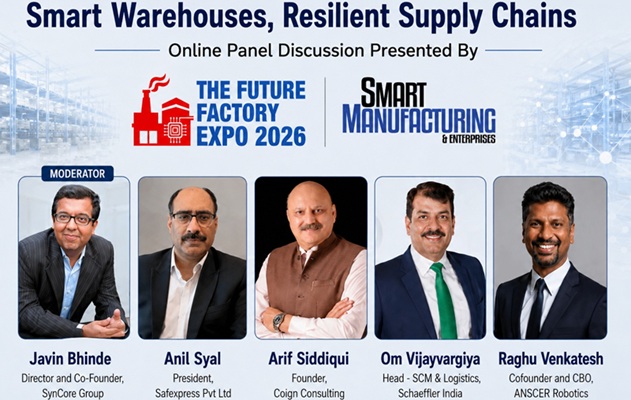
Future Factory Expo Webinar Series: Smart Warehouses for Resilient Supply Chains
In the run-up to Future Factory Expo 2026 (to be held on November 3-4 in Mumbai), Smart Manufacturing & Enterprises recently hosted the webinar exploring how automation, digitalisation, smart infras..
Read moreAutomation & Robotics
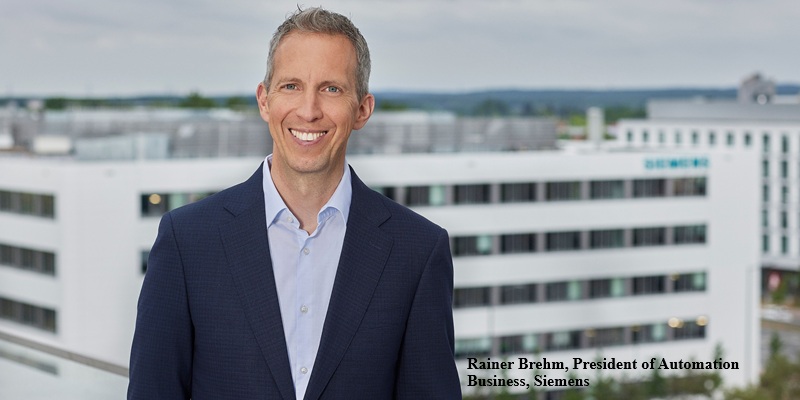
Siemens appoints Rainer Brehm as President of new Automation Business
Rainer Brehm to lead the newly established Automation unit, effective October 1, 2026. New organisation brings together key automation capabilities and further advances Siemens’ ONE Tech Company s..
Read moreRelated Products
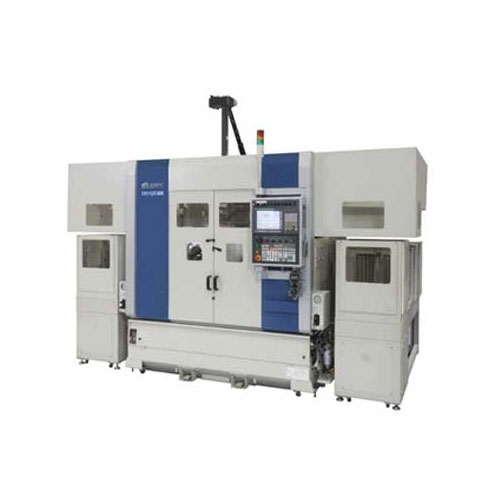
Compact Fmc - Motorum 3048tg With Fs2512
INDUSTRIAL AUTOMATION & TECHNOLOGY CONSULTANCY
Meiban Engineering Technologies Pvt Ltd offers a wide range of Compact FMC - Motorum 3048TG with FS2512.
Digital Colony Counter
INDUSTRIAL AUTOMATION & TECHNOLOGY CONSULTANCY
Rising Sun Enterprises supplies digital colony counter.

Robotic Welding SPM
INDUSTRIAL AUTOMATION & TECHNOLOGY CONSULTANCY
Primo Automation Systems Pvt. Ltd. manufactures, supplies and exports robotic welding SPM.
latest News
Subscribe to iNoW

For Industry News on WhatsApp, Give a Miss Call on: +91 84228 74016