





Schedule a Call Back


From Cost Efficiency to Survival
 Articles
- May 08,26
Surging crude-linked resin prices, shortages and longer lead times are forcing India’s packaging sector to shift from cost efficiency to resilience, scale and strategic sourcing, writes Thimmaiah Napanda, MD and CEO, Alternicq Ltd.

The Indian packaging industry is confronting a moment of reckoning. What
began as a geopolitical disruption has rapidly evolved into a systemic stress
test for supply chains, cost structures and long-standing procurement
relationships. With crude oil prices breaching $100 per barrel in March 2026,
the ripple effects are being felt across industries, but nowhere more acutely
than in packaging, where crude-linked raw materials form the backbone of
production.
In recent weeks, prices of key inputs—resins such as PET, polypropylene
(PP) and polyethylene (PE)—have surged between 40 per cent and 80 per cent,
depending on the grade. Yet, the deeper disruption lies not only in price
escalation, but in availability. For many plastic manufacturers, the challenge
is no longer just higher raw material costs, but sourcing the material itself.
This dual pressure of inflation and scarcity is forcing a reset in how
packaging companies operate. The industry is moving from a finely tuned model
of cost efficiency to one defined by resilience, continuity and survival.
Packaging at the centre of disruption
The packaging industry is a critical enabler for sectors such as FMCG,
pharmaceuticals, food and beverage, paints, agrochemicals and more. Any
disruption in packaging supply directly affects production lines, retail
shelves and, ultimately, product availability for consumers.
The current crisis has exposed the fragility of this interconnected
system. Supply disruptions across polymer categories, particularly those
dependent on imports from West Asia, have tightened availability.
High-performance grades used in essential applications—from bottle caps in FMCG
to pharmaceutical packaging—are facing constraints worsened by shipment delays
and logistical bottlenecks.
At the same time, procurement cycles have stretched significantly. What
was once a three-to-four-week lead time has now extended to six-to-eight weeks
in many cases. This has a cascading effect: production planning becomes more
complex, demand forecasting less certain, and working capital requirements
significantly higher. For an industry built on efficiency, this is a structural
disruption, not a temporary anomaly.
The end of cost-led procurement
For decades, procurement strategies in packaging were optimised around
cost. The objective was clear: secure the lowest landed price, diversify
suppliers to maintain competitive pricing, and operate on lean inventory
cycles. This model worked in a relatively stable environment where supply was
predictable and disruptions episodic.
That model is now being fundamentally challenged. In the current
environment, availability has taken priority over cost. When raw materials are
constrained, the ability to secure supply becomes more valuable than
negotiating marginal price advantages. The cost of not having raw
material—halted production lines, unfulfilled customer commitments and lost
market share—far outweighs the impact of higher input prices.
This has led to a decisive shift from multi-supplier, spot-driven
procurement to relationship-led sourcing models. Brands are increasingly
consolidating their supplier base, prioritising long-term partnerships with
strategic suppliers who can offer reliability, allocation priority and
consistent supply in volatile conditions.
Procurement is evolving from a transactional function to a strategic
one, anchored in trust, scale and long-term alignment.
From just-in-time to just-in-case
At the heart of this transformation lies a critical trade-off: inventory
versus cost.
Historically, the industry operated on a just-in-time (JIT) model,
minimising inventory to optimise working capital and reduce holding costs. In
today’s environment, that approach is increasingly untenable. Supply uncertainty,
extended lead times and volatile pricing have made lean inventory strategies a
significant operational risk.
As a result, companies are shifting towards a just-in-case (JIC) model,
building higher inventory buffers to safeguard against disruptions. This shift,
however, comes at a cost.
Holding inventory at elevated raw material prices locks up significant
working capital. Financing costs rise, cash-flow cycles stretch and balance
sheets come under pressure. Yet the alternative—running low on inventory and
risking supply gaps—carries far greater consequences. Lost business, strained
customer relationships and reputational damage can have long-term implications
that far exceed short-term financial strain.
This is where divergence within the industry becomes most visible.
Larger, well-capitalised players with strong balance sheets are able to absorb
the cost of higher inventory and use it as a competitive advantage. Smaller
players, constrained by limited working capital and weaker supplier access, are
facing disproportionate stress. In many ways, inventory is no longer just an
operational lever—it has become a strategic differentiator.
Relationship capital as a survival tool
If inventory is the buffer against uncertainty, relationships are the
gateway to access.
In a supply-constrained environment, allocation decisions by suppliers
are rarely neutral. They are influenced by scale, consistency and the depth of
the relationship. Companies with long-standing contracts and meaningful volume
commitments are more likely to secure priority access to materials, even when
supply is limited.
This has elevated the importance of what can be termed ‘relationship
capital’. While it may not appear on balance sheets, its impact is tangible and
visible in allocation priority, reliability of supply and operational
continuity.
On the customer side, relationships are also becoming more collaborative
and transparent. Packaging manufacturers and their customers, such as FMCG or
pharma players, are increasingly working together to navigate cost volatility,
adjust pricing mechanisms and align on demand forecasts. There is growing
recognition that supply-chain resilience is a shared responsibility, and that
continuity of supply is more critical than short-term cost optimisation.
This shift is redefining partnerships across the value chain—from
transactional engagements to strategic collaborations.
A structural shift: Scale, consolidation and
localisation
What is unfolding today is not a cyclical disruption that will fade with
stabilising crude prices. It represents a structural shift in how the packaging
industry will operate from here on.
First, there are clear signs of a move towards scale and integration.
Brands are increasingly rationalising their vendor base, preferring to work
with partners who can guarantee supply continuity, absorb volatility and offer
end-to-end capabilities. This naturally favours larger, organised players with
integrated capabilities.
Second, recent disruption and geopolitical uncertainty are likely to
trigger consolidation within the industry. Smaller, less integrated players are
already facing pressure from rising costs and limited access to materials,
making it increasingly difficult to compete. The combination of supply
constraints, working capital stress and rising customer expectations is
creating conditions for significant consolidation over the next few years.
Third, there is a growing emphasis on localisation and supply-chain
resilience. While India is largely self-sufficient in many resin categories,
this disruption is likely to accelerate efforts to localise specialised grades
and reduce dependency on volatile import channels.
Together, these shifts are reshaping the competitive landscape,
rewarding resilience, scale and strategic alignment.
Disruption as a catalyst for circularity
Amid the disruption, an unexpected trend is likely to gain momentum—the
acceleration of circularity in plastics. The high cost of virgin resins and
scarcity are encouraging companies to explore recycled alternatives more
actively, while policymakers are also supporting this shift.
Starting April 1, the Government has mandated producers to use 40 per
cent recycled content in packaging, which may accelerate the adoption of
recycled PET across the food and beverage sector. Extended Producer
Responsibility (EPR) norms have also begun to reinforce the shift towards
recycling in plastics. By mandating recycling targets, policymakers are pushing
companies to invest in traceability, recycling partnerships and recovery infrastructure.
However, the transition remains complex. It requires investment in
collection infrastructure by government, manufacturers, corporates and
consumers. It also requires process adjustments by manufacturers, regulatory
compliance and supply-chain realignment so that the economics shift in favour
of recycled materials.
At present, high-quality recycled material availability is still
limited, regulatory frameworks are evolving, and applications such as food and
pharmaceutical packaging require stringent compliance. As a result, adoption is
likely to accelerate gradually rather than immediately. While execution remains
a challenge, EPR is an important step towards aligning business incentives with
sustainability outcomes.
Nonetheless, the current crisis is reinforcing a long-term direction:
sustainability and resilience are no longer separate agendas—they are
increasingly intertwined.
Opportunity beyond survival
The packaging industry is undergoing a profound transformation. What was
once a cost-optimised, efficiency-driven ecosystem is evolving into one where
resilience, relationships and resource security define success.
The shift from just-in-time to just-in-case operating models, from
cost-led procurement to supply-assured sourcing, and from transactional
interactions to strategic partnerships reflects a deeper change in priorities.
In this new reality, the ability to secure material, maintain continuity and
collaborate across the value chain is becoming more valuable than incremental
cost savings.
For companies that can navigate this transition—leveraging strong
supplier relationships, maintaining inventory discipline, building financial
resilience and developing integrated capabilities—the current disruption
presents an opportunity not just to survive, but to emerge stronger, more
integrated and more strategically relevant.
About the author
Thimmaiah Napanda is the CEO & Managing Director of Alternicq
Limited, which is now a portfolio company of global private equity firm PAG. He
is a distinguished business leader with over 29 years of leadership experience across
automotive and manufacturing sectors in India and the Asia-Pacific region. Prior to the current ownership he successfully
led Alternicq Limited (formerly known as Manjushree Technopack Ltd) through a
landmark enterprise valuation and strategic exit to Advent International,
making it one of the most significant transactions in India’s packaging
industry.
Indian packaging industry
supply chain disruption
crude oil price surge
resin prices
procurement strategy shift
just-in-case inventory
packaging sector consolidation
recycled plastics adoption
Thimmaiah Napanda
Alternicq Ltd
Related Stories
Policy Regulation

West Asia Crisis Reshapes Risks for Indian Sectors
Primus Partners says the West Asia crisis is reshaping Indian sectoral risks across trade, capital flows, supply chains, logistics and exports.
Read morePolicy Regulation
West Asia war is impacting India's engineering exports: Pankaj Chadha
While India’s engineering goods exports are expected to grow by 5 per cent in FY26 over previous year, the West Asia conflict has significantly impacted outbound shipments, says Pankaj Chadha, Cha..
Read moreIndustrial Safety & Security
From Cost Efficiency to Survival
Surging crude-linked resin prices, shortages and longer lead times are forcing India’s packaging sector to shift from cost efficiency to resilience, scale and strategic sourcing, writes Thimmaiah ..
Read moreRelated Products

Grey Polka Dash Board Covers
INDUSTRIAL SAFETY & SECURITY SYSTEMS
Elegant Auto Accessories offers a wide range of grey polka dash board covers.
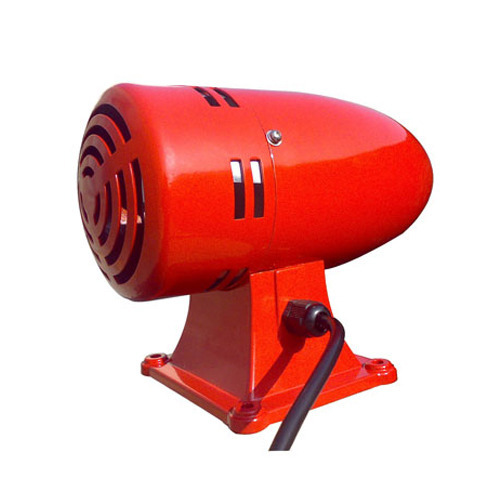
Fire Protection - Industrial Sirens
INDUSTRIAL SAFETY & SECURITY SYSTEMS
Amit Safety Enterprises offers a wide range of fire protection industrial sirens.
Read more
Fire Alarm Sysytem
INDUSTRIAL SAFETY & SECURITY SYSTEMS
Nayakson Security Systems is offering a range of fire alarm, intrusion alarm and gas alarm systems.
latest News
Subscribe to iNoW

For Industry News on WhatsApp, Give a Miss Call on: +91 84228 74016