







Schedule a Call Back




Experts advocate for major reforms to attract manufacturers to India
 Industry News
- Aug 13,24
They suggest that now is the time for substantial policy reforms to enhance India's manufacturing sector.
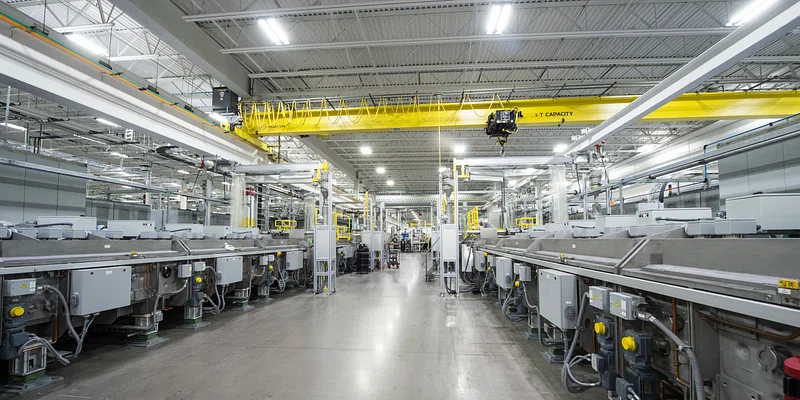
Experts argue that India must accelerate its efforts beyond existing production-linked incentive (PLI) schemes to firmly establish itself as a global manufacturing hub and generate millions of new jobs. They suggest that now is the time for substantial policy reforms to enhance India's manufacturing sector.
Proposed steps include developing world-class, export-oriented industrial hubs, negotiating favourable tax treaties with major trading partners, enhancing logistics infrastructure with improved port connectivity, promoting sector-specific skill development, increasing local production of capital goods, and investing in smart manufacturing technologies.
These measures are seen as crucial for improving India's appeal to global investors in sectors such as automobiles, renewable energy, telecom equipment, electronics, and batteries. With shifting global dynamics and companies seeking alternatives to China, India is well-positioned to attract significant manufacturing investments.
Recent budgetary changes, including a 5% point increase in import duties on printed circuit board assemblies and exemptions on solar module manufacturing equipment, are viewed as initial steps. However, industry experts argue that more transformative policy reforms are needed for India to become a leading player in global manufacturing.
Rajeev Singh, Partner and Consumer Industry Leader, Deloitte Asia Pacific, highlighted the sector's potential, noting, "For every job created in manufacturing, 3.5-4.0 jobs are generated in the services sector." The PLI schemes have bolstered local manufacturing in telecom and electronics, with telecom gear sales surpassing Rs 500 billion in fiscal 2024—a 370% increase from the base year of FY20. This growth has reduced import dependence and created 17,800 jobs in under three years.
Similarly, the electronics manufacturing PLI scheme has led to a surge in mobile phone exports and a dramatic reduction in imports. However, experts believe that replicating this success in the automotive sector requires more comprehensive policy support. Singh noted that India lags behind countries like Thailand in developing large, export-oriented industrial hubs.
Investments in the automotive sector under the PLI scheme have reached Rs 130 billion, with major players such as Mahindra & Mahindra, Tata Motors, and Ola Electric contributing to advancements in green vehicles. The government aims to attract Rs 425 billion in investments over the next two to three years, with a recent allocation of Rs 35 billion to incentivise the sector.
India's renewable energy sector is also showing progress, with solar module manufacturing capacity increasing from less than 10 GW in FY21 to over 50 GW. However, more policy action is needed to boost the local production of critical components like wafers and ingots.
Kunal Vora, Head- India Equity Research, BNP Paribas, anticipates that the recent customs-duty waiver on critical minerals used in battery cell manufacturing will further support the sector's growth.
Overall, experts stress the importance of implementing bold reforms to enhance India's manufacturing capabilities and secure its position as a global leader in the industry.
(ET)
Related Stories
Policy Regulation

India’s Manufacturing Mission: What Make in India Got Right and Wrong
A decade after its launch, Make in India shows sectoral progress but structural gaps remain. As global manufacturing turns VUCA, the next phase must focus on value addition, jobs and ecosystems, say..
Read morePolicy Regulation

How India Can Build Manufacturing Strength in a VUCA World
As global manufacturing resets under VUCA pressures, India stands at a strategic inflection point, balancing resilience, technology, sustainability and leadership to shape future supply chains, says..
Read moreMaterial Handling Equipment

Why Batteries Trail Strategy in Humanoid Robot Development
Battery makers are racing ahead of robot OEMs in positioning humanoids as the next growth frontier. This press release examines developments from both perspectives and considers how deeper cross-ind..
Read moreRelated Products
latest News
Subscribe to iNoW

For Industry News on WhatsApp, Give a Miss Call on: +91 84228 74016