







Schedule a Call Back


Digitisation strengthens our quality management: Anand Mishra
 Articles
- Nov 29,25
In this interview, Anand Mishra, Vice President – QMS & ESG, Ghodawat Consumer Ltd, discusses how integrated quality systems and sustainability-driven innovation are strengthening GCL’s FMCG leadership and shaping its future-ready growth.

To start with, can you provide us with an overview of Ghodawat Consumer Ltd (with respect to business, manufacturing facilities, growth in the past few years, etc)
Ghodawat Consumer Ltd (GCL), the FMCG arm of Sanjay Ghodawat Group (SGG), is one of India’s fastest-growing FMCG companies. Over the past decade, GCL has evolved from a regional entity into a national, multi-category consumer brand with a strong presence across the FMCG sector.
The company operates as an integrated FMCG business with a multi-brand, multi-category portfolio that includes staples such as STAR atta, STAR besan, STAR rawa, STAR maida, STAR rice, STAR edible oils, and STAR salt, as well as impulse products like Coolberg – India’s No.1 Non-alcoholic Beer, To Be Honest (TBH) – 100 per cent real fruit and vegetable crunchies. GCL’s major manufacturing strengths include large-scale production units in Maharashtra equipped with automated lines. The company has achieved backward integration in key categories such as rice milling, oil extraction and refining, and the manufacturing of atta, rawa, maida, and besan.
It also operates high-speed beverage bottling plants and has an in-house New Product Development (NPD) team, along with a NABL-accredited Central Lab, to ensure consistent product quality and innovation. This integrated approach and robust manufacturing infrastructure have underpinned GCL’s significant growth in recent years.
Ghodawat Consumer has been strengthening its quality management frameworks across product categories. How do you ensure consistency, traceability, and compliance across diverse FMCG product lines while scaling up production?
Ghodawat Consumer Ltd (GCL) ensures consistency, traceability, and compliance across its diverse FMCG product lines while scaling up production by employing a comprehensive, technology-driven quality management framework. The company implements centralised quality protocols that are uniformly applied across every plant and category, with Standard Operating Procedures (SOPs) mapped to FSSAI, HACCP, ISO 22000, and GMP norms. Unified hygiene, sanitation, and cross-contamination controls are enforced, and dedicated quality teams are assigned to each category. To further meet consumer expectations, GCL has adopted the 3D Quality process, which ensures food safety, original design adherence, and consumer-delivered quality in terms of taste, odor, appearance, freshness, and packaging, thereby maintaining consistent standards even as production scales.
Vertical integration is another key strength, with in-house rice mills, oil refineries, packaging units, and beverage bottling plants allowing direct monitoring of raw material quality from sourcing to final packaging, reducing dependency on external suppliers and enhancing consistency. GCL employs advanced traceability mechanisms, including batch-wise digital tracking and centralised ERP systems (SAP/PRM), which link procurement, production, and distribution for real-time visibility and quick root-cause analysis.
Each facility features a fully equipped, centrally supervised laboratory for physical, chemical, biological, and sensory testing, as well as packaging and barrier testing and FEMA verification. Centralised NPD ensures product formulations remain uniform across all plants and batches. Automation and technology-driven controls, such as automated filling, packaging, blending, and bottling lines, and real-time analytics, further support high-volume, repeatable quality by minimising human error.
GCL maintains compliance through regular third-party audits and certifications, including FSSAI, BRC-GS, FSSC 22000, US FDA, Kosher, Halal, and environmental and safety certifications, along with periodic regulatory inspections. Finally, the company promotes continuous improvement through FOSTAC training, Kaizen and 5S projects, cross-functional internal audits aligned with GFSI standards, and real-time feedback systems between plants and NPD. This integrated approach builds a culture of quality and enables GCL to maintain the highest standards across all product lines and facilities.
GCL has set ambitious goals for Water Neutrality, Carbon Neutrality, and Zero Discharge by 2030. What are the most transformative initiatives underway in your sustainability roadmap, and how are they reshaping daily operations on the ground?
GCL has set ambitious targets for water neutrality, carbon neutrality, and zero liquid discharge by 2030, and several transformative initiatives are actively reshaping our daily operations to achieve these goals. On the water conservation front, GCL is committed to becoming water neutral by 2030 and has already achieved 11 per cent rainwater harvesting, with a target to reach 16 per cent by the end of FY 2025-26. Specifically, our rainwater harvesting project at the beverage plant is estimated to capture 23,413.30 KL of rainwater annually. In addition to rainwater harvesting, we are focused on achieving zero liquid discharge through the reuse and recycling of wastewater. This involves conducting water audits to identify wastage and optimisation opportunities, as well as upgrading existing Effluent Treatment Plants to ensure all wastewater is treated and reused within our facilities.
On the carbon neutrality front, GCL has achieved a 37 per cent share of renewable energy in its operations and aims to increase this to 41 per cent by the end of 2025 through the expansion of solar panel installations. Planned additions include 100 KWP at the Head Office, 300 KWP at the rice facility, and 250 KWP at the beverage plant, with a total of 950 KWP of solar panels expected to be installed over the next two financial years (2025-2026 and 2026-2027). These sustainability projects are not only reducing our environmental footprint but are also fostering a culture of resource optimisation, efficiency, and environmental responsibility at every level of our operations.
How is technology (such as automation, digitalisation, AI, etc.) helping in enhancing product safety, reducing errors, and supporting data-driven decision-making within your quality function?
Technology is playing a pivotal role in enhancing product safety, reducing errors, and enabling data-driven decision-making within our quality function at GCL. Automation is extensively deployed across our manufacturing and quality checkpoints to ensure precision and minimise human error. Automated filling, blending, and packaging lines deliver consistent product measurements, while vision-based inspection systems quickly detect any packaging defects or errors. Additionally, automated Clean-in-Place (CIP) systems in our beverage unit maintain the highest standards of hygiene, significantly reducing manual dependency and error rates.
Digitisation further strengthens our quality management by enabling real-time monitoring and centralised control. SAP-linked quality modules track raw material quality, maintain comprehensive batch records, and log test results, while digital SOPs and audit trails ensure compliance and minimise documentation gaps. Real-time production monitoring provides immediate alerts if there are deviations from established quality parameters, making quality traceable, auditable, and transparent from end to end.
Integrated data flow across procurement, production, quality, and distribution empowers our leadership with actionable insights. Real-time quality metrics allow for swift corrective actions, trend analysis supports continuous improvement, and central dashboards facilitate remote collaboration and performance reviews. This seamless integration of data transforms information into a strategic asset, enabling us to scale operations safely, efficiently, and with a strong focus on quality.
Across the Indian FMCG sector, what do you see as the biggest challenges companies face in adopting sustainable practices, particularly around water management, waste reduction, and responsible packaging?
Across the Indian FMCG sector, some of the biggest challenges in adopting sustainable practices include building a sustainable supply chain, effective water management, comprehensive waste reduction, and responsible packaging. Sustainable supply chain management remains a key hurdle, as companies must balance efficiency, transparency, and environmental responsibility. At GCL, we have made significant strides in this area, and water management remains another critical challenge that requires continuous investment in conservation, recycling, and efficient usage techniques. Waste reduction and achieving zero waste to landfill are equally pressing, given the scale of operations in FMCG. GCL has made notable progress here, having achieved a 58 per cent waste diversion rate, and we continue to implement strategic plans focused on reducing, reusing, and scientifically disposing of waste.
Responsible packaging is also at the forefront, particularly with evolving Extended Producer Responsibility (EPR) compliance requirements and new mandates regarding the use of recycled raw materials in plastic packaging. Addressing these challenges requires close collaboration between procurement and R&D teams. At GCL, we are actively working together to develop and implement sustainable packaging solutions that align with both regulatory requirements and our broader sustainability goals.
With increasing regulatory focus on Extended Producer Responsibility (EPR), food safety, and carbon reporting, how should FMCG companies prepare to stay compliant while maintaining operational agility?
To stay compliant amid increasing regulatory focus on Extended Producer Responsibility (EPR), food safety, and carbon reporting, FMCG companies must adopt a proactive and adaptive approach. At GCL, we file EPR for every financial year based on targets provided by the Central Pollution Control Board (CPCB). In FY 2024–25, we managed 1,052 MT of plastic waste, including HDPE, PET, PP, LDPE, and MLP, which helped divert 852,120 cubic feet of waste from landfills, prevented 2,630,000 kg of air pollution, and conserved 19.1 million litres of water, 6.07 million kWh of energy, and 2.72 million litres of oil.
However, recent amendments in EPR regulations, such as the Ministry of Environment, Forest and Climate Change notification dated 16th February 2022, have introduced additional challenges, particularly regarding the non-availability of recycled packaging materials with the desired quality.

Despite these hurdles, GCL is continuously seeking innovative solutions and strengthening collaborations with suppliers and R&D teams to ensure we meet compliance requirements while maintaining operational agility. A robust compliance framework, ongoing process improvements, and a focus on sustainable sourcing are essential for FMCG companies to navigate evolving regulations without compromising efficiency or product quality.
GCL has adopted solar, wind, electric mobility, and local sourcing. How are these interventions contributing to measurable ESG outcomes, and what lessons can other FMCG manufacturers draw from your approach?
GCL's adoption of renewable energy sources, electric mobility, and local sourcing is delivering measurable ESG outcomes and offers valuable lessons for the broader FMCG sector. By increasing our renewable energy share to 37 per cent with a target of 41 per cent by the end of 2025 through ongoing solar panel installations at the Head Office (100 KWP), rice facility (300 KWP), and beverage plant (250 KWP), and a projected 950 KWP of additional solar capacity over the next two years, we are significantly reducing greenhouse gas emissions and contributing to the fight against global warming.
Our transition to electric mobility for employee commutes, which currently includes around 10 EV scooters, 2 EV cars, and 2 hybrid electric cars, further decreases our carbon footprint. We have a phased plan to expand our electric and hybrid vehicle fleet annually, including for long-distance travel, ensuring continuous progress in sustainable transportation.
Additionally, our sustainable procurement initiative prioritises local vendor development to minimise the transport of raw and packaging materials. This not only reduces transportation emissions but also strengthens local economies and supply chain resilience.
The key lesson for other FMCG manufacturers is the importance of integrating renewable energy, electric mobility, and local sourcing as part of a holistic ESG strategy. These interventions are not only environmentally responsible but also provide cost efficiencies, improve compliance with evolving regulations, and enhance brand reputation by demonstrating a genuine commitment to sustainability.
Looking ahead, which strategies and/or technologies (such as IoT, AI, or advanced recycling systems, etc) will play the most critical role in helping FMCG organisations achieve their sustainability goals by 2030?
Looking ahead, a combination of advanced technologies and innovative strategies will be critical for FMCG organisations to achieve their sustainability goals by 2030. IoT-enabled systems are set to revolutionise resource efficiency in manufacturing, with smart meters and sensors providing real-time tracking of energy and water usage, predictive maintenance to reduce downtime and wastage, and automated monitoring for air, water, and effluent quality. These tools facilitate data transparency and enable plants to become increasingly resource-efficient.
AI will play a transformative role across the value chain—from procurement to production and distribution. With AI-based demand forecasting, companies can minimise overproduction and food waste, while optimised production planning and quality prediction help lower energy consumption and rejection rates. Algorithmic sourcing ensures materials are sustainably procured, and AI-powered route optimisation reduces transportation emissions. This marks a shift from reactive to predictive sustainability management.
Circular packaging and advanced recycling technologies will also be essential. Innovations such as mechanical and chemical recycling, PET depolymerisation, multi-layer plastic recycling, and design-for-recyclability frameworks are driving reductions in plastic usage and improving recyclability. The adoption of biodegradable and bio-based materials, along with closed-loop recovery models like reverse logistics and deposit systems, further support circularity.
Renewable energy and smart energy systems are becoming indispensable for meeting decarbonisation targets. Solar, wind, and hybrid grids, coupled with battery energy storage and AI-based energy management systems, optimise consumption and support energy independence. Technologies like heat recovery and energy-efficient boilers and chillers contribute to Scope 1 and 2 emission reductions.
Water stewardship will rely on advanced treatment and recycling technologies, including membrane filtration, Zero Liquid Discharge (ZLD) systems, smart leakage detection, and AI-optimised cleaning cycles to reduce water use. As water conservation becomes both a regulatory and brand imperative, these solutions will be vital.
Finally, blockchain-led traceability will enhance transparency and trust in sustainability reporting. By tracking raw materials for ethical and low-carbon sourcing, providing consumers with insight into sustainability metrics, and guaranteeing the authenticity of recycled content and carbon claims, blockchain technology will strengthen compliance and consumer confidence.
Collectively, these strategies and technologies will empower FMCG organisations to meet and exceed their sustainability commitments by 2030.
Digitisation in FMCG
centralised quality control
smart manufacturing FMCG
traceability in FMCG
automation and digitisation
AI in quality control
Anand Mishra
Ghodawat Consumer
Related Stories
Process Equipment
Digitisation strengthens our quality management: Anand Mishra
In this interview, Anand Mishra, Vice President – QMS & ESG, Ghodawat Consumer Ltd, discusses how integrated quality systems and sustainability-driven innovation are strengthening GCL’s FMCG lea..
Read moreAutomation & Robotics

Can AI be the game changer for Indian manufacturers?
While manpower issues and quality are driving adoption of industrial automation, cost and lack of knowledge are causing hindrances. Artificial intelligence (AI) can be the game changer, writes Rakes..
Read moreOther Industrial Products

Ace Designers is targeting $1 billion by 2029: T K Ramesh
In this exclusive interview with Rakesh Rao, T K Ramesh, MD, Ace Designers Ltd, speaks about opportunities in India’s manufacturing sector, challenges facing the machine tool industry, and the com..
Read moreRelated Products
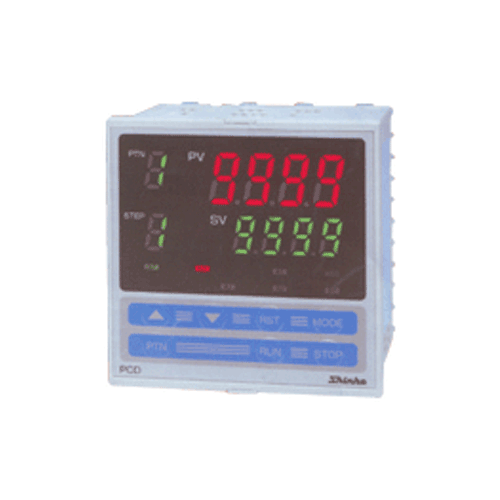
Programmable Controllers - Pcd-33a Series
CHEMICAL PROCESS, FOOD/PHARMA EQUIPMENT & ANALYTICAL INSTRUMENTS
Pro-Med Instruments (P) Ltd offers a wide range of programmable controllers - PCD-33A Series.

Gasket Graphite Powder
CHEMICAL PROCESS, FOOD/PHARMA EQUIPMENT & ANALYTICAL INSTRUMENTS
Arihant Packing & Gasket Company offers a wide range of gasket graphite powder.
Asahi Kasei expands 3D printing filament sales in North America
CHEMICAL PROCESS, FOOD/PHARMA EQUIPMENT & ANALYTICAL INSTRUMENTS
Asahi Kasei, a leading resin and compounding technology provider, has initiated the sales of 3D printing (3DP) filaments in North America through Asahi Kasei Plastics North America (APNA). The soft la Read more
latest News
Subscribe to iNoW

For Industry News on WhatsApp, Give a Miss Call on: +91 84228 74016