








Schedule a Call Back


Antifragile Manufacturing: Reimagining Make in India in a Volatile World
 Articles
- Jan 26,26
As global manufacturing faces sustained volatility, India’s opportunity lies in becoming the most reliable “Plus One” partner through engineering discipline, resilience-focused design, and operational consistency, shares Vivek Verma, Managing Director, Spray Engineering Devices Limited (SED).

Key Takeaways:
- The article argues that manufacturing volatility today is sustained and structural, requiring a shift in focus from pure efficiency to long-term reliability amid geopolitical, energy and regulatory pressures.
- India’s “Plus One” opportunity lies in reinforcing global supply chains as a dependable partner, not replacing existing systems or competing solely on cost.
- Engineering resilience is determined at the design stage, with integrated utilities, energy and water self-sufficiency, and disciplined operations delivering stable, high-performance plants.
- Digitalisation and sustainability act as enablers of consistency and control when built on sound engineering, strengthening long-term reliability and competitiveness.
Manufacturing has never been predictable. But what we are experiencing today is not routine uncertainty—it is sustained and structural instability. Geopolitical conflicts, trade realignments, export controls, energy price volatility, climate-linked resource constraints, and rising sustainability expectations are no longer isolated disruptions. They are occurring simultaneously, reshaping how factories are designed, financed, and operated.
For those who have spent decades building and commissioning industrial plants, VUCA—volatility, uncertainty, complexity, and ambiguity—are not a management theory. It appears in very practical ways: delayed equipment deliveries, fluctuating operating costs, sudden regulatory changes, and customers demanding higher standards of efficiency, emissions control, and long-term reliability.
India’s “Plus One” moment: Reliability over replacement
A common misconception in today’s manufacturing discourse is that India must offer a completely different model to succeed globally. The more pragmatic and impactful approach is a “Plus One” strategy. India does not need to dismantle global manufacturing systems; it needs to strengthen them by becoming the most reliable additional node in global supply chains.
In a VUCA world, buyers are not merely seeking alternatives—they are seeking dependable partners. India’s opportunity lies in augmenting global manufacturing with resilience, consistency, and execution discipline. It ensures when one part of the world faces disruption, the Indian link in the chain remains stable.
From this perspective, Make in India does not require reinvention; it requires reinforcement.
From efficiency to reliability
For decades, global manufacturing prioritised efficiency above all else. Long supply chains, concentrated sourcing, and just-in-time inventories delivered cost advantages in a relatively stable world. That assumption no longer holds.
Across industrial projects in India and overseas, a clear pattern has emerged. Plants designed only for peak efficiency struggle when conditions change. Those engineered with flexibility, integrated utilities, energy recovery, and decentralised systems perform far more consistently. The difference is structural, not incremental.
In a VUCA environment, reliability is not the opposite of efficiency—it is its safeguard.
The persistent pressures on Indian manufacturing
The pressures facing Indian manufacturers today are real and persistent. Supply chains remain vulnerable to geopolitical decisions taken thousands of kilometres away, often with little warning or recourse.
Energy costs continue to fluctuate sharply, particularly for process industries where energy can account for nearly a third of operating expenses. Digital technologies are advancing rapidly, but frequently at a pace faster than skills, systems, and process discipline can absorb. At the same time, sustainability requirements are tightening, increasingly influencing access to global markets, capital, and long-term contracts.
These are not temporary challenges. They define the operating environment going forward.
Engineering resilience is a design choice
In engineering-led industries, resilience is largely determined at the design stage. Once a plant is commissioned, operational interventions have limited leverage.
In one recent case, a facility designed for 4,500 TCD has been delivering close to 7,500 TCD on a sustained basis, achieved without any hardware modifications. This performance was driven entirely by process integration and operational discipline. It demonstrates that when engineering fundamentals are sound and execution is disciplined, hidden capacity is unlocked.
Over decades of executing turnkey projects across sugar, ethanol, bioenergy, wastewater, textiles, chemicals, and allied process industries, one lesson stands out clearly: dependence on external energy and water inputs creates exposure. Plants engineered with integrated utilities, waste heat recovery, biomass-based energy systems, and closed-loop water circuits operate with far greater stability.
These are not experimental concepts. They deliver higher uptime, predictable costs, smoother compliance, and—most importantly—control.
Digitalisation and sustainability: Enablers of discipline
Digitalisation is an important enabler, but it is not a substitute for sound engineering. Predictive maintenance, real-time monitoring, and digital twins are most effective when processes are already well designed and understood. Digitising a poorly disciplined process simply creates digital complexity.
Used thoughtfully, digital tools reinforce consistency by identifying deviations before they become disruptions.
Sustainability follows a similar logic. Often treated as an external obligation, it is in reality closely aligned with good engineering. Reducing energy and water consumption, recovering waste streams, and optimising process efficiency strengthen both environmental performance and operating economics. In a VUCA world, sustainability is not a compliance cost—it is a resilience strategy.
Policy enables, discipline delivers
Policy support remains important, particularly in encouraging energy efficiency, modernisation, and skill development. Predictable regulation gives industry the confidence to invest.
However, policy alone cannot compensate for weak execution. Growth defined solely by capacity expansion risks creating fragile systems in an already fragile world. What India needs is a manufacturing culture rooted in engineering discipline, process standardisation, and operational consistency.
Conclusion: Dependability as India’s competitive advantage
Make in India has successfully placed India on the global manufacturing map. To remain there through a decade of disruption, the next phase must be defined by dependability.
India does not need to be the cheapest manufacturing destination. It needs to be the most reliable.
In a VUCA world, trust is built quietly—through performance, consistency, and engineering discipline. India’s “Plus One” contribution to global manufacturing will be its ability to deliver systems that are engineered to last. And that, ultimately, is a design choice.
About the author:

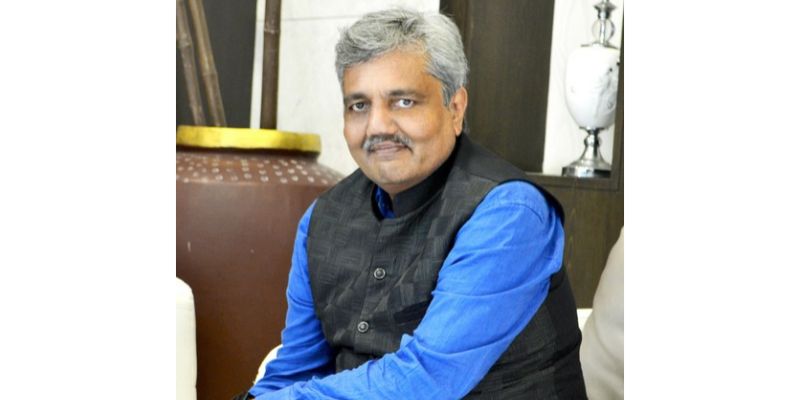
Vivek Verma, an Agriculture Engineer, founded Spray Engineering Devices Limited (SED) in 1992 and he is currently the Managing Director of the Company. His expertise lies in Thermal Engineering, Waste Heat Recycling, Sugarcane Processing without Boiler, Biomass to 2G Ethanol, which has resulted in the development of Disruptive Technologies for Sugar, Distillery, Biofuel, Ethanol, Green Chemicals, Jaggery and Water Sectors.
India manufacturing strategy
VUCA manufacturing
engineering resilience
Make in India
supply chain reliability
industrial plant design
sustainable manufacturing
digitalisation in industry
Vivek Verma
Spray Engineering Devices Limited
SED
Related Stories
Aerospace Defence
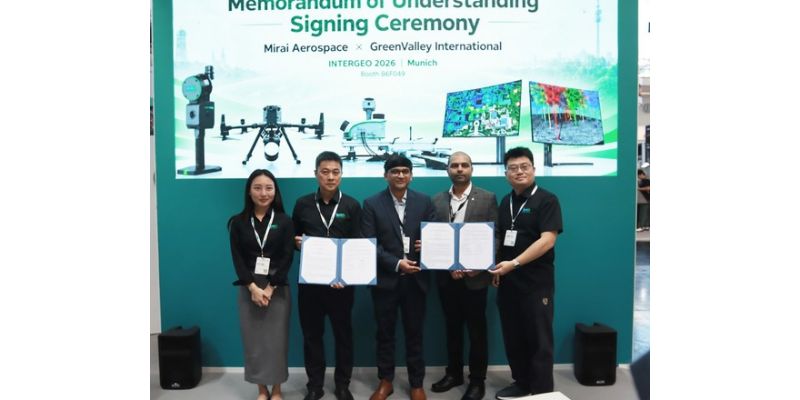
Mirai Aerospace, GreenValley Sign MoU for LiDAR Manufacturing in India
Mirai Aerospace has partnered with GreenValley International to strengthen India’s geospatial and LiDAR manufacturing ecosystem through local assembly, technical support and AI-driven applications..
Read moreMachine Tools & Accessories
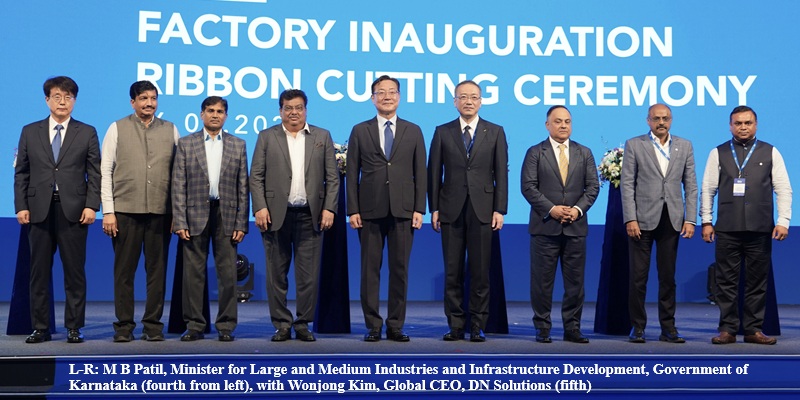
Korea’s DN Solutions opens Rs 6 bn machine tools facility in Bengaluru
Bengaluru becomes company’s first overseas plant outside China in two decades. Investment expected to create local employment across R&D, application engineering and skilled manufacturing operatio..
Read moreSmart Manufacturing

Clean manufacturing is key to India’s future growth: Yash Kashyap
Yash Kashyap, India Lead, Industrial Transition Accelerator, shares insights with Ashlin Rajan on industrial decarbonisation, clean manufacturing, green technologies and India’s transition towards..
Read moreRelated Products
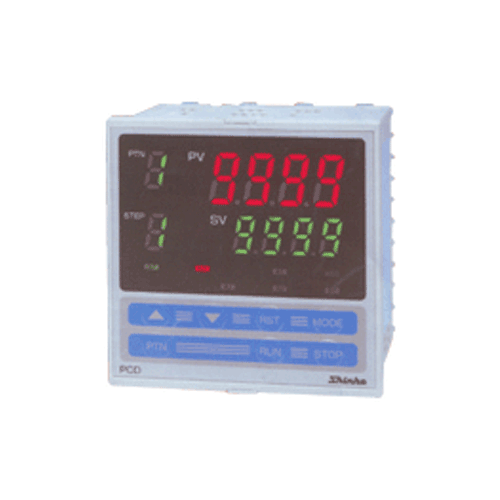
Programmable Controllers - Pcd-33a Series
CHEMICAL PROCESS, FOOD/PHARMA EQUIPMENT & ANALYTICAL INSTRUMENTS
Pro-Med Instruments (P) Ltd offers a wide range of programmable controllers - PCD-33A Series.
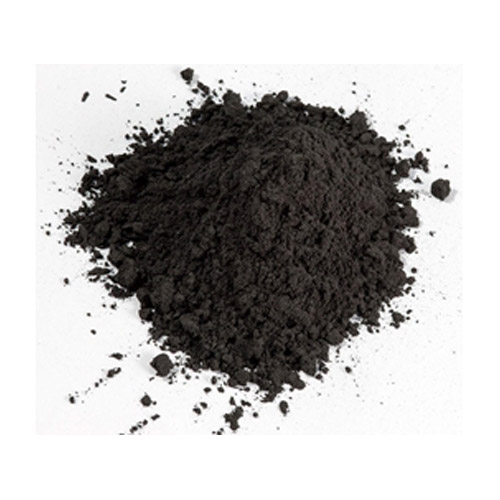
Gasket Graphite Powder
CHEMICAL PROCESS, FOOD/PHARMA EQUIPMENT & ANALYTICAL INSTRUMENTS
Arihant Packing & Gasket Company offers a wide range of gasket graphite powder.
Asahi Kasei expands 3D printing filament sales in North America
CHEMICAL PROCESS, FOOD/PHARMA EQUIPMENT & ANALYTICAL INSTRUMENTS
Asahi Kasei, a leading resin and compounding technology provider, has initiated the sales of 3D printing (3DP) filaments in North America through Asahi Kasei Plastics North America (APNA). The soft la Read more
latest News
Subscribe to iNoW

For Industry News on WhatsApp, Give a Miss Call on: +91 84228 74016