





Schedule a Call Back


Why Industrial Safety Will Drive India’s Manufacturing Growth
 Articles
- May 25,26
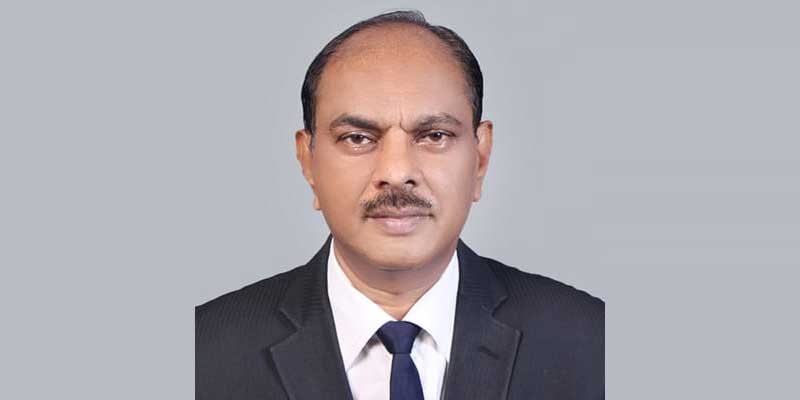
Jeewan Mahadik, Senior Head of Audit and Consultancy, British Safety Council, India emphasises that embedding a robust safety culture is essential for sustainable industrial growth and worker wellbeing.
India remains among the fastest-growing major economies in the world, according to the Economic Survey and government estimates. The changing landscape in the business environment and increased diversification of global manufacturing supply chains have enabled India to emerge as a potential global manufacturing hub in the coming decade. This will help India immensely in becoming more competitive in the global markets while also boosting India’s manufacturing sector, which at present accounts for about 16–17 per cent of India’s GDP. India's policy target is to increase the share of manufacturing to 25 per cent over the coming years.
With its ‘Make in India’ campaign and PLI scheme, there has been a rush in various segments such as electronics, automobile industry, pharmaceuticals, engineering, semiconductors, etc. India's young demographic profile, rising demand within the country, development in infrastructure, and reforms made by the government will all provide an enabling environment for India to grow further in the global supply chain space. Recent government data suggests that India has seen high manufacturing growth rates in the past quarters, with manufacturing GVA growing at 7.72 per cent and 9.13 per cent in Q1 and Q2 of FY 2025-26, respectively.
It is imperative for manufacturing to continue playing a pivotal role in balancing and sustaining economic development. Manufacturing provides employment opportunities on a large scale and produces a multiplier effect on all industries. As India begins to place more emphasis on industrial development, it is imperative to analyse the state of occupational health and safety standards in manufacturing. It will not be possible to achieve sustainable industrial development unless there is a realisation that ensuring the safety and well-being of workers is a top priority.
Although considerable economic progress has been made, safety issues continue to pose a major challenge. According to labour statistics, the number of industrial accidents, injuries, and deaths continues to be high in India’s manufacturing industry. Statistics obtained from DGFASLI show that from 2017 through 2020, there have been three deaths and eleven injuries among registered workers in factories daily. Recent labour statistics and industry studies suggest that safety concerns continue to exist, especially among contractual employment.
However, as the ambition towards manufacturing grows in India, several workers still work in hazardous working environments without adequate training, guidance, and mechanisms of protection. The current research shows that up to 80–90 per cent of the workers in India are in the informal sector, meaning that their occupational safety regulations are still inadequate. Research shows that cases of occupational injuries have gone up by 31 per cent in FY 2025-26 in the MSMEs industry of India, where the major part is from manufacturing industries.
A bigger problem occurs when we discuss industries which are dependent on contract-based or daily wage-based labourers. These temporary workers work in hazardous environments with no safety training, protective gear, or knowledge regarding industrial hazards. Several studies on labour rights suggest that many incidents occur with workers who do not receive any kind of training, while using machinery. This also occurs because of longer working hours, fatigue, and labour regulation enforcement.
Occupational health hazards for factory workers are also evident with regard to exposure to a hazardous environment. These include musculoskeletal disorders arising from poor manual handling techniques, electrical injuries, burns, breathing problems like silicosis from exposure to dust, and other chronic occupational diseases. Apart from physical occupational hazards, psychological issues and stress are also becoming prominent occupational hazards in the workplace globally. According to a recent report by the International Labour Organisation revealed, more than 840,000 deaths arising from psychosocial risks, like workplace stress and burnout, as noted on World Day for Safety and Health at Work 2026.
It is important to note that poor workplace safety and conditions affect business, as well as the affected individuals. Occupational health hazards in industries have far-reaching negative effects for businesses, such as production downtime, liability costs, and reputational risks. As for the workers and their families, the results are catastrophic for many of them.
On the contrary, organisations that focus on health, safety and workers’ well-being tend to become more productive, robust and sustainable in the long term. Health and safety initiatives within companies contribute to improved performance and continuity by enhancing workforce confidence and productivity. India will benefit from developing an entire new culture in relation to occupational health, safety and wellbeing. Although legislation plays a crucial role, the sustainable change in attitudes will be achieved by having active leaders throughout various industries. It is vital to create cultures where safety is seen as a key organisational value rather than a mere requirement.
It is important to have consistent communication about safety and its importance at all times including meetings, regular talks and workplace safety practices. In many cases, frontline workers, supervisors and managers are aware of gaps within organisations when it comes to safety, which means it is necessary to establish environments where workers feel free to raise issues and share ideas to improve safety. Psychological safety is also essential for workers’ safety. Workers should feel comfortable with sharing concerns without fear of consequences since such participation enhances safety.
The manufacturing sector in India is at an important juncture in its development, which is driven by significant political momentum, investment in industries, and changes in the global value chain. Nonetheless, if India wishes to position itself as a globally competent manufacturing hub, then workplace safety and the well-being of workers must be a core part of the journey. Safety in industry cannot be a secondary concern while striving for development. If India wants to be recognised as a sustainable manufacturing giant on a global level, then it must demonstrate leadership in this domain.
About the author
Jeewan Mahadik is the Senior Head of Audit and Consultancy of British Safety Council, India, is a dynamic corporate professional bringing extensive experience in industrial operations, safety management, and business coordination across domestic and international markets.
Occupational health
industrial safety
manufacturing India
worker wellbeing
informal sector
contract labour
workplace hazards
safety culture
Jeewan Mahadik
British Safety Council
Related Stories
Industrial Safety & Security
Why Industrial Safety Will Drive India’s Manufacturing Growth
Jeewan Mahadik, Senior Head of Audit and Consultancy, British Safety Council, India emphasises that embedding a robust safety culture is essential for sustainable industrial growth and worker wellbe..
Read moreAutomation & Robotics

Automation to drive India’s manufacturing future: Dr Sanjeev Srivastava
In this interview with Rakesh Rao, Dr Sanjeev Srivastava, Head Industrial Automation, Delta Electronics India Pvt Ltd, highlights the changing dynamics of Indian manufacturing sector and growing imp..
Read moreAerospace Defence

Wings, Wars, Wealth
West Asia conflicts have exposed the power of low-cost drones. Ashlin Rajan examines how this creates a major manufacturing opportunity for India, but success will depend on scaling components, tale..
Read moreRelated Products

Grey Polka Dash Board Covers
INDUSTRIAL SAFETY & SECURITY SYSTEMS
Elegant Auto Accessories offers a wide range of grey polka dash board covers.
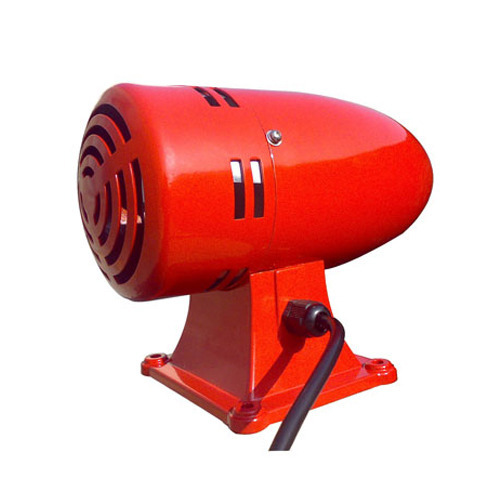
Fire Protection - Industrial Sirens
INDUSTRIAL SAFETY & SECURITY SYSTEMS
Amit Safety Enterprises offers a wide range of fire protection industrial sirens.
Read more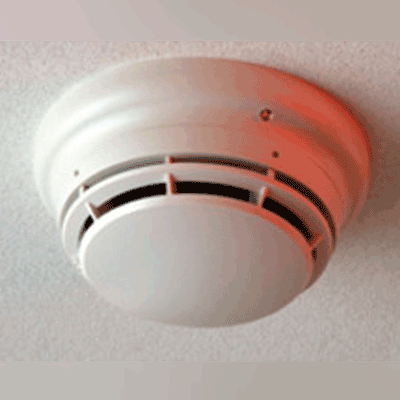
Fire Alarm Sysytem
INDUSTRIAL SAFETY & SECURITY SYSTEMS
Nayakson Security Systems is offering a range of fire alarm, intrusion alarm and gas alarm systems.
latest News
Subscribe to iNoW

For Industry News on WhatsApp, Give a Miss Call on: +91 84228 74016