







Schedule a Call Back




Why Batteries Trail Strategy in Humanoid Robot Development
 Articles
- Jan 31,26
Battery makers are racing ahead of robot OEMs in positioning humanoids as the next growth frontier. This press release examines developments from both perspectives and considers how deeper cross-industry collaboration could reshape value across the two ecosystems, with insights from Shirly Zhu, Principal Analyst and Marco Wang, Market Analyst, Interact Analysis.

Since late 2024, humanoid robots and lithium-ion batteries—particularly solid-state batteries—have increasingly appeared together in industry headlines. Major battery players such as CATL and EVE Energy have announced partnerships, technical solutions and investments linked to humanoid robotics. However, most public discussion on the battery–humanoid relationship continues to originate from battery vendors, while humanoid robot manufacturers have largely avoided detailed commentary on batteries, despite their role as a core power component.
This imbalance reflects differing development priorities. Humanoid robot OEMs regard batteries as essential but not yet a top-tier R&D focus. Battery companies, by contrast, view humanoid robots as a long-term growth frontier, with current activity centred on pilot projects and strategic positioning.
The humanoid robot perspective: batteries matter, but are not yet a core priority
Batteries underpin energy supply for humanoid robots. However, as the market remains in an early stage, manufacturers continue to prioritise scenario adoption and rapid technological iteration.
Battery configurations vary widely by robot architecture. Bipedal humanoids face strict constraints on torso space and weight, typically carrying less than 1,000 Wh. Tesla’s Optimus V2, for instance, uses a 2.3 kWh battery system and delivers roughly two hours of dynamic runtime, while Unitree’s H1 is equipped with 864 Wh, supporting less than four hours of static operation.
Wheeled humanoids benefit from larger internal space and lower locomotion power demand. These systems generally use batteries exceeding 1,500 Wh, enabling runtimes of more than six hours. From a chemistry standpoint, NCM and NCA lithium-ion batteries dominate due to higher energy density. LFP batteries offer cost advantages and are applied in lower-endurance or simpler functional scenarios such as voice interaction.
To address energy constraints, the industry is exploring two practical approaches. One is the co-development of battery swapping and fast-charging systems, with companies including Fourier Intelligence, Leju Robotics and Apptronik deploying dual battery-swapping solutions for extended operation. The second is the advancement of high-energy-density technologies, exemplified by SoftStone’s Tianhe C1 using quasi-solid-state batteries and XPENG’s IRON robot adopting all-solid-state batteries.
Despite these efforts, power system innovation remains peripheral to the humanoid robot market for two reasons. First, scenario adoption precedes power optimisation. Humanoid robots have yet to achieve large-scale commercial deployment, and product–market fit remains undefined. Improvements in runtime do not address core challenges around autonomy, efficiency and operational reliability. Where basic usability remains unresolved, enhanced batteries offer limited commercial benefit.
Second, robot architectures are evolving too rapidly to establish a dominant battery technology. Ongoing changes in joint actuation, form factors, thermal management and edge AI power consumption make future space allocation and discharge requirements uncertain. As Figure AI highlighted during the F.03 launch, off-the-shelf EV batteries cannot be directly reused, and customised battery systems must wait until robot architectures stabilise. As a result, OEMs are de-risking battery choices while prioritising overall system performance.
The lithium-ion battery perspective: future potential, limited near-term scale
For battery manufacturers, humanoid robots are emerging as EV demand growth slows and solid-state technologies seek validation environments. While humanoids represent both a technology catalyst and a potential future market, near-term commercial impact remains minimal.
Research indicates that lithium battery shipments for robots, including mobile and consumer robots, reached approximately 5.2 GWh in 2024, accounting for less than 0.4 per cent of global lithium-ion shipments. Global humanoid robot shipments exceeded an estimated 10,000 units in 2025, translating to roughly 20 MWh of total demand and rendering the market economically negligible at present.
Deployment remains dominated by samples and small-batch deliveries. China-based Azure supplies batteries for Unitree’s quadrupeds and H1 humanoid, while EVE Energy and Farasis Energy have announced strategic cooperation and pilot supply agreements. These volumes, however, remain financially insignificant for major battery producers.
Technologically, humanoid robots are acting as a catalyst for battery innovation. Their combined requirements for high-rate output, high energy density, safety and long cycle life are accelerating advances in materials and cell design. Farasis has delivered sulphide solid-state sample cells to humanoid robot clients, and EVE has launched its Longquan No 2 solid-state solution targeting high-end equipment such as humanoid robots and eVTOLs. EngineAI’s T800 and XPENG’s IRON have also debuted with solid-state batteries installed, further validating feasibility.
Nonetheless, some battery suppliers are emphasising humanoid robots more for narrative positioning than substantive investment, creating a gap between announcements and execution. This reflects competitive pressure in the EV market and the search for new growth avenues, including humanoid robotics and the low-altitude economy.
Final thoughts
For lithium-ion batteries and humanoid robots to move beyond symbolic association towards mutual value creation, deeper cooperation is required. On the demand side, humanoid robot deployment must progress from demonstrations to scenario-specific scaling. Real operational data will be essential to refine requirements for energy density, discharge power and cycle life.
On the supply side, battery manufacturers need to engage directly in robot platform co-development, working with OEMs to design application-ready battery systems for industrial and commercial use. Continued improvements in performance and cost—particularly in solid-state batteries—will be critical to removing power bottlenecks and unlocking future market potential.
At present, this mutual commitment remains nascent. For both sectors, disciplined planning and focused technology investment will deliver greater long-term value than short-term market hype.
About the authors:
Shirly Zhu is Principal Analyst at Interact Analysis. Shirly has worked across multiple industry sectors in her 10+ year career, conducting projects requiring primary and secondary research, as well as quantitative and qualitative analysis. She’s primarily focused on Industrial Automation topics including motion and industrial controls.
Marco Wang is Market Analyst at Interact Analysis. Marco supports our research directors in both our Commercial Vehicles and Robotics sectors. Previously, he worked for an energy organisation in China as a researcher focusing on renewables. Marco is also experienced as a market researcher in automotive parts in a cross-border M&A advisory.
Humanoid robots
lithium-ion batteries
solid-state batteries
robot energy systems
battery manufacturers
industrial robotics
smart manufacturing
Shirly Zhu
Marco Wang
Interact Analysis
Related Stories
Material Handling Equipment
Why Batteries Trail Strategy in Humanoid Robot Development
Battery makers are racing ahead of robot OEMs in positioning humanoids as the next growth frontier. This press release examines developments from both perspectives and considers how deeper cross-ind..
Read moreAerospace Defence
India’s Manufacturing Reset in an Uncertain World
Global manufacturing is being reshaped by volatility and disruption. This release outlines how India is strengthening depth, resilience and capability to emerge as a long-term manufacturing partner,..
Read moreOther Industrial Products

Project execution in a VUCA world: Mitigating cost and time escalation
Projects today must succeed despite uncertainty, not in the absence of it. Project execution now demands resilience, digital intelligence and lifecycle integration to control cost and schedule risks..
Read moreRelated Products
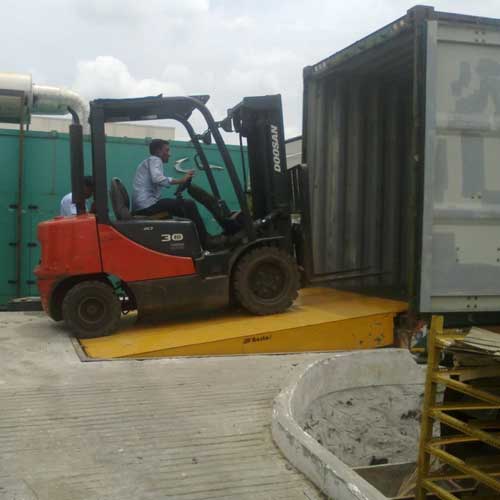
Dock Leveller
MATERIAL HANDLING EQUIPMENT & STORAGE SYSTEMS
Besto Material Handling Equipments offers a wide range of dock leveller.
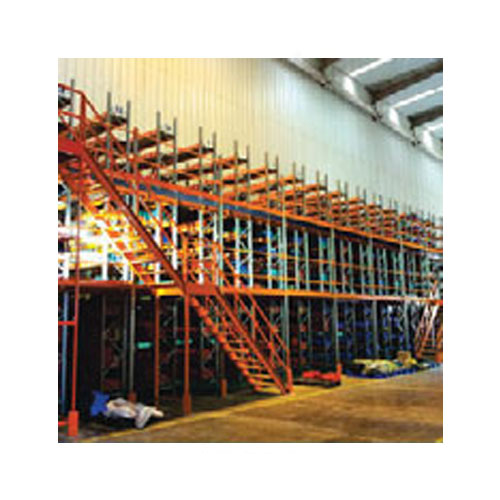
Multi Tire
MATERIAL HANDLING EQUIPMENT & STORAGE SYSTEMS
SCI Storage Solution offers a wide range of multi tire.
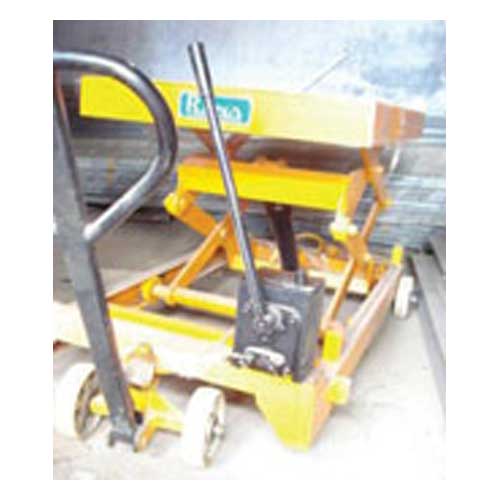
Industrial Lifting Equipment
MATERIAL HANDLING EQUIPMENT & STORAGE SYSTEMS
Rana Material Handling Equipments Pvt Ltd offers a wide
range of industrial lifting equipment.
latest News
Subscribe to iNoW

For Industry News on WhatsApp, Give a Miss Call on: +91 84228 74016