







Schedule a Call Back


The 12th Plan Throws Huge Opportunities for Growth
 Technical Articles
- Jan 30,12
NULL

Even though the Indian electrical and electronics industry is currently in a phase of consolidation, the next few years will witness impressive growth, says Mr Ramesh Chandak, President, IEEMA, in an interview with Huned Contractor, on the eve of ELECRAMA 2012 held in Mumbai
 To sustain the envisaged annual GDP growth rate of around 8-9 per cent over the next 20 years, it has been estimated that India will be required to increase its electricity generation capacity from around 180 GW presently to over 800 GW by 2032. This would require a matching upgradation and enhancement of the electricity transmission and distribution (T&D) segment. The electricity sector requires a projected investment of about USD 300 billion over the next five years. In this interview, Mr Ramesh Chandak, President, Indian Electrical and Electronics Manufacturers' Association (IEEMA) speaks about the challenges and the steps needed to help the industry.
Chandak is also the Managing Director & CEO of KEC International Limited (KEC), a global transmission and infrastructure company, headquartered in Mumbai. He is a member on the Management Board of the RPG Group and serves on the Board of Raychem RPG Ltd, KEC Global FZ LLC, UAE, SAE Towers USA and other companies. At KEC, he has led the firm's transformation into being the world's largest transmission line construction company, assuming leadership when its turnover was Rs 501 crore in 2002 and taking it to the current height of over Rs 4,000 crore.
What is the current status of the Indian electrical equipment industry?
The Indian electrical equipment industry registered a moderate 9 per cent growth in the first half (H1) of the financial year 2011-2012, according to data compiled by the Indian Electrical and Electronics Manufacturers' Association (IEEMA), the apex Indian industry association of manufacturers of electrical, industrial electronics and allied equipment. The export-import trends based on select major ports trade data indicates alarming growth of almost 20 per cent in imports, especially from China, South Korea, Germany and other EU countries.
The growth represents an absolute increase in output over a similar period of the last financial year and may differ from the growth in value terms. The adverse domestic economic situation due to high inflation, high interest costs, credit squeeze, et al is having a significant impact on the growth of the industry, apart from intense overseas competition. All product sectors have shown decline in their growth momentum from the first quarter (Q1) of FY12.
Is anything being done to improve the situation?
The Maira Committee set up to study this scenario has sent its recommendations to Heavy Industries Minister Mr Praful Patel. It suggests an import duty of 14 per cent on power generation equipment to strike a balance between protecting local manufacturers and the need to import equipment to boost power production. We all know that Chinese imports are relatively cheaper because equipment makers from China benefit from low interest rates and an undervalued currency, which in itself lends to cheaper exports. If this (14 per cent import duty) is levied, it will create a level playing field for the Indian manufacturers to compete with imports. India now has adequate domestic capacity to fulfil the anticipated annual demand for power generation capacity augmentation, which was not the case earlier.
Could you provide an overview of the sector?
Growth in exports has assisted and buoyed the growth of some sectors like transformers, switchgear, cables, capacitors, energy meters, transmission line towers and conductors. However, imports are simultaneously increasing and establishing themselves firmly in the domestic market, thus affecting the domestic players. The recent surge in imports of HV/EHV transformers, HV/EHV circuit breakers and AC motors - mainly from China, Korea and Germany - is a cause of concern to the domestic industry. For the first time in the 11th Plan period, transmission line towers and conductors (combined) have shown a negative growth of 9.1 per cent. Transformers continued to grow at a moderate rate of 5.6 per cent, driven by power transformers (mainly for extra high voltage segment) growth of 8.1 per cent.
The cables sector clocked unprecedented growth of 60 per cent due to a 200 per cent growth in the control cable segment. In the switchgear sector, although low voltage equipments are in good demand, the demand for high voltage equipment like breakers and isolators has declined. Renewed momentum in the industrial and the power generation sectors has led to a pick-up in demand for both LT and HT motors by more than 10 per cent. Energy meters and power capacitors continued their growth momentum and registered 20.4 per cent and 17.3 per cent growth respectively on account of regular off-take from most of the utilities and private players.
In this last year of the 11th Plan, about 15,000 MW of addition to power generation is expected to be commissioned and most of the transmission and sub-station projects at 400 kV and below are likely to be completed despite the fact that most of the HVDC and 765 kV projects are likely to spill over to the 12th Plan period. Since it calls for large quantities of power equipment, bunching of orders with quick deliveries is not ruled out. IEEMA maintains that the Indian electrical equipment industry needs to be very alert in the wake of global competition and adverse impact of duty reduction through various FTAs/RTAs and PTAs signed and under discussion by the Government of India with the other countries.
Will the 12th Plan (April 2012 to March 2017) make way for new opportunities?
The 12th Plan throws huge opportunities for growth with envisaged investment of USD 300 billion, coupled with exports growth. However, in the medium term the industry is witnessing a decline in enquiries and order finalisations. It has reported a 'wait and watch' stand adopted by the purchasing bodies, including core sectors like cement, steel, etc due to uncertainty in the economic, financial and political situation in the country.
What are the major concerns for the Indian transmission and distribution (T&D) equipment industry?
About 90 per cent of the manufacturers in most sub-sectors of the domestic electrical equipment industry are micro, small and medium enterprises. Currently it is estimated that the size of the domestic electrical equipment industry exceeds Rs 1,10,000 crore (USD 25 billion) and exports of electrical equipment stand at around Rs 18,000 crore (USD 4 billion). The biggest challenge faced by the industry is lack of domestic availability of critical inputs and raw material and the widening skill gap and manpower crunch.
There are several critical inputs used in the manufacture of electrical equipment that are not readily available domestically. Cold-rolled grain-oriented (CRGO), a critical raw material for large generators/transformers, manufactured by 12 companies (no Indian manufacturer) in the world, is a prime example.
The ambitious power development projects of the government require the setting up of a domestic CRGO manufacturing facility. The electrical equipment industry is facing a major problem in securing skilled and employable manpower that is technically competent, equipped with skills and ready to be deployed. The government needs to provide additional funds and facilities to modernise technical institutes, provide interest-free loans to technical institutes to upgrade their laboratories, involve the industry in the board of studies and incentivise the industry in providing internship to students and teachers.
What do you feel should be done to change things?
There is an urgent need to improve fund availability to the power sector, provide fuel linkages and faster regulatory clearance for timely completion of power projects, accelerate renovation and modernisation activities and accelerate the deployment of rural electrification schemes.
What about standardisation of product specifications and design parameters?
There are no appropriate standards specified by the central and the state utilities and in some cases tenders are floated with outdated specifications and design parameters which causes a lot of trouble to the manufacturers. Standardisation of specifications for various equipments used in the power sector across utilities, at least under the centrally sponsored schemes, will not only lead to cost competitiveness of the industry being enhanced but also minimise the lead time in manufacturing and procurement. The domestic testing and calibrating facilities for electrical equipment, especially high voltage equipment, are inadequate and costly. Manufacturers have to send their products abroad for testing for want of domestic testing facilities or bear a long waiting period at the Central Power Research Institute (CPRI), which results in high logistics cost and long time. The government needs to take urgent steps for the upgradation of testing and calibrating infrastructure in the country, especially for high voltage equipment.
Is there room for innovation and R&D in the industry?
There is slow pace of absorption of new technology by domestic manufacturers of electrical equipment, and also user industries, and low investment in research and development. According to estimates, less than 1 per cent of the annual turnover of the industry is invested in R&D. The buying practices of utilities do not encourage innovations and R&D. As a result, the main focus of the manufacturers of electrical equipment is on cutting costs and not on innovative technologies, on piecemeal short-term tactical measures rather than evolving any strategic action plan for their growth and development.
Related Products
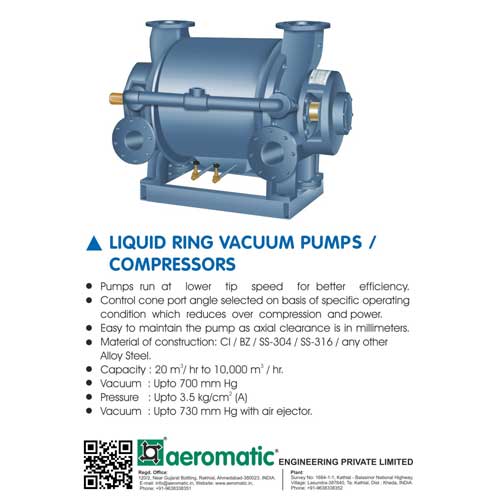
Liquid Ring Vacuum Pumps/Compressors
Compressors and Allied Equipment
Aeromatic Engineering Private Limited offers a wide range of liquid ring vacuum pumps/compressors.
Read more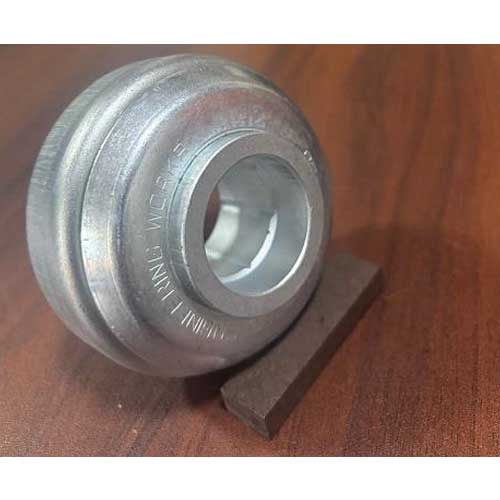
Hot Wheel Bearing
Bearings, Bushings, Wheels and Gears
SICCO Engineering Works offers a wide range of hot wheel bearing. Read more
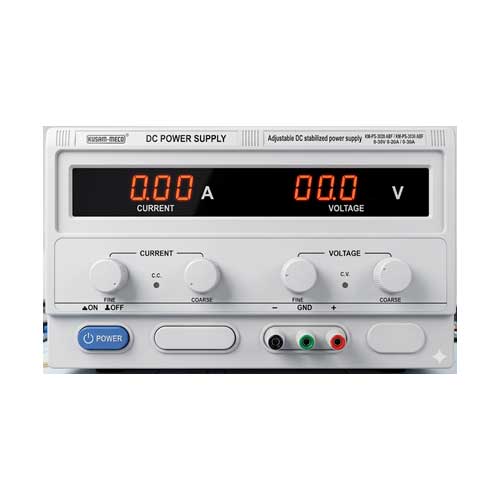
Kusam-meco DC Power Supply Model Km-ps-3020 Abf / Km-ps-3030 Abf
Power Supplies, Batteries & Accessories
<p>Kusam Electrical Industries Ltd offers Kusam-Meco DC power supply model KM-PS-3020 ABF/ KM-PS-3030 ABF</p> Read more
latest News
Subscribe to iNoW

For Industry News on WhatsApp, Give a Miss Call on: +91 84228 74016