





Schedule a Call Back


The workforce must be upgraded, updated and upskilled: Arvind Tilak
 Articles
- Jun 25,26
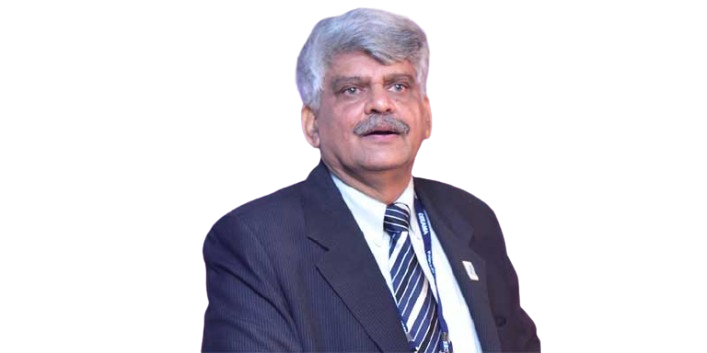
In this interview with Ashlin Rajan, Arvind Tilak, CEO, Ascent Intellimation Pvt Ltd, explains why automation is no longer a large-company privilege, how mid-sized manufacturers can adopt it practically, and why the future of competitive manufacturing will depend as much on skilled people as on smart machines.
How is automation transforming operations in Indian manufacturing SMEs today?
There are a few things happening in manufacturing in India today. There is a lot of inquisitiveness, willingness and intent to adopt technology.
One thing that has always been seen in Indian companies is a strong dependence on manpower. We have always had people-focused and people-centric operations, where one person knows everything and one person becomes the key to the process. However, the mobility that was earlier very visible in the IT sector is now also coming into manufacturing companies.
So, with business pressure for expansion, people-related challenges, and customer requirements around visibility, quality and technology adoption, manufacturing companies are realising that they will have to adopt technology in general. Automation and industrial IoT are becoming very important on shop floors.
While companies are trying to adopt technology across the value chain, the big focus is on what happens on the shop floor. That is where we are seeing a major push in the manufacturing sector.
Another factor helping this shift is that a new generation of entrepreneurs, directors and CEOs is joining manufacturing companies. The younger generation is much more tech-savvy, exposed and willing to adopt and adapt. That is why the pace of adoption is really increasing. We have seen this change in the past five to six years in a big way, and I think it will become even more pronounced in the coming years.
Is automation adoption among MSMEs really slow, or does it depend on the industry and business context?
I would not say that MSMEs or mid-sized companies are slow. In my experience, and in our company’s experience, it is not the size that decides whether a company will go for technology.
What matters is the area in which the company is operating. That is one very important factor. Of course, small and mid-sized industries have challenges on the investment side. They do not have the kind of deep pockets that large groups have.
But mid-sized companies are actually in a better sweet spot for adopting technology because their operations are comparatively smaller. So, if any change is adopted, it is easier to cover the entire scale, compared to a very large company where there are multiple plants, different kinds of people and different cultures. In large companies, change is more difficult. So, mid-sized companies are actually better suited to adopting change.
Which factory operation can gain the most from automation?
The most common starting point we have seen in our projects is productivity. Once you talk about productivity, you also have to talk about machine uptime, energy, people, quality and everything else. Productivity becomes the focus. Once productivity starts improving, the returns on investment also ramp up very quickly. Then the investments get justified, and companies can do more.
Wherever we have seen productivity and downtime monitoring, machine monitoring is usually one of the key focus areas, followed by quality. These are the typical things we talk about in OEE, APQ — availability, productivity and quality. Most companies are starting with productivity.
One other area is maintenance. Machine maintenance, or asset maintenance, is driving digital adoption in a big way. Currently, most maintenance practices are reactive. If a machine goes down, then maintenance is done.
But the moment you bring proactive and predictive maintenance discipline onto the shop floor, it helps significantly in reducing downtime and increasing productivity. So, maintenance use cases are also driving adoption in a big way.
How can manufacturers make automation more affordable, scalable and practical, rather than treating it as a one-time large investment?
We always advocate that digitalisation and automation are not a single-day journey. It is a journey spread over months, quarters or even years, depending on the size of the operation, how old or new the machines and assets are, and how complex the manufacturing process is.
Very importantly, it also depends on how quickly people on the shop floor are willing to adopt technology. Based on this, it is never a one-day journey.
We always say: plan top-down. Look at the bigger picture. Look at your entire operation and have a plan for what you are going to do in terms of digitalisation and automation across the full operation. This plan could be for the next one, two or three years.
Then, from this larger plan, pick those areas where you can see results very quickly. Start showing results and outcomes, begin generating profits, and then drive it further.
However, it is a journey. You adopt, implement, improve, and then go through the same loop again. You can either go vertical by taking up a complete process, or horizontal in terms of one plant or one area. Each company and each unit will have its own way of deciding this.
But we always advocate: plan top-down and implement bottom-up. Never take up a huge project in one go, because there is a high chance that it will fail. Start with 50 machines or 70 machines, make it successful, start showing the results, and do not go for a big-bang approach with 200 or 300 machines or multiple plants. That is what has worked with our customers.
What challenges are SMEs facing due to automation?
The key challenge is: how do I justify the investment?
A manufacturing CEO may say, “I have to choose between an automation project and buying a new machine.” Buying a new machine is a very easy decision because it means doubling or tripling capacity. But what people miss is that by adopting digital technologies, you can actually leverage your current investments multiple times.
That kind of maturity is required. We always advocate that there should be a digital champion in a company who is able to talk about this and start looking at each process, asset and machine to understand how adopting digitalisation and automation can help.
On top of that, people still have a lot of faith in people. They may say the data coming into the system is not right because sometimes this data disproves what they have been advocating for a long time. Once their beliefs are challenged, people often say the system is not right. So, we always have the struggle of proving that the system is right and that the earlier belief was wrong. That is always a challenge.
Investment is obviously another big factor.
If we are guaranteeing them, or if we are talking about a payback period of six to 18 months, then companies are very happy to invest. There is no problem on that front. There is money, and there is investment appetite.
The real question is: how do I derive value? How do I get value from the investment I make? Sometimes those discussions are very long. But yes, it is happening, and those are the challenges. Companies are learning to overcome them.
As SMEs adopt automation, shop-floor workers may see it as a threat. How can companies ensure that automation is accepted and not seen as a threat?
Companies that refuse to adopt, or people who refuse to adopt or support a company in its adoption, will suffer. Competitors will take that space.
Customers are now saying, “I want traceability. I want every part that is produced to be traced.” If you do not have digitalisation on the shop floor, you cannot provide traceability to your customer. If you cannot provide it, there will be a competitor who can, and he will take the order. It is as simple as that.
So, it is not just about someone losing a job. The company may lose business, and then the person may lose the job. There is no question about that.
However, the messaging from the CEO is very important. Automation or digitalisation should not be positioned as being at the cost of people. Companies will still need people, and they will still need good, talented and skilled people on the shop floor. When you have more advanced systems, you need even more advanced skills to operate those systems.
So, the current workforce needs to be upgraded, updated and upskilled. Not everybody will change, for sure, but the people who do change will benefit. In fact, new roles are opening up, and there is a shortage of people who can take on those roles.
What should Indian manufacturers do in the coming years to build efficient, transparent and globally competitive factories through automation?
Automation is going to be a very important part of the solution. It will be able to answer some of those questions, especially those related to the shop floor, product quality, traceability and repeatability.
One of the things that was not happening enough in Indian manufacturing is consistency in quality. We may have produced something very good, but the next batch may or may not have been equally good. Automation will be able to bring that consistency into operations. Automation will also be able to bring scalability. If I have to scale from one unit to 100 units, the only way it can happen with consistent quality and consistent productivity is through automation and digitalisation.
So, digital adoption will become very important. Manufacturing companies need to aggressively adopt digital technologies and showcase this to customers, both in India and outside India.
Supply-chain integration is also becoming very important. Today, a customer in Europe wants to know when a part is produced in Pune, when it will be shipped, how it will be shipped and what time it will reach. So, logistics visibility, production visibility and quality visibility are all required across the supply chain.
Companies need to start investing in technology, showcase this investment, talk about it, and produce quality consistently, without breaks or failures. The opportunities are huge, and we can really benefit from them.
The only way to scale is through technology and digitalisation. It is not enough to simply adopt technology. Companies also need to demonstrate the benefits of this adoption to internal stakeholders, from the shop-floor operator to the board, and also to customers outside the company. That is going to be very important.
SME automation
Indian manufacturing
smart factories
industrial IoT
shop-floor automation
digital transformation
MSME automation
manufacturing SMEs
Arvind Tilak
Ascent Intellimation Pvt Ltd
Ashlin Rajan
Related Stories
Automation & Robotics
LTTS Launches Ainfonix 4.0 for Process Industries
Ainfonix 4.0 transforms engineering records into structured, asset-linked intelligence to support AI adoption, faster decision-making and lifecycle performance.
Read moreAutomation & Robotics
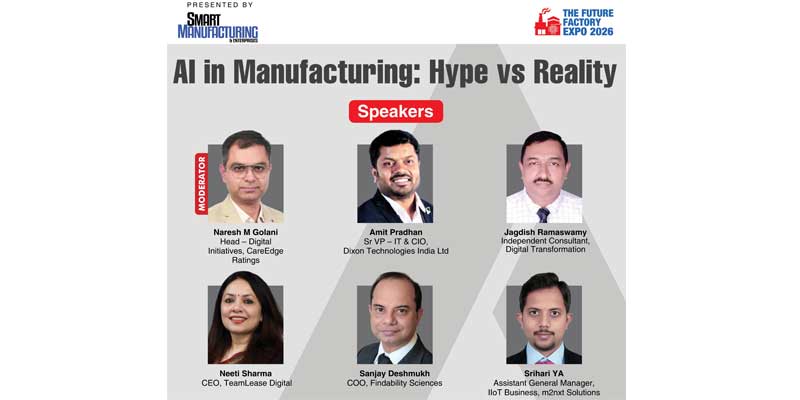
Future Factory Expo webinar explores real-world AI use in factories
Future Factory Expo (FFE) recently hosted a webinar bringing together senior leaders from manufacturing, digital transformation and workforce development to decode artificial intelligence's role on ..
Read moreAutomation & Robotics
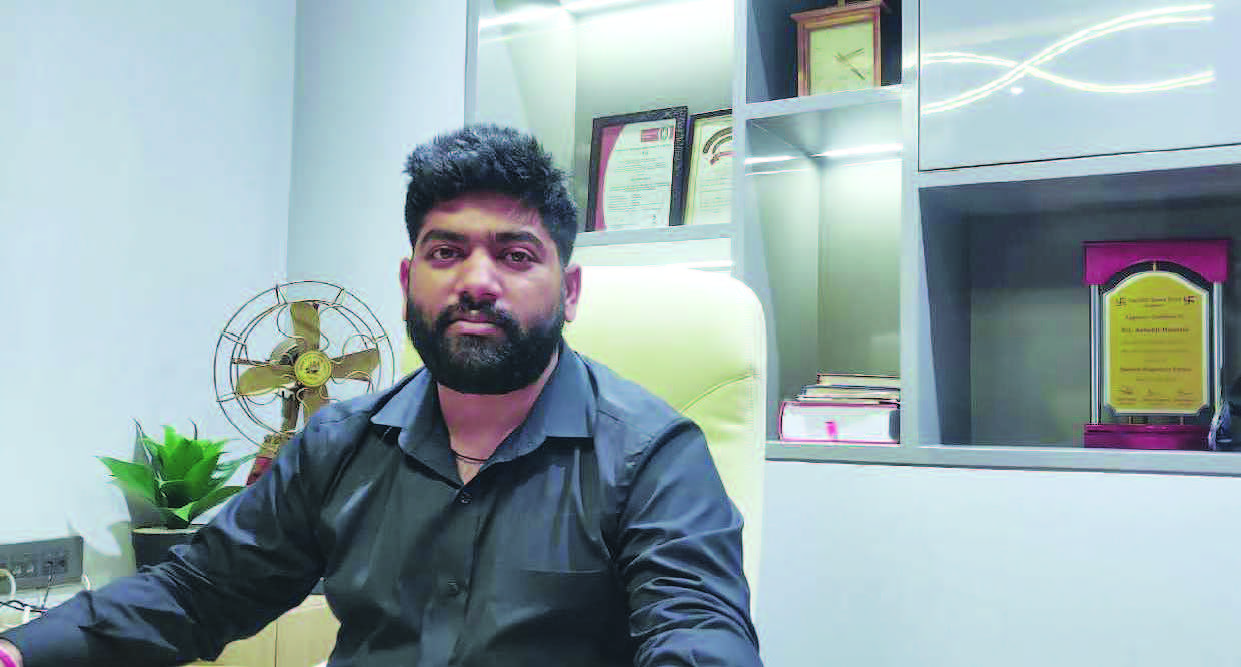
Automation is transforming material handling: Ravi Hissaria
In this interaction, Ravi Hissaria, MD, Tippers & Trailers India Pvt Ltd (TNT India), discusses advancements in material handling technologies, the company’s latest offerings and its future plans.
Read moreRelated Products
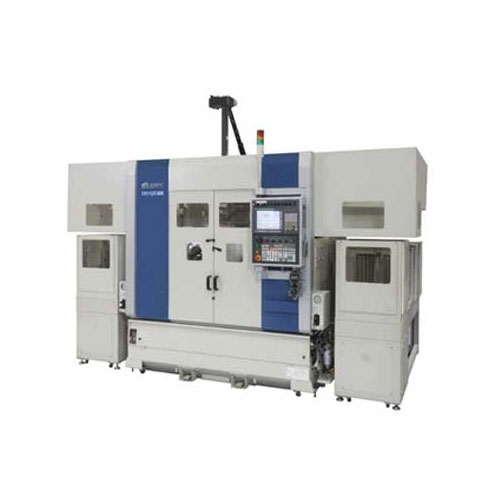
Compact Fmc - Motorum 3048tg With Fs2512
INDUSTRIAL AUTOMATION & TECHNOLOGY CONSULTANCY
Meiban Engineering Technologies Pvt Ltd offers a wide range of Compact FMC - Motorum 3048TG with FS2512.
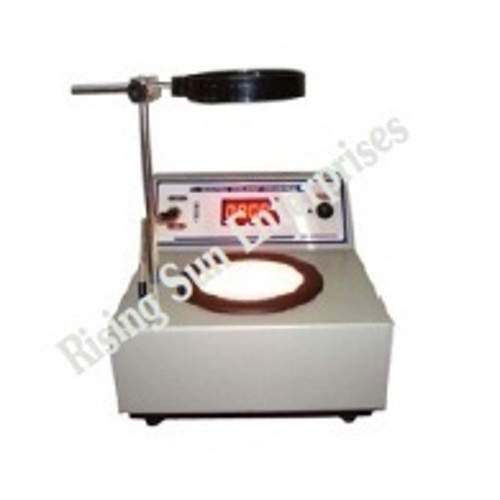
Digital Colony Counter
INDUSTRIAL AUTOMATION & TECHNOLOGY CONSULTANCY
Rising Sun Enterprises supplies digital colony counter.

Robotic Welding SPM
INDUSTRIAL AUTOMATION & TECHNOLOGY CONSULTANCY
Primo Automation Systems Pvt. Ltd. manufactures, supplies and exports robotic welding SPM.
latest News
Subscribe to iNoW

For Industry News on WhatsApp, Give a Miss Call on: +91 84228 74016