



Schedule a Call Back




The role of risk management in large projects
 Articles
- Dec 29,25
Risk is inseparable from project management, particularly in large and long-duration projects, where inadequate risk identification, ownership and follow-up often lead to cost and time overruns. Practical vigilance, continuous follow-up and decisive execution matter more than theoretical frameworks in successfully managing project risks, writes R Jayaraman.

Project management and risk are like conjoined twins, they are born together, and traverse their journeys through the entire duration of the project. As every project manager knows it, projects are a set of activities which have a beginning and an end date. Within these dates, a lot of work gets done, sometimes as per plan, but most times with both cost overruns and time delays. Very few large projects get done as per plan, some exceptions notwithstanding. One would associate the Reliance Jamnagar refinery project in this group, along with the cold rolling mill project of Tata Streel at Jamshedpur. The most famous examples in recent memory include the Demonetisation project of the GOI and the Jan Dhan bank accounts opening project.
These two projects achieved astounding numbers in terms of rates of work done. The Wikipedia report on the Jan Dhan project says: Run by Department of Financial Services, Ministry of Finance, under this scheme 15 million bank accounts were opened on inauguration day. The Guinness Book of World Records recognized this achievement, stating: "The most bank accounts opened in one week as a part of the financial inclusion campaign is 18,096,130 and was achieved by the Government of India from August 23 to 29, 2014". By 27 June 2018, over 318 million bank accounts were opened and over Rs 792 billion ($12 billion) were deposited under the scheme’.
Larger the project, more is the risk effect. Longer the duration of a project, greater is the chance of risky events. Risks are prevalent even before a project starts. It is just that the project enters the risk envelope, in order to be born. For example, when laying a railway line, rivers have to be crossed, land has to acquired, people may have to be relocated and a host of materials have to be transported to the project sites at remote locations. These risks were present, irrespective of the fact that a railway line has to be laid. So, every project is a risk seeker, a risk mitigator, and a risk companion. Even after a project is completed, post completion risks are ever present, although the agencies handling these risks change. Risk handling and responsibility for doing so are often subjects of controversy during project execution, a lot of bad blood is let out due to this. No one likes risks, especially if the downside is steep. While everyone acknowledges and is amenable to accept the presence of risk, the same everyone would like to avoid, to the extent possible, handling the same. One would like someone else to take care of the risk. For example, during project execution, the client wants the EPC contractor to assume full charge of risk management.
In India, the riskiest projects are those which are in the domain of infrastructure. The least risky are those which are green field in nature. And most such projects are in the private sector domain. During the license permit raj, the biggest risk was the act of getting a license. Companies would not want to wait for the license to be in their possession, as the wait would inevitably lead to cost escalations. Next in line would be the risks inherent in the import of equipment, as, in those days, most equipment for large projects had to be imported. Over the years, with the dismantling of the license permit regime, ease of doing business improved. However, even today, in India, unease of doing business far outweighs its doing.
Many have attempted to study project related risks, especially of large projects, which is where the gain and loss can be big, and which are more prone to slippages in time and costs, if not for anything else, just for the long duration. Risk increases with time, usually. Except when dealing with the GST in India, as was the recent experience. Many classifications have been attempted. Many years back, I remember that Infosys had come out with a list of some 120 plus risks, not all related to project management, but largely so, as most IT companies deal in project management type of activities, to earn their daily living. Including the Y2K. Which project, so admirably managed by Indian IT, led by TCS, simply stunned the world. In fact, IT companies have adapted from waterfall, to agile to scrum to agile + scrum methods to bring down the project delays, which, at one time, according to a study by PMI, exceeded 200% per project. Risk classification, risk profiling, risk estimation (using indexes like the RPN values of FMEA) and risk mitigation have all been well studied in literature. I don’t think many have tried to study risk avoidance, assuming that, risk and project management are like the soul and the body, risk being the soul.
Risk mitigation arises from risk estimation. Which is an outcome of the previously mentioned two risk dimensions. Many instruments are currently available to estimate and propose mitigation strategies. Both are important as risks, if not avoided or dealt with, can lead to cost and time overrun. The subject of risk should be ideally studied based on the following dimensions, at the least, in India:
- Is the project to be executed in a greenfield or brownfield location?
- Is the technology new or tried and tested?
- Have similar projects been done in the past, anywhere in the world?
- Does the project involve construction or not? (this is primarily to distinguish IT projects from others)
- Is the project to do with infrastructure?
- Is the project to do with the government (state or centre)?
- Is the project being done in India or abroad?
- Has the land for the project been acquired?
- Has the environment clearance been obtained? (this is a project breaker, see what happened to Lavasa)
- Has the funding for the project tied up?
Each of the above risks must be assessed on a scale of 1 to 5, and even a score of 3 on one dimension needs to be evaluated in depth. Each one of the above factors can ruin a project, if not found to be OK. While one is tempted to say that a minimum score of 70 out of the maximum possible 100 is OK, the caveat is: NONE should be below 3. If any factor is below 3, don’t commit to the project.
The PMBOK and other tomes on project management tell you the step-by-step process to deal with risk. The issue is that, even if a team studies and follows these steps in detail, the dynamic nature of risk is itself a big risk. Vigilance is the key, but, even more, quick thinking, speedy decision making, distributed decision making, using daily milestones followed up by daily monitoring using a network software are essential. Co-ordination and follow-up are the keys to risk management, not just the knowledge of methods.
For example, very often one comes across this issue in civil work. Pouring of 10,000 tonnes of concrete is scheduled for tomorrow, concrete mixer-carriers arranged through a contractor, and he has promised to deliver at the time you have asked him to. So, you have a nice overnight sleep, and come to the site to see the precious concrete go and sit in its allotted place, and help you claim the reward for pouring 10,000 tonnes of concrete for the day, but, mixer-carrier never arrived. Frantically you phone up the contractor, who informs you that the same has gone to another site, and he will send you the next consignment. This is just Pfaff; you need to go or sit at his site to ensure that the truck with concrete mixed leaves his site and reaches yours. No rocket science, but of the risk of greed or chance or sheer opportunism is not attended to, then you are the loser. What is the correct thing to do? Post a person at the contractor’s site first thing in the morning after ensuring that the route is free of any traffic jams and other hindrances.
I remember a project where we were getting large imported consignments from Kolkata to Jamshedpur, for which, we posted a person at the customs to clear the same, then recced the entire route three days prior to the actual movement, and then had a person who would travel with the consignment from the customs warehouse to the project site. This is practical risk management, or follow-up management, which no book may teach you, but experience will, as will some thoughtfulness. In fact, in my discussions with Japanese project managers, they said that 90% is follow-up, only 10% is planning.

Finally, why do we go to such lengths to mitigate risks? First, if you don’t attend to these risks, you will become a part of the mass of large projects which have shown 100% slippages in terms of cost and time (please see MOSPI data). Second, the adverse effect on the margin. Figure 1 is a representative graph, which is drawn from research done at PGEMP, SPJIMR.
To all project managers in the unenviable position of leading large projects, mind your risk, if you do, you can make your company rich.
About the author:
R Jayaraman is the Head, Capstone Projects, at Bhavan's S P Jain Institute of Management & Research (SPJIMR). He has worked in several capacities, including Tata Steel, for over 30 years. He has authored over 60 papers in academic and techno economic journals in India and abroad. Jayaraman is a qualified and trained Malcolm Baldrige and EFQM Business Model Lead Assessor.
R Jayaraman
Capstone Projects
S P Jain Institute of Management & Research
Project management
risk management in large projects
Large infrastructure projects
Cost and time overruns
Risk identification and mitigation
Indian infrastructure sector
EPC project execution
Risk profiling and assessment
Project governance and accountability
Follow-up and execution discipline
Tata Streel
Reliance Jamnagar refinery
Related Stories
Construction Equipment
The role of risk management in large projects
Risk is inseparable from project management, particularly in large and long-duration projects, where inadequate risk identification, ownership and follow-up often lead to cost and time overruns. Pra..
Read moreElectrical & Electronics

India’s Expanding Nuclear Ambitions and the Emerging Market for Small Reactors
As India’s Vision 2047 sets a target of 100 GW of nuclear capacity, the government is shifting to distributed nuclear generation by deploying smaller reactors across multiple locations, writes R J..
Read moreProcess Equipment

India’s petrochemical economy: Opportunities for manufacturing industry growth
With supportive government policies and robust market demand, the Indian petrochemical industry has the potential to emerge as a pillar of industrial self-reliance, write R Jayaraman and T C R Amon.
Read moreRelated Products
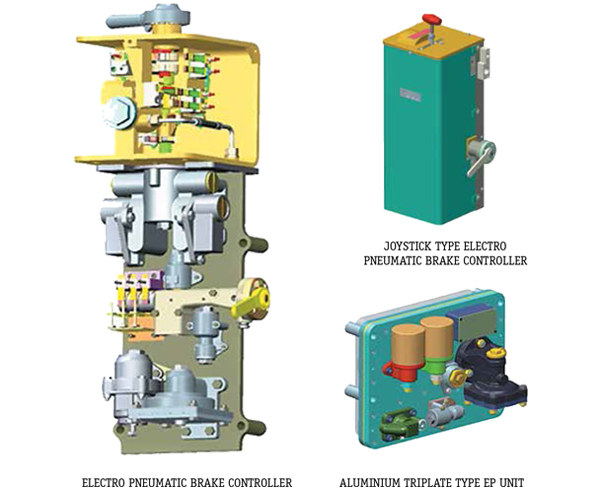
Electro - Pneumatic Brake System for Emu
CONSTRUCTION, MINING & EARTH MOVING EQUIPMENT
Escorts Kubota Limited offers a wide range of electro - pneumatic brake system for EMU.

Indef Powered Crane Kit
CONSTRUCTION, MINING & EARTH MOVING EQUIPMENT
Hercules Hoists Ltd offers a wide range of Indef powered crane kit.
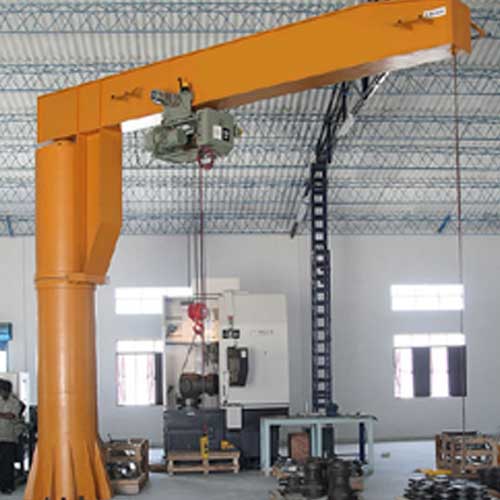
Jib Crane
CONSTRUCTION, MINING & EARTH MOVING EQUIPMENT
DC Hoist & Instruments Pvt Ltd offers a wide range of Jib crane.
latest News
Subscribe to iNoW

For Industry News on WhatsApp, Give a Miss Call on: +91 84228 74016