






Schedule a Call Back


Safety Considerations for Live Measurements
 Technical Articles
- Mar 18,11
NULL

Keep your eyes on the job at hand
Measuring live voltages and current in today's high energy environments can result in a severe hazard to equipment and users if proper precautions are not applied. Given the risk of transients, surges, and old-fashioned human error, it always pays to follow safe work practices and use test instruments rated for the voltage or current you're measuring.
Whenever possible, work on de-energised circuits and follow proper lockout, tag-out procedures. If you have to work on live circuits, following the steps below will improve your measurement practices and help reduce any hazard.
Set Up
1. Assess the environment before taking the measurement.
2. Do not work alone in hazardous areas.
3. Wear the appropriate Personal Protective Equipment (PPE) as determined by NFPA 70 E and the local recommendations of health and safety personnel.
4. Make sure your test instrument is rated for the measurement environment.
5. Be familiar with and know how to use your equipment prior to any hazardous measurements.
Practices
1. Measure at the lowest energy point.
2. Keep your eyes on the area you're probing and keep both hands free as conditions require.
3. For single phase, connect neutral first -- hot second.
4. Use the three-point test method discussed below.
5. Use test probes with a minimum amount of exposed metal such as .12 in (4 mm) metal tip probes.
6. Keep one hand in your pocket unless you must use both hands for a good measurement.
Set Up - Environmental Analysis
Before you open an equipment cabinet, look over your work environment. How do you plan to use your meter? Where will you mount it? Do you have clear access to the equipment in question? Have you been trained on or are you knowledgeable in the use of your meter? Are environmental hazards present, such as tree branches or water? Do you have enough light and ventilation?
Avoid working in dark areas. If you choose to work in a dark area, turn on the test tool's backlight to brighten the display for easier viewing. And, if you're working in a deep or recessed panel, use a test probe extender and probe light to illuminate the area to be probed. Be sure you can clearly view the point of measurement. The probe extender facilitates measurement by keeping your hands further away from the inside of the panel, reducing potential danger.
Also make sure you have a helper knowledgeable in electrical safety or let someone else know where you're working. It's never good practice to work alone on high energy circuits.
What to Wear
When an arc flash occurs, Personal Protective Equipment (PPE) is the only thing that can defend you from horrific pain, injury and even death. When measuring systems of 1000 volts or less, including 480 V and 600 V three phase circuits, follow the detailed PPE standards developed by the American National Standards Institute (ANSI), the Canadian Standards Association (CSA), and the International Electro-Technical Commission (IEC).
The safety specifications include, among other considerations, eye and hearing protection, insulated hand tools, insulated gloves, and fire resistant clothing. In the United States, NFPA standard 70E and NEC article 110.16 define where and when PPE must be used.
Voltage Category Ratings
In the four-category rating system, the closer you are to the power source, the higher the category -- and the greater the danger. CAT III covers distribution level wiring, including 480 or 600 volt circuits such as 3-phase bus and feeder circuits, motor control centres, load centres and distribution panels.
Given the trend toward using higher voltage levels in modern buildings, most commercial and industrial electricians work in a CAT III or CAT IV environment -- sometimes, without even knowing it. And that can lead to real danger.
Make sure your test instruments are rated to a minimum of CAT III 600 V. Most digital multimeters (DMMs) display these ratings near the voltage/current input terminals. If your DMM and your leads don't have the appropriate ratings, don't make the measurements with them. If you have to make these measurements, upgrade and purchase instruments rated for that environment. Using an older instrument (manufactured prior to 1996) or a new instrument without the proper voltage and category rating will put you and your employer at risk.
Practices
1. It is a good practice to measure voltage at the point of the lowest available energy. For example, if you are measuring voltage on a breaker panel, identify the lowest-rated breaker available, and make your measurement there. This way, you have more protection between yourself and the potential hazard
2. Effective steps should be taken to obtain the best reading within the necessary envelope of safety. If conditions require that both of your hands remain free for a safe measurement, set the instrument down; use the instrument's bail stand (if it has one). Better yet, use a magnetic hanger to hang the unit at eye level on the edge of the panel. Don't try to watch the meter while you make your measurement -- always keep your eyes on your test probes.
3. When taking single-phase measurements, always connect the neutral lead first, the hot lead second. After taking your reading, disconnect the hot lead first, the grounded lead second.
4. When testing for voltage, use the three point test method.
- Test a similar known live circuit first
- Test the "circuit to be tested"
- Re-test the first known live circuit.
This process verifies your test instrument is working properly - an important part of your personal safety.
5. When making measurements in or around high energy three phase distribution panels, use test probes with a minimum amount of exposed metal at the probe tips, such as .12 in (4 mm) metal tip probes. This reduces the risk of an accidental arc flash from probe tips being inadvertently shorted together between phases.
6. Keep one hand in your pocket or out of the panel and the measurement circuit. You don't want to offer a closed circuit. Whenever possible, use a properly rated alligator clip to attach the black test lead to the circuit under test. This gives you a free hand to probe with the red test lead.
New 1000 V CAT III and 600 V CAT IV meters designed to withstand 8000 V transients Use meters with these markings: 1000 V CAT III or 600 V CAT IV
Old
Meters designed to older standards do not show category rating on front of instrument Do not use meters without proper CAT markings on 480 V circuits
Fluke Safety: Helping to Reduce Hazards
Fluke offers a complete line of CAT IV 600 V/CAT III 1000 V digital multimeters with backlit displays for the measurement applications described here.
Fluke accessories like the TPAK Magnetic Hanger, the L210 Probe Extender and Probe Light, the TP238 Test Probes and the i400 Current Clamp are rated for use in high energy environments complying to US and International standards. Remember, using the right tools helps you do your job more safely and efficiently.
For more information and resources about good electrical measurement practices, including web links to all the standards mentioned in this article, visit www.fluke.com/safety, or contact: TTL Technologies Pvt Ltd, Bangalore. Toll free: 1800 425 3200. Email: ig@ttlindia.com
Related Products

Liquid Ring Vacuum Pumps/Compressors
Compressors and Allied Equipment
Aeromatic Engineering Private Limited offers a wide range of liquid ring vacuum pumps/compressors.
Read more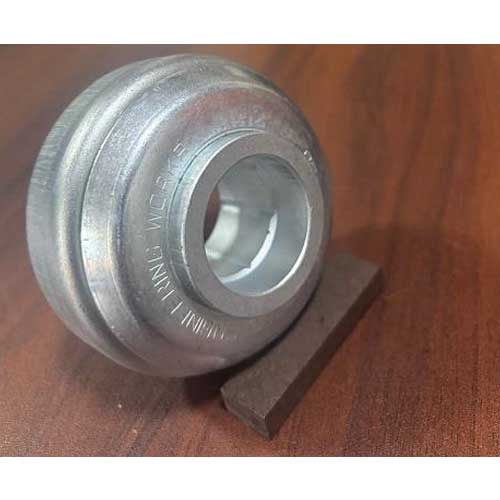
Hot Wheel Bearing
Bearings, Bushings, Wheels and Gears
SICCO Engineering Works offers a wide range of hot wheel bearing. Read more
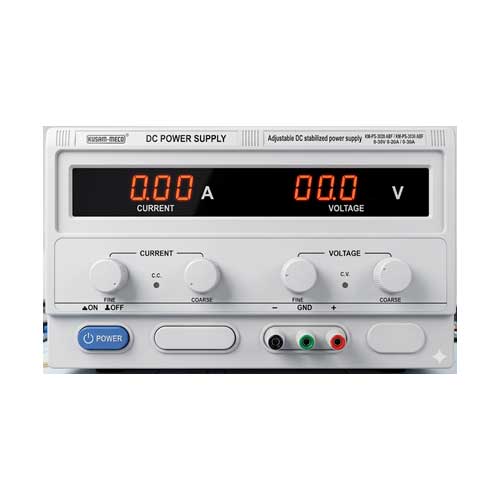
Kusam-meco DC Power Supply Model Km-ps-3020 Abf / Km-ps-3030 Abf
Power Supplies, Batteries & Accessories
<p>Kusam Electrical Industries Ltd offers Kusam-Meco DC power supply model KM-PS-3020 ABF/ KM-PS-3030 ABF</p> Read more
latest News
Subscribe to iNoW

For Industry News on WhatsApp, Give a Miss Call on: +91 84228 74016