






Schedule a Call Back


Robotics should empower, not replace people: Naresh Nagarwal
 Articles
- Jun 25,26
In this interaction, Naresh Nagarwal, CEO and Cofounder, CNN Robotics, discusses how automation, robotics, AI and smart manufacturing are helping Indian manufacturers improve quality, productivity, safety and global competitiveness.

How is automation changing the way Indian manufacturing companies operate today?
The hesitation is understandable, and I say this with empathy — not criticism. Three core barriers exist. Automation is fundamentally reshaping Indian manufacturing and the shift is happening faster than most people anticipated. We are moving from labour-dependent, error-prone processes to smart, data driven production lines where robots, AI, and machine vision work together to deliver consistent quality at scale.
At CNN Robotics, we see this transformation firsthand. Our clients across automotive, pharma, and food & beverage sectors are achieving significant productivity gains not just by replacing manual tasks, but by reimagining their entire production workflow. Automation is enabling Indian manufacturers to compete globally, reduce waste, improve safety, and most importantly, free up human talent for higher-value work.
India is no longer just a low-cost manufacturing destination it is becoming a smart manufacturing hub. And automation is the engine driving that change.
Why are many small and mid-sized manufacturers still slow in adopting automation and smart manufacturing technologies?
The hesitation is understandable, and I say this with empathy — not criticism. Three core barriers exist.
Perception of cost. Most SME owners still see automation as a large, one-time capital expenditure rather than a phased, ROI-driven investment.
Fear of disruption. Owners worry about production downtime during implementation or workforce resistance.
Lack of awareness. Many SMEs are unaware that modular, scalable automation solutions exist that can be deployed without overhauling their entire facility.
At CNN Robotics, our approach is always to start small, prove ROI fast, and scale smartly — practical automation that fits the customer's current reality, not a textbook ideal.
Which areas of factory operations can benefit first from simple automation quality, productivity, energy use, machine monitoring, logistics or manpower efficiency?
Based on our project experience across India and Europe, I would prioritise in this order: Quality and consistency comes first robotic welding, machine vision inspection, and automated assembly eliminate human error at the most critical point of production. The ROI here is immediate and measurable.
Manpower efficiency comes second particularly in repetitive, physically demanding tasks like palletising, packaging, and material handling. This is where cobots and SPMs deliver fast results.
Machine monitoring and predictive maintenance is the third priority Industry 4.0 tools that reduce unplanned downtime can save manufacturers significantly per month. Energy and logistics automation can follow once the core production floor is stabilised. The key is Sequencing automation intelligently not doing everything at once.
How can manufacturers make automation affordable, scalable and practical instead of treating it as a large one-time investment?
The mindset shift needed is from 'automation as a project' to 'automation as a journey.' At CNN Robotics, we actively encourage our clients to adopt a phased approach identify the one process that is costing the most in quality rejects or labour inefficiency, automate that first, measure the ROI, and then reinvest those savings into the next phase.
We also leverage our global-local model engineering and IP developed in Europe, manufactured cost-efficiently in India to deliver world-class automation at prices that make sense for Indian SMEs. The goal is always faster payback periods and scalable architecture so the system grows with the business. Automation does not have to be expensive. It has to be right-sized.
How can companies ensure that automation is accepted by shop-floor workers and not seen only as a threat to jobs?
This is a conversation I personally care deeply about. At CNN Robotics, our founding belief is that robotics should empower, not replace, human potential.
The solution starts with communication and transparency. Workers need to understand that automation is taking away the dangerous, repetitive, and physically harmful tasks not their livelihoods. When a worker no longer has to stand in front of a welding arc for 8 hours, that is a win for human dignity.
The second step is reskilling. Companies must invest in training shop-floor workers to operate, monitor, and maintain automated systems. A welder who learns to program a welding robot becomes significantly more valuable and more employable.
Leadership must champion this change from the top. When the CEO walks the floor and explains the Vision personally resistance transforms into participation.
What should Indian manufacturers do over the next three to five years to build efficient, transparent and globally competitive factories through automation?
Invest in smart infrastructure now. The manufacturers who begin their automation journey today, even with small steps, will have a significant competitive advantage by 2028-30. Waiting is the most expensive strategy.
Embrace AI and data. The next frontier is not just automated machines but intelligent factories — where every machine, sensor, and process generates data that drives better decisions. Indian manufacturers must start building this data culture today.
Build global partnerships. India cannot automate in isolation. Collaborating with global technology partners — for equipment, software, and expertise — accelerates the journey dramatically. At CNN Robotics, our Denmark-India model, is proof that this works: global innovation, local execution, competitive cost.
India has every ingredient needed to become a world-class manufacturing nation. Automation is not the destination it is the vehicle.
Indian manufacturing
automation
smart manufacturing
robotics
AI in manufacturing
Industry 4.0
machine vision
CNN Robotics
Naresh Agarwal
Related Stories
Automation & Robotics

Yaanendriya Raises Rs 150 million to Scale Indigenous Navigation Systems
The deep-tech company will strengthen R&D, accelerate product development and expand high-precision navigation systems for mission-critical applications.
Read moreOther Industrial Products
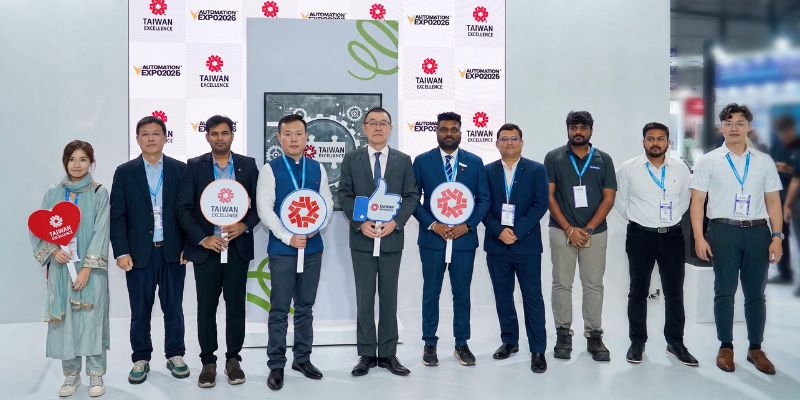
Taiwan Excellence showcases AI-powered manufacturing solutions at Automation Expo 2026
Taiwan Excellence showcased 55+ industrial innovations from 22 Taiwanese brands at Automation Expo 2026, highlighting AI-driven solutions for India's smart manufacturing growth.
Read moreAutomation & Robotics
AI Emerges as Key Growth Driver for Indian Manufacturing Sector: PwC
PwC study reveals 59 per cent of Indian manufacturers see AI as key to strategic growth over the next five years.
Read moreRelated Products
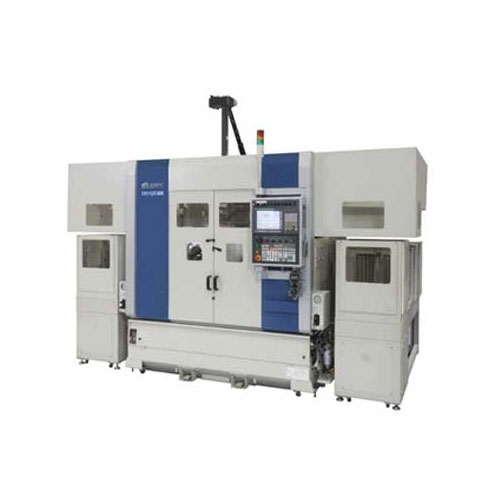
Compact Fmc - Motorum 3048tg With Fs2512
INDUSTRIAL AUTOMATION & TECHNOLOGY CONSULTANCY
Meiban Engineering Technologies Pvt Ltd offers a wide range of Compact FMC - Motorum 3048TG with FS2512.

Digital Colony Counter
INDUSTRIAL AUTOMATION & TECHNOLOGY CONSULTANCY
Rising Sun Enterprises supplies digital colony counter.

Robotic Welding SPM
INDUSTRIAL AUTOMATION & TECHNOLOGY CONSULTANCY
Primo Automation Systems Pvt. Ltd. manufactures, supplies and exports robotic welding SPM.
latest News
Subscribe to iNoW

For Industry News on WhatsApp, Give a Miss Call on: +91 84228 74016