






Schedule a Call Back


Packaging & Printing: Opportunities Galore
 Technical Articles
- Nov 03,11
NULL

With the lifestyle of the middle-class segment in India having changed due to an increase in spending power, packaged goods that include food items, healthcare products and other consumables has witnessed a rising demand, thereby opening the field for those in the packaging and printing business, says Huned Contractor
 A growing economy implies greater consumption of everything, be it food, healthcare products, clothes, automobiles or housing. And all that has a direct impact on the packaging and printing industry. This is evident enough from what is happening in India. Consider the statistics: all set to move to a higher level of growth of up to 20-25 per cent, the packaging industry, though highly fragmented, is presently estimated at Rs 8,000 crore. Over the next five years, the sector is expected to triple to around Rs 24,000 crore. As of now there are about 600-700 packaging machinery manufacturers, 95 per cent of which are in the small and medium sector located all over India.
The Indian packaging machinery imports are valued at USD 125 million. "The increasing affluence of the middle-class, liberalisation and the organised retail sector are the catalysts for growth in the packaging and printing industry," is what Mr N S Manku, President, Indian Printing Packaging and Allied Machinery Manufacturers Association (IPAMA) said at the 10th edition of PrintPack held at Delhi in January 2011. Citing the reasons for this unparalleled growth, experts point out the fact that India is now the world's second-largest producer of food next to China.
 "The growth of the food processing sector has nearly doubled to 13.7 per cent during the last four years. It ranks second only to Japan in inland sector fish production and produces about 6.57 million metric tonnes fish every year. Of the world's total annual spice trade of 8,50,000 tonnes, India accounts for 44 per cent in quantity and 36 per cent in value. The beer market in India is pegged at around 12 million hectolitres. The functional foods market is set to earn revenues of over USD 1,161 million in 2012. This data clearly spell out the scope in the Indian packaging industry," says Mr Dhiraj Gaur, Director, Sai Krupa Foods, a food processing unit at Jejuri near Pune.
Yet another contributor to the impressive leapfrogging in the packaging industry is the pharmaceutical sector, which is growing at a rate of over 13 per cent annually. According to the Organisation of Pharmaceutical Producers of India, "The sector is estimated to be worth USD 6 billion. The Indian pharmaceutical industry ranks fourth in terms of volume (with an 8 per cent share in global sales) globally and produces 20-24 per cent of the world's generic drugs (in terms of value). India is one of the top five active pharmaceutical ingredients (API) producers with a share of about 6.5 per cent. The Indian pharmaceutical market is a USD 7.3 billion opportunity with the domestic retail market having crossed the USD 10 billion mark in 2010 with the expectation of reaching an estimated USD 12-13 billion in 2012."
Packaging Industry Overview
 More than 80 per cent of the total packaging in India constitutes rigid packaging. The remaining 20 per cent comprises flexible packaging. Within India, the increasing penetration of organised retail (including foreign players who are large consumers of flexible packaging solutions) and an increasing preference for branded products has added to the demand for flexible packaging solutions.
The rigid packaging industry that comprises drums and containers made from metal, plastics, fibre board and composite materials is growing at about 13 per cent per annum. Within the industry, there is a migration to plastics and the major metal drum manufacturers have started setting up facilities for manufacturing plastic containers. The 6 million units' plastic drum market is growing at over 16 per cent while the 10 million drum steel market still manages a positive growth of 2 per cent.
The flexible bulk packaging industry includes woven sacks, leno bags, wrapping fabric and flexible intermediate bulk container (FIBC) which is growing at over 20 per cent with FIBC containers expected to grow three-fold in the next five years riding an increased industrial production and a shift toward higher-value containers offering enhanced performance and supply chain efficiency. "In fact, the global slowdown has been an opportunity for the Indian FIBC manufacturers as the production cuts by the companies in Europe and USA has resulted in the sourcing shifting to India, thus adding an important factor to the growth story," says Mr K Ravi, Managing Director, Hassia India.
Hassia India is a part of Hassia Packaging, a 100 per cent subsidiary of the global Oystar Group based in Karlsruhe, Germany. Operating in eight countries, with over 2,500 employees and annual revenue of approximately USD 450 million, the Oystar Group has built a strong reputation for delivering advanced and integrated packaging solutions for a wide range of industries, enabling clients to focus on their core competencies. The company specialises in automated packaging of food and other products in pouches, jars, and cans, catering to the needs of a diverse group of industries including dairy, malted food, health drinks, snack food, tea, coffee, sugar, salt, detergent, and agro-chemicals in India, the Middle East countries, Africa, South East Asia, Australia, and New Zealand.
 The impetus has also come from the rapid innovations and the specialisations that have been taking place in the packaging, as also the printing, industry. Mohali-based Khosla Machines is one such enterprise that, among other things, has domain expertise in the packaging of biscuits. According to Mr Ashim Khosla, the company's director, "Pouch packing has certain advantages that make it ideally suited for biscuits. One, it provides for hermetic sealing i.e. the seals do not allow any moisture penetration. Biscuits being very hygroscopic in nature require this type of sealing on the package. Two, this type of package is very tolerant to the size and shape of the product and biscuits vary a lot in size and shape because of uncontrollable factors during the production process." Research and development has therefore become an integral part of the industry.
As the management of Mumbai-based Presto Pack Systems, manufacturers and exporters of industrial packaging machines, oil packaging machines, edible oil packaging machines, and milk packaging machines, puts it, "Our R&D experts are aware of the material and mechanical properties of basic material and components used in the production process, which helps them in testing our wide range of packaging machines. In fact, R&D plays a vital role in the smooth functioning of our company and our teams conduct research on various parameters like basic material, manufacturing process and process technology in order to offer superior quality product range."
 One of the fastest growing segments in the Indian consumer market is that of packed snacks and therefore companies are now focusing on developing special machines and technologies to cater to the requirements posed by this sector. One such is Coimbatore-based ABC Agro and Food Machine (India) which is actively engaged in manufacturing and exporting a wide range of agro and food processing machinery that can be applied for the processing and packing of snacks and food items such as murukku, wafers, namkeen snacks, poori, chapati, idli, etc.
Similarly, Pune-based Nichrome, established in 1948, is known for its milk packaging machines. In the year 1977 Nichrome successfully designed and manufactured India's first pouch packing machine for milk. When the company turned 60, it repeated history by presenting India's first aseptic pouch packing system for long-life UHT milk.
Says Mr Harish Joshi, managing director of Nichrome India: "The packaging industry is going through exciting times. For example, with a machine installation base of over 5,000, we have now diversified into two new technologies with the help of foreign partners. We have entered into a technology transfer licensing agreement with Prodopack Corp, USA to manufacture and sell high-speed multilane VFFS machines and with Totpack, Spain to manufacture and sell horizontal form fill and seal machines. We have also set up a dedicated product development/R&D centre for the development of technology, new products and new applications. It has a DSIR-approved R&D centre status and employs a group of mechanical, electrical and software engineers as also packaging technologists. The centre has a controlled atmosphere demonstration/R&D machine lab for conducting trials on real life products. It uses state-of-the-art 3D modelling facility for the mechanical designs."
Printing Industry Overview
According to a research report, the Indian label industry is growing at a rate of more than 15 per cent with several press manufacturers and label converters gearing up to challenges. The industry has rapidly evolved and is global in its outlook and delivery.
The larger Indian converters have been adopting the latest technologies and several high-end machines have been installed in the country in the past few years. These machines are largely imported from the western countries, with Germany and Italy accounting for almost 45 per cent of the total packaging machinery imports.
However, as the need to upgrade is felt by the smaller converters and corrugators and many commercial printers diversify into package printing, there is an increasing focus on machines made in Taiwan, Korea and also China.
In terms of technological innovations, across the globe flexography has become the pre-dominant medium for package printing and several sophisticated CI flexo presses have been installed in the past six months. Says Mr Sanjay Sabharwal of Noida-based UFLEX Ltd: "The printing and labelling sector is now growing at the same pace as the packaging industry because of the increasing demand for sophisticated products that can meet international benchmarks. This is also because of the entry of MNCs in India and the fact that Indian consumers are now very quality conscious. The appeal for any product lies in the packaging and the printing."
One of the biggest boosters to the printing and labelling sector has been the increasing use of automatic identification and data capture (AIDC) technology, which in several companies is integrated with the ERP/ EDI applications. The AIDC industry includes barcodes, smart cards, RFID, biometrics and EAS. According to a survey, the barcode industry is around Rs 2.5 billion and is growing at over 30-35 per cent every year. The printers and scanners contribute equally to 50 per cent of this turnover while the consumables such as tags, labels and ribbons contribute up to 35 per cent and the services make for the balance. Some of the major international suppliers such as Symbol, PSC, Metrologic and Unitech for bar code scanners and Zebra, Intermec, Printronix, Sato, Toshiba and Datamax for barcode printers have their presence in India.
Need of the Hour
Meanwhile, the ongoing developments in this sector are not just limited to style and form. There is more in-depth research being carried out on materials and technology, one of which is the use of nanotechnology.
According to a researcher at Delhi's Indian Institute of Technology, nanotechnology in packaging can help prevent the sale of counterfeit products. "Using nanotechnology, companies can apply covert information directly on to the products and packaging. They can encrypt nano-scale codes on to pharmaceutical pills for tracking and tracing, create nano bar codes which are invisible codes that are technologically very complex," he says.
But along with the rise in the packaging sector, there has come about a greater concern for the environmental spill-out of packaging materials. Organisations such as the Indian Centre for Plastics in the Environment have been undertaking continuous awareness programmes by publishing information on waste management materials, statistics, as well as going to schools and colleges and teaching students and people about the correct usage of polymers.
"The good thing is that the packaging sector is developing in a holistic manner because corporations are also seen to be making efforts to adapt greener technologies. No company can now afford to use material that will harm the eco-system," opines Pune-based Shekhar Gadgil, Director, Pallavi Techno Foods, manufacturer of pulp processing plants, aseptic filling lines, etc.
Related Products

Liquid Ring Vacuum Pumps/Compressors
Compressors and Allied Equipment
Aeromatic Engineering Private Limited offers a wide range of liquid ring vacuum pumps/compressors.
Read more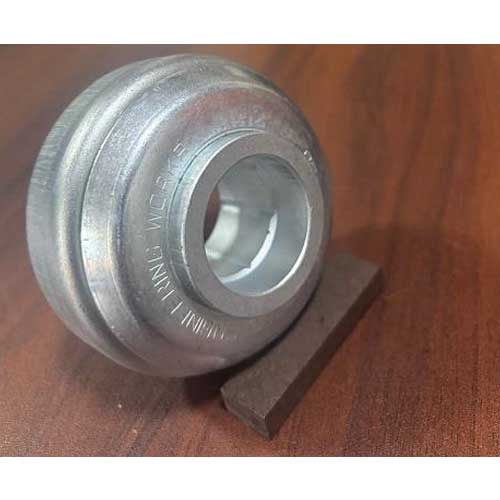
Hot Wheel Bearing
Bearings, Bushings, Wheels and Gears
SICCO Engineering Works offers a wide range of hot wheel bearing. Read more
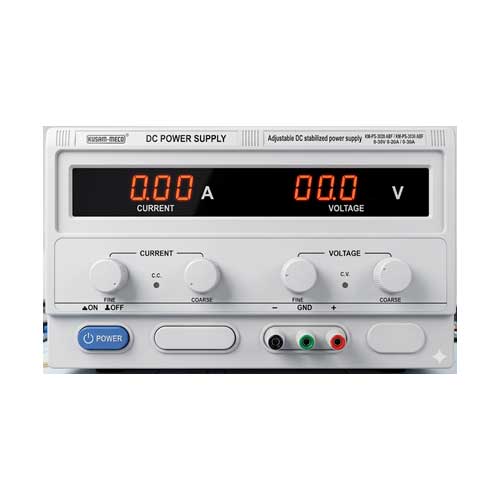
Kusam-meco DC Power Supply Model Km-ps-3020 Abf / Km-ps-3030 Abf
Power Supplies, Batteries & Accessories
<p>Kusam Electrical Industries Ltd offers Kusam-Meco DC power supply model KM-PS-3020 ABF/ KM-PS-3030 ABF</p> Read more
latest News
Subscribe to iNoW

For Industry News on WhatsApp, Give a Miss Call on: +91 84228 74016