






Schedule a Call Back


Next 3–5 years will define Indian manufacturing: Manoj Barve
 Articles
- Jun 25,26
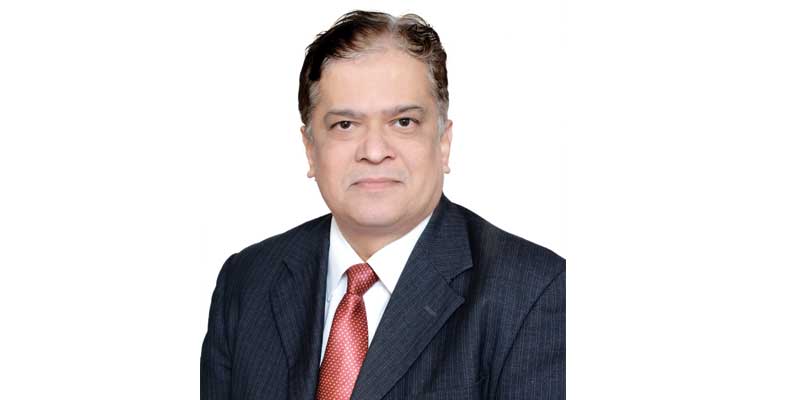
Manoj Barve, Head - BVMW India, highlights how automation is helping Indian manufacturers move from labour-intensive operations to data-driven, globally competitive factories by combining people, processes and technology.
What are your views on automation changing the way Indian manufacturing companies operate today?
Automation is gradually transforming Indian manufacturing from labour-intensive operations to data-driven and process-driven businesses. Until a few years ago, automation was largely the privilege of large automotive or pharmaceutical companies. Today, that boundary is blurring rapidly. Today, falling technology costs and increasing competitive pressures are driving adoption even among SMEs.
Automation is helping manufacturers improve productivity, quality consistency, traceability, machine utilisation, and delivery performance. A major shift is that automation is no longer limited to robots. Sensors, machine monitoring systems, digital quality management, predictive maintenance, AI-driven analytics, and energy management solutions are becoming equally important.
India's manufacturing sector has also received strong policy tailwinds. The Production Linked Incentive (PLI) scheme, the push for Make in India and increasing export obligations - especially in electronics, auto components, pharmaceuticals and textiles - are forcing manufacturers to raise quality standards and reduce rejection rates.
A concrete example is Lumax Industries, an auto-component supplier based in Gurugram. They integrated machine vision systems for quality inspection on their lighting assembly lines, replacing manual visual checks. Defect detection accuracy improved dramatically, and the cost of customer returns fell. That kind of measurable ROI is now convincing smaller suppliers in the same ecosystem to follow.
Why are many SME and MSME manufacturers slow in adopting automation and smart manufacturing technologies?
The biggest barrier is often not technology but mindset. Many SME owners still view automation as a large capital expenditure rather than an investment in productivity and competitiveness. There is often uncertainty about return on investment, a lack of internal expertise, and fear of operational disruption. Perhaps the most underrated barrier is organisational readiness. Automation is not just a technology purchase. It requires clean data, disciplined processes, trained operators and a management culture that values measurement.
Other common challenges include, limited availability of automation specialists, concerns about workforce resistance, fragmented production environments, difficulty selecting the right technologies, and preference for short-term cost control over long-term competitiveness.
Many SMEs also assume that Industry 4.0 requires fully automated factories, whereas meaningful improvements can begin with small, targeted interventions. Germany's Mittelstand - its celebrated ecosystem of mid-sized family manufacturers - faced identical anxieties in the early 2010s as it began its Industry 4.0 journey. What worked there was a combination of state-sponsored technology adoption programmes, vendor-neutral advisory centres (with the Fraunhofer Institutes playing a major role), and a clear narrative that automation was about upskilling workers rather than replacing them. India needs a similar ecosystem approach, and some early steps are visible through SIDBI schemes, the National Manufacturing Competitiveness Programme, and cluster-based technology upgradation funds.
Which areas of factory operations should SMEs automate first to achieve quick, measurable returns?
Most SMEs should start with areas that deliver quick, measurable returns. The right starting point depends on where the pain is greatest. But if I were advising an SME owner, I would suggest a sequence based on speed of ROI and ease of implementation. Machine monitoring should come first. Installing basic IoT sensors on critical machines to track uptime, downtime, cycle time and OEE (Overall Equipment Effectiveness) costs very little - often Rs 15,000 to Rs 40,000 per machine - and the data produced is immediately actionable. When a plant owner discovers that a machine they thought was running at 85 per cent utilisation is actually running at 55 per cent because of micro-stoppages and changeover delays, the business case for improvement becomes obvious. Energy monitoring is the second quick win. In most Indian manufacturing SMEs, energy costs account for 8–15 per cent of total production costs. A simple energy monitoring system - power meters connected to a dashboard - immediately reveals which machines consume the most, whether consumption peaks are avoidable during non-production hours, and where compressed air or steam is being wasted. Payback is typically under 12 months. Quality automation - specifically, machine vision and inline inspection. This is particularly relevant for precision engineering, packaging, electronics assembly and pharma. Manual visual inspection is inherently inconsistent. A camera-based system running at line speed is not.
Some other automation processes that should follow are production planning and scheduling, inventory and warehouse management, predictive maintenance, digital work instructions and documentation.
As the German saying goes: "You cannot improve what you cannot measure."
A German parallel worth noting: Trumpf, the machine tool maker from Ditzingen, developed a "Smart Factory" demonstrator specifically for mid-sized customers, showing how a machine shop with 20 employees could sequence digital job management, laser cutting and automated material handling in a connected workflow - without requiring a full Industry 4.0 overhaul from day one.
How can manufacturers adopt automation in a phased and affordable manner instead of treating it as a costly one-time transformation?
Successful companies usually follow a phased approach. They start with pilot projects that solve a specific business problem. Once benefits are demonstrated, solutions are expanded across departments and plants.
Automation should be treated as a continuous improvement programme - a series of small, validated investments - rather than a one-time transformation project.
Recommended approach can be identify a major pain point, quantify current losses, implement a small pilot, measure results, and scale gradually.
Use modular, cloud-based technologies. Today, industrial IoT platforms from companies like Siemens MindSphere, Rockwell FactoryTalk, or Indian startups like Machstatz and Prescinto are available on subscription models (SaaS). They have significantly reduced entry barriers.
The focus should always be on business outcomes rather than technology for its own sake.
Leverage government schemes. The Technology Upgradation Fund Scheme (TUFS) for textiles, the Credit Linked Capital Subsidy Scheme (CLCSS) for SSIs, and PLI-linked capex support all reduce the net investment burden. Many SMEs are not fully aware of what is available to them.
Collaborate within clusters. In the Ludhiana bicycle parts cluster or the Coimbatore pump manufacturers cluster, Pune’s Autocluster, groups of SMEs have jointly invested in shared inspection equipment, centralised ERP systems, or common prototyping (3-D printing) and testing facilities. Shared investment dramatically improves affordability.
Germany's experience with "Mittelstand 4.0 Competence Centres" - government-funded pilot labs where SMEs could test technologies before buying - is a model India should replicate more aggressively at the district industrial level.
How can manufacturers bring shop-floor workers into the automation journey and reduce fears around job losses?
Automation projects fail when employees perceive them as job-elimination initiatives. Successful companies communicate clearly that automation is intended to eliminate repetitive, physically hazardous, and low-value tasks while enabling employees to develop higher-value skills.
Create visible wins for workers. When a cobot handles the ergonomically difficult task of loading heavy dies or painting in a confined space, workers experience automation as protective rather than threatening. Start with use cases where automation is clearly doing the hard or dangerous work.
Practical measures includes, early employee involvement, transparent communication, reskilling and upskilling programs – invest in retraining, recognition of employee contributions and creating new technical and supervisory roles.
German Mittelstand companies have traditionally been successful because they treat automation as a partnership between technology and people, not as a replacement for people.
In Germany, the concept of "Sozialpartnerschaft" - social partnership between management and works councils - means that the introduction of technology is negotiated collaboratively. Indian manufacturers may not have formal works councils, but the principle of transparent dialogue and shared benefit applies equally.
What should Indian manufacturers focus on in the coming years to build more efficient, transparent and globally competitive factories?
The next three to five years are, I believe, a defining window for Indian manufacturing. Global supply chains are reconfiguring, China+1 strategies are creating genuine demand for Indian capacity, and the cost of industrial technology is falling every year. But opportunity alone is not a strategy.
The smartest investment a manufacturer can make today is in clean, reliable data. This means deploying basic sensors on machines, implementing a shop-floor data collection system, and ensuring that production, quality, inventory and maintenance records are digital rather than paper-based. Without this data layer, any advanced analytics or AI application will fail.
Invest in people alongside technology. The talent constraint is real. India does not yet have enough industrial IoT engineers, automation commissioning specialists, or data analysts with domain knowledge in manufacturing. Companies should partner with polytechnics, ITIs and engineering colleges in their regions to create practical training pipelines.
Build toward supply chain transparency. Global customers - whether in automotive, medical devices, or consumer electronics - increasingly require traceability: which batch of raw material went into which finished product, under what process conditions, inspected by whom. Think globally, benchmark ruthlessly. Manufacturers in Pune, Coimbatore, Faridabad or Rajkot are competing with suppliers in Vietnam, Taiwan and Poland. The benchmark for quality, delivery reliability, and cost must be global. Automation, done well, is the most reliable lever to close that gap.
Germany's manufacturing strength rests not on any single technology but on a culture of continuous improvement, incremental innovation, precision, and long-term investment - anchored by family-owned businesses that think in decades rather than quarters. Indian SMEs, many of them also family-run and generationally committed, carry the same potential. The task now is to combine that ownership commitment with the urgency of technological adoption.
For Indian SMEs, the message is clear: start small, scale fast, and view automation as a journey rather than a destination.
The factories that will succeed in the next decade will not necessarily be those with the most robots, but those that most effectively combine people, processes, and technology.
Automation
Indian manufacturing
smart manufacturing
Industry 4.0
SMEs
factory productivity
machine monitoring
global competitiveness
Manoj Barve
BVMW
Related Stories
Automation & Robotics

SFK Group crosses Rs 1.5 billion annual turnover
SFK Group of Companies has crossed Rs 1.5 billion in annual business turnover, marking a key growth milestone as it expands across industrial automation, environmental monitoring, engineering soluti..
Read moreMachine Tools & Accessories
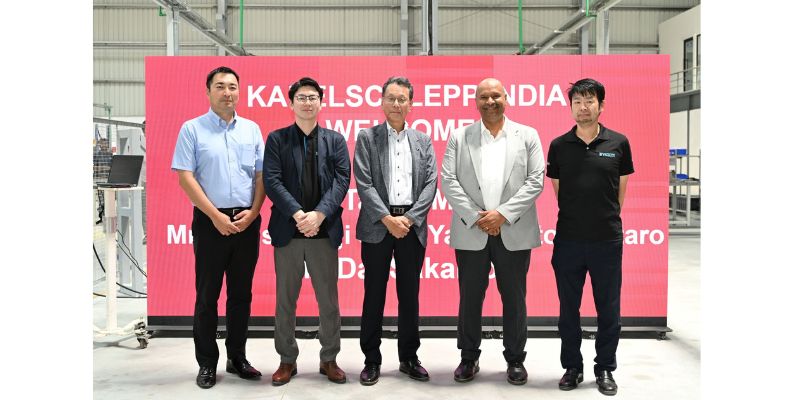
Tsubaki Leadership Reinforces India Growth Strategy during Kabelschlepp Visit
Tsubaki’s senior leadership visited Kabelschlepp India to review growth, localisation and innovation initiatives while strengthening engagement with employees, partners and customers.
Read moreAutomation & Robotics
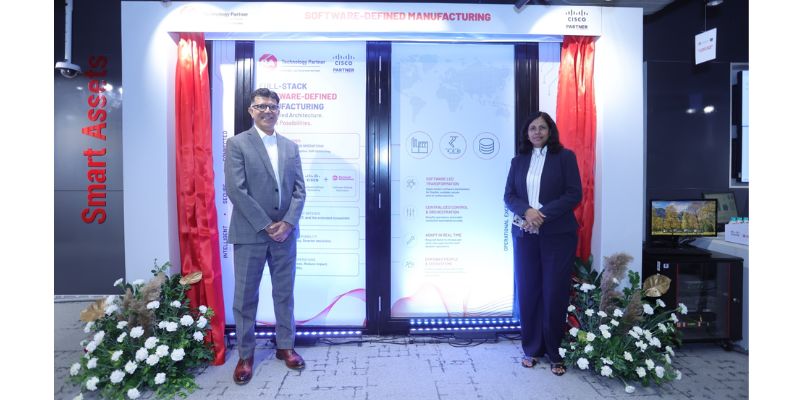
Rockwell Automation, Cisco Partner in India
Rockwell Automation and Cisco have announced a strategic collaboration in India to integrate IT and industrial automation, launch a software-defined manufacturing demo pod, and strengthen digital sk..
Read moreRelated Products
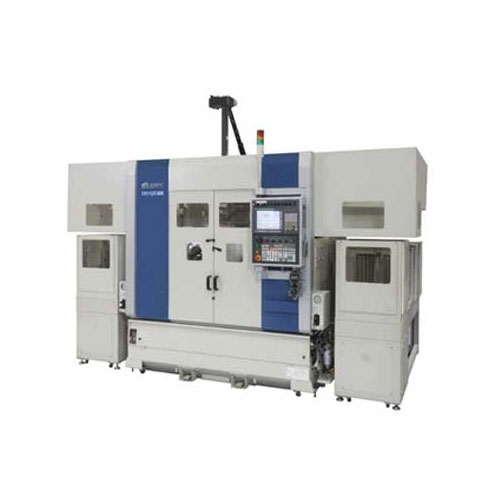
Compact Fmc - Motorum 3048tg With Fs2512
INDUSTRIAL AUTOMATION & TECHNOLOGY CONSULTANCY
Meiban Engineering Technologies Pvt Ltd offers a wide range of Compact FMC - Motorum 3048TG with FS2512.
Digital Colony Counter
INDUSTRIAL AUTOMATION & TECHNOLOGY CONSULTANCY
Rising Sun Enterprises supplies digital colony counter.

Robotic Welding SPM
INDUSTRIAL AUTOMATION & TECHNOLOGY CONSULTANCY
Primo Automation Systems Pvt. Ltd. manufactures, supplies and exports robotic welding SPM.
latest News
Subscribe to iNoW

For Industry News on WhatsApp, Give a Miss Call on: +91 84228 74016