






Schedule a Call Back


Making autonomous, resilient manufacturing accessible to all: Abhinav Atthota
 Articles
- May 26,26
Abhinav Atthota, CEO & Co-Founder, Workroom Automation, is driving the vision of autonomous, resilient manufacturing accessible to mid and large discrete manufacturers.

Could you provide a brief overview of Workroom Automation and the specific manufacturing gap it aims to address?
Workroom Automation builds an AI-powered Factory Operating System for medium to large discrete manufacturers. We ensure customer demand and orders are converted into constraint-aware production plans, providing real-time operational visibility, execution, and re-planning based on live constraints, all on a single platform.
The gap we address is this: today's manufacturers have data fragmented across ERPs, machines, workforce systems, tribal knowledge, spreadsheets, and paper checklists. There is no single source of truth. As a result, most manufacturers operate blind. Despite investments in ERPs and automation, supervisors often still walk the floor at the end of a shift to understand what actually happened. Decisions are made on data that is hours or days old, which is costly for discrete manufacturers running high-mix, low-volume production.
Workroom was built to eliminate that lag—not by replacing existing systems, but by sitting above them and making all data coherent.
How does Workroom Automation function on the shop floor, and what differentiates it from traditional MES or other Industry 4.0 platforms?
Workroom Automation's Factory OS is built around three layers: connect, contextualise, and automate.
First, we connect to everything on the shop floor and beyond: machines, ERPs, IoT sensors, workforce systems, and material allocation. Most manufacturers have already invested in these systems; we do not ask them to replace them.
The second layer is where the real work happens. We contextualise the data, meaning we do not just collect it, we join it. A machine event is mapped to the production order it belongs to, the operator running it, the shift it falls in, and the plan it was meant to follow. That context transforms raw data into actionable insights for plant heads. Without context, data is just noise.
The third layer is automation. This is not about replacing humans for routine tasks, but about performing multi-level constraint planning across machines, workforce, materials, and schedules simultaneously. The Workroom AI Planning Engine processes these constraints in real time and generates executable plans that no human planner could manually produce at that speed and complexity.
What sets us apart from traditional MES is both scope and philosophy. Legacy MES platforms record what happened; we show what is happening now and guide what should happen next—a fundamentally different value proposition.
Unlike most Industry 4.0 solutions that require a greenfield environment, we work with systems manufacturers already have. We sit above existing ERPs and automation infrastructure, adding an intelligence layer those systems were never designed to provide, resulting in faster time to value and lower deployment risk.
What measurable business outcomes or ROI do your customers experience using your platform?
At the core, we help manufacturers do more with what they already have. The two outcomes that matter most are maximising capacity utilisation and reducing order delays. Everything we build traces back to those two things.
Most manufacturers lose capacity unknowingly. A machine sits idle because the right material was not staged. A skilled operator is on the wrong workstation. A production order gets delayed because the planner did not have visibility into a downstream constraint when the schedule was built. These are not exceptional events; they happen every shift, across every plant, and they compound.
When you connect all of that data and run it through a constraint-aware planning engine, you start recovering that hidden capacity. Orders get scheduled against what is actually available, not what the plan assumed would be available. Exceptions get flagged before they become delays, re-planning happens in minutes, not the next morning.
The ROI clear: more output from the same assets, fewer missed delivery commitments, and a planning function that spends its time on decisions rather than data gathering. For a mid to large discrete manufacturer, even a few percentage points of improvement in capacity utilisation translates into significant revenue impact without any additional capital investment.
What have been the most significant challenges in deploying Workroom Automation across complex manufacturing environments, and how have you overcome them?
The toughest challenge has been the sheer variety of what exists on the ground. Every plant is different. Different machines, different ERP configurations, different ways of defining a shift, a work order, or an approval process. Most manufacturers have built custom workflows over years, sometimes decades that are deeply embedded in how their operations run. You cannot just ask them to change how they work to fit your software.
The second dimension of this is legacy systems. A lot of the infrastructure we connect to is sometimes not designed to talk to modern platforms. Getting reliable, structured data out of older machines and systems is genuinely hard.
Our answer to both of these has been to build Factory OS like a Lego system, and that work is very much on-going. Every integration, every workflow, every module is designed as a composable building block. We are actively building out an integration library that covers the most common systems manufacturers use. Alongside that, we are developing a workflow engine where any operational workflow can be assembled rapidly using these blocks, in minutes rather than days.
The vision is that if a customer has a unique approval chain, a custom exception process, or a non-standard planning cycle, we configure it by snapping the right pieces together, with no heavy engineering required. We are building towards turning implementation from an engineering project into a configuration exercise. That is what will allow us to scale across complex environments without proportionally scaling our delivery team.
Looking ahead, how do you envision Workroom Automation evolving over the next three to five years, and what role will it play in shaping the future of industrial automation?
Our vision is autonomous manufacturing—factories that largely run themselves.
The near-term roadmap is about closing the loop on planning and execution. Currently, we surface intelligence and let humans act on it. Over the next two to three years, we want the system to not just flag a constraint but respond to it, re-sequence the plan, reallocate workforce and materials, and keep production moving without waiting for a human intervention mid-shift—and all of this is happening from one single tool that factory teams rely on to run production, not one of ten systems they toggle between.
And there is a deeper reason this matter—the skill gap in manufacturing is real and it is not going away. Experienced planners, seasoned supervisors, and operators who carry decades of tribal knowledge that pool are increasingly scarce. We are building workroom so that the intelligence those people carry gets encoded into the system and factories do not have to depend on finding and retaining that expertise to operate well. The platform becomes the institutional memory and the decision engine, not any single person.
That is the role we want to play: making autonomous, resilient manufacturing accessible to every mid to large discrete manufacturer, not just the ones with the biggest budgets or the most sophisticated teams.
Workroom Automation
AI Factory OS
discrete manufacturing
MES alternatives
real-tim0e production
capacity utilisation
autonomous manufacturing
Industry 4.0
Abhinav Atthota
Related Stories
Automation & Robotics
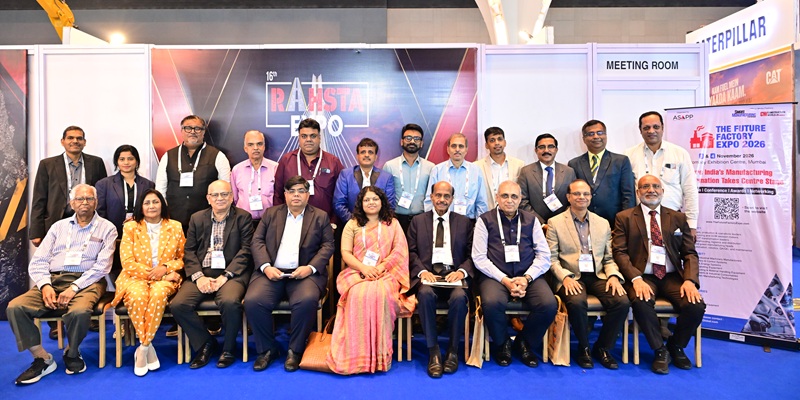
Future Factory Expo CXO Roundtable Charts Smart Transformation for SMEs
During the roundtable, hosted by Smart Manufacturing & Enterprises (SM&E) and The Future Factory Expo 2026, industry leaders outlined how SMEs can use practical digitisation, automation, skilling an..
Read moreAutomation & Robotics
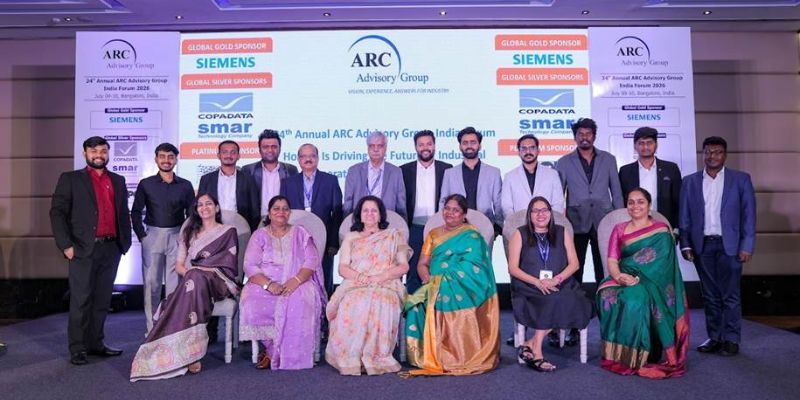
ARC India Forum Spotlights AI-Led Industrial Transformation
ARC Advisory Group’s 24th India Forum brought together 300-plus leaders to examine how AI is transforming industrial operations, manufacturing and supply chains.
Read moreSmart Manufacturing
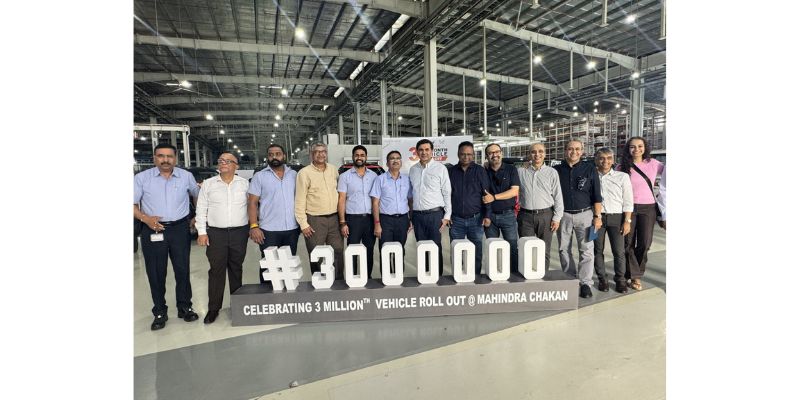
Mahindra’s Chakan Plant Crosses 3 million Vehicle Milestone
Mahindra’s Chakan facility has crossed three million vehicles, with the BE 6 marking its evolution into a flexible, digitally enabled hub for ICE and electric mobility.
Read moreRelated Products
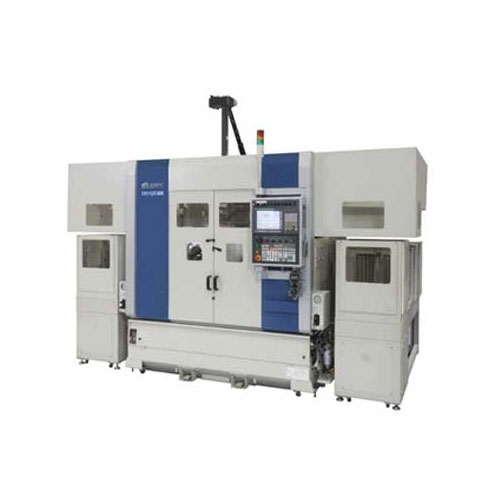
Compact Fmc - Motorum 3048tg With Fs2512
INDUSTRIAL AUTOMATION & TECHNOLOGY CONSULTANCY
Meiban Engineering Technologies Pvt Ltd offers a wide range of Compact FMC - Motorum 3048TG with FS2512.
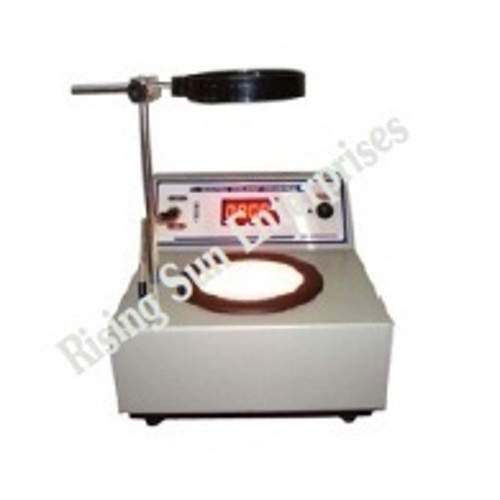
Digital Colony Counter
INDUSTRIAL AUTOMATION & TECHNOLOGY CONSULTANCY
Rising Sun Enterprises supplies digital colony counter.

Robotic Welding SPM
INDUSTRIAL AUTOMATION & TECHNOLOGY CONSULTANCY
Primo Automation Systems Pvt. Ltd. manufactures, supplies and exports robotic welding SPM.
latest News
Subscribe to iNoW

For Industry News on WhatsApp, Give a Miss Call on: +91 84228 74016