





Schedule a Call Back


Industry 4.0: The 'Smart Factories' are coming
 Technical Articles
- Mar 01,17

Sumit Banerjee reports on the preview of the forthcoming Hannover Industrial Fair, better known as Hannover Messe, scheduled from April 24-28, 2017.
Hannover Messe is undoubtedly the flagship trade fair in the world on industrial products, held every year in April, in the trade fair city of Hannover in Germany. Like in previous years, this year too, the Deutsche Messe Team organised a preview of the fair on 9th February, to showcase a few selected exhibitors and exhibits, the ones which might steal the limelight in the fair proper. The obvious objective of such preview is to gain global traction for the forthcoming fair itself, by highlighting the items that might be of special interest to the potential visitors.
This year, there were about 40 exhibits in the preview. The table that attracted immediate attention because of its sheer thoughtful connect with nature, was the one by Ziehl Abegg, displaying its Bionic series of centrifugal fans, inspired by design elements from nature, such from whales, honeycombs, owls, etc. Exhibitors claimed these designs are more aerodynamic, more energy efficient, and sometimes more silent than conventional designs. Quite inspiring and intriguing adoption of nature into science, perhaps evoking a desire to see more such innovations.
However, the overarching theme flowing through most exhibits seemed to be Industry 4.0. Although frequently used and heard about these days, the term Industry 4.0 perhaps needs some explaining. Where does the number 4.0 come from? Number one was steam and the steam engines that mechanised some of the work we did. Next came electricity, the assembly line and the advent of mass production, immortalised in the movie ‘Modern Times’. The third era of manufacturing industry came with computers and the rumblings of automation, when electronically controlled machines began to replace humans on those assembly lines. And now we enter the age of Industry 4.0, in which computers and automation are collaborating in an entirely novel way, with robotics connected through internet/wi-fi, to computer systems equipped with machine learning capabilities that can learn and control the robotics with scant instructions from human masters. This is the genesis of Industry 4.0, or shall we say ‘Industrie 4.0’ as the Germans would say.
Industry 4.0 brings to us what has been variously called the “smart factory,” in which cyber-manufacturing sub systems track the physical processes of a factory and make localised decisions/choices. The physical systems, meaning the actuators, sensors, tools and alike, become Internet of Things, communicating and cooperating both with each other and with operators in real time via direct connectivity or the wireless network.
For a factory or system to be accepted as Industry 4.0, it must have:
Interoperability - machines, devices, sensors and people that connect and communicate with one another.
Information flow - the systems create a virtual copy of the physical world through sensor data in order to contextualize information.
Technical collaboration and assistance - both the ability of the sub systems to support operators in making decisions and solving problems or doing tasks that are too iterative for humans.
Decentralised decisions - the ability of electro-physical sub systems to make simple decisions on their own and become autonomous to some extent.
The focus on how to take manufacturing industry to the next level of productivity and competitiveness through implementation of state-of-the-art automation, leveraging on the latest advances in communications technology, was evident in almost everything displayed in the preview. It came across to me as a strong desire by a nation (Germany, in this case) to sustain its leadership in hi-tech manufacturing in the world.
Being a maintenance guy myself, I was deeply interested in some of the offerings on predictive maintenance applications, for diverse sectors such as cement, sugar, pharma, power, etc., exhibited by the likes of Rexroth – Bosch, ABB, GE and others. Predictive maintenance in itself is not a new idea, and in one form or another, it is also practices by progressive organisations which are highly sensitive to unreliable machine interruptions. But the newer applications shown in this preview will take predictive maintenance to the realm of artificial intelligence, with the help of advanced sensors and data analytics. However, these applications may not be affordable to most manufacturers in India in the current context.
A welcome feature we noticed was that several research institutions were present displaying their concepts on smart manufacturing, which are considered ready for commercialisation. It was a refreshing change to interact with researchers and educationists from technical institutes, getting to know how such developmental work is supported in Germany, and how things find applications in real-life factories. Take for example, the need of aircraft, trains and power plants which have to be inspected regularly. Detecting damage too late could pose safety risks and often result in expensive downtimes. Now, researchers from Fraunhofer Institute are using the 3D SmartInspect sensor and inspection system to transfer established testing routines into tomorrow’s digital world.
There were other research bodies as well, presenting new technologies both software and hardware for Industrie 4.0, altogether giving an impression of the very close cooperation between German industry and research institutes, working together to enhance the competitiveness of the German manufacturing sector. A fascinating new energy saving and carbon friendly process for manufacturing glass from Karlsruhe Institute of Technology, was found particularly disruptive. How one wishes that such harmony existed in India also, between the academicians and industrialists.
Related Stories
Auto & Auto Components

NBC Bearings Expands Automotive Aftermarket Portfolio Beyond Bearings
NBC Bearings has launched a new range of automotive aftermarket products, including wiper blades, brake pads, belts and steering rods, for two- and three-wheelers and passenger cars.
Read moreAuto & Auto Components
Vimag Labs secures fifth patent for VMSM platform
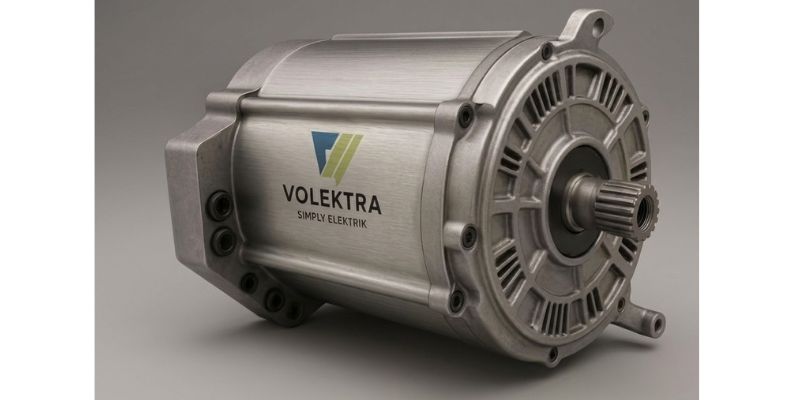
Vimag Labs has secured its fifth Indian patent for the core architecture of its Virtual Magnet Synchronous Motor platform, strengthening its intellectual property portfolio and supporting commercial..
Read moreAuto & Auto Components
Uno Minda enters complete vehicle seating segment
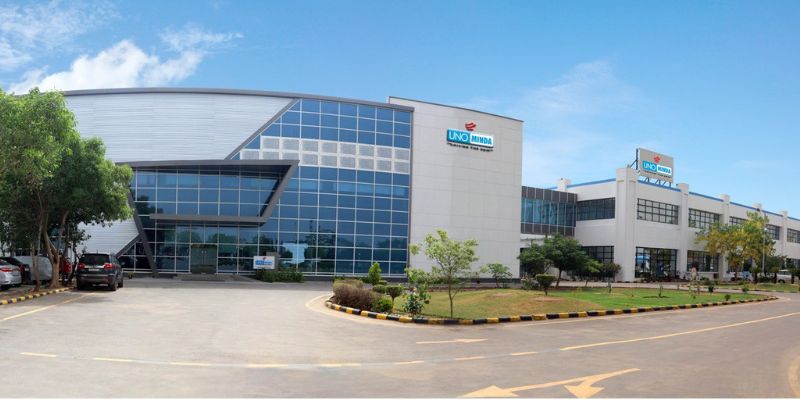
Uno Minda will enter the complete four-wheeler passenger vehicle seating systems segment through a Rs 3.2 billion greenfield facility in Chhatrapati Sambhajinagar, expected to begin operations by Q4..
Read moreRelated Products

Liquid Ring Vacuum Pumps/Compressors
Compressors and Allied Equipment
Aeromatic Engineering Private Limited offers a wide range of liquid ring vacuum pumps/compressors.
Read more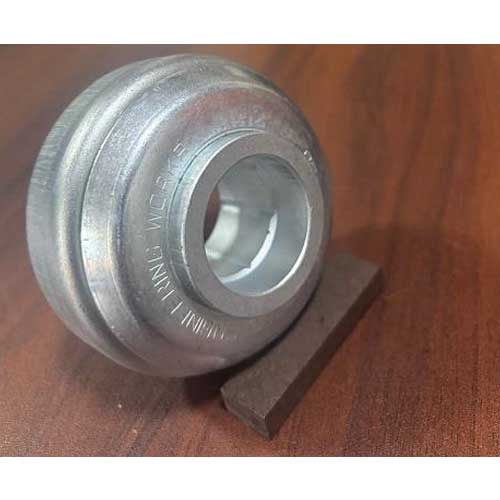
Hot Wheel Bearing
Bearings, Bushings, Wheels and Gears
SICCO Engineering Works offers a wide range of hot wheel bearing. Read more
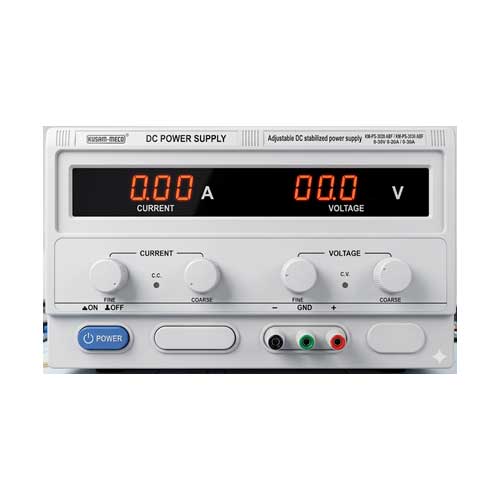
Kusam-meco DC Power Supply Model Km-ps-3020 Abf / Km-ps-3030 Abf
Power Supplies, Batteries & Accessories
<p>Kusam Electrical Industries Ltd offers Kusam-Meco DC power supply model KM-PS-3020 ABF/ KM-PS-3030 ABF</p> Read more
latest News
Subscribe to iNoW

For Industry News on WhatsApp, Give a Miss Call on: +91 84228 74016