




Schedule a Call Back


Industrial Automation: Synchronising with time
 Technical Articles
- Dec 09,15

- DR PETER MARTIN
Real-time enterprise, effectively managed, reduces energy costs, increases plant safety and improves overall production.
The real-time enterprise is a practical, achievable ideal. Especially in a difficult economic time, re-aligning existing assets for a real-time model can yield business rewards. Industrial companies commonly respond to a difficult economy by hunkering down and waiting for the market to swing back up. Although this is often a safe approach, it sometimes results in lost opportunities to increase production, improve efficiencies and better the overall operations of the plant. As the economy weakens, capital spending is naturally cut, which is a very reasonable reaction. But when capital projects stop, new opportunities to use existing technology and talent to drive performance improvements arise. By seizing these opportunities, not only will the company cope with the impact of a weak economy, it will also be in a strong position to capitalise on new efficiencies when the economy recovers.
Industrial plant is actually a collection of assets working together to create or generate products. These assets include process assets, such as equipment and piping; automation and information assets, such as instrumentation and systems; supply assets, such as energy and feedstock; and human assets, such as operators, maintenance personnel, engineers and management. To optimise the overall business performance of the enterprise, each of these asset groups must operate collaboratively at peak levels. Because existing human assets are not busily applied to new capital projects during an economic slowdown, this might be the ideal time to divert human asset capabilities to fundamentally enhance the performance of all the other assets.
 While this might be obvious to industrial management, what might not be as obvious is determining an effective strategy, which the plant’s human assets can employ to drive performance improvement. Identifying the appropriate strategy is most readily accomplished by evaluating the business dynamics that have changed over the past few years. To determine what might be new and different in the industry, it might be useful to start at the business basics of the plant.
Evaluating costs
At its core, industrial plant exists to generate product at the lowest possible cost. In the process industries, the majority of these variable costs come from energy and feedstock. When evaluating these business variables for dynamic changes that have occurred over the past few years, we find that important shifts have occurred. For example, only a few years ago, industrial companies could negotiate energy contracts with their suppliers over a period of six months or even one year, effectively making the price of energy a constant value. Today, long- term contracts are no longer available in most markets and, not only that, the price of energy might change many times every day. This shift has completely altered the business dynamic and created the need for an effective business management system. Since their inception, manufacturing processes have had to operate in real-time. Now, the business of manufacturing has to be conducted in real-time too.
 As a result of these dynamic shifts, traditional strategies for managing manufacturing operations fall short. Most of the business management infrastructure in industrial operations has been designed and implemented to provide monthly snapshots of businesses that are changing minute by minute. This is unacceptable. It is tantamount to driving a car while only looking through the windshield once a month, hoping that you arrive to your desired destination without an accident. That is just not going to happen.
Moreover, the freedom to drive improved business value is limited by mandatory safety programs that focus on protecting the people, the process, and the environment. In many cases, these safety standards impose constraints on business variables and often work at odds with business objectives.
Real-time improvements
Many variables that measure safety fluctuate in real-time. For example, the process and equipment measurements that foreshadow an impending accident or event, such as equipment vibration or temperature, change in real-time with equipment operation. Even environmental issue such as emissions can change in real-time. These safety variables must be managed in real-time while simultaneously driving real-time business improvements even as other key business variables are changing in real-time. It is obvious that the most effective strategy to improve performance in such a real-time atmosphere is to develop a real-time business operations management infrastructure that is built to match the dynamics of emerging real-time enterprises.
A real-time enterprise requires business and operations information to be available to operations personnel and management in real-time. Traditional IT systems however, are not designed to provide information so frequently. They are optimised around monthly, weekly or, at best, daily schedules, and typically do not contain data that reflect the real-time operation of the business. It is impossible to take monthly data and extract minute- by-minute guidance from it. On the other hand, automation systems were designed from inception to operate in real-time. They are also connected to a real-time process instrumentation that reflects everything that is happening in the plant second by second.
Better business
Using real-time business information, such as current energy costs that can be retrieved directly from utilities in electronic format, basic process data can be transformed into required business and operating data in real-time, allowing plant personnel to make real-time decisions that improve the plant performance in real-time. And this typically requires no additional capital investments. All it requires is talent that can use existing plant automation and information systems in a new and different way to apply real-time operational and business information.
Although the concept of a real-time enterprise might seem daunting, the basics of controlling and improving such an enterprise are much simpler than they initially appear. The key is to build on the knowledge engineers have developed over the past fifty years in controlling real-time production processes.
 Implementation
The four-block process displayed in the figure shows how this transposition can be accomplished. The first block represents real-time business measurement already discussed. Once these measurements are available, they can provide each person in the operation with the information they require, empowering them to make decisions that generate ongoing business value in real time. These empowerment dashboards must be carefully designed to provide only the easy-to-understand data each person requires to improve business performance as they execute their job. For frontline personnel who operate in the most real-time environment, it is very important to limit the information only to what is necessary and contextualise it to the current manufacturing and production strategy.
The next box of real-time business control shows how the classic concepts of feedback and feed forward can be applied to business variables, not just process variables. The final box is real-time business optimisation. The connotation of business optimisation in this context is not limited to linear and non-linear optimisation techniques.
Rather it is focused on how changes in business approach might help drive performance improvements. For example, the new approach might help break down organisational silos, such as operations and maintenance that traditionally work on the same industrial assets, but with almost diametrically opposed objectives. Developing collaboration provides common and complementary performance measures for both groups and leads to significant changes in behaviour. This in turn leads to significant performance improvement and provides huge opportunities to drive increased business value into an industrial operation.
The four-block operations business management model is simple, familiar and effective when applied to business improvement. Most control and process engineers have the background and experience to make great strides towards business performance improvement using it. But because business improvement is typically constrained by safety issues related to people, process and the environment, effective operations of the real-time enterprise requires that a similar performance measurement and improvement approach be applied to the key real-time variables associated with safety. Once again, this can be effectively accomplished by applying the four-block model to real-time safety management, real-time safety empowerment, real-time safety control, and real-time safety optimisation.
Getting the larger picture
Applying and coordinating the simple measurement, empowerment, control and optimisation model to both the safety and business aspects of an industrial operation provides a holistic approach to operations management that matches the dynamics of the business environment in which today’s plants operate. The real-time enterprise, effectively managed, reduces energy costs, increases plant safety and improves overall production while helping to achieve environmental sustainability.
This is a difficult economic time for industry. But such times offer new opportunities for improvements. With the reduction of capital projects, if industrial companies mobilise their existing human assets to build real-time operations business and safety management programs using their automation and information assets, not only will they ride the downturn with less disruption, will also be in a great position to capitalise when the economic upswing comes. The time is now. The opportunity is ripe.
Dr Peter Martin, Vice President, Business Value Solutions, Schneider Electric
Related Stories
Machine Tools & Accessories

Feintool Opens First Production Facility in India
Feintool has inaugurated its first production facility in India, located in Pune, with production ramping up to fulfil initial customer orders for fineblanked automotive components and support growi..
Read moreSmart Manufacturing
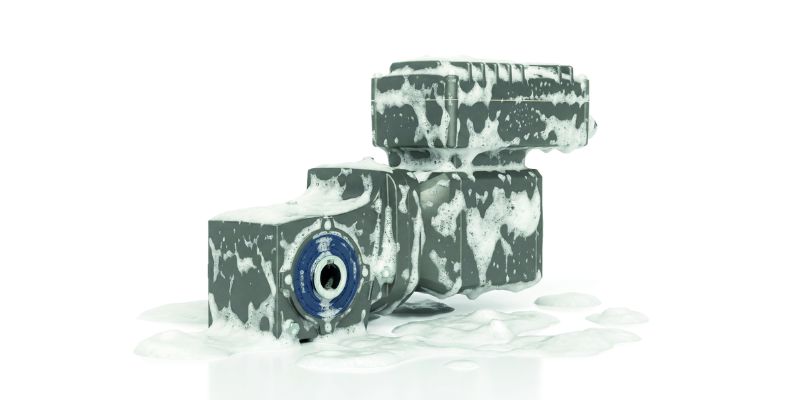
NORD’s NXD tupH strengthens hygienic packaging drives
NORD DRIVESYSTEMS’ NXD tupH® surface treatment enables compact aluminium drive solutions for wet product-contact areas, offering hygiene, corrosion resistance and scalability for primary packagin..
Read moreAuto & Auto Components
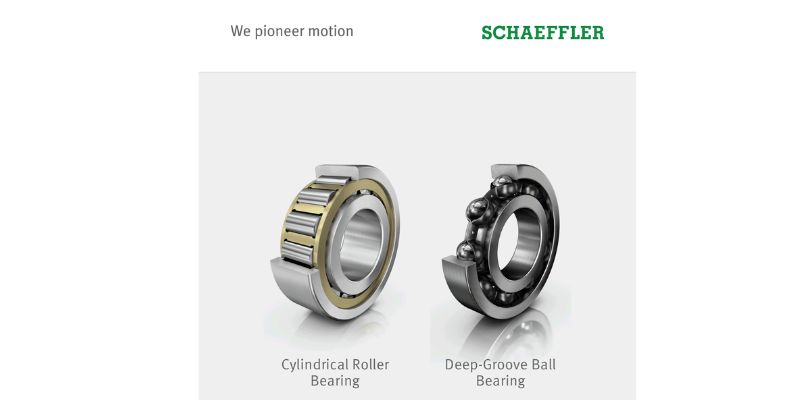
Schaeffler India Secures BIS Licence for Bearings
Schaeffler India’s Maneja and Savli plants have received BIS licences for Cylindrical Roller Bearings and Deep Groove Ball Bearings, marking a significant first for the company and India’s beari..
Read moreRelated Products
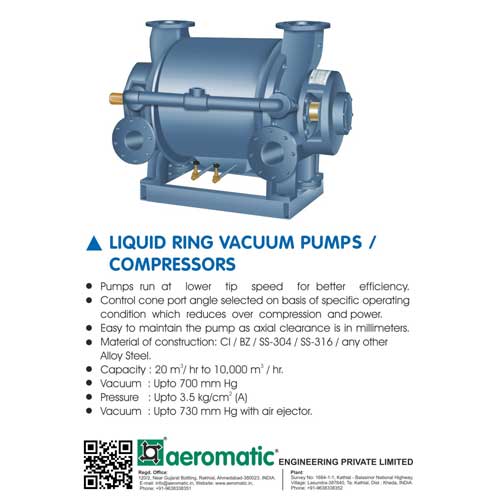
Liquid Ring Vacuum Pumps/Compressors
Compressors and Allied Equipment
Aeromatic Engineering Private Limited offers a wide range of liquid ring vacuum pumps/compressors.
Read more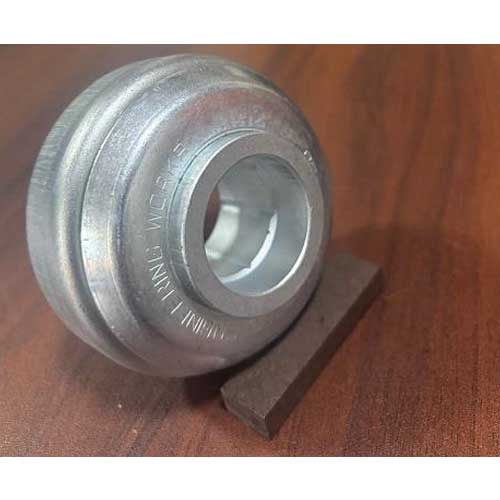
Hot Wheel Bearing
Bearings, Bushings, Wheels and Gears
SICCO Engineering Works offers a wide range of hot wheel bearing. Read more
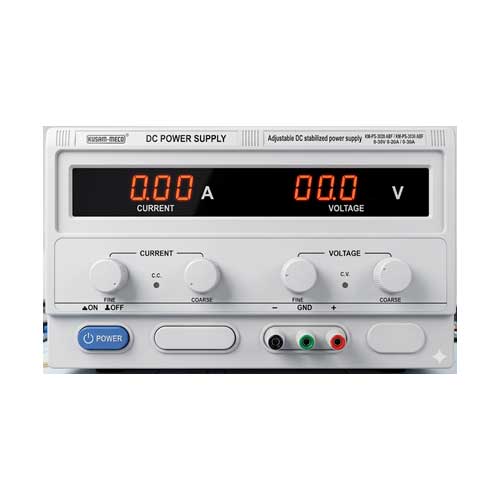
Kusam-meco DC Power Supply Model Km-ps-3020 Abf / Km-ps-3030 Abf
Power Supplies, Batteries & Accessories
<p>Kusam Electrical Industries Ltd offers Kusam-Meco DC power supply model KM-PS-3020 ABF/ KM-PS-3030 ABF</p> Read more
latest News
Subscribe to iNoW

For Industry News on WhatsApp, Give a Miss Call on: +91 84228 74016