






Schedule a Call Back


India’s security calculus is shaped by West Asia conflict: Satyabrata Satapathy
 Interviews
- May 08,26
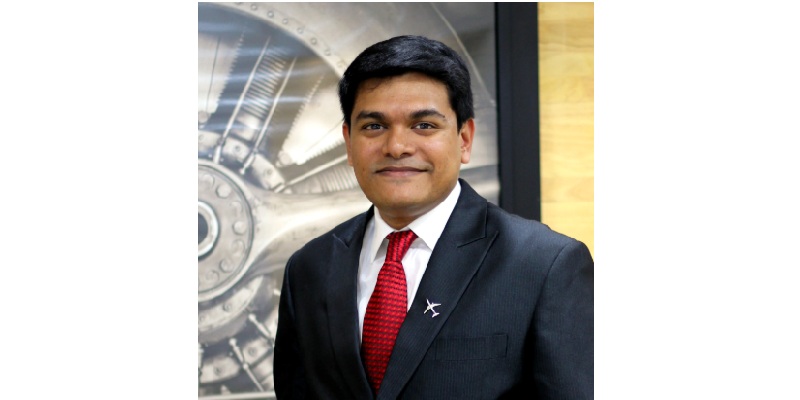
In this interview with Satyabrata Satapathy, Co-founder & CEO BonV Aero, outlines how global conflicts, import dependence and policy shifts are accelerating India’s demand for drones, counter-drone systems and indigenous defence manufacturing.

How are ongoing conflicts in West Asia impacting the global demand for drones and counter-drone systems, particularly within India’s defence sector?
The 2025–2026 US-Israel–Iran conflict didn't just reshape West Asian geopolitics, it rewrote the rulebook on modern warfare itself.
Ballistic missiles made headlines, but drones were the real protagonists. Iran's mass deployment of Shahed loitering munition swarms, coordinated, relentless, and timed alongside traditional missile salvos, wasn't random aggression. It was a calculated doctrine: flood the sky with enough low-cost threats to push the world's most sophisticated air defence systems — Patriot, THAAD — into an impossible equation.
Consider the number that should make every defence planner pause: for every $1 Iran spent launching a drone, the US and Israel were spending $80 to $200 to shoot it down. That asymmetry isn't a tactical footnote, it's a strategic crisis. Stopping hundreds of low-altitude, an autonomous threat simultaneously isn’t just technically demanding; it is economically unsustainable at scale.
For India, the lessons are immediate and consequential. With nearly 9 million citizens in the region and a significant share of its energy imports transiting West Asian waters, this conflict is not a distant theatre, it directly shapes India's own security calculus. The response has been swift. DRDO Chief Samir V Kamat's 2026 announcement of a strategic pivot toward drones and counter-drone technologies, backed by India's record Rs 7.85 trillion defence allocation in Union Budget 2026-27, reflects the urgency policymakers now feel.
Demand for surveillance UAVs, loitering munitions, and multi-layered counter-drone systems is growing at an unprecedented pace, and India's defence industrial ecosystem must rise to meet it.
What are the key challenges currently hindering the growth of India’s drone industry, particularly in technology access, component sourcing and scaling up manufacturing? How is your organisation addressing these issues?
India's drone industry is growing fast, but we also need to ensure that the growth stands on a solid, sustainable foundation.
The structural challenges run deeper than most acknowledge. Component dependency is the most acute: India imports 50–60 per cent of its drone parts, nearly 90 per cent of flight controllers for small drones come from China, and critical sensors, IMUs, LiDAR modules, GPS units, remain largely foreign-sourced. The Ministry of Defence has rightly banned Chinese components in military drones on security grounds, but that creates an immediate sourcing vacuum the Indian supply chain is not yet equipped to fill.
Then there is the manufacturing scale-up problem. India has no shortage of drone startups, but scaling from prototype to production-grade, repeatable manufacturing is a completely different challenge. Most companies operate with limited quality control infrastructure and inconsistent component sourcing. Building defence-grade UAVs at volume requires precision tooling, environmental testing rigs, and robust quality assurance systems that most early-stage players cannot sustain without institutional support
Add to this a significant shortage of drone engineers and autonomous systems developers, and you have a tripartite challenge, supply chain, regulation, and talent, that no single policy intervention can solve.
This is precisely the space BonV Aero operates in. Our response has been structural: building core propulsion systems and GPS-denied navigation stacks in-house, rather than assembling imported sub-systems under an Indian label. Our Rs 3 billion facility in Khordha, Odisha, with an embedded industrial skilling centre, is our answer to all three challenges simultaneously.
We are not just manufacturing drones. We are manufacturing the ecosystem.
How dependent is India still on imports for critical drone components, and how are companies working to localise production?
Let's be honest about where India stands. The government banned Chinese components in military drones back in 2023, yet as recently as March 2026, the Ministry of Defence released a new enforcement framework explicitly acknowledging that Chinese-origin microchips, sensors, and sub-electronic parts are still being found in products supplied to the armed forces. Firms are now facing blacklisting for falsifying component origins, which tells you the problem is not just supply chain; it is systemic.
The deeper problem is that India is largely still assembling drones, not manufacturing them. PLI 2.0, finalised in early 2026, is a step in the right direction, mandating that approximately 30 per cent of total drone value be produced domestically. But policy frameworks alone don't build supply chains. Companies have to make the harder choice of investing in indigenisation even when importing is cheaper and faster.
BonV Aero has made deliberate choices to reduce this dependency. By developing cost-efficient, indigenised sub-systems in-house and reducing reliance on imports across propulsion and navigation, we are demonstrating that component-level indigenisation is achievable without sacrificing performance. Our Odisha facility will further deepen this by bringing suppliers, engineers, and software developers into a single ecosystem, creating approximately 1,000 direct and indirect jobs.
Which emerging technologies are driving the next phase of drone development, and how are they influencing design, performance, and real-world deployment?
The next generation of drones is being shaped less by s fundamental advances in materials, propulsion, and energy, and these are visibly transforming how UAVs are designed.
Solid-state batteries are redefining endurance expectations. Designers are now building airframes around higher energy-density cells, enabling longer missions without the weight penalties of conventional lithium packs.
Advanced composite materials, carbon fibre, aramid laminates, and self-healing polymers, are allowing engineers to push structural limits while keeping platforms remarkably lightweight. Aerodynamic refinement has followed suit, with blade geometries and body profiles being optimised for efficiency at varying payload capacities.
Modular design philosophy is gaining ground too. Operators want platforms that adapt, swappable payloads, configurable propulsion arrays, and standardised interfaces that reduce downtime in the field.
Collectively, these demands are pushing drone design toward greater precision engineering, tighter tolerances, and a manufacturing rigour traditionally associated with manned aviation.
Which government policies and initiatives have been most relevant to the drone and defence ecosystem? What further support is needed to accelerate growth?
The policy architecture India has built, Drone Rules 2021, PLI Scheme for Drones, Drone Import Policy, Drone Shakti Mission, and iDEX, collectively represents the most progressive regulatory ecosystem India has created for any emerging technology sector. Union Budget 2026 reinforced this by treating drones as part of "strategic and industrial infrastructure" rather than experimental technology.
What makes India's current policy moment particularly powerful is that it is not just a Central government story. State governments are emerging as equally proactive actors. Odisha's B-MAAN (Building Manufacturing, Aerospace and Navigation) scheme is a standout example, offering dedicated land allocation, capital subsidies, and infrastructure support specifically for UAV manufacturers looking to set up in the state. At a time when most states are still treating drones as a niche subset of their generic industrial policy, Odisha has built a targeted, sector-specific incentive framework that signals genuine strategic intent. BonV Aero's decision to anchor our Rs 3 billion manufacturing facility in Khordha, Odisha, was directly influenced by this enabling environment.
At the Central level, iDEX has been a particularly catalytic mechanism for us, enabling early-stage technology validation with defence end-users before full-scale production. The PLI scheme has incentivised the manufacturing investment that makes our Odisha facility viable. Policy has set the foundation. What the next phase demands is execution infrastructure to match the ambition.
What new opportunities do you see emerging for Indian drone companies across defence and dual-use applications, and how is your organisation preparing to capitalise on them?
The next wave of opportunity for Indian drone companies is wider than most people appreciate, and it spans both defence and civilian applications in equal measure.
Consider what India's own varied geography demands: high-altitude logistics in the Himalayas, last-mile medical logistics to inaccessible territories where a slight delay can cost precious lives, disaster response in flood-prone corridors, and precision agriculture across fragmented landholdings. These are not future aspirations, they are active, urgent use cases. Together, they build a use-case library that positions Indian manufacturers uniquely for the rest of the world, where similar terrain and infrastructure gaps exist but domestic manufacturing capability does not.
BonV Aero is preparing on multiple fronts. Our Rs 3 billion integrated manufacturing facility in Khordha is built not just for production at scale, but for the full-stack development cycle, from rapid prototyping and systems integration to airworthiness validation and type certification readiness. Our dedicated testing infrastructure at Rangeilunda supports real-world flight envelope testing, payload deployment trials, and BVLOS mission simulation across diverse operational environments. This end-to-end in-house capability, spanning avionics development, autonomous navigation stacks, and propulsion engineering, means we are not dependent on external validation cycles or imported sub-system compatibility.
Beyond infrastructure, we are investing in capacity building and partnering with defence establishments, state governments, logistics players, and agricultural bodies to co-create solutions across India's diverse demand landscape. We are also actively targeting export markets, where the need for ruggedised heavy-lift logistics is acute.
The inflection point is here, and we recognise the responsibility that comes with it. At BonV Aero, we are focused on building with purpose, one validated system at a time.
India drone industry
counter-drone systems
defence drones India
BonV Aero
drone manufacturing
indigenous UAVs
DRDO drones
drone policy India
Satyabrata Satapathy
Related Stories
Aerospace Defence
Low-cost drones defeat costly military assets: Arth Chowdhary
In this interaction Arth Chowdhary, CEO, InsideFPV says, low-cost drone warfare in West Asia is driving urgent demand for domestic drones, counter-drone systems, localisation and next-generation def..
Read moreAerospace Defence
India’s drone future needs scale, reliability, localisation: Vamsi Vikas Ganesula
In this interview Vamsi Vikas Ganesula, Founder and Managing Director, Raghu Vamsi Aerospace Group outlines how conflicts, localisation, emerging technologies and policy support are reshaping Indiaâ..
Read moreAerospace Defence
India’s security calculus is shaped by West Asia conflict: Satyabrata Satapathy
In this interview with Satyabrata Satapathy, Co-founder & CEO BonV Aero, outlines how global conflicts, import dependence and policy shifts are accelerating India’s demand for drones, counter-dron..
Read moreRelated Products
Troop Comforts revolutionises military gear with indigenous innovations
Aerospace & Defence
Troop Comforts Ltd (TCL), a state-owned defence corporation, has recently received a request for proposal (RFP) from the Northern Command of the Indian Army for its indigenously developed military gea Read more
latest News
Subscribe to iNoW

For Industry News on WhatsApp, Give a Miss Call on: +91 84228 74016