





Schedule a Call Back


Haas Automation Inc: Racing Ahead
 Technical Articles
- Jun 03,11
NULL

Haas Automation's manufacturing facility, spread across a whopping 1 million sq. ft., presently produces 1200 machines a month
By Milton D'Silva
 Early this year, in the second week of February 2011, Haas Automation India Pvt Ltd., was formally inaugurated in Navi Mumbai as a 100% subsidiary of Haas Automation Inc., USA, by volume the largest manufacturer of CNC machine tools in the world. A month later, at the company's global headquarters in California, over 1200 customers, dealers, and vendor representatives attended the HaasTec from March 10 to 12, 2011 for an on-the-spot experience of the Haas manufacturing facility through a guided factory tour, and a look at the vendor exhibits covering tooling, probing, software and more.
Terrence Miranda, Managing Director, Haas Automation India Pvt Ltd, led a 25-member delegation to the HaasTec, representing Haas officials and customers from India. The highlight of the three-day event was the display of the latest Haas machines with new technologies, including the DT-1 Drill/Tap Centre, ST-10 CNC Lathe, and DS-30SSY Dual-Spindle Turning Centre.
 Founded by Gene Haas, who once owned a machine shop, the necessities of which sowed the seeds of this burgeoning enterprise, the Haas manufacturing facility is spread across a whopping 1 million sq.ft. of built up area at Oxnard, a small town that is a 75 minutes drive from LA International airport. Established in 1983 at Sun Valley, California, the company moved to the 86-acre facility in 1997, and has since scaled up operations to assemble over 1200 units of its various models and versions every month. At present, the manufacturing activities are spread over three buildings while the fourth building, added in 2006, serves as the inventory. So while Gene Haas, who co-owns a NASCAR race team with Tony Stewart, pursues his passion for racing on weekends, the company he founded is racing ahead 24x7.
 With a healthy order book, the machine shops are buzzing with activity, all the flexible manufacturing systems and robotic cells working with clockwork precision, the operation automated to the extent possible, running with minimal human intervention during the day, and unattended during the night. Over the years, the number of Haas machines, including robotic cells and chip making machines, has increased on the shop floor. Of the 289 chip making machines, 201 are Haas, accounting for 70% of the production machines. Though the average age of the machines is 5 years, the oldest dates back to 1997. There are other machines, mainly Motoman and Fanuc robotic cells; Mori Seiki Flexible Manufacturing Systems for aluminium parts; Hitachi Seiki and Toshiba and Okuma, all multi-pallet cells, mainly for machining of large castings, turrets and housings. All machining operations are performed in a single set up to maintain production speed as well as accuracy.
 The numbers are huge. The manufacturing of Haas machines consumes 1 million pounds of aluminium castings annually, sourced from 3 different foundries and mainly comprising SMTC housings, carousels and inline spindle motors. Besides, another million pounds of raw materials is used per month, steel and aluminium bar stock, supplied by vendors on a daily-needs basis.
The company also processes 7 million pounds of cast iron per month, 350,000 pounds per day, sourced from 15 suppliers around the world. With such numbers, the operations are fully automated, the total scheduling managed with vendors via the SAP system that integrates all Haas operations globally.
 While the company takes immense pride in manufacturing most of its requirements in-house, non-critical components and operations are outsourced. Some components are manufactured in-house as well as outsourced, depending on the requirement. All sheet metal parts are outsourced, and so are the heat treatment and powder coating operations. Small castings are also outsourced.
45 trucks bring in the sheet metal on a daily basis, the load amounting to 650 pallets. With 34-ft high ceiling, the Inventory Building is 10 ft taller than the three other buildings. The precision flat floors have guidelines embedded in them for wire guided fork trucks to negotiate the narrow aisle racking. The inventory numbers are also staggering - 1.5 million pounds of pallet racking, 17,000 pallet spaces; over 40,000 different part numbers from 675 suppliers worldwide. Two-thirds of the vendors are domestic.
With a product range of around a dozen main machine groups comprising Toolroom Mills and Toolroom Lathes (and their diminutive 'Office' versions), Turning Centres, and the VMCs and HMCs, Haas manufactures and assembles over 160 variants that make the total product portfolio. At the centre of this plethora of models is the same SAP system that is the backbone of all Haas operations linking vendors and Haas Factory Outlets (HFOs), right from taking the orders to making final delivery.
Once an order is placed for a particular model from anywhere in the world, through the HFO, the same is transmitted to the factory where it is converted into a SolidWorks model with each and every parameter accurately mapped.
 Once the virtual model, an exact replica of the real thing is ready, it is time for assembly. Based on the virtual model, it is now time for 'kitting' - different kits are prepared for each assembly process, with every single part accounted for, down to the last bolt and cable tie. "What we ensure by kitting is that experts in the inventory are putting parts together, and experts in assembly are building machines," says Robert Murray, General Manager, and a Haas veteran. The kitting process ensures that the assembly is perfect, with no scope for that assembler's nightmare - a missing bolt or a loose cable. The tool crib is automated with vending machines as the interface.
The Haas global footprint covers over 100 countries - the entire American continent, and all of Europe and Asia, also Australia and New Zealand. With the exception of large parts of Africa and some areas in the Middle East, Haas has customers all across the world. It is now moving into Kenya and Morocco, with an eye on the future. With such a vast geographical spread across different countries, languages and cultures, maintaining service manuals is also a formidable challenge. "We work with translation services and standard translation packages doing real time translations. Every six months all the manuals are revised to accommodate the changes in specifications, where applicable," says John Roth, Director of Customer Service.
 Haas does not tool up machines for customer specific requirements. The company manufactures standard machines; however the HFOs do a certain amount of customisation, based on actual user requirements. The Haas customer is really the HFO and the HFOs are organised along a strict set of guidelines. According to Roth, each HFO is chosen carefully and is not much different in look and feel across different geographies. Also other than the shipping costs that vary across the geographies, the actual cost of a Haas machine remains uniform across the HFOs.
The Haas philosophy is clear: to keep things simple and not to get into anything that does not have the numbers. "We are not interested in any machine that will sell just one unit a month," says Roth. "For Haas to make sense, there has to be at least two machines on order each week of any model or variant," adds Murray. It is all about volumes.
 That does not mean the company lacks the capability. "We are simply not a solutions provider in that sense, for all types of machining requirements. Yet we have products for most applications including 5-axis machining used in wind mills and aeronautical sectors," says Roth, and adds, "Our typical customer is a job shop or a component maker. For them too, it is all about numbers and flexibility. The machines essentially have to adapt from one batch of components this week to another the next week."
The DT-1, a compact, high-speed drill and tap machine with full milling capabilities is one of the faster selling machines from Haas, and then there are the VMCs, VF-1 and VF-2. But even the HMCs including the large job models, are getting the volumes. Yet, despite being a volumes player, today the average waiting period for a Haas machine is between 8 to 10 weeks, something that both Roth and Murray are not happy about. "We have our production schedules decided in advance for each quarter, and for the next, we are scaling up," says Murray. The company has the capacity to scale up monthly production to 1300 machines, and even stretch it up to 1400. As a matter of fact, the company did set a monthly record of over 1500 machines once, in early 2008, just before the recession set in.
The year 2009 is one that everyone in USA would like to forget. The figures tell why. The company that sold 13,000 machines in 2008 globally could sell just 5,100 machines in 2009. It was crisis big time, and survival was the key. Being debt free helped. Not only were there no retrenchments at Haas, the company also helped its US-based HFOs survive the bad phase through discounts and bonuses. The crisis eased the following year as volumes for 2010 rose to a respectable 7,900 machines. Production doubled, and happily the trend continues in 2011.
At Haas Automation, constant improvement is described as a way of life, the company always looking for ways to improve its CNC products and give more value to its customers. Such incremental improvements are rolled into production without fanfare - and the customer simply gets a better machine. The company invests a significant part of its turnover, around 15%, on R&D. About 120 engineers, from a total of 850 Haas employees at the factory, are engaged in R&D. The focus of all R&D efforts this year is on Reliability. This, from a company that receives just about one service call on an average, during the warranty period.
"Design, safety and simplicity are at the heart of all our R&D initiatives," says William Tandrow, Director of echanical Engineering, while drawing attention to the generational changes incorporated in the VMCs recently (see box). Among the new developments on the anvil are a Universal Machining Centre; Drill Tap centre DT-2; a long bed version of ST-40; and Y axis for ST-10. Nothing radical, but always getting better and better, keeping with the company's philosophy.
Haas operations in India are expanding too. The company sold 680 machines in 2010-11, more than double the number it sold in the previous fiscal. For the current fiscal, the company expects to sell close to 800 units. Operating with six HFOs at the moment, more HFOs are planned to open in the coming years, covering all major industrial regions. Though Haas Automation Inc., sources components from several countries globally, at the moment nothing is sourced from India. But given the pace of India's machine tool development, that may not take too long to change. N
New Developments in Haas Machines
When Haas redesigned its VF product line recently, it incorporated wide ranging enhancements, making Haas VMCs better than ever. All aspects of the machines were reviewed - including motion control, coolant containment, chip evacuation, ergonomics, and serviceability. Highlights include:
- Coolant containment - redesigned chip pans and coolant flow to reduce chip build up and efficiently flush chips into the auger trough for removal; optional chip removal systems with multiple side augers with front discharge auger or belt type conveyor for high volume production applications
- Optimised enclosures to prevent chip and coolant egress during machining; better enclosure with much simpler design
- Better ergonomics - the machines' windows and doors now stiffer, move more smoothly, and close tightly; the new Haas thin-design control pendant mounts directly to the enclosure, providing a lighter but more stable operator interface than the previous version, and
- Enhanced motion control - Haas VMCs now use next-generation digital servomotors and high-resolution encoders on all axes to ensure smooth, precise motion control. Combined with significant software and motor-control advancements on the new machines, these yield higher accelerations and better surface-finish performance than ever before.
Related Products
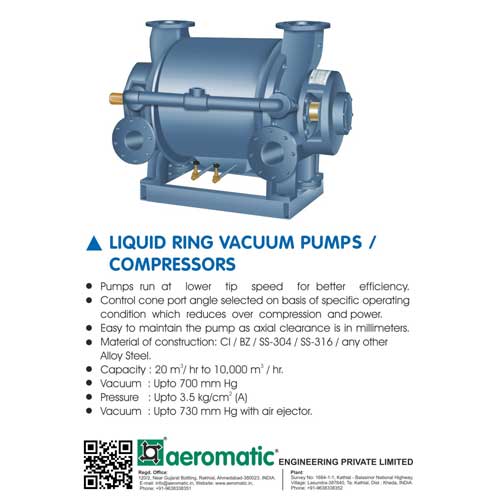
Liquid Ring Vacuum Pumps/Compressors
Compressors and Allied Equipment
Aeromatic Engineering Private Limited offers a wide range of liquid ring vacuum pumps/compressors.
Read more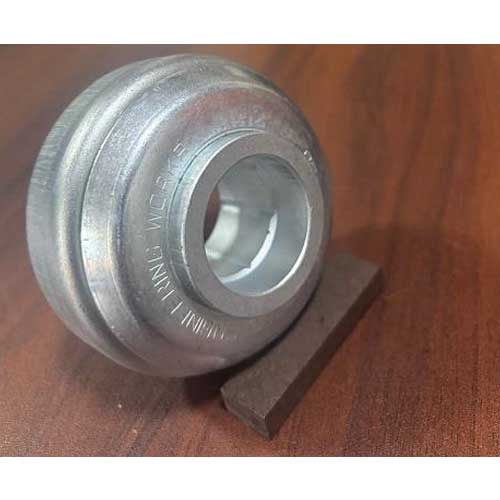
Hot Wheel Bearing
Bearings, Bushings, Wheels and Gears
SICCO Engineering Works offers a wide range of hot wheel bearing. Read more
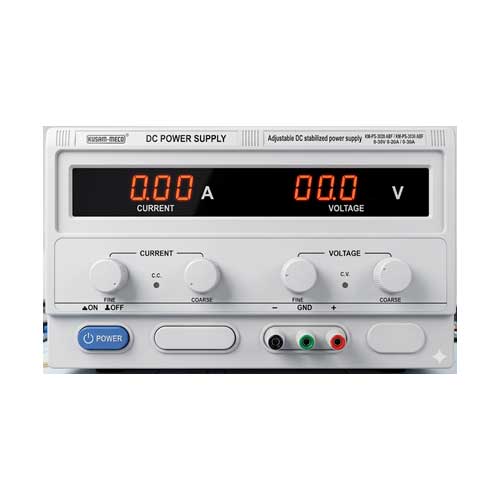
Kusam-meco DC Power Supply Model Km-ps-3020 Abf / Km-ps-3030 Abf
Power Supplies, Batteries & Accessories
<p>Kusam Electrical Industries Ltd offers Kusam-Meco DC power supply model KM-PS-3020 ABF/ KM-PS-3030 ABF</p> Read more
latest News
Subscribe to iNoW

For Industry News on WhatsApp, Give a Miss Call on: +91 84228 74016