





Schedule a Call Back


Good growth prospects for the ECE industry
 Technical Articles
- Jul 01,17
The year 2016 has been a remarkable year so far for JCB India as we see strong growth returning in the earthmoving and construction equipment (ECE) industry. Roads and highways is one of the key sectors driving this growth, supported by the development of physical infrastructure in both, urban and rural India. The government has made efforts in creating an environment for revival of growth in the infrastructure space.

An overview of the earth moving and construction equipment industry
“The year 2016 has been a remarkable year so far for JCB India as we see strong growth returning in the earthmoving and construction equipment (ECE) industry. Roads and highways is one of the key sectors driving this growth, supported by the development of physical infrastructure in both, urban and rural India. The government has made efforts in creating an environment for revival of growth in the infrastructure space. Also, programmes like ‘Make in India’ have shown great potential in transforming India into a world-class manufacturing hub. From a policy perspective, the passage of GST in the Rajya Sabha was a critical milestone. It is an important step towards free trade within India, and will also give a push towards the ease of doing business in the country.” This is the gist of a message posted by Vipin Sondhi, MD & CEO, JCB India Limited, and it puts into a nutshell everything there is to the ECE industry in India.
In fact, JCB India, which is one of the giants in the ECE industry, has displayed its faith in this growth story by introducing three new, innovative material handling product ranges – telehandlers, skid steers and super loaders. Aimed at replicating global best practices in India, these products are now revolutionising the way material is handled at Indian construction sites. But, to begin with, how does one define this particular industry? Construction equipment generally refers to the relatively heavy machines or heavy-duty vehicles that are specially designed for executing construction (or demolition) tasks, mainly earthwork operations. An efficient, accurate, easy, and cost-effective method for the construction of complex and high-quality infrastructure is possible only with the help of construction equipment.
Construction equipment (CE) can be classified into four groups – earth moving, road construction, concrete and material handling equipment. Earth moving equipment is the largest group, followed by concrete equipment and material handling equipment. In brief, the earth moving and construction equipment is one of the most important sectors which forms around 7per cent – 8 per cent of the national gross domestic product (GDP). It is one of the largest contributors to economic activity, following the agriculture sector in India. Hence it acts a key driver for various infrastructure development projects and to create growth opportunities for various other industries in the economy.
Thus, the construction equipment industry also paves way for valuable FDI inflows and has attracted various international players. It is the sector which gives either direct or indirect employment to more than 30 million people in the country and hence it’s highly labour-intensive. Among the total infrastructural investment, around 60 per cent accounts for construction equipment. The construction industry of India is an important indicator of the development as it creates investment opportunities across various related sectors. It has contributed an estimated Rs 6,708 billion to the national GDP in 2011-12 (a share of around 9 per cent). The industry is fragmented, with a handful of major companies involved in construction activities across all segments; medium-sized companies specialising in niche activities; and small and medium contractors who work on a subcontractor basis and carry out the work in the field.
According to the report titled ‘Construction and Mining Equipment Market’ by Markets and Markets, the global construction equipment market would be worth USD 125.4 billion by 2019, among which Asia-Pacific is the largest and fastest growing construction and mining equipment market. Based on the report by A T Kearney and the Indian Construction Equipment Manufacturers’ Association (ICEMA), in India, over the next few years the ECE industry is expected to grow at a tremendous CAGR of 20-25 per cent. Currently the ECE market accounts for only USD 3 billion, but its growth potential is more in the near future, such that the market would be around USD 16-20 billion by 2020. The Indian ECE market has the greatest capability to grow at 20-25 per cent to reach 3,30,000 – 4,50,000 unit sales by 2020.
Based on revenues, among the construction equipment industry, earth moving holds the largest share of around 68 per cent whereas the remaining 32 per cent is contributed by concreting/road construction/material handling/material processing. In India, 71 per cent of the sector comprises public limited companies including PSUs and 29 per cent private limited or joint ventures including closely held private limited companies. It is notable that there were cumulative foreign direct investment (FDI) inflows of USD 209.4 million in earth moving machinery in the period April 2000 - March 2014. The Planning Commission estimates total infrastructure spending to be about 10 per cent of GDP during the 12th Five Year Plan (2012–17), when compared to 7.6 per cent during the previous plan (2007–12).
As per a report by IBEF, significant allocation to the infrastructure sector in the 12th Five Year Plan and investment requirement of USD 1 trillion is expected to create huge demand for construction equipment in India. In the road sector, the government’s policy to increase private sector participation has proved to be a boon for the infrastructure industry with a large number of private players entering the business through the public-private partnership (PPP) model. During the next five years, investment through PPP is expected to be USD 31 billion. An additional boost will be the government’s ‘One Hundred Smart Cities’ project to develop satellite towns of larger cities by modernising the existing mid-sized cities in the country. Rs 70.6 billion have been allocated in the current fiscal year for the same.
Some of the key players in the ECE segment that are bound to benefit from such plans include JCB India, Action Construction Equipment, Ashok Leyland, John Deere, Bharat Earth Movers, Caterpillar Commercial, Escorts Construction Equipment, GMMCO, Greaves Cotton, Ingersoll Rand India, L&T Komatsu, Larsen & Toubro Ltd. (Construction Equipment Division), Mahindra & Mahindra, Stetter India, Trucks India, Telco Construction Equipment Co., TIL, Voltas, Volvo India, Wirtgen India, Apollo Earthmovers, Braithwaite & Co., Elecon Engineering Co., Godrej & Boyce Mfg. Co., Gujarat Apollo Equipment Ltd., Jessop & Co., TRF Ltd., WMI Cranes, and others.
According to business reports about the ECE industry, two primary factors that will help the industry achieve its potential for growth are the increase in demand from end-user industries and higher adoption of ECE in traditional construction applications. “However, to meet its unrealised potential, the industry will need to address some tough challenges. Best practices from other countries, as well as from successful domestic projects, offer ways to increase ECE adoption by construction companies. But ultimately success will depend on close collaboration between government and ECE OEMs to clear away some of the roadblocks,” the report states.
There are some challenges though. As for example, issues of land acquisition and the scarcity of land for various infrastructure developments is one of the primary obstacles to quick growth. Various project bottlenecks like delays in project approval or other regulatory issues and environmental concerns place barriers in construction equipment sale. The timely availability of raw materials is yet another factor. Delays related to forest and environment clearance have an impact on infrastructure projects and lead to deviations in projected cash flows. Further, financing options are limited, and payment terms for first-time users are often unfavourable. “There is a need for pro-development policies from the government to bring about rapid execution of planned projects without any delays,” an industry spokesperson suggests.
But even as ways and means are being sought to address such challenges, industry leaders are moving ahead at a brisk trot to bring about impressive improvements in the ECE industry. To cite an example, BEML has introduced the BE1800E, an excavator with 10 cubic metre loading capacity, which is stated to be the biggest of its kind. It has been indigenously developed in India, is packed with leading-edge technologies, and offers a host of advantages, maintainability and operator comfort, as well as low operating costs. The electrical excavator is cost-efficient and an emission-free alternative to the engine-driven excavators. This equipment is working at the Singareni Collieries Company (SCCL), Ramagundam, Telangana since two years and has clocked over 12,000 hours of operation with very high uptime.
Truly reflecting the ‘Make in India’ policy of the government, BEML, through its R&D establishment, has been designing and developing various products for the mining and construction segment, including the recently designed and developed BH150E and BH205E electric dump trucks and BD50 HST dozer. Such initiatives have been forthcoming from other manufacturers too. JCB India, for instance, announced its first landmark deal last year to supply 250 JCB ‘ecoMAX’ engines annually to TPS Infrastructure, a leading engineering equipment manufacturer in India. TPS, based in New Delhi manufactures a range of engineering equipment for applications ranging from pollution control, municipal solid waste and special purpose mobile and bulk transportation.
Of late, there have been some notable trends in the ECE industry. Chinese equipment manufacturers have established a strong presence in some segments such as wheel loaders and dozers, due to which imports from China increased in FY16. Chinese equipment tends to be price-competitive, thereby putting downward pressure on prices of domestic equipment manufacturers. Meanwhile, the private sector’s share has expanded across key infrastructure segments, ranging from roads and communications to power and airports. Of the total planned infrastructure investments worth USD 1 trillion during the 12th Five Year Plan, the share of private sector is estimated to be 47 per cent, up from 25 per cent during the 10th Five Year Plan.
When it comes to the ECE industry, it is equally important to consider the associated financing and rental sectors. According to an industry report, as with any product that requires a large one-time capital expense, financing is a good way for the construction equipment industry to spark demand and acquire new customers. India’s earthmoving and construction equipment (ECE) financing industry was valued at Rs 23,000 crore. Financing accounts for about 80 per cent of the equipment purchased. For imported machinery, it’s even higher, with 90 per cent of equipment purchased being financed.
Over the next few years, the ECE financing industry is expected to grow by a compound annual growth rate of about 22 per cent. Most financing is through loans, with leasing as a distant second option. About 80 per cent of ECE users that opt to finance are micro, small, and medium-sized enterprises. With ticket sizes varying from Rs 20 lakh for a backhoe loader purchased by an individual user to Rs 20 crore for a construction firm’s bulk equipment purchase, the variety of players offering equipment financing has grown. Non-banking financial companies handle 75 per cent – 80 per cent of ECE financing.
Leasing or rental of construction equipment is still a very fragmented industry in India, but is expected to show strong growth, possibly higher than 30 per cent annually over the mid-term. Several OEMs have already constituted dedicated teams for the rental or leasing services. A robust rental market enables reduction in investments in projects by outsourcing the equipment requirement (including spares and services) and improving capacity utilisation of equipment, the report states. The key equipment in the rental fleet in India currently are backhoe loaders, pick-n-carry (PNC) cranes, excavators, motor graders, and vibratory compactors. “The demand for rental equipment is set to witness strong growth in the mid-term due to large investments in infrastructure. New players can also explore opportunities in the equipment finance business.”
-HUNED CONTRACTOR
Related Stories
Other Industrial Products
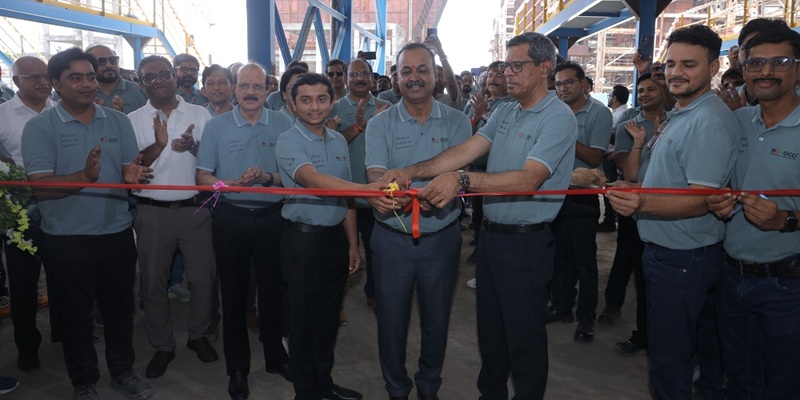
Nuvoco Vistas opens Limla cement plant, expands Western India footprint
Nuvoco Vistas opens a 2 MMTPA grinding unit at Limla, entering Gujarat and advancing its target of 35 MMTPA capacity by FY 2028.
Read moreMachine Tools & Accessories
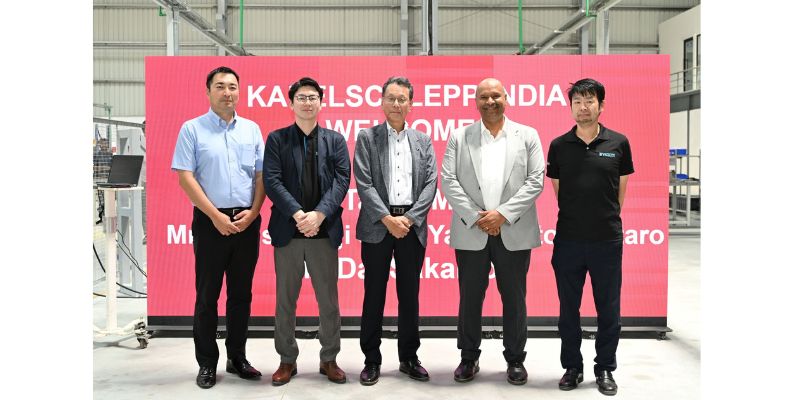
Tsubaki Leadership Reinforces India Growth Strategy during Kabelschlepp Visit
Tsubaki’s senior leadership visited Kabelschlepp India to review growth, localisation and innovation initiatives while strengthening engagement with employees, partners and customers.
Read moreAuto & Auto Components

Škoda Auto Volkswagen India Announces Leadership Transition
Piyush Arora will assume additional responsibility for Group sales and marketing in India as Jan Bures moves to a new role at Volkswagen AG.
Read moreRelated Products

Powder Sort Micro Level Sorting System
Building & Construction Machinery & Accessories
Gridbots Technologies Pvt. Ltd. offers powder sort micro level sorting system.
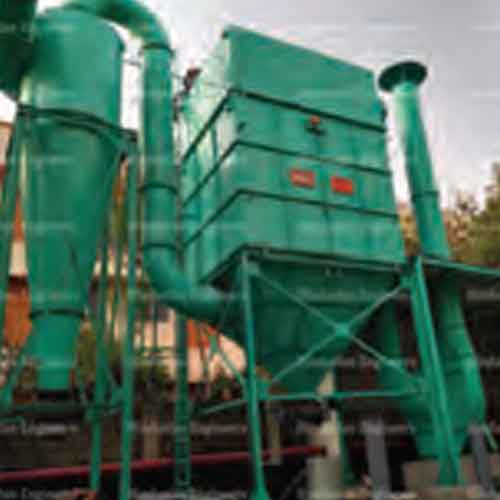
Industrial Cyclones
Building & Construction Machinery & Accessories
Hindustan Engineers offers a wide range of industrial cyclones.
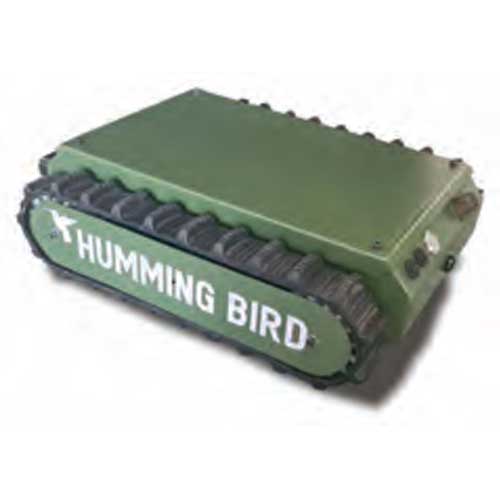
Autonomous Surveillance Humming Bird
Building & Construction Machinery & Accessories
Gridbots Technologies offers a wide range of humming bird. Read more
latest News
Subscribe to iNoW

For Industry News on WhatsApp, Give a Miss Call on: +91 84228 74016