



Schedule a Call Back


Godrej Enterprises Group: Driving India’s Material Handling Revolution
 Articles
- May 25,26
It is believed that India’s material handling sector is in a transformative phase. Godrej is all set to capture this growth with its electric material handling equipment (MHE), IoT-enabled fleets, and vertical storage solutions, writes Rakesh Rao.
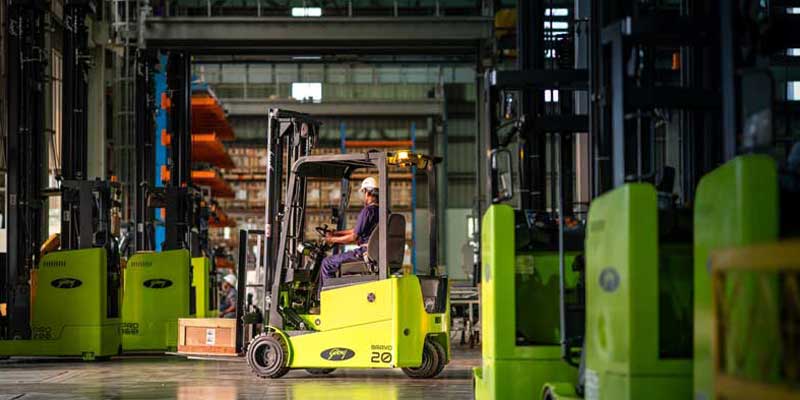
For nearly six decades, Godrej’s Material Handling Business has been at the forefront of India’s intralogistics sector. The business is part of a wider ecosystem of Godrej Enterprises Group that includes consumer-facing and nation-building ventures such as aerospace, defence, and industrial equipment. “Our material handling operations encompass forklift manufacturing, storage solutions including racking and shelving systems, and warehouse automation. Together, they form the backbone of Godrej Intralogistics,” explains Neville Mevawala, Head – Sales & Marketing, Material Handling Equipment business of Godrej Enterprises Group (GEG).
Since manufacturing its first one-tonne electric forklift in 1963, Godrej has pioneered electric mobility in India’s warehouse industry. “There is so much buzz around electric vehicles (EVs) today, but electric forklifts have been around in India for almost sixty years. We were the first to bring this technology to the country,” he states, highlighting the company’s leadership despite growing competition from domestic and international players.
A cornerstone of Godrej’s success, according to him, is indigenisation. “We emphasise locally designed and manufactured solutions. Even our advanced lithium-ion and multi-ion battery systems are developed in India, with engineering, control software, and data management fully localised. This ensures superior service and operational reliability for our customers,” he notes.
Battery innovation and electrification
The company’s battery strategy is particularly innovative. While lithium-ion technology was introduced in India only a few years ago, Godrej approached it with caution, partnering with Indian startups to develop complete battery packs, modules, and battery management systems (BMS) locally. Mevawala elaborates: “The BMS is effectively the computer of the battery, controlling how power is drawn and delivered. Local design allows us to provide constant support and ensures that operational data remains in India, enhancing reliability and customer trust.”
Godrej has also introduced multi-ion battery technology, designed for high-stress environments such as ceramics, jute, brick-making, aluminium, and steel production. He highlights the advantages: “Multi-ion batteries contain no lithium, reducing supply chain dependencies. They are thermally stable, safe, and operate in a wide temperature range—from minus twenty to fifty degrees Celsius. Importantly, they last up to 70–80 per cent longer than conventional lithium-ion batteries, essentially becoming ‘batteries for life’.”
The transition from diesel to electric forklifts has been transformative. Early electric models were limited by inefficient motors and control systems, but Godrej’s introduction of advanced DC motors in the early 2000s, followed by AC motor technology in 2008, improved energy efficiency, reliability, and maintenance. “For diesel forklifts, fuel accounts for 35–40 per cent of total lifecycle costs. Electric trucks reduce this to 15 per cent, offering clear economic and environmental benefits,” Mevawala observes.
Sustainability and corporate responsibility have also accelerated the shift toward electrification. “Many large companies now mandate that their supply chains be green. Vendors are expected to electrify wherever possible, driving adoption even in traditionally diesel-heavy industries,” he adds. Today, Godrej produces electric forklifts ranging from three to ten tonnes, catering to harsh operational environments previously considered unsuitable for electrification.

Space efficiency and logistics optimisation
Space efficiency is another driver of modern warehouse design. Rising land costs and the need for higher storage density have prompted companies to move from low-aisle layouts to high-rack, narrow-aisle configurations. “As warehouses go vertical, you need machines capable of operating in aisles as narrow as two metres and lifting pallets up to eleven metres high. This is where our engineering innovation makes a difference,” Mevawala explains.
The broader logistics ecosystem also shapes material handling trends. India’s expanding e-commerce, FMCG, and industrial networks require warehouses and distribution centres across tier-two, three, and four cities. Companies must manage hundreds of sites efficiently, creating demand for IoT-enabled forklifts, predictive maintenance, and fleet monitoring solutions. He observes: “With sensors, we can detect early signs of wear, monitor driver behaviour, and track fleet utilisation centrally. This allows for preventive maintenance and optimised operations across the country.”
Mechanisation is essential to meet rising production demands. “Labour shortages and the need to distribute to hundreds of centres across India mean that mechanised systems are no longer optional. Warehouses now handle pallets of 200 cartons or more, which can weigh up to two tonnes, making forklifts critical to operational efficiency,” he points out.
Technological trends and the future
Looking ahead, Mevawala identifies two key technological fronts. First, energy efficiency remains paramount. “Our next focus is improving motor efficiency. While current motors convert about 85 per cent of battery energy to wheels, we are developing systems capable of 90–92 per cent efficiency. Combined with advanced batteries, this can reduce electricity consumption by up to 30 per cent compared to trucks five years ago.”
Second, digitalisation will continue to reshape operational management. IoT integration allows real-time monitoring of trucks across multiple factories and warehouses, delivering insights that enhance productivity, safety, and lifecycle management. He explains: “Once data from our trucks is collected centrally, managers can analyse fleet utilisation, operator performance, and potential maintenance issues, enabling informed decisions that save both time and energy.”
Godrej’s market foresight extends to strategic expansion. The company recently inaugurated a Global Production Centre in Hosur and a Global Capability Centre in Bengaluru. Neville emphasises: “These facilities support advanced engineering, software development, digital solutions, and process excellence. They allow us to serve domestic customers efficiently while supporting exports, maintaining our global competitiveness.”
Industry outlook and emerging opportunities
Neville Mevawala anticipates a transformative decade for India’s material handling sector. “Mechanisation is essential to address labour shortages and rising production demands. Distribution is expanding beyond metros, and with national highway networks and initiatives like Sagarmala, industrial clusters will proliferate. The logistics and material handling industry is poised for unprecedented growth.”
The proliferation of electric and multi-ion battery forklifts, IoT-enabled fleets, and vertical storage solutions positions Godrej to capture this growth. “By integrating energy-efficient motors, advanced batteries, and IoT monitoring, we are helping warehouses achieve both operational efficiency and sustainability. Our solutions ensure that customers stay competitive today and in the future,” Mevawala concludes.
Neville Mevawala
Godrej Material Handling
Material Handling
Electric Forklifts
Lithium-Ion battery
Multi-Ion Battery
Rakesh Rao
Warehouse Automation
Energy Efficiency
Godrej Enterprises Group
Godrej & Boyce
Industrial Logistics
Material Handling equipment
Related Stories
Smart Manufacturing
Adoption of electric material handling equipment is accelerating: Jai Sancheti
In this interview, Jai Sancheti, Vice President, Material Handling Equipment Solutions, SILA Group, explains emerging trends in material handling sector and how SILA is supporting this transition wi..
Read moreMaterial Handling Equipment
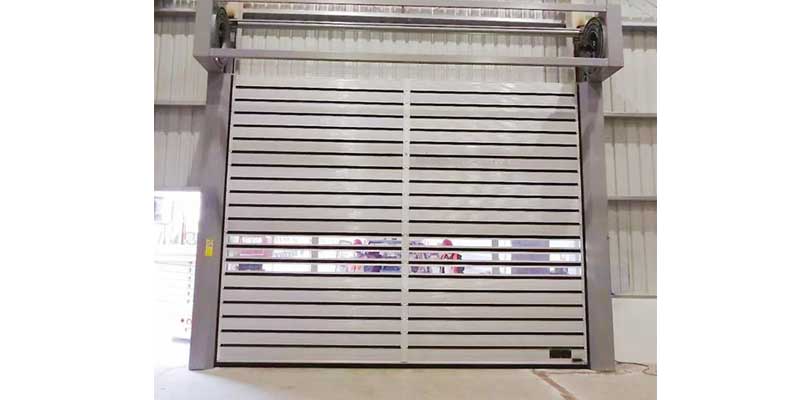
Avians High-Speed Metallic Spiral Door for Efficiency and Safety
This innovative door combines the swiftness of high-speed doors with the robustness of metal rolling shutters, featuring insulation for added efficiency.
Read moreAutomation & Robotics
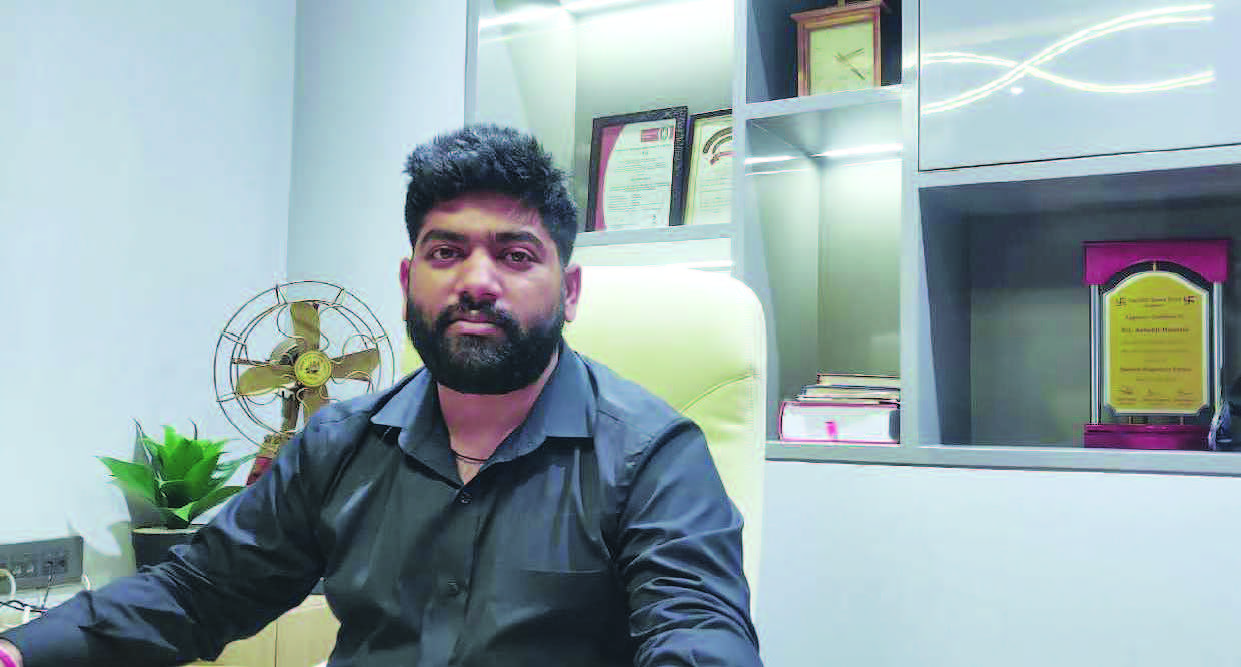
Automation is transforming material handling: Ravi Hissaria
In this interaction, Ravi Hissaria, MD, Tippers & Trailers India Pvt Ltd (TNT India), discusses advancements in material handling technologies, the company’s latest offerings and its future plans.
Read moreRelated Products
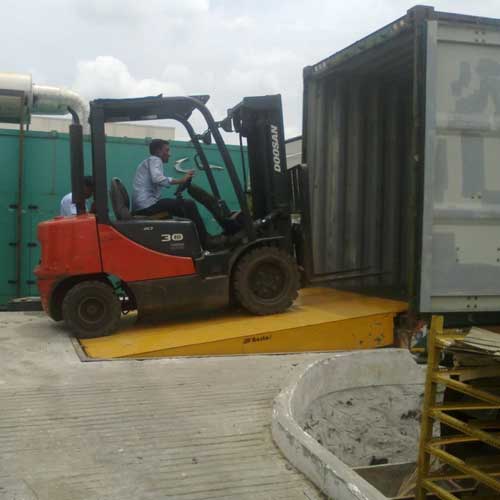
Dock Leveller
MATERIAL HANDLING EQUIPMENT & STORAGE SYSTEMS
Besto Material Handling Equipments offers a wide range of dock leveller.
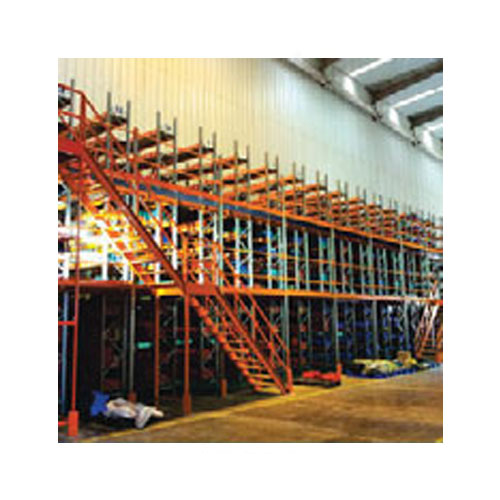
Multi Tire
MATERIAL HANDLING EQUIPMENT & STORAGE SYSTEMS
SCI Storage Solution offers a wide range of multi tire.
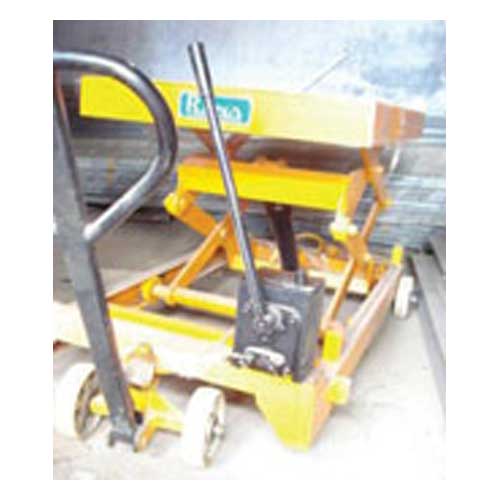
Industrial Lifting Equipment
MATERIAL HANDLING EQUIPMENT & STORAGE SYSTEMS
Rana Material Handling Equipments Pvt Ltd offers a wide
range of industrial lifting equipment.
latest News
Subscribe to iNoW

For Industry News on WhatsApp, Give a Miss Call on: +91 84228 74016