





Schedule a Call Back


Global leaders decode industrial trends and India’s manufacturing future
 Articles
- May 25,26
From investments in local facilities to global capability centres (GCCs), multinational companies are sharpening their focus on India. Industry leaders share their insights with Rakesh Rao on emerging manufacturing trends, automation and India’s growing role in the future of industry.

India’s manufacturing sector is entering a transformative phase, driven by emerging technologies, strategic investments, and an increasingly skilled workforce. Global industrial leaders are closely observing these developments, aligning their operations and strategies to leverage India’s growth potential. From automation and AI to renewable energy integration and localised production strategies, India is rapidly positioning itself as a hub for innovative manufacturing.
Industrial evolution: AI impact
The industrial landscape is evolving at an unprecedented pace. Frank Notz, Member of the Management Board, Sales, Festo SE & Co KG, highlights, “Beyond artificial intelligence (AI), general software and ecosystem integration now play a larger role in managing data and connectivity. For example, leveraging product data—from design to installation—can improve operational efficiency. Over the past year, Festo has also expanded its footprint: we opened a facility in India and plan to open a factory in Turkey. Regional and ‘local-for-local’ manufacturing strategies have accelerated, partly influenced by tariffs, which also make local production in the US attractive.”
Haluk Menderes, Managing Director, Eplan GmbH & Co KG, observes, “As economic pressures are driving companies to invest more in automation, it is providing good opportunities for us. Industrial automation, which was traditionally focused on manufacturing lines, is now increasingly relevant in energy and power sectors as well. Together with Rittal, we are concentrating substantial resources not only on market outreach but also on future-focused development.”
Automation remains a central driver in today’s industrial environment. Menderes explains, “The prevailing trend is heightened automation, but it is accompanied by increasing emphasis on quality and lead times. Companies are now benchmarking globally; for instance, suppliers from Asia Pacific may deliver faster to South America than local suppliers. This challenge is also an opportunity—optimising production and delivery can create competitive advantage.”
The industrial landscape is evolving rapidly, with emerging technologies capturing considerable attention, such as humanoid robots. Besides, software and AI adoption are transforming traditional production paradigms. “While earlier, Industry 4.0 was often discussed as a future concept, it is now a tangible reality. At Rittal sites, for example, robots are fully operational in production, and AI is the next milestone,” Menderes adds.
Connectivity and modularity are reshaping system integration. Norbert Gemmeke, Senior Vice President Global Product Development, Project Management and Innovation at HARTING Technology Group, points out, “The primary trend is accelerated product development. Solutions that previously took years can now be realised within months, aided by generative AI, particularly during prototyping. Customers also demand modularity. For example, in robotics, there is increasing use of mixed rectangular, metric and circular connectors to optimise system integration.”
Regional variations influence technology adoption. Emanuel Viklund, President, Portable Metrology division, Hexagon Manufacturing Intelligence, says, “Trends vary significantly by industry and geography. In electronics, for example, high-volume production necessitates extensive automation. Conversely, industries such as shipbuilding, which have smaller production runs, have different automation requirements. Regionally, adoption is influenced by industrial history, workforce skills, and cost factors. Japan, with its longstanding automation culture, has seen high adoption, while skill shortages in the US have accelerated automation in sectors like aerospace. In Europe, high labour costs are offset by automation, enabling efficient production of complex components such as precision ball bearings.”
Dr Evelin Arnold, Director Sales Support, Stationary Metrology division, Hexagon Manufacturing Intelligence, adds, “Cultural norms, workforce training, and regional industrial practices influence how automation is implemented. Different industries have varying tolerances for technology adoption, and companies tailor solutions to align with production complexity, labour availability, and cost structures.”
Precision industries, particularly aerospace, demand stringent quality standards. Dr Arnold explains, “Aerospace components, especially for engines, are increasing in size and throughput requirements. This necessitates advanced optical systems capable of high-speed measurement, often combining tactile and optical sensors. Our metrology solutions enable manufacturers to meet strict quality standards, increase throughput, and maintain consistency across complex assemblies. These systems allow for precise monitoring of tolerances, ensuring components adhere to the highest specifications.”
Viklund adds, “Aerospace backlogs require faster production. Manufacturers are automating existing lines and exploring production of smaller aircraft and unmanned vehicles. The sector has been among the fastest-growing over the past 12–24 months, driven by both civilian and defense demand. Automation solutions help optimise production flow, reduce bottlenecks, and improve overall efficiency.”
India: Focus on localisation
The shift from offshoring to localised production has emerged as a key trend in global manufacturing. As many countries adopt a ‘local for local’ strategy, this move towards de-globalisation is creating new opportunities for domestic suppliers to serve local markets. In line with this trend, Festo India has made significant investments in strengthening its local operations. Notz elaborates, “Festo India opened a manufacturing facility in mid-2025, now fully operational, catering to local demand while serving Asian markets and selected global clients. The facility gradually localises products to meet specific regional requirements while maintaining global quality standards. In February 2026, we inaugurated the Global Capability Center (GCC) in Bangalore, which houses technical, commercial, and design support, alongside R&D and local value-added processes. This dual setup—the factory and GCC—is fully commissioned and operational, forming a strong base for regional and global operations.”
Supporting SMEs in India is also a priority. “Indian SMEs vary greatly. Some small companies, with as few as 20–50 employees, are highly specialised in areas like robotic integration. These firms leverage high skill levels to adopt advanced automation. Other small enterprises may focus on low-labour-intensive processes such as sheet metal fabrication, often semi-automated. Our approach accommodates both types. We provide tailored solutions that match the capabilities and long-term perspective of the SME. High-end specialists increasingly utilise India’s software capabilities to integrate robotic automation efficiently. This support enables SMEs to grow rapidly and scale their operations with a clear value proposition,” says Notz.
Neil Elliott Smith, Segment President, Consumer Packaged Goods (CPG), Schneider Electric, highlights India’s market potential, “India is rapidly modernising and is on a high growth trajectory. Initiatives like ‘Make in India’ encourage local production and self-reliance, creating significant opportunities. The Indian CPG sector benefits from urbanisation, a growing middle class, and openness to international products. This combination makes India a vital market for Schneider Electric, one where we are investing heavily in both manufacturing capabilities and market development.”
Menderes adds, “India is our fastest-growing market, with high double-digit growth in customer base and team size. Indian companies are increasingly seeking efficiency and global competitiveness. Education in India is strong, producing highly capable engineers, including unique programmes for mechatronics. Indian customers now value global-standard engineering tools and certified products. SMEs are increasingly seeking internationally acceptable drawings and solutions. This shift aligns with government initiatives encouraging global outreach rather than solely serving domestic markets. The mindset in India is evolving towards quality, global competitiveness, and standardisation.”
Strategic market potential
According to Marco Stefanini, Founder & Global CEO, Stefanini Group, India presents two major opportunities. “First, in the mining sector, India has a strong position in exploration and beneficiation of critical minerals. Stefanini can partner strategically with these industries, leveraging our global experience in mining operations. Second, India offers a rich talent pool essential for complementing our IT and manufacturing solutions. Expanding our operations in India aligns with our broader strategy of Asia-Pacific growth, attracting, developing, and retaining skilled professionals for industrial digital transformation,” he says.
For Stefanini Group, India represents a key next step in its Asian strategy. He elaborates, “With a strong industrial base and growing adoption of digital transformation, India is an ideal environment to implement our solutions. Our focus is to establish a consolidated presence, attract and develop talent, and form strategic partnerships in sectors like mining and manufacturing. This approach allows us to integrate our IT and operational expertise effectively, ensuring a scalable and sustainable impact on Indian industrial operations.”
India’s growing electronics and high-value manufacturing ecosystem is a key growth area. Viklund observes, “Electronics is a major growth area, particularly in Asia. Countries like China, India, and Vietnam are rapidly expanding electronics manufacturing ecosystems. Major electronics companies are diversifying production footprints, establishing ambitious greenfield and brownfield facilities, and setting aggressive targets to scale production quickly. These developments create substantial demand for Hexagon’s solutions.”
Dr Arnold adds, “High-value electronics, such as smartphones and flat-panel displays, require precise measurement solutions. Premium products demand flawless finishes and performance consistency. Our systems ensure repeatability, enabling manufacturers to maintain quality standards and preserve the product experience, from visual appeal to functional integrity.”
Schneider Electric sees opportunities in life sciences and renewable energy. Smith explains, “Life sciences remain a key focus due to India’s leadership in generics and its growing biotech sector. Automation, energy management, and software solutions are essential in this space to ensure operational efficiency, compliance, and sustainability. Behind-the-meter energy solutions such as rooftop solar, wind, and storage systems are increasingly adopted. Schneider Electric enables integration with plant operations to maximise energy efficiency, schedule activities based on energy availability, and optimise storage. This integration allows plants to manage production within energy constraints while leveraging renewable sources effectively. Microgrids and hybrid energy solutions are becoming standard in advanced manufacturing facilities.”
ZEISS Industrial Quality Solutions is scaling its footprint in India. Dr Robert Zarnetta, Head of Customer Segment Management, explains, “India has emerged as one of our fastest-growing markets. To support this, we are building a 53-acre factory in Bangalore, adding to our manufacturing footprint alongside Germany, the US and China. The Indian market presents opportunities not only in traditional automotive and aerospace sectors but increasingly in electronics, batteries and semiconductors. With manufacturing shifting to India, our focus is on enabling high-quality production for both domestic use and global export.”
HARTING’s presence in India exemplifies strategic localisation. Gemmeke states, “India is a strategic region for both production and development. We localise not only manufacturing but also R&D to stay close to customers. Our development centres in India, China, Vietnam, Switzerland and the US allow us to respond quickly to local and global needs. In Chennai, we have production, product management and connector development. Bengaluru hosts our service, simulation, and generative AI activities, including AI-assisted modelling for connector development. This strengthens our regional presence while supporting HARTING’s global innovation and delivery capabilities.”
John Pritchard, Business Manager - Emulate3D, Rockwell Automation, underscores India’s digital potential: “India is a very promising market. The economy is growing rapidly, and manufacturing will be central to that growth. India is already important in sectors such as pharmaceuticals and automotive, and it is likely to become even more significant in global manufacturing. For companies looking to innovate, improve speed to market and compete internationally, digital twin technology can be extremely valuable. In that sense, India represents a perfect opportunity for Emulate3D and for the broader use of virtual commissioning. As manufacturers scale, modernise and compete with other industrial economies, technologies such as digital twins and AI-assisted engineering can play a vital role.”
Trade facilitation
Festo projects strong growth in 2026. Notz observes, “We anticipate continued growth. The year has started strongly, and while short-term market conditions are uncertain, we remain adaptable to capture emerging opportunities. India, in particular, is expected to outpace global growth due to foreign investment inflows and a significant demand for automation. Indian equipment and machine builders are becoming more international, driving additional growth.”
The India-EU Free Trade Agreement (FTA) is expected to facilitate smoother capital investments and enhances export potential, reinforcing India’s strategic importance for European firms. Menderes explains, “Many of our largest customers have extensive licensing in India and operate globally. The India-EU agreement facilitates smoother trade and reduces duties, for instance, for cooling solutions used in AI data centres and Industry 4.0 applications. Indian companies are exporting high-quality products to Europe, and with our solutions, we can support them in maintaining international standards while benefiting from reduced trade barriers. This will accelerate execution and enhance business efficiency.”
Dr Zarnetta concludes, “India is rapidly scaling in both quality and production capacity. This growth extends across automotive, aerospace, semiconductors and beyond. Our role is to equip manufacturers with the tools and technologies necessary to meet local and global quality standards. As companies adopt more advanced inspection and metrology solutions, we anticipate a virtuous cycle: better quality attracts more business, prompting further investment in capabilities. ZEISS aims to remain an integral partner in this scaling journey, supporting both large companies and SMEs.”
India’s industrial and manufacturing landscape presents a unique combination of opportunity, talent, and innovation. From investment in local facilities and GCCs to AI integration and renewable energy adoption, the country is poised for accelerated growth. Global experts believe India is on track to become a global manufacturing powerhouse with continued focus on localised production, quality standards, and advanced technology deployment.
Tech Shift
- Automation is moving beyond production lines into energy and power sectors.
- AI is enabling faster prototyping, predictive maintenance and process optimisation.
- Robots are becoming practical tools for assembly, handling and inspection.
- Digital twins are helping manufacturers reduce risks before physical execution.
- Precision metrology is becoming critical for maintaining quality.
India Advantage
- Global manufacturers see India as both market and export hub.
- Skilled engineering talent is strengthening India’s industrial technology ecosystem.
- Rising domestic demand is attracting long-term manufacturing investments.
- India’s quality focus is improving its global competitiveness in manufacturing.
Automation
industrial automation
artificial intelligence (AI)
Industry 4.0
localised production
global capability centres
digital twins
industrial robotics
precision metrology
Make in India
Haluk Menderes
Eplan
Frank Notz
Festo
Neil Elliott Smith
Schneider Electric
Emanuel Viklund
Metrology
Hexagon Manufacturing Intelligence
Dr Evelin Arnold
Hexagon
Marco Stefanini
Stefanini Group
Dr Robert Zarnetta
ZEISS
Quality Solutions
John Pritchard
Emulate3D
Rockwell Automation
Related Stories
Automation & Robotics
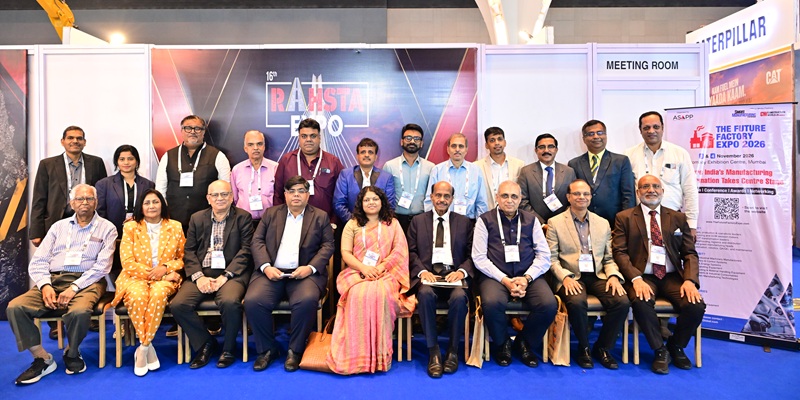
Future Factory Expo CXO Roundtable Charts Smart Transformation for SMEs
During the roundtable, hosted by Smart Manufacturing & Enterprises (SM&E) and The Future Factory Expo 2026, industry leaders outlined how SMEs can use practical digitisation, automation, skilling an..
Read moreAutomation & Robotics
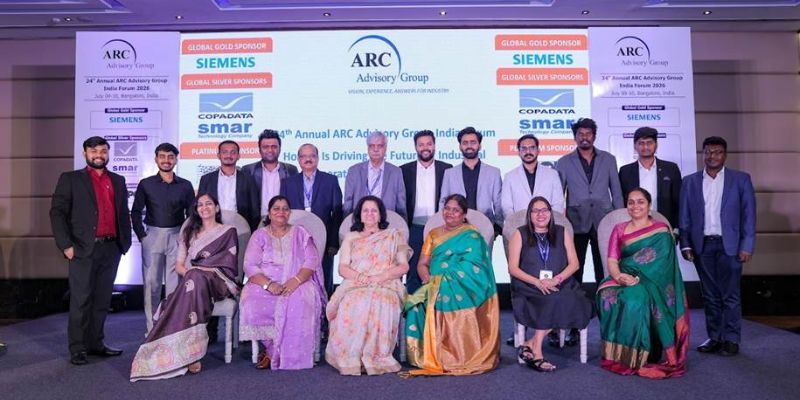
ARC India Forum Spotlights AI-Led Industrial Transformation
ARC Advisory Group’s 24th India Forum brought together 300-plus leaders to examine how AI is transforming industrial operations, manufacturing and supply chains.
Read moreSmart Manufacturing

Hitachi Vantara’s Norman Plant Named WEF Lighthouse Facility
Hitachi Vantara’s Norman manufacturing site has earned WEF Lighthouse status for using AI to reduce lead times, inventory and carbon emissions.
Read moreRelated Products
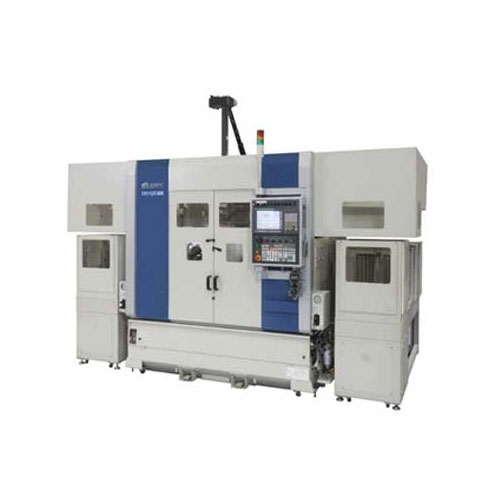
Compact Fmc - Motorum 3048tg With Fs2512
INDUSTRIAL AUTOMATION & TECHNOLOGY CONSULTANCY
Meiban Engineering Technologies Pvt Ltd offers a wide range of Compact FMC - Motorum 3048TG with FS2512.
Digital Colony Counter
INDUSTRIAL AUTOMATION & TECHNOLOGY CONSULTANCY
Rising Sun Enterprises supplies digital colony counter.

Robotic Welding SPM
INDUSTRIAL AUTOMATION & TECHNOLOGY CONSULTANCY
Primo Automation Systems Pvt. Ltd. manufactures, supplies and exports robotic welding SPM.
latest News
Subscribe to iNoW

For Industry News on WhatsApp, Give a Miss Call on: +91 84228 74016