






Schedule a Call Back


Food Processing and Sterilisation Technology
 Technical Articles
- Aug 06,12
NULL

With rapid urbanisation coupled with the boom in the IT and ITeS segments of the job market, eating out and purchasing processed food has become a common scenario, especially in urban India, helped in no small measure by the rapid proliferation of malls and mega markets. With the growing number of people in high profile jobs and the attendant work pressure, working couples are increasingly relying on the convenience of packaged foods, apart from more frequent visits to restaurants. With calories and health issues being the visible part of the story, many are not aware of the behind-the-scenes developments of how the science of food processing and sterilisation technology is gaining momentum in India.
The increasing number of frozen food brands and food parks has brought about a multi faceted change in the Indian society. FnBnews.com, a leading website of the food and beverages industry, reports that the Indian packaging industry has met with a substantial growth at a whopping rate of 15% per annum owing to the demand for processed foods and beverages. The portal also enlightens that despite the ongoing EU crisis and other challenges, Indian food processing industry is growing at a healthy rate of 14% per annum.
According to Mr Murugesa Boopathy, Vice-Chancellor, Tamil Nadu Agricultural University, India is the second largest producer of fruits and world's largest producer of mangoes. He adds that 40 per cent of the produce is damaged during transportation and this damage could be averted by nano-technology based projects. A synthetic version of a plant based chemical named hexanal can be employed in the form of nano-films to increase the shelf life of fruits. Hexanal is eco-friendly and has been approved by US Food and Drug Administration.
The Indian food market is worth Rs 8,60,000 crore of which primarily the processed food market accounts for Rs 2,80,000 crore and value added food processed market takes a share of Rs 1,80,000 crore. In India, the 300 million strong upper and middle class is a regular consumer of processed food. Top laboratories in India are encouraged by the Indian government to bring a significant quality change in Indian processed food industry. The Codex Alimentarius Commission (CAC), a body that was established in 1963 by the Food and Agriculture Organisation of the United Nations (FAO) and the World Health Organisation (WHO), strives to coordinate Indian processed food to international quality standards.
The following is the percentage presentation of processed food market:
- Fruits and vegetables (2%)
- Poultry (6%)
- Milk (35%)
- Marine Products (8%)
- Buffalo meat (21%), and
- Value addition (20%).
Overall, the story of food in India is one of humungous amount of wastage, which by a conservative estimate, is put at Rs 58,000 crore. Only 13% of the total milk produced falls in the organised diary sector. Sadly though, only 70,000 tonnes of storage capacity is available for the 90 million tonnes that is produced. India has 5500 registered and 25770 unregistered slaughter houses. The chilling, freezing and cold storage provisions are poor for the Indian meat industry. The high tax duties for packaging, low utilisation of cold storage units (48% of the total capacity), absence of cost effective cold storage technology, poor farmer processor links are bottlenecks for Indian processed food industry. An annual loss of Rs 44,000 crore in this regard is reported by Dr Pitam Chandra, Director, Central Institute of Agricultural Engineering (ICAR), as quoted on the Associated Chamber of Commerce and Industry (Assocham) website. Indian food process industry also needs better quality control and testing infrastructure.
The food preservation process works differently for dairy products, fruits and vegetables, grains, meat, alcoholic and non-alcoholic beverages and packaged food. The Indian food processing industry works hard to successfully meet challenges such as research, farm and lab connectivity, manpower skills and cold chain integration.
Brand and Investments in Food Processing Industries
Companies like Dabur, Godrej, Hindustan Lever, Britannia, Nestle, Pepsi, Cadbury Schweppes, Future Group and RPG, to name a few, are the key players in Indian processed food industry. Food processing and packaging solutions firm Tetra Pak is setting up a new facility at Chakan near Pune at an estimated Rs 600 crore investment to cater to the growing needs.
According to a newspaper report, the current food processing industry in India is worth USD 135 billion and expected to see a 10 per cent growth by 2015 to reach USD 200 billion. The process equipment sector alone is estimates to be worth USD 1571 million. The current import of packing machinery is valued at USD 172 million. Food processing and related industries like those making food processing equipment have grown well enough for banks to put them in the priority sector while lending loans.
The website of the Overseas Indian Facilitation Centre (OIFC) informs that food processing has been the prime investment focus in Punjab. Projects worth Rs 25 crore are sanctioned with fiscal and facilitation concessions. They are also assisted with 5% exemption on electricity charges for 5 years, 50% exemption on mandi fees for non FCI paddy for 10 years and 100% exemption on mandi fees for purchase of fruits and vegetables for 10 years. The Assocham has adopted two districts in Odisha to set up food and agro processing clusters. Similar initiatives are already executed in West Bengal, Jammu & Kashmir and Bihar.
Foreign Investments in Indian Food Processing
The Indian Department of Industrial Policy and Promotion reports that food processing industries in India have recently attracted foreign investments worth USD 1,409.60 million. The increasing demand for fruit and vegetable juice has an important role in this. Minister for Commerce, Industry and Textiles, Mr Anand Sharma, has invited investments from Brazil for food process industries in India. India has also joined hands with New Zealand for meat processing technology. The Ministry of Food Processing Industries has invested Rs 241 crore on this account.
An agro-food process group from Bangladesh has invested Rs 6.80 crore in Tripura, India. The logistics for this project is bound to earn extra foreign exchange for India. Mohammed Saqib, secretary general of India China Economic and Cultural Council, says that several Indian and Chinese companies are involved in negotiations for tie-ups in food processing amidst many other sectors.
Besides foreign investments, Indian processed foods are exported to immediate neighbours like Bangladesh (jaggery and confectionery), Nepal, Pakistan, Sri Lanka and other far flung countries like USA (cluster beans, processed fruits and vegetables, cereals and milled products), UK, Russia (dried and preserved vegetables), Saudi Arabia (mango pulp), UAE (alcoholic beverages), Germany, Netherlands (cocoa products) and Indonesia (groundnuts). Exports of processed food have improved both quality and quantity wise.
Radiation Methods of Sterilisation Technology
Destroying or disabling micro-organisms is the base concept of processed food or chemicals. The hot Indian weather favours the growing need for sterilisation for those who opt for processed food and industries that rely on processed chemicals. Such sterilisation is done by heat and filtration technologies among many other methods. Sterilisation methods depend on the acidity value of the product. Ultraviolet sterilisation is the most desired method, since it does not use chemicals and is more eco-friendly. It is also fast and cost effective. This technique is widely used in breweries, restaurants, pharmaceuticals, bakeries, hospitals, schools and cosmetic food product industries. The gamma radiation sterilisation plant of ISOMED at Trombay hugely benefits Indian healthcare supplies on an industrial scale. The gamma radiations are emitted from Cobalt-60 at a prescribed time and dosage. ISOMED is now in existence for close to 4 decades since its inception in 1974. It began with 12 clients and has now expanded to a proud 1600 strong clientele base. These radiation plants are located in Mumbai, Lasalgaon, Bangalore, Jodhpur, Kottayam, Delhi, Trivandrum and Vadodara. Plants under MoU are located in Mumbai, Hyderabad, Rahuri, Agra, Kolkata and Sonepat (Haryana).
The Union Ministry of Food Processing headed by Sharad Pawar aims at better utilisation of agricultural produce. The ministry decides the developmental and promotional policies, helps with technical and advisory issues and regulates the food and chemical processing industry in India. It also helps with workshops, seminars and publications that promote food and chemical processing.
Retort Processing Technology
Retort processing technology differs for different types of edible product and different types of packaging. Steam, steam and air, water immersion, water cascading and shaking retort are the different types of retort used in food processing. The sterilisation value and the cook value of the products are considered before subjecting them to retort processing technology. It is the most acceptable form of food processing which is economic too.
Chemical Process Industry Chemical manufacturers in India are making efforts to comply with European Union's REACH norms and many other regulations across the globe. Bristol Myers Squibb India plans to launch biological drugs made from human or animal proteins, which are highly different from the normal chemical process. Donut shaped glucose molecules, viz., cyclodextrins are used to remove unpleasant taste and preserve anti-oxidants and vitamins in processed food.
Chemical processing is also done through equipments like vaporisers, condensers, reboilers, pressure vessels, filters, fractionation distillation units, fluidised bed dryers, double cone dryers, rotary louvers dryer and spray dryers. The chemical process plants may be of heat exchanger type or reaction kettle type. To sum up, urbanisation and food and chemical process industry are supporting one another and this makes for an interesting scenario in India, as interesting as that for other developed countries. We find new trends in the industry, market and research levels. The future however, depends upon the government attitude towards the issue. If access to better information and support for better infrastructure is provided, India has tremendous potential in the food processing and sterilisation industries. Such developments would also reflect on India's ability for better infrastructure and improvement in general quality of life for its citizens.
In conclusion, it can be said that there are ample opportunities for investments in food and food-processing technologies, equipments, especially in areas of canning, dairy and food-processing, specialty processing, packaging, frozen food and thermo processing, cold chains and of course in the area of food retail.
Related Products

Liquid Ring Vacuum Pumps/Compressors
Compressors and Allied Equipment
Aeromatic Engineering Private Limited offers a wide range of liquid ring vacuum pumps/compressors.
Read more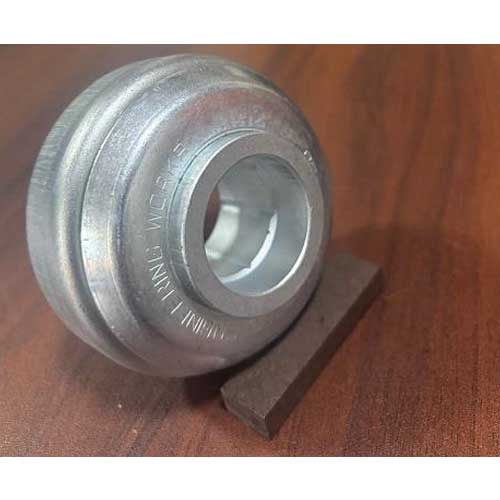
Hot Wheel Bearing
Bearings, Bushings, Wheels and Gears
SICCO Engineering Works offers a wide range of hot wheel bearing. Read more

Kusam-meco DC Power Supply Model Km-ps-3020 Abf / Km-ps-3030 Abf
Power Supplies, Batteries & Accessories
<p>Kusam Electrical Industries Ltd offers Kusam-Meco DC power supply model KM-PS-3020 ABF/ KM-PS-3030 ABF</p> Read more
latest News
Subscribe to iNoW

For Industry News on WhatsApp, Give a Miss Call on: +91 84228 74016