




Schedule a Call Back


Fastening & bonding for better growth
 Technical Articles
- Nov 30,-1

The fasteners and adhesives & sealants industry in India has several triggers to fuel growth over the coming years, including huge investments being made in the automotive, defence and construction sectors.
A new study by Grand View Research Inc., makes for interesting reading when it comes to the fasteners market. As per its findings, the global industrial fasteners market is expected to reach USD 104.32 billion by 2020 primarily due to an increasing demand for fasteners in the automotive industry coupled with growing construction spending as a result of economic growth and industrialisation. This certainly implies a good growth curve for the fasteners industry in India given the fact that both the automotive and the infrastructure sectors are poised for positive results in the coming years. That apart, the Asia Pacific region is expected to witness growth on account of increasing government investments in commercial aircraft and aerospace, defence and non-building construction. Advanced processing technique and improved mechanical properties of fasteners is expected to serve new growth opportunities for the market. In addition, development of railroad fasteners is expected to open new market avenues for manufacturers over the next six years.
According to industry experts, in India, automotive OEM was the second-largest application market accounting for over 20% of revenue share in the years 2013-15 and is expected to show significant growth over the forecast period as a result of increasing production of automobiles. Construction is expected to witness swift demand growth at an estimated CAGR of 6.9% from 2014 to 2020 due to rising government funding for large-scale infrastructure and residential construction in the India market. The analysts forecast the global industrial fasteners market to grow at a CAGR of 4.05% during the period 2016-2020. According to the industrial fasteners market report, one of the key drivers observed in the market is the emergence of self-clinching fasteners. These provide a reliable solution that offers reusable and permanent load-bearing threads, ideal for applications that involve thin sheet metals that require good pull-out and torque loads to provide safe fastening. They are often installed during the fabrication process.
The automotive segment dominated the industrial fasteners market during 2015-16. As one of the major end-users, the automotive industry uses various types of fasteners such as steel, stainless steel (including duplex and austenitic grades), and plastic fasteners that are often coated with an anti-corrosive material for enhanced protection. To cite an example of this growth, ARaymond Fasteners India, the local arm of the French supplier of fastener solutions to the automotive industry, recorded slow movement of its products in 2013 but then witnessed a turnaround over the following years. As Manish Padharia, the company’s managing director, had said in a media interview last year, there is a possibility of a year-on-year growth of up to 40% for the next two to three years.
ARaymond’s first Indian project was the Tata Nano. While the company saw its inception in India in November 2007 and later its two-moulding machine-facility was inaugurated in October 2008 in Pimpri, Pune, it had its team regularly flying from Europe to participate in the development process of the Nano project back in 2006. Later, as the company commissioned the Chakan facility in 2011, the plant was built within a year as the operations were moved from Pimpri to Chakan in end-2012. Other than the plant, it has sales and customer support offices in Gurgaon and Chennai. ARaymond’s current clientele includes all big OEMs such as Maruti Suzuki, Tata Motors, Mahindra & Mahindra, Hyundai Motor India, Bajaj Auto, Royal Enfield, Hero MotoCorp and others.
A similarly positive sentiment was voiced by R K Oberoi, proprietor of Ludhiana-based Bull Fasteners. “The fastener market in India is doing well and many of the manufacturers have set up good export channels too. Our products, for example, are currently exported to the US, Sweden, Greece, UAE, Qatar, Sri Lanka, etc. Essentially, the fastener industry is now better organised and most manufacturers have good in-house production facilities. For instance, we have invested heavily in our cold forging section, machine shop, heat treatment facility, surface finishing set-up and tool room,” he said during a trade fair interaction.
Over the years, fasteners have transformed into multi-purpose highly engineered components used in automotive, aerospace and other industrial applications such as manufacturing. Mechanical fastening devices such as bolt, nut, screw, rivet or nail, that affix or join together two or more objects, are of high significance as they are the critical components that define the integrity and longevity of structures. A deceptively simple looking device, a fastener in reality is a complex mechanical tool which requires significant research and development to analyse axial and bending cyclic load conditions and design robust products with lower susceptibility to fatigue failure. The market is therefore poised to benefit from technological developments that help improve the fatigue strength of fasteners. Meanwhile, the miniaturisation of devices have spurred the advent of micro-fasteners, while there is also increasing use of innovative threaded and plastic fasteners.
According to an industry export, in order to benefit from the growing preference for advanced lightweight fasteners, conventional fastener makers have begun to expand portfolios to include plastic fasteners, especially nylon fasteners, which are growing in popularity encouraged by the technology breakthroughs achieved in composite material R&D. Glass and/or metallic fillers are often used in combination with plastics to enhance the strength and performance. Unlike metal fasteners which are heat-treated and cold-worked, plastic fasteners are manufactured through a process called injection moulding. Technology developments have imparted plastics performance features on par with metals, i.e., material toughness, corrosion resistance, and heat resistance. Corrosion resistance even when exposed to moisture is regarded as a major benefit of plastic fasteners over metal fasteners. Also driving the use of plastic fasteners are the stringent fuel efficiency norms legislated by governments worldwide.
Adhesives and Sealants
End-use industries such as automobiles, packaging and construction have been reported to be the highest revenue contributors to adhesives and sealants demand in the recent past. In addition, with increasing technology coupled with widespread application of these solutions, the industry is expected to have a positive growth over the forecast period. Adhesives and sealants’ demand was majorly from manufacturing and construction industries, witnessing tremendous growth in BRIC economies. For instance, China’s construction spending was approximately USD 1.7 trillion in 2013, while India spent approximately USD 426.5 billion in the same year.
These products are used in insulation, panels and partition applications while sealants find applications in fire protection and facades. As per some industry reports, strong indicators for increase in automobile sale along with norms to reduce vehicle weight should drive the adhesives and sealants market size. Automobile production was estimated at approximately 89.7 million units in 2014 and is likely to cross 100 million units by 2018. Panel laminating is one of the key applications for this industry. On an average every car contains roughly 15-18kg of glues and caulking products used to replace mechanical fasteners. Technology innovation has also resulted in reducing spot welding by almost 50% which helps to decrease vehicle weight.
Worldwide, water-based technology dominated the adhesives demand and was valued close to USD 8.5 billion in 2015 and is anticipated to be the fastest growing up to 2022. Rising environmental concerns owing to exposure to carcinogenic contents while manufacturing is likely to favour water-based technology. This technology eliminates VoC (volatile organic compounds) emissions and help in reducing operating costs. The hot melt adhesives market was close to 1.8 million tonnes in 2015 and is forecast to significantly grow up to 2022. These products display excellent adhesion properties compared to solvent-based technology and restrict VoC emissions. The demand for acrylics adhesives was the highest and was valued at nearly USD 5 billion in 2015. It has faster setting time along with excellent bonding properties. These materials are used for developing waterborne and UV light curing technology.
Pressure sensitive applications dominated the glue demand with valuation over USD 6.2 billion in 2015. These are most commonly used for water and heat treatment applications. Its application includes labels, pressure sensitive tapes, automobiles and labels. Packaging applications accounted for over 20% of the glue demand, with consumption over 2 million tons in 2015. These include envelopes, flexible packaging and disposables. Construction application dominated sealants’ demand with revenue generated estimated at USD 1.5 billion in 2015. “Increase in construction spending, particularly in China and India, should drive the adhesives and sealants market size. Automotive applications accounted for over 18% of the caulking products demand in 2015 and are likely to witness highest gains over the forecast period,” the report states.
In India, along with the automotive industry, the building and construction industry is the largest end user of waterproof adhesives and sealants that accounted for a major share of the market, in terms of value, in 2014. Waterproof adhesives and sealants are widely used for construction of curtain wall, glazing, marine, control joints, pre-cast concrete panel joints, tiling, and roofing applications globally due to its low cost, strong adhesion, and better performance. The market for waterproof adhesives and sealants in the building and construction application is driven by high government investment in infrastructural development activities, that is, residential and non-residential construction.
As Suprotik Das, President, The Adhesives and Sealants Association (TASA), puts it, “Ours is a knowledge-driven industry. As India has opened up to the world over the last two decades, the users of our products have taken giant steps in bringing new products to market, and doing so more productively and efficiently. Underlying this has been the deployment of new knowledge. Many of the new products that have become commonplace in recent years - from better and more energy efficient transportation, to cleaner water and safer healthcare products – have been made possible thanks to adhesives and sealants technologies that simply did not exist a few decades ago. This process of knowledge-based change will accelerate in the coming years.”
The fact that there will be guaranteed growth in this sector is also borne out by the huge investments being made by some of the leading players. Henkel Adhesives Technologies India, for instance. In June 2015, the company announced an investment of Euro 30 million to set up India’s largest adhesives plant in Kurkumbh near Pune. This plant is being built in a phased manner. In the first phase, the state-of-the-art, multi-technology manufacturing facility will have an operational area of about 20,000 sq.mtr and the annual capacity is expected to be about 80,000 metric tonnes of adhesives and surface treatments. The investment will further support Henkel’s global strategy to increase sales and business growth in emerging markets.
Commenting on the plans, Jeremy Hunter, then the president of India operations, had said: “The Kurkumbh plant is a very important milestone of Henkel’s journey in India. This plant will enable us to localise our product portfolio and reduce imports while bringing the best global technology to India. Considering the proximity of the plant to our customers, it will also help us to work closely with them in developing solutions. We are aiming to win a greater market share in India, which is one of the biggest emerging markets for us.”
Driving the market is innovation that is marching in tune with the development of new products and technologies in all the sectors where adhesives and sealants are required. For example, last year, Henkel Adhesives Technologies India expanded the capabilities of its innovation centre at Pune with two dedicated laboratories, one for maintenance repair and overhaul (MRO) and the other for acoustic and NVH (industry term for noise, vibration and harshness). These laboratories will facilitate development of products that can meet the unique needs of customers to save costs, reduce downtime and improve performance; test products in simulated conditions in-house before they are used in actual conditions; and train customers on product selection, application, and best practices.
Pradhyumna Ingle, Business Director, General Industry, Henkel India, said: “Henkel anticipates, responds to and meets customers’ expectations, building partnerships with them to achieve success. The MRO and acoustic centre will go a long way in working with our customers to work on finding complete solutions to their design, efficiency and reliability challenges.” Meanwhile, this is not to say that the fasteners and the adhesives and sealants industry in India has been and will have a smooth ride all along.
While the industrial adhesives segment provides high growth potential in India, it is also faced with challenges, particularly in procurement of important raw materials and technology absorption. Non-availability of feedstock is the key challenge which the industry at large needs to address. One of the major market challenges that most of the technology-driven companies face in India is acceptance of new technologies by the customers. This is either due to the inability to integrate the technology into the existing system or the upfront cost of investment.
– HUNED CONTRACTOR
Related Stories
Machine Tools & Accessories
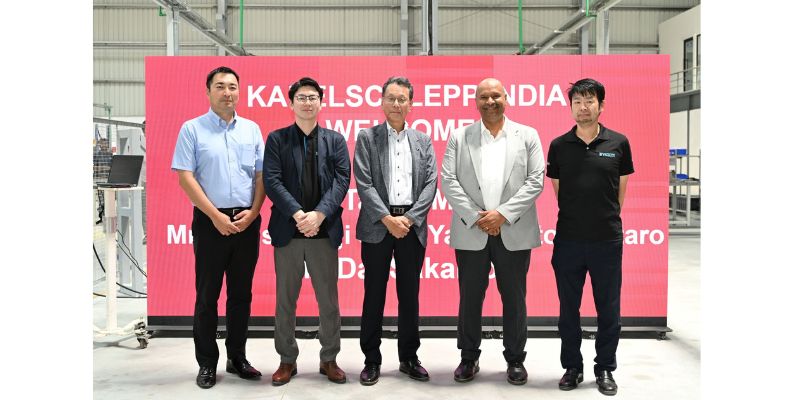
Tsubaki Leadership Reinforces India Growth Strategy during Kabelschlepp Visit
Tsubaki’s senior leadership visited Kabelschlepp India to review growth, localisation and innovation initiatives while strengthening engagement with employees, partners and customers.
Read moreAuto & Auto Components
Škoda Auto Volkswagen India Announces Leadership Transition
Piyush Arora will assume additional responsibility for Group sales and marketing in India as Jan Bures moves to a new role at Volkswagen AG.
Read moreProcess Equipment

Godavari Biorefineries Starts 200,000-litre Grain Distillery
The Rs 1.3 billion facility at Sameerwadi raises Godavari Biorefineries’ ethanol capacity to 800,000 litres per day and adds 60 million litres annually.
Read moreRelated Products
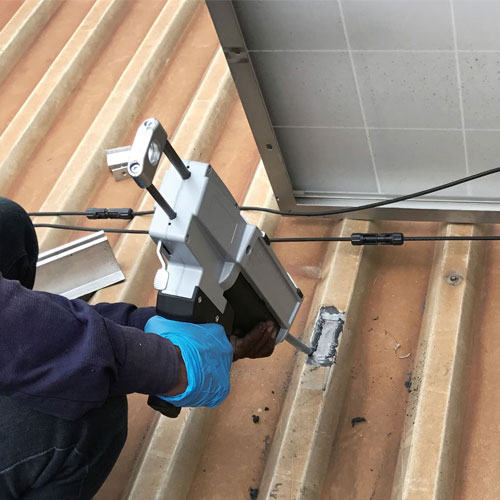
Structural Adhesive for Solar Panel Roof Mounting
Adhesives, Sealants and Tapes
Parson Adhesives India Private Ltd offers a wide range of structural adhesive for solar panel roof mounting – Partite 7535.
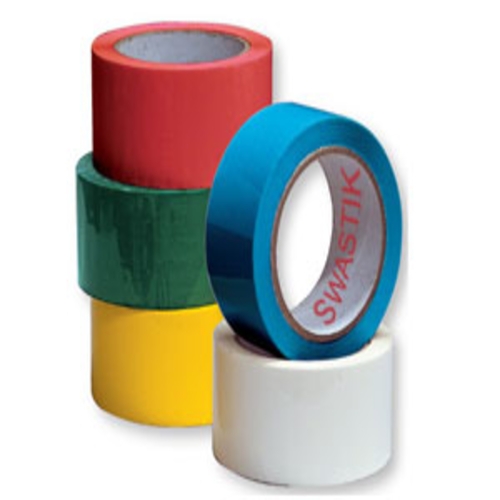
Bopp Tape
Adhesives, Sealants and Tapes
Keval Industries offers a wide range of bopp tape.
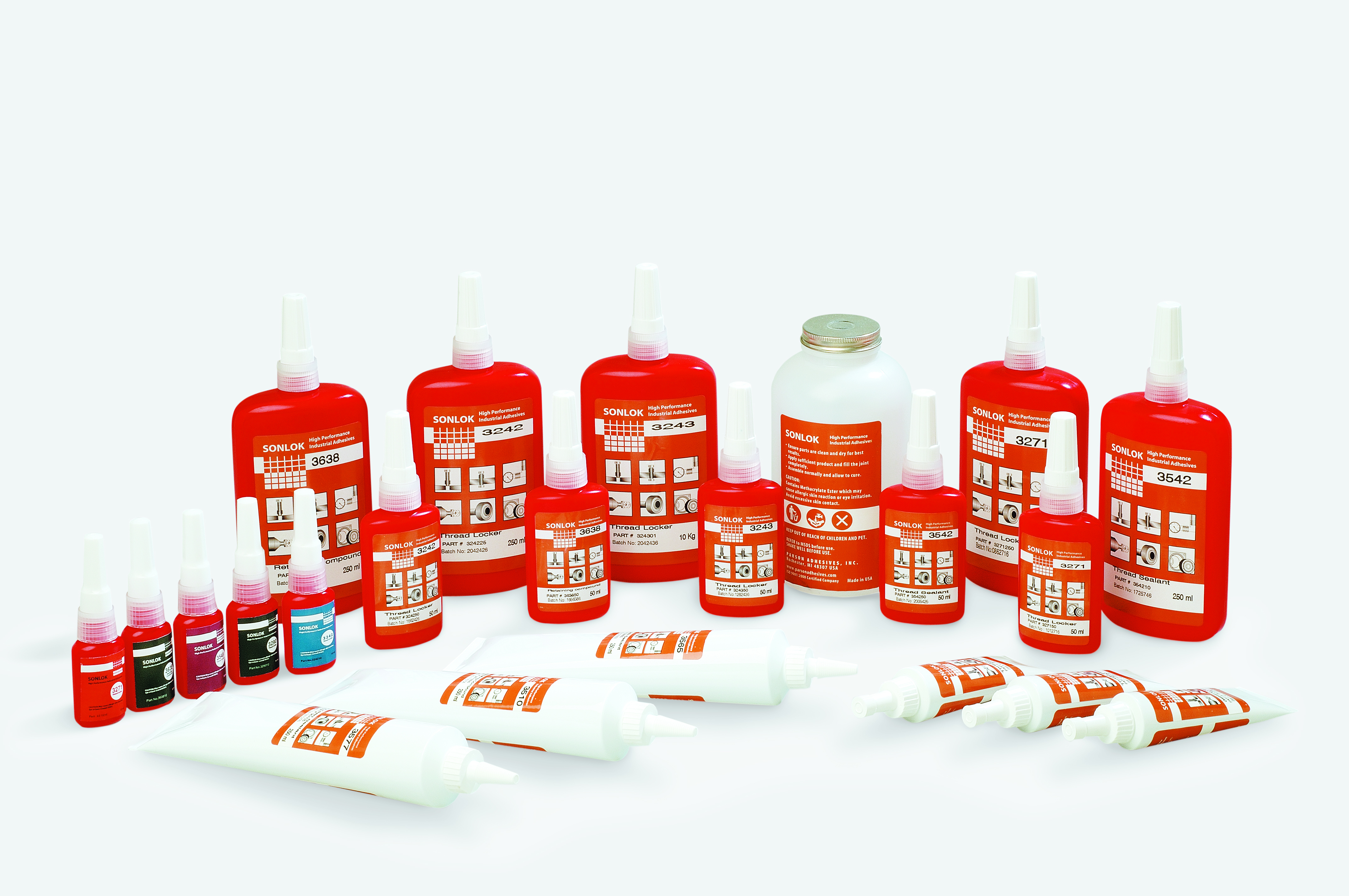
Industrial Engineering Adhesives and Sealants
Adhesives, Sealants and Tapes
Parson Adhesives India Private Limited offers a wide range of industrial engineering adhesives & sealants.
Read morelatest News
Subscribe to iNoW

For Industry News on WhatsApp, Give a Miss Call on: +91 84228 74016