




Schedule a Call Back




EV transition and tariff wars redefine India’s auto components play
 Articles
- Dec 31,25
India’s auto component industry is poised to hit $ 145 billion by FY30 from $ 80 billion in FY25. Yet high US tariff, EV transition and heavy reliance on imports from China expose vulnerabilities, writes Rakesh Rao.
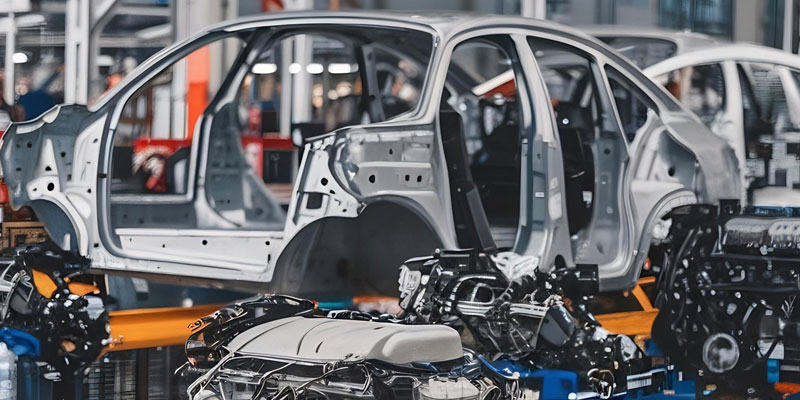
India’s automobile industry, a key engine of economic growth, ranks as the third largest globally. The country hosts operations of most leading global automobile manufacturers and produces vehicles across all segments, including two-wheelers, three-wheelers, passenger cars, light commercial vehicles, trucks, buses, tractors and heavy commercial vehicles. India is the world’s second-largest producer of two-wheelers, the largest manufacturer of three-wheelers and the third-largest producer of passenger cars. Over the years, the sector has recorded rapid and sustained growth in manufacturing capacity and output. In parallel, the Indian auto component industry has also seen comprehensive development, evolving steadily to meet the changing requirements of automotive OEMs.
“India currently has taken the position of the third largest passenger vehicle market, and it continues to grow. This gives confidence to Indian and global manufacturers to further expand their capacities. However, unpredictable geopolitical trends, influenced mainly by uncertain regulation changes and tariffs, create a complex situation while evaluating investment decisions. Having said that, India continues to offer competitive advantages in services and manufacturing versus other global manufacturing hubs,” says Milind Godbole, President, MAHLE India.
He adds, “While the global auto industry is going through a transformation - supply chain disruptions, intensifying tariff regimes, shift to electrification, environmental, social and governance (ESG) priorities, etc, the Indian auto industry is witnessing an optimistic outlook along with these changing trends. The strong growth momentum within the Indian economy presents a unique opportunity.”
Driven by the health growth of vehicle production, the Indian auto component industry registered a y-o-y growth of 8.2 per cent and a turnover of $ 80.2 billion in FY2025. The NITI Aayog’s report “Automotive Industry: Powering India’s Participation in Global Value Chains,” predicts that the Indian auto-component industry is poised for significant expansion, with production projected to reach $ 145 billion by 2030.
EV transition reshapes component demand
Rising adoption of electric vehicles (EVs) is changing the dynamics of auto industry with OEMs forced to balance investments between legacy internal combustion engine (ICE) capabilities and emerging EV technologies. Viveka Bhandari, COO, PVNA Group, explains, "The Indian auto component industry is resilient and growing but also undergoing massive change. Electrification, tighter regulations, and increasing electronics content are reshaping what OEMs expect from suppliers. Companies that innovate, localise, and invest in R&D are well placed to ride this transformation. Overall, the sentiment remains positive, but agility is becoming more important than ever."
Technology transition risks are becoming increasingly pronounced. Tushar Bhaskar, Chief Business Officer, Rubix Data Sciences, elaborates, “As electric mobility gains momentum, non-traditional components such as batteries, power electronics and semiconductors now account for nearly 40–50 per cent of an EV’s total value, while connected-car technologies are fundamentally reshaping vehicle architectures. India’s auto component sector, where MSMEs account for nearly 70 per cent of firms and about 40 per cent of industry revenues, has limited R&D depth and constrained investment capacity in advanced areas such as lightweight materials, high-efficiency electric motors and next-generation powertrains. This limits the sector’s ability to meet global standards and keep pace with evolving EV-centric value chains.”
Major changes in the auto OEM space in recent years are impacting market dynamics, particularly in India. Subhabrata Sengupta, Partner, Avalon Consulting, says, “The Indian auto OEM landscape has undergone several structural shifts in recent years. One of the most visible trends is the strong growth of the utility vehicle (UV) segment, largely at the expense of sedans and, to a lesser extent, hatchbacks. At the same time, electric vehicles have continued to grow or at least remain stable despite the rationalisation of subsidies. In the commercial vehicle space, there is a clear trend towards larger vehicles within the medium and heavy commercial vehicle (MHCV) segment.”
Another important change has been the rising market share of Indian OEMs such as Tata Motors and Mahindra & Mahindra, while several overseas OEMs have struggled. “Brands like Skoda–Volkswagen, Renault–Nissan and Honda have seen limited traction, and some players such as Ford and General Motors have exited the passenger car segment altogether. These shifts have had mixed implications for the component industry. Growth has increasingly been driven by local OEMs, with a few suppliers benefiting from blockbuster product cycles. However, some suppliers have also incurred losses due to misplaced bets. The exit of global OEMs like Ford and GM has made deemed exports and direct exports more challenging, as supplier approvals from global platforms were earlier easier to secure,” observes Sengupta.
While auto component exports have continued to grow—by around 8 per cent in FY25—the impact of US tariff is likely to be felt more strongly in FY26. In addition, the increased use of electronics, ADAS and related technologies has led to a continued rise in imports, which grew by about 7.3 per cent in FY25, indicating that domestic capability building in key technology areas is still lagging.
Trade barriers and tariffs test export momentum
Geopolitical re-alignments are posing significant challenges to auto component manufacturers in India—especially regarding raw material imports, semiconductors, etc. Milind Godbole highlights, “In the recent times factors like high tariff, trade sanctions, ban on export of certain products have created multiple challenges for the Indian auto industry. For instance, reliance mainly on one country for critical components viz. rare earth elements and semiconductors, have resulted in supply risks and a need to diversify sourcing. Policy shifts and carbon taxes in trade with developed markets are seeing suppliers set up local production facilities in export markets, adopt greener practices, and diversify export customer base.”
Imposition of high tariff by the US on Indian goods has impacted India’s auto component suppliers. Exports to the US accounted for approximately 27 per cent of India’s auto component exports in FY2025, with the share ranging between 25–28 per cent since FY2020. This growth has been supported by vendor diversification initiatives undertaken by global OEMs and higher levels of outsourcing. “The steep increase in tariffs imposed by the US on products from India, including auto components—ranging from 25–50 per cent depending on the type of component—places Indian exporters at a disadvantage compared to other Asian peers such as China, Japan, Vietnam and Indonesia, which face relatively lower tariffs of 15–30 per cent. While incremental costs are largely being passed on to customers, the extent of pass-through depends on several factors, including the supplier’s criticality, share of business, competitive intensity and the technology intensiveness of the components supplied,” explains Sruthi Thomas, VP and Sector Head, Corporate Ratings, ICRA Ltd.
Auto component suppliers with higher dependence on the US market are actively diversifying their revenue base across other geographies, including Asia. In parallel, initiatives to enhance value addition, diversify into non-automotive segments and implement cost-optimisation strategies are being pursued to mitigate margin pressures. Exporters are also exploring the rerouting of supplies through alternate geographies to reduce the effective impact of tariffs.
“Overall, given the established position of Indian auto component suppliers and the long lead times associated with onboarding alternate vendors, there is a fair degree of comfort regarding the stability of existing business over the near to medium term. However, the awarding of new business and product programmes has seen some deferment amid prevailing uncertainties and the evolving global trade environment. Consequently, capital expenditure plans among component manufacturers remain cautious,” opines Sruthi Thomas.
The short- to medium-term impact of US tariff is likely to remain modest, as supply chain realignments in the automotive sector typically unfold over time. Subhabrata Sengupta states, “It is estimated that US tariff could impact nearly 8 per cent of India’s auto component production. However, these tariffs have not yet resulted in an immediate decline in Indian exports, partly because changes in automotive supply chains take time to materialise. While some build-to-print work has already shifted, products that are more IP-oriented are likely to transition gradually as new suppliers are qualified and onboarded. A clearer resolution on tariffs would be welcome.”
Risks to growth
The Indian auto component sector is expected to maintain its growth trajectory over the near to medium term, supported by favourable structural drivers such as improving automotive penetration, steady replacement demand, premiumisation and localisation trends in the domestic automotive market. In addition, opportunities arising from diversification strategies adopted by global OEMs also provide a growth impetus. However, several risks could potentially temper this outlook. “Rising trade protectionism is a key concern, as exports contribute nearly 27 per cent of industry revenues, with major exposure to North America, Europe and the APAC region. Recent changes in tariffs and duty structures globally could erode the competitiveness and margins of Indian exporters, thereby impacting growth prospects,” opines Sruthi Thomas.
Trade and cost competitiveness risks are also increasing. Tushar Bhaskar explains, “India’s auto component exports to the European Union, valued at approximately $ 4.6 billion, face potential pressure as carbon costs become institutionalised under frameworks such as the Carbon Border Adjustment Mechanism (CBAM). In addition, Mexico’s decision to impose import duties ranging from 5 per cent to as high as 50 per cent on non-FTA partners from January 1, 2026 poses a direct risk to Indian exporters. Auto and auto components accounted for the largest share—33.8 per cent—of India’s exports to Mexico in FY25. Auto parts exports to Mexico stood at $ 834 million in FY25, with $ 370 million shipped in the first half of FY26, indicating sustained demand and making this a material near-term growth risk.”
Supply chain constraints remain a significant risk. Although the automotive supply chain is largely globalised, the manufacturing of certain critical inputs is still concentrated among a small number of countries or suppliers. This concentration has resulted in periodic disruptions, as evidenced by shortages of semiconductors and rare-earth magnets. Moreover, logistical challenges such as the Red Sea crisis can interrupt even well-established supply chains, leading to production delays and higher costs.
Rare earths and supply-chain vulnerabilities
Subhabrata Sengupta states, “On the issue of rare earth materials, some resolution is already under way. Over the longer term, there may be a need to optimise rare earth usage by adopting alternative technologies. With the exception of Mahindra & Mahindra, most OEMs were not significantly impacted by the recent rare earth supply disruptions.”
To establish domestic manufacturing ecosystem, the Union Government of India in November 2025 approved the ‘Scheme to Promote Manufacturing of Sintered Rare Earth Permanent Magnet (REPM)’ with a financial outlay of Rs 72.80 billion. The scheme aims to establish 6,000 metric tonnes per annum (MTPA) of integrated REPM manufacturing capacity in India, covering the full chain from rare-earth oxides to finished magnets. By building a domestic integrated ecosystem, the initiative is intended to enhance self-reliance in a critical input for electric vehicles, renewable energy systems, electronics, aerospace and defence, and to position India as a key player in the global REPM market.
"It is a very timely initiative. Permanent magnets are at the heart of electric motors and several mechatronic systems. Localising them will reduce import dependence, stabilise supply chains, and give Indian EV component manufacturers a major competitive edge. For companies like ours with a growing e-drive and motor-driven portfolio, this support accelerates our ability to innovate and scale," comments Viveka Bhandari.
Tushar Bhaskar believes supply-chain dependence on critical materials remains a structural vulnerability. “Rare earth magnets, which are essential for EV motors, sensors and braking systems, are almost entirely import-dependent. India imported around 2.3 kilotons of rare earth magnets in 2024, nearly 65 per cent of which came from China, while demand is expected to triple to about 6 kilotons by FY30. Although the government’s Rs 72.8 billion rare-earth permanent magnet manufacturing programme is a positive step, delays in localisation could restrict domestic value addition and slow the pace of electrification,” he says.
According to Sruthi Thomas, volatility in raw material prices and currency exchange rates is another risk factor. “Sharp fluctuations in input commodity prices and foreign exchange rates—particularly for players with import or export exposure—can adversely impact profitability if these costs cannot be fully passed on, thereby affecting earnings and growth potential,” she explains.
The transition to alternate fuel technologies also presents challenges. She elaborates, “The shift from internal combustion engine (ICE) vehicles to electric vehicles threatens obsolescence for traditional component manufacturers. With only about 30–40 per cent of EV drivetrain components currently localised, a significant portion of value addition remains unrealised. Moreover, India’s technological capabilities and global acceptance in new fuel technology components are yet to be demonstrated at scale, which could undermine competitiveness during the transition to green mobility.”
Viveka Bhandari believes supply chain volatility, especially in semiconductors and critical materials, remains a challenge. “India still depends on imports for several advanced components, and this adds cost and uncertainty. At the same time, OEM expectations around technology readiness are rising quickly. Suppliers need to scale capabilities in electronics, software, and materials engineering to stay competitive. It’s a demanding phase, but also full of opportunity for those who adapt fast,” she elaborates.
Meanwhile, access to capital remains a constraint, particularly for smaller players. “Sustained growth and global competitiveness require investments in capacity expansion, technology development and product diversification, all of which are capital-intensive. Limited access to funding can restrict growth, especially for SMEs, which already face challenges competing with larger players from countries such as China, Vietnam and Indonesia that benefit from scale, cost advantages and preferential trade arrangements,” explains Sruthi Thomas.
GST rationalisation lifts domestic demand
To simplify compliance, minimise cascading tax effects, and enhance the global competitiveness of the Indian industry, the government rationalised GST rate slabs into a dual-rate structure of 5 per cent and 18 per cent. "Amid ongoing macroeconomic uncertainties and tariff-related challenges in export markets, the GST rate cut has emerged as a timely and significant positive for the domestic auto and auto component sector," opines Sruthi Thomas.
Tushar Bhaskar elaborates, “The GST rationalisation implemented from September 22, 2025 has had a meaningful impact on India’s auto components industry by simplifying the tax structure and reducing the overall tax burden on vehicles and parts. This reform is expected to support demand across the entire automotive value chain. The GST slab structure has been streamlined primarily to 5 per cent and 18 per cent, with most auto components standardised at 18 per cent irrespective of HS code classification, down from multiple slabs including 28 per cent and associated cesses.”
This rationalisation has reduced compliance complexity and lowered input costs for manufacturers and suppliers. “The uniform 18 per cent GST rate directly benefits a large number of ancillary firms, particularly MSME suppliers, by improving cost efficiency, competitiveness and margin stability. Lower GST rates on small cars, two-wheelers and commercial vehicles are also stimulating end-vehicle demand, which in turn increases component orders and creates a positive upstream effect across the supply chain. For instance, total vehicle sales in October 2025 rose by 41.3 per cent year-on-year,” he states.
Industry bodies and analysts have broadly welcomed the move, noting that it should improve affordability, enhance logistics efficiency and support sector growth, especially in rural and semi-urban markets, while also resolving long-standing GST classification disputes. Overall, supplies to domestic OEMs are projected to grow 8–10 per cent, with the aftermarket also benefiting structurally from improved liquidity and consumer sentiment. Thus, GST reforms are widely viewed as a growth catalyst for the auto components sector by reducing costs and strengthening demand prospects.
Prospecting growth
To bolster growth, Union Government continues to engage with the US and EU – the major export markets for Indian goods – to finalise preferential trade treaty. “Trade negotiations with the US and the European Union present both significant opportunities and notable challenges for India’s auto component industry. On the opportunity side, improved market access under bilateral trade agreements could help offset recent tariff shocks that threaten competitiveness. According to ICRA, high US tariff could affect nearly 8 per cent of India’s auto component production, while ACMA data shows that the US accounts for 27 per cent of total component exports, underscoring the importance of tariff relief or preferential access. A comprehensive trade agreement with the EU could similarly unlock larger export volumes by lowering tariffs and non-tariff barriers, while also attracting foreign direct investment and facilitating technology partnerships that enable Indian firms to move up global value chains,” comments Tushar Bhaskar.
However, negotiations are complex and fraught with challenges. He explains, “Both the US and EU have strong market access and regulatory demands, including expectations around tariff reductions. The EU, for instance, has pressed India to significantly lower auto tariffs, creating a tension between protecting domestic industry and securing export opportunities.”
Subhabrata Sengupta believes India is likely to negotiate and secure reasonable duty structures, particularly with the European Union. “However, the fundamental challenge remains that most Indian auto component manufacturers, with a few notable exceptions, do not develop proprietary technologies and largely operate on a build-to-print model. Unless this changes—though there are some early green shoots—structural challenges will persist,” he notes.
The same logic applies to imports. Sengupta explains, “While there are frequent concerns about the ASEAN FTA, the reality is that if the domestic industry is competitive in terms of cost, quality and technology, customers would have little incentive to prefer imports. That said, there are genuine disadvantages related to higher input costs, including power, cost of capital and certain raw materials. If these issues are articulated effectively, the government may be willing to provide a more level playing field.”
In the US context, stalled negotiations have already resulted in tariff increases that undermine Indian exporters’ pricing competitiveness relative to Asian peers with more favourable trade arrangements. “Preferential frameworks such as the US–Mexico–Canada Agreement (USMCA) further disadvantage India. Industry bodies, including ACMA, have also cautioned against across-the-board duty cuts on auto components unless these are supported by safeguards, phased implementation and reciprocity to protect MSMEs. Overall, while trade agreements with the US and EU could expand export opportunities, enhance competitiveness and attract investment, their ultimate impact will depend on the final negotiated terms, particularly around tariffs, regulatory alignment and protections for domestic manufacturers,” elaborates Tushar Bhaskar.
Balancing growth amid global uncertainty
In line with the global trend, India has undertaken a strong green initiative by actively promoting both the adoption and domestic manufacturing of electric vehicles. EVs play a critical role in reducing carbon dioxide emissions and addressing air pollution. “Given the current transition from ICE to EV in the global auto industry, I reckon the next 2-3 years are very crucial for the Indian automotive ecosystem as there is an immense scope and space for all types of vehicles. The numerous initiatives aligned with the Atmanirbhar Bharat vision of Government of India e.g. the PLI scheme, FAME, PM-EDRIVE and much-awaited vehicle regulation related policy will further develop the Indian automotive ecosystem for the domestic market as well as the international export market. The market share of passenger car OEMs in India, which has doubled in the past six years, is expected to rise further. And a noticeable factor is variety of battery electric vehicles (BEV) passenger vehicles offered by the OEMs in India. Earlier, only a couple of OEMs had BEVs in their fleet, but now we see almost every OEM has started focusing on BEVs,” opines Milind Godbole.
Electric vehicles are clearly gaining momentum and are here to stay. “The entry of Maruti Suzuki India into the EV space is expected to further broaden the four-wheeler EV market. EVs are also increasingly becoming part of the decision matrix in the two-wheeler and three-wheeler segments. However, India remains several years behind China in EV technology, particularly in key components. Significant catch-up is required in terms of localisation, technology development and capability building across the EV value chain,” observes Subhabrata Sengupta.
Tushar Bhaskar expects domestic demand to remain resilient, supported by improving vehicle penetration, a rising SUV share and continued electrification. However, external risks could temper export momentum. “Elevated US import tariffs pose challenges to price competitiveness, while the outcomes of trade negotiations with the US and EU will be critical in shaping market access and cost structures, particularly as carbon and regulatory norms tighten in Europe. Overall, while global trade uncertainties warrant caution, strong domestic fundamentals, policy incentives and localisation efforts underpin a moderate growth outlook for FY26,” he says.
Having surpassed Japan to become the world’s third-largest automobile market, India benefits from a strong structural demand base, further reinforced by the government’s ambition to attain the top position within the next five years. "Global OEMs are looking for reliable, cost-competitive partners outside traditional supply hubs. India fits this shift well. The biggest opportunities are in e-mobility components, advanced mechatronics, and electronics,” states Viveka Bhandari.
Despite near-term headwinds, India’s auto component industry is expected to maintain a cautiously positive trajectory in FY26. Subhabrata Sengupta opines, “The overall outlook for India’s auto component industry remains positive. However, meaningful progress will require a greater willingness to take risks in technology. This applies both to OEMs, who need to experiment with and adopt new technologies, and to suppliers, who must be prepared to invest in future-ready capabilities.”
Milind Godbole, President, MAHLE India
Policy shifts and carbon taxes in trade with developed markets are seeing suppliers set up local production facilities in export markets, adopt greener practices, and diversify export customer base.
Sruthi Thomas, VP and Sector Head, Corporate Ratings, ICRA Ltd
The steep increase in tariffs imposed by the US on products from India places Indian exporters at a disadvantage compared to other Asian peers such as China, Japan, Vietnam and Indonesia.
Viveka Bhandari, COO, PVNA Group
Indian auto component industry is resilient and growing but also undergoing massive change. Electrification, tighter regulations, and increasing electronics content are reshaping what OEMs expect from suppliers.
Tushar Bhaskar, Chief Business Officer, Rubix Data Sciences
Preferential frameworks such as the US–Mexico–Canada Agreement (USMCA) further disadvantage India. Industry bodies, including ACMA, have also cautioned against across-the-board duty cuts on auto components.
Subhabrata Sengupta, Partner, Avalon Consulting
The fundamental challenge remains that most Indian auto component makers, with a few notable exceptions, do not develop proprietary technologies and largely operate on a build-to-print model.
Table 1: Segment-wise Contribution of Indian Auto Components Industry (FY25)
Segments | Contribution (in $ bn) |
Supply to OEMs | $67.9 bn |
Supply to Aftermarket | $11.8 bn |
Exports | $22.9 bn |
Imports | $22.4 bn |
Source: ACMA
Table 2: Turnover of Indian auto component industry
Year | Turnover (in $ bn) |
FY2020 | $ 49.3 bn |
FY2021 | $ 45.9 bn |
FY2022 | $ 56.6 bn |
FY2023 | $ 69.7 bn |
FY2024 | $ 74.1 bn |
FY2025 | $ 80.2 bn |
Source: ACMA
Note: Industry Turnover = Supply to OEMs plus Aftermarket plus Exports minus Imports.
Table 3: India's Import & Exports of Auto Components ($ billion)
Year | Exports | Imports |
FY21 | $13.3 bn | $13.8 bn |
FY22 | $19.1 bn | $18.3 bn |
FY23 | $20.1 bn | $20.3 bn |
FY24 | $21.1 bn | $20.9 bn |
FY25 | $22.9 bn | $22.4 bn |
Source: ACMA
Indian auto components industry
Electric vehicles
EVs
OEM localisation
US tariff
Rare earth magnets
GST rationalisation
Supply-chain resilience
Automotive exports
MSME manufacturers
Milind Godbole
MAHLE India
Sruthi Thomas
ICRA
Viveka Bhandari
PVNA Group
Tushar Bhaskar
Rubix Data Sciences
Subhabrata Sengupta
Avalon Consulting
Rakesh Rao
Related Stories
Auto & Auto Components
EV transition and tariff wars redefine India’s auto components play
India’s auto component industry is poised to hit $ 145 billion by FY30 from $ 80 billion in FY25. Yet high US tariff, EV transition and heavy reliance on imports from China expose vulnerabilities,..
Read moreAuto & Auto Components
EV shift, trade pressures threaten India’s auto components: Tushar Bhaskar
India’s auto component industry faces mounting risks as EV-led technology shifts, trade pressures, and critical material dependence threaten its global competitiveness.
Read moreAuto & Auto Components

MAHLE India to double business in 4–6 years: Milind Godbole
MAHLE India to double business in 4–6 years: Milind Godbole
Read moreRelated Products

Automotive Oil Pump
AUTO COMPONENTS & ACCESSORIES
Kalpak Auto Pvt Ltd offers a wide range of
automotive oil pump.
Tata Motors unveils facilities for development of Hydrogen propulsion tech
AUTO COMPONENTS & ACCESSORIES
Tata Motors, India?s largest automobile company, unveiled two state-of-the-art & new-age R&D facilities for meeting its mission of offering sustainable mobility solutions. The unveilings constitute of Read more
Tata Motors plans petrol powertrain for Harrier and Safari SUVs
AUTO COMPONENTS & ACCESSORIES
Tata Motors is in the process of developing a new petrol powertrain for its premium sports utility vehicles, the Harrier and Safari, as confirmed by a senior company official. Currently, these models Read more
latest News
Subscribe to iNoW

For Industry News on WhatsApp, Give a Miss Call on: +91 84228 74016