








Schedule a Call Back


Digital transformation in manufacturing is about people, not just technology
 Articles
- May 26,26
In this interview, Peter Zakharov, CEO, MDCplus, discusses why workforce readiness, MSME clusters and execution discipline are becoming the defining factors of digital transformation in Indian manufacturing.
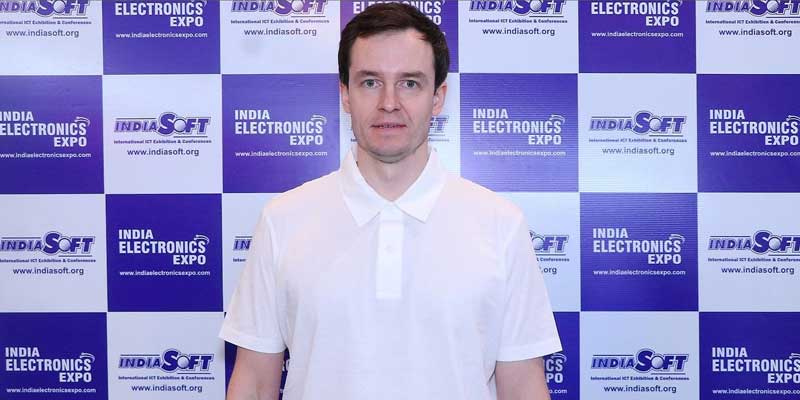
MDCplus develops industrial monitoring and analytics platforms that help manufacturers turn machine-level data into real-time operational decisions. In this interview, Peter Zakharov, CEO, MDCplus, discusses why workforce readiness, MSME clusters and execution discipline are becoming the defining factors of digital transformation in Indian manufacturing.
How do you see the current phase of digital transformation in manufacturing?
We are past the stage where digital transformation is about adopting tools. The shift now is toward operationalising data at scale - turning machine-level signals into decisions that affect throughput, quality and cost in real time.
What is different is the expectation of immediacy: manufacturers no longer invest in digital systems for long-term positioning alone. They expect measurable operational impact in months, not years. The real challenge integration into brownfield environments layered with legacy equipment and fragmented data.
Where does India stand in this transformation?
India is structurally different from mature manufacturing economies. It is riding strong growth momentum - the sector is targeted to move from around 17 per cent of GDP to 25 per cent - but that growth exposes execution gaps faster. Indian manufacturers are often skipping intermediate stages, moving directly toward connected, data-driven operations. The opportunity is speed; the risk is misalignment between technological ambition and operational readiness.
MSMEs and Tier-2/Tier-3 clusters form the majority of Indian manufacturing. How does digitalization play out there?
MSMEs account for close to 90 per cent of India’s manufacturing base and roughly 30 per cent of GDP. Production in auto components, precision engineering, textiles and electronics is distributed across Tier-2 and Tier-3 clusters in Coimbatore, Rajkot, Aurangabad and Ludhiana, not concentrated in a handful of large enterprises. Encouragingly, digital adoption in Tier-2 and Tier-3 cities is now growing roughly 40 per cent faster than in the metros, but these clusters still operate as loosely connected ecosystems, each unit optimised locally rather than systemically. The next leg depends on connecting these clusters digitally and aligning them operationally.
Workforce is often cited as the real constraint. How critical is this issue?
It is the central issue, and the most underestimated. Experienced operators are retiring while new entrants take longer to reach productivity. The Ministry of Skill Development has projected a shortfall of about 1.3 million skilled workers in Indian manufacturing alone. NASSCOM estimates 60–65 per cent of India’s workforce will need significant reskilling by 2030, and the only about half of graduates are immediately employable, especially in manufacturing operations. Digital transformation is ultimately paced by how quickly organisations can build operational competence - not by how quickly they can buy technology.
What will define the next phase of manufacturing transformation?
There is a convergence between workforce capability and technology capability. The advantage of the next five years will not come from access to tools - those are increasingly commoditised. It will come from execution discipline: from how well companies can translate data into habits, standards and decisions at every level of the plant. The manufacturers who win will treat their people and their platforms as a single system, not two.
What does this mean for shop-floor system design?
Systems must compensate for variability in skill levels rather than assume it away. The design goal is to shorten time to proficiency and stabilise operations when senior staff are absent. That means embedding decision support, contextual alerts and guardrails into the daily workflow, not delivering another dashboard. A system that does not change behaviour on the floor is not transformation; it is reporting.
What role do local partnerships play in executing this in India?
Local execution capability is critical. A global technology perspective is necessary but not sufficient - Indian factories have their own rhythms, supplier structures and workforce realities.
Our collaboration with Koremec Autosys, our primary partner in India, is structured around exactly that: bringing engineering and deployment depth on the ground so transformation is translated into real, running factory environments. We are looking forward to contributing to India’s technology revolution and resolving existing workforce challenges with a modern and manufacturing-first decision.
Peter Zakharov
MDCplus
Koremec
Autosys
Digital transformation
Indian manufacturing
workforce readiness
MSME clusters
operational efficiency
brownfield integration
execution discipline
shop-floor systems
Related Stories
Machine Tools & Accessories
Safcon ensures product integrity with high performance security seals
In this interview, Rajesh Banka, Managing Director, Safcon Seals Pvt Ltd, highlights the company’s focus on innovation, automation and global expansion to strengthen its presence in the advanced s..
Read moreAutomation & Robotics
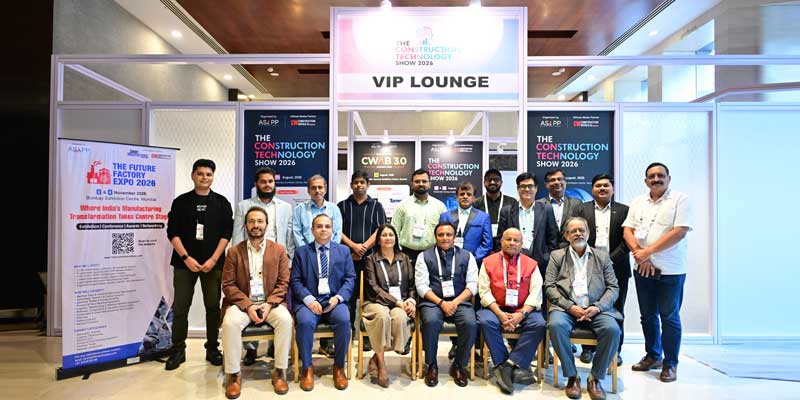
Future Factory Expo Roundtable Discusses Blueprint To Upgrade Indian Factories
During the roundtable, hosted by Future Factory Expo (FFE), industry leaders discuss how automation, AI, engineering excellence and digital transformation can help Indian factories achieve global be..
Read moreAutomation & Robotics

AI will redefine industrial production: Rainer Brehm
In this interview with Rakesh Rao, Rainer Brehm, COO for Automation Business and CTO, Digital Industries, Siemens AG (President of Automation from October 1, 2026), discusses the evolution of indust..
Read moreRelated Products
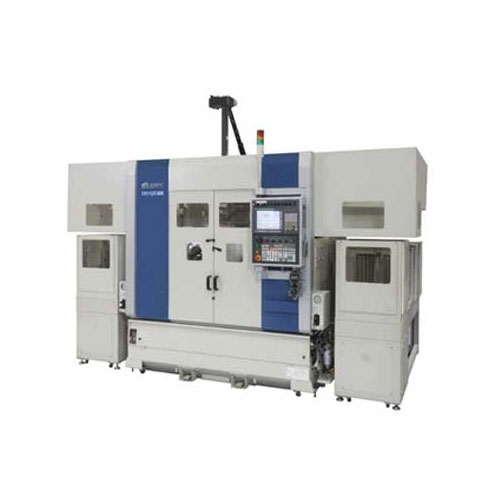
Compact Fmc - Motorum 3048tg With Fs2512
INDUSTRIAL AUTOMATION & TECHNOLOGY CONSULTANCY
Meiban Engineering Technologies Pvt Ltd offers a wide range of Compact FMC - Motorum 3048TG with FS2512.
Digital Colony Counter
INDUSTRIAL AUTOMATION & TECHNOLOGY CONSULTANCY
Rising Sun Enterprises supplies digital colony counter.

Robotic Welding SPM
INDUSTRIAL AUTOMATION & TECHNOLOGY CONSULTANCY
Primo Automation Systems Pvt. Ltd. manufactures, supplies and exports robotic welding SPM.
latest News
Subscribe to iNoW

For Industry News on WhatsApp, Give a Miss Call on: +91 84228 74016