





Schedule a Call Back


Can Integrated Material Handling Boost Warehouse Efficiency?
 Articles
- May 26,26
Jai Sancheti, Vice President – Material Handling Equipment Solutions, SILA, notes India’s warehouses are evolving into integrated distribution hubs, with material handling systems, automation, and workforce coordination redefining operational efficiency.

India’s warehousing and logistics sector is entering a far more sophisticated phase of growth. For years, the focus was largely on adding capacity and expanding infrastructure. This is not sufficient anymore. Warehouses are no longer just places for storage; they have transformed into fast-moving distribution centres and become an important node in the logistics value chain. This new reality has resulted in a change in the way warehouses are managed. Material handling is no more treated as an equipment-related operation. It is becoming an integral part of a holistic operating system consisting of infrastructure, technologies, workforce utilisation, facility management, and movement systems.
The material handling equipment market in India reached a size of $ 11.4 billion in 2025 and is forecasted to increase to $ 23.3 billion in 2034, exhibiting a compound annual growth rate of approximately 8 per cent. At the same time, warehousing demand continues to expand rapidly across e-commerce, retail, automotive, pharmaceuticals, FMCG, manufacturing, and third-party logistics. But the real shift is not just in market size, it is in how warehouse efficiency is being defined.
Earlier, warehouse decisions were often driven by storage capacity and upfront equipment costs. In today’s scenario, companies are analysing their processes based on a wider perspective that includes throughput, turnaround time, labour efficiency, safety compliance, equipment availability, lifecycle costing, and scalability over the long term. Consequently, there is an increasing need for comprehensive material handling systems as opposed to standalone equipment acquisitions. The forklift segment continues to be integral to the Indian MHE sector, and growth forecasts suggest robust expansion of the forklift market up until 2030. The old diesel forklifts are slowly giving way to electric and lithium-ion-powered counterparts which provide lower operating expenses, indoor capability, and environmental friendliness.
Moreover, narrow aisle forklifts, reach trucks, and VNA systems contribute significantly to vertical space utilisation within warehouses. But the value of this equipment depends entirely on how well it is integrated into the warehouse ecosystem. A high-performance forklift fleet without trained operators, maintenance discipline, charging infrastructure, traffic planning, and safety protocols does not improve efficiency, it creates bottlenecks. This is where integrated material handling solutions become critical. Modern warehousing requires seamless coordination between infrastructure design, material movement systems, manpower deployment, maintenance schedules, software platforms, and facility operations. Equipment alone cannot solve productivity challenges. Warehouses perform better when the entire operating environment is designed to support movement efficiency.
Automation is accelerating this shift. Technologies such as Automated Storage and Retrieval Systems (AS/RS), Automated Guided Vehicles (AGVs), Autonomous Mobile Robots (AMRs), conveyors, and intelligent sortation systems are improving storage density, reducing repetitive manual movement, and increasing operational precision. However, automation succeeds when supported by the right operating backbone, layout planning, docking systems, charging zones, floor design, workforce readiness, and real-time monitoring all need to work in sync. Without that integration, automation becomes expensive rather than efficient.
Software is also becoming central to warehouse performance. With the help of Warehouse Management Systems (WMS), Internet of Things-based fleet management systems, predictive maintenance, and analytical tools based on Artificial Intelligence, operators now have much more insight regarding inventory flow, equipment performance, productivity, and bottleneck issues. When properly implemented, they make warehouses highly scalable and flexible.
In addition, there is a paradigm shift in the expectations from their clients. Companies have begun preferring service providers who offer everything from start to finish, rather than handling a number of different vendors for equipment, labour, and other services.
At SILA, we see this increasingly across large warehousing and industrial portfolios. Clients are no longer evaluating material handling decisions in isolation. They are looking for partners who can bring together equipment, workforce deployment, operational discipline, facility management, and technology integration within a single accountable framework.
Earlier, warehouse operators often worked with separate vendors for forklifts, staffing, maintenance, and facility management.?This created gaps in accountability, slower response times, and operational inefficiencies. Today, companies want unified partners who can manage the entire operational chain under one ecosystem. A single integrated partner improves execution speed, reduces downtime, strengthens safety compliance, and creates clearer ownership across warehouse performance. This? model is especially valuable in large-format industrial parks, manufacturing clusters, and multi-location warehousing portfolios where consistency and scalability are critical.
Government policy is also accelerating this shift. Initiatives such as Make in India, the Production Linked Incentive (PLI) scheme, PM Gati Shakti, and industrial corridor development are driving large-scale investments in manufacturing and logistics infrastructure. As new factories, warehouses, and distribution centres continue to come up, the need for integrated operational models becomes even stronger.
The future of warehousing will not be defined by how much space a facility has, but by how intelligently that space performs. At SILA, our experience across integrated material handling and facility operations reinforces one clear reality: warehouse performance improves most when material handling is approached not as an equipment decision, but as an operating system decision, where infrastructure, workforce, uptime, and technology are planned together from the start.
As India’s supply chains become faster and more complex, integrated material handling solutions will move from being a competitive advantage to becoming a business necessity. The next phase of warehouse efficiency will not be unlocked by better equipment alone. It will be unlocked by better integration.
About the author:
Jai Sancheti is the Vice President - Material Handling Equipment Solutions of SILA. With more than 15 years of experience in the Material Handling Equipment (MHE) leasing and rentals industry. Over the years, he has been closely involved in building businesses from the ground up and turning them into successful, growth-driven operations.
Jai Sancheti
warehousing
logistics
material handling
integrated solutions
automation
forklifts
warehouse efficiency
supply chain
SILA
Related Stories
Aerospace Defence

ideaForge Secures Rs 1.51 Billion RDI Funding for Heavy-Lift YETI Platform
ideaForge has received a Letter of Intent for up to Rs 1.51 billion in long-term debt financing to develop YETI, an autonomous heavy-lift aerial logistics platform.
Read moreAutomation & Robotics

Yaanendriya Raises Rs 150 million to Scale Indigenous Navigation Systems
The deep-tech company will strengthen R&D, accelerate product development and expand high-precision navigation systems for mission-critical applications.
Read moreOther Industrial Products
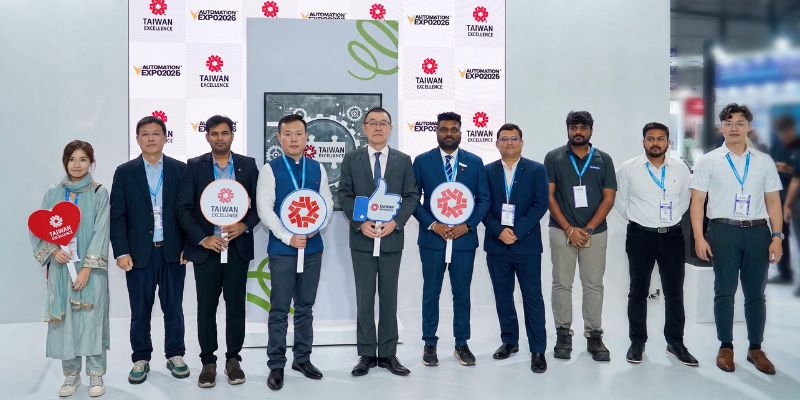
Taiwan Excellence showcases AI-powered manufacturing solutions at Automation Expo 2026
Taiwan Excellence showcased 55+ industrial innovations from 22 Taiwanese brands at Automation Expo 2026, highlighting AI-driven solutions for India's smart manufacturing growth.
Read moreRelated Products
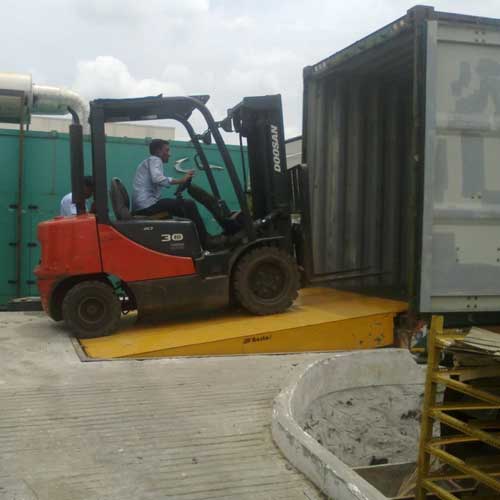
Dock Leveller
MATERIAL HANDLING EQUIPMENT & STORAGE SYSTEMS
Besto Material Handling Equipments offers a wide range of dock leveller.
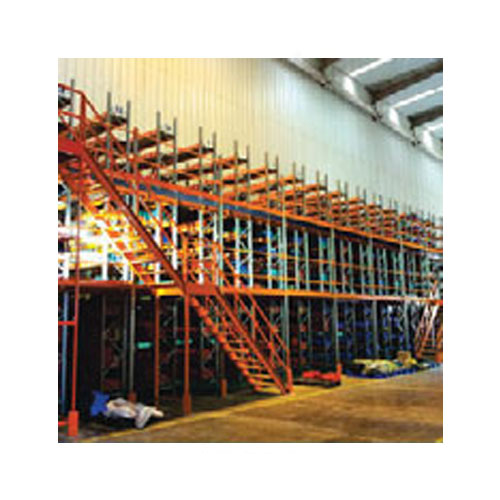
Multi Tire
MATERIAL HANDLING EQUIPMENT & STORAGE SYSTEMS
SCI Storage Solution offers a wide range of multi tire.
Industrial Lifting Equipment
MATERIAL HANDLING EQUIPMENT & STORAGE SYSTEMS
Rana Material Handling Equipments Pvt Ltd offers a wide
range of industrial lifting equipment.
latest News
Subscribe to iNoW

For Industry News on WhatsApp, Give a Miss Call on: +91 84228 74016