







Schedule a Call Back


Building Future-Ready Manufacturing
 Articles
- Jun 24,26
Anup Wadhwa, Director, Automation Industry Association, explains why real-time visibility, standard dashboards and transparent data can help Indian SMEs build reliable, disciplined factories.

In the bustling factories across India, robots and automated machines are gaining acceptance. There has been a lot of buzz around Industry 4.0 technologies. Whether its smart sensors, robots, IIOT, extended reality or digital twins, the cyber-physical world is redefining the automation landscape. Talk at conferences is shifting to Industry 5.0. But something else, quietly decides whether a company will thrive or merely survive — whether people can see the truth of what’s happening, right now, in real time.
When a factory runs without real-time visibility, problems stay hidden until they become crises. A machine running slower than it should, material wastage creeping up, or workers struggling with a process — these realities remain invisible until the monthly report lands like a sudden storm. By then, the damage is done and the conversation turns into a blame game.
Real-time visibility changes this completely. When everyone — from the owner to the shop floor supervisor to the machine operator — can see the same live picture, something powerful happens: honesty becomes the natural way of working. You no longer need to chase people for updates. You don’t need to guess whether a target will be met. The truth is simply there, visible to all.
This visibility becomes the foundation for genuine process discipline. When deviations are seen immediately, correcting them becomes part of daily rhythm rather than a painful monthly exercise. Processes stop being documents that gather dust and start becoming living agreements that everyone can trust.
Technology, when guided by this need for visibility, stops being an expensive toy. Instead of buying automation for automation’s sake, manufacturers start investing in solutions that actually make the invisible visible. The focus shifts from collecting more data to making the right data instantly meaningful.
Most beautifully, real-time visibility creates the ground for genuine people empowerment. When workers can see how their efforts directly impact output, quality, and efficiency, they stop feeling like mere operators and begin to feel like co-creators of the business’s success. Accountability stops being something imposed from above and becomes something people willingly embrace.
For Indian SMEs, this is not a luxury. In an increasingly competitive and transparent market, the ability to run an honest and reliable enterprise is becoming table stakes. Customers, both domestic and global, want partners they can trust — partners who know their exact delivery status, quality levels, and capacity in real time.
The journey doesn’t have to be complicated or expensive. Start with what matters most. Identify three to four critical parameters that truly reflect the health of your operations. Make those visible first. Let people get comfortable with seeing and responding to live data. Build from there.
The magic happens when visibility becomes a cultural habit rather than a technical project. When an operator can glance at a simple dashboard and know if they’re ahead or behind, when a manager can see patterns emerging before they become problems, when the owner can sleep better knowing the factory is truly running transparently — that is when an enterprise becomes genuinely reliable.
Real-time visibility is not about monitoring people. It is about freeing everyone from the fog of uncertainty. It is about creating an environment where trust can grow naturally because truth is no longer hidden.
When it comes to implementation, many developers complain that customers want customised dashboards. Here’s where many companies go wrong. When every factory claims “our problems are unique” and demands completely custom dashboards, implementation becomes long, expensive, and people never truly adopt the system.
Think of a car driver. Whether driving a Tata, Mahindra or Maruti, the speedometer, fuel gauge and warning lights are always in familiar places. His eyes are trained on standard patterns. Manufacturing dashboards should follow the same wisdom.
We need standardised and sanitised manufacturing visibility dashboards built around a common set of vital signs — machine availability, production rate, quality rate, material consumption, and manpower efficiency. These core parameters should look and behave the same way across companies. Of course, every factory can have a small section for their specific needs, but the main dashboard should follow industry standards.
This brings faster and cheaper implementation, easier movement of people between factories, and the development of intuitive understanding — just like an experienced driver senses trouble with just a glance.
Samarth Community – A mission for simplifying the wisdom of smart manufacturing.
The most powerful way forward to create an uncompromising implementation ecosystem may be the creation of a Samarth Community— autonomous professionals and manufacturing leaders committed to building and sustaining a simple Truth Operating System for Indian SMEs.?
Samarth, meaning both competent and collaborative, captures the exact spirit this initiative needs. This community would define and maintain common dashboard standards, certify practical solutions, share implementation knowledge, and collectively engage with owners and technology providers.?
A neutral body like the Foundation for Smart Manufacturing, can play the role of promoting mass awareness and provide the necessary infrastructure for testing and training.? It has built good facilities, covering smart machines, smart automation and cloud computing. An OEM-backed outreach for different clusters and verticals will attract a majority of manufacturing professionals and ensure the community truly develops to serve the interests of SMEs.
Such a platform can dramatically reduce costs, speed up adoption, and create standards that actually work on the shop floor. Most importantly, it puts the power of truth and transparency directly in the hands of manufacturers themselves.
The existing financial incentives under different government schemes, offer a good starting point for adopters. They don't have to dig in elsewhere. Even if they have to invest additional amounts, a quick payback scenario can be convincing.
Machining MSME Case
Baseline
- 20 CNC machines
- Operating 22 days/month
- 2 shifts/day
- Current Revenue = Rs 150 million/year
- Current OEE = 55 per cent
Automation implemented
- Machine monitoring
- OEE dashboard
- Downtime analytics
Improvement
- OEE improves from 55 per cent to 65 per cent (18 per cent improvement)
Financial impact
Without purchasing additional machines or hiring additional people the company can additionally produce and sell Rs 20–25 million:
Assuming an average of 20 per cent contribution margin, Rs 4–5 million/year additional profit can be earned.
Investment breakup
Item | Cost |
Sensors/Gateways | Rs 0.5 million |
Software licenses | Rs 0.5 million |
Dashboards & Integration | Rs 0.3 million |
Training & Audit | Rs 0.2 million |
Total | Rs 1.5 million |
Payback
Rs 1.5 million investment versus Rs 4 million annual contribution.
Payback: 4.5 months
We could also look at another category of industry where inventory and rework reduction is the main objective.
Fabrication Case
Baseline
Automation
Financial impact
Benefit | Annual Value |
Inventory reduction | Rs 2 million |
Reduced rework | Rs 1.5 million |
Reduced expediting | Rs 0.5 million |
Total | Rs 4 million |
Rs 1.5 million Payback: 4.5 months
Apart from Machine Monitoring & OEE and Material Tracking, one could also look at Energy, Safety and Pollution Monitoring. The standard dashboard will provide a plug-in for that as well. If a company has multiple processes (most mid-sized companies usually do), the financial case becomes even more compelling. In fact, the Truth dashboard will show the immediate financial impact of every minor stop or re-work.
Companies that adopt a culture of honest and best practices are also best suited to develop and retain good talent. Candidates from good vocational institutes will be attracted to look at such SMEs for employment and growth. The transparency of purpose, people, process, profit, might be the most powerful competitive advantage any Indian manufacturer can build today.
About the author
Anup Wadhwa, is the Director of Automation Industry Association, he is an engineering Alumnus of IIT Delhi and a certified professional in Technology Management from IIM Ahmedabad. His passion for Digital Electronics started in college and later took him to an exciting career in the field of Industrial Automation and Technology Management.
Real-time visibility
smart manufacturing
Industry 4.0
IIoT
OEE dashboards
Indian SMEs
automation adoption
manufacturing transparency
Anup Wadhwa
Automation Industry Association
Related Stories
Smart Manufacturing
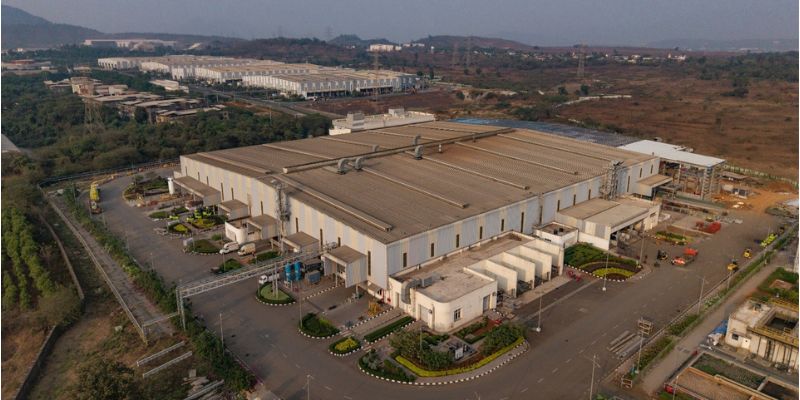
Godrej MHE begins operations at advanced Khalapur manufacturing facility
The facility will produce up to 6,000 material handling units annually, scalable to 15,000, for domestic and export markets.
Read moreOther Industrial Products
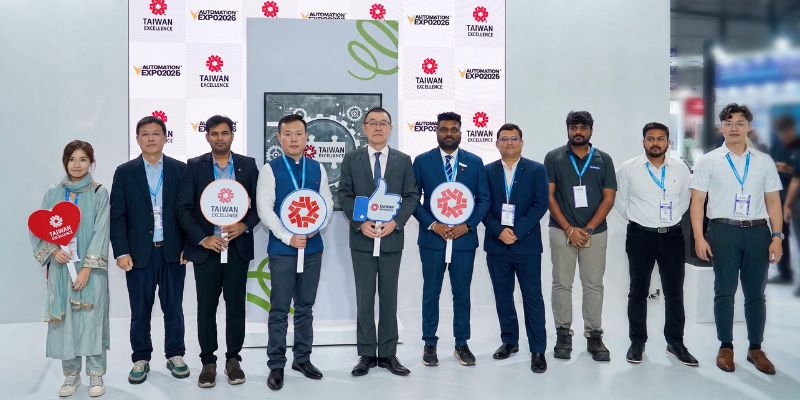
Taiwan Excellence showcases AI-powered manufacturing solutions at Automation Expo 2026
Taiwan Excellence showcased 55+ industrial innovations from 22 Taiwanese brands at Automation Expo 2026, highlighting AI-driven solutions for India's smart manufacturing growth.
Read moreAutomation & Robotics
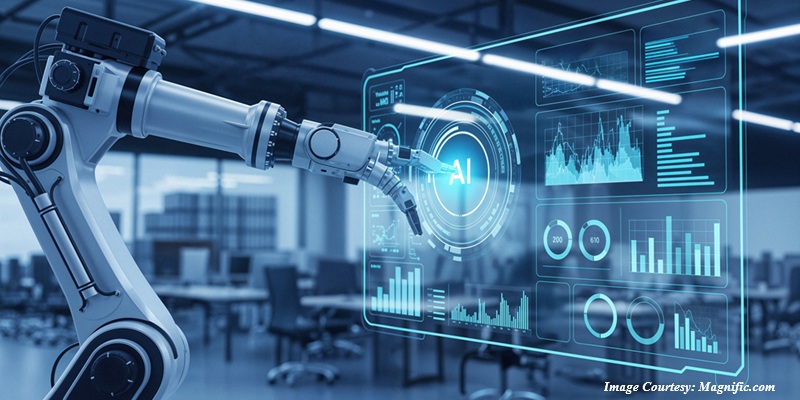
AI Emerges as Key Growth Driver for Indian Manufacturing Sector: PwC
PwC study reveals 59 per cent of Indian manufacturers see AI as key to strategic growth over the next five years.
Read moreRelated Products
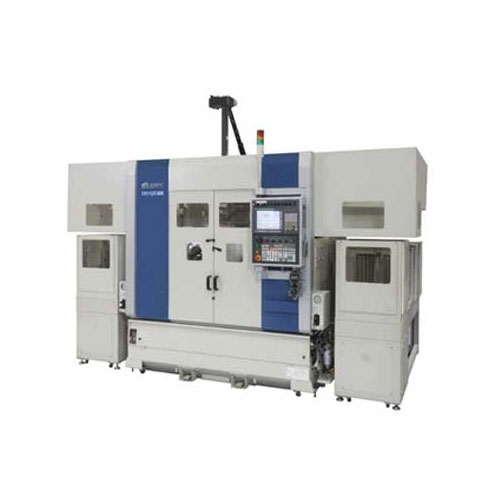
Compact Fmc - Motorum 3048tg With Fs2512
INDUSTRIAL AUTOMATION & TECHNOLOGY CONSULTANCY
Meiban Engineering Technologies Pvt Ltd offers a wide range of Compact FMC - Motorum 3048TG with FS2512.
Digital Colony Counter
INDUSTRIAL AUTOMATION & TECHNOLOGY CONSULTANCY
Rising Sun Enterprises supplies digital colony counter.

Robotic Welding SPM
INDUSTRIAL AUTOMATION & TECHNOLOGY CONSULTANCY
Primo Automation Systems Pvt. Ltd. manufactures, supplies and exports robotic welding SPM.
latest News
Subscribe to iNoW

For Industry News on WhatsApp, Give a Miss Call on: +91 84228 74016