






Schedule a Call Back


Aviation & Aerospace: Opportunities Galore
 Technical Articles
- Jun 10,15
NULL

When in December 2014 the International Air Transport Association (IATA) announced that 2015 would be healthier for the global aviation industry, it had much to do with the falling oil prices as fuel accounts for a major chunk of expenses for global aviation companies, and in India it is as high as 40%. Aviation is not just about commercial air transport, but also the defence industry, which makes it of strategic importance to any country. Globally the combination of civil and defence aviation is estimated to be over USD 1000 billion, making it one of the most lucrative industries. For India, the renewed focus on defence aviation under the new government means opening up of further opportunities, for a segment that is already upbeat as evidenced by the entry in Indian skies of Vistara, a joint venture between Tata Sons and Singapore Airlines, in January 2015. The Indian civil aviation industry is on a high growth trajectory. It is expected to be the third largest aviation market by 2020, and according to some estimates, the largest by 2030.
In mid-May 2015, the Indian government approved the joint bid of Airbus Defence and Space and Tata Advanced Systems (TASL) to replace the Indian Air Force's fleet of Avro aircraft with the Airbus C295 medium transport. The decision to team with TASL follows a detailed industrial assessment and stringent evaluation of the Indian private aerospace sector by Airbus Defence and Space, which concluded with the selection of TASL as the Indian Production Agency (IPA) exclusive partner. Though this was the only bid, the government has allowed it as a special case to boost the aviation sector as well as the private sector involvement in this area.

A total of 56 Avro aircraft are to be replaced. Airbus Defence and Space will supply the first 16 aircraft in 'fly-away' condition from its own final assembly line. The subsequent 40 aircraft will be manufactured and assembled by TASL in India. This will include undertaking structural assembly, final aircraft assembly, systems integration and testing, and management of the indigenous supply chain. This development is expected to provide a big boost to the aviation sector in India.
Just sample these deals and announcements in the wake of Aero India, the country's largest biennial air show for both military and civil aircraft that was held in February at Yelahanka near Bangalore:
- Pune-based Bharat Forge Limited signed a multi-year contract with Boeing Commercial Airplane to supply titanium forgings to be used in the wings of next-generation 737 and 737 MAX. According to Baba Kalyani, CMD, Bharat Forge, the company is targeting revenues in excess of USD 100 million per annum from this sector.
- Rolls-Royce awarded a contract worth over US$ 19 million to TAL Manufacturing Solutions Ltd (TAL), a Tata enterprise and a wholly owned subsidiary of Tata Motors Ltd for manufacture and supply of precision aero engine components for Trent XWB and Trent 1000 aero engines.
- Eric Trappier, Chairman and CEO, Dassault Aviation, which presented a fleet of its Falcon large cabin, long range business jets predicted a bright future for Indian Bizjet Market. With 22 aircraft Dassault is the Indian market leader in the large cabin, long range aircraft segment, and upbeat about the growth, is soon planning to launch maintenance facilities in India.
- GE unveiled its new 'Brilliant Factory' near Pune, which is among the company's most advanced facilities bringing together automation, the Industrial Internet and 3D printing. It is built on the concept of flexibility, allowing for the manufacturing of a diverse set of products and catering to GE's broad range of businesses, including aviation, oil & gas and rail. It will include manufacturing capability for new generation aviation engine components.
Also in early February, US-based UTC Aerospace Systems announced that the United States Federal Aviation Administration (FAA) has officially approved a product manufactured by UTC Aerospace Systems affiliate entity in Bengaluru, India. With this approval, the Bengaluru unit is among the first Indian entities to domestically produce and export an aviation product to aircraft manufacturers in the United States. In the aviation industry which is characterised by very strict evaluation and rating systems for all its sub-assemblies, components and spares, getting a product 'type approved' is a very lengthy process that calls for meticulous R&D and very high manufacturing standards.

The India facility of UTC Aerospace Systems was established at Bengaluru in 1997 with 12 employees to provide MRO support for aircraft evacuation systems to airlines in India and the Middle East. Today it is a 2400+ strong organisation housed at two locations in Whitefield area, and is an integrated manufacturing, engineering and sourcing hub for UTC Aerospace Systems. Products being built in India include aircraft evacuation systems, aircraft interior and exterior lighting, cargo systems, pilot and cabin attendant seats, flight control motors, actuation systems and sensor systems. Additionally, the Engineering Centre at the facility provides engineering support to all businesses of UTC Aerospace Systems.
Incidentally, Bangalore, as the city was known earlier, is one of the oldest and largest centres of the aviation industry in India. It was here that Shri Walchand Hirachand, a farsighted visionary and doyen of Indian industry, in association with the Government of Mysore, established the Hindustan Aircraft Company in December 1940. In collaboration with the Inter Continental Aircraft Company of USA, Hindustan Aircraft Company commenced its business of manufacturing of Harlow Trainer, Curtiss Hawk Fighter and Vultee Bomber Aircraft. In 1942, the company was taken over by the colonial government of India, a strategic decision to serve the requirements of the Royal Air Force of UK. It was also temporarily placed under the USAF during that period to service the American military aircraft.
In August 1963, Aeronautics India Limited (AIL) was incorporated as a wholly owned company of the Government of India to undertake the manufacture of the MiG-21 aircraft under licence from the then USSR. In June 1964, the Aircraft Manufacturing Depot, which was set up in 1960 as an Air Force unit to produce the airframe for the HS-748 (AVRO) transport aircraft was transferred to AIL. And finally in October 1964, it was amalgamated with Hindustan Aircraft Company to form the present day Hindustan Aeronautics Limited (HAL), which is today one of the largest aerospace companies in Asia.
HAL has a long history of collaboration with several other international and domestic aerospace agencies such as Airbus, Boeing, Lockheed Martin, Sukhoi Aviation Corporation, Elbit Systems, Israel Aircraft Industries, RSK MiG, BAE Systems, Rolls-Royce plc, Dassault Aviation, MBDA, EADS, Tupolev, Ilyushin Design Bureau, Dornier Flugzeugwerke, the Indian Aeronautical Development Agency and the Indian Space Research Organisation. It has several divisions and R&D centres spread across the country and operates several airports that include Nashik, Korwa, Kanpur, Koraput, Lucknow, Bangalore and Hyderabad. Even though HAL has an illustrious history, the full potential of this organisation has not yet been realised.
Among major companies, France-based European consortium Airbus Industrie's footprint in the fast-growing Indian aerospace sector is coordinated through the company's fully-owned subsidiary, Airbus India Operations, which was established in December 2013. This unifies Airbus' in-country engineering activities, including Emerging Technologies and Concepts (ETC), strategy and international cooperation, sourcing, customer support and services activities under one umbrella - bringing the company closer to customers, suppliers and stakeholders.
Airbus' industrial cooperation with India began in the 1980s when an agreement was reached with HAL to manufacture forward passenger doors for the A320 aircraft. HAL now produces half of all A320 forward passenger doors. In addition, Airbus' list of Indian partners and suppliers has expanded to encompass engineering, IT services, technical publications, research and technology and manufacturing of aero-structures, detail parts and sub-assemblies. More than 5,000 professionals nationwide contribute directly/indirectly to all Airbus aircraft programmes.
Airbus also works directly with Indian companies in designing and manufacturing aerostructures, and strongly encourages its major Tier 1 suppliers to partner with Indian organisations to expand their reach and capacity. Dynamatic Technologies from Bangalore has partnered with Spirit Aero Systems to manufacture complex machined components and assemblies (Flap-Track Beams) for the A320 Family, which is the world's most popular single-aisle aircraft programme. In February 2015, Dynamatic Technologies signed an agreement to be the single source supplier of flap-track beams for the wide body A330 Family aircraft.
Another global multinational, Honeywell Aerospace has been supporting the Indian aerospace industry's growth for the last 40 years. The association began with a tie-up with HAL. Today, each of Honeywell Aerospace's three business units is present in India. In addition, Indian engineers play a key role in technology development for Honeywell's global aerospace business. More than 2,800 dedicated aerospace engineers work on solutions for India and the world as part of Honeywell Technology Solutions, the global technology development and engineering arm of Honeywell.
Honeywell Aerospace works with airline and defense customers, suppliers and research institutes in India to provide a host of products and services, including integrated avionics and communications systems; propulsion and mechanical systems; conditioned-based maintenance, logistics, and flight management services; and full-service solutions for airliners, business and general aviation aircraft, military aircraft, rotorcraft, and spacecraft.
(This article has been complied based on information sourced from websites of featured companies)
Related Products

Liquid Ring Vacuum Pumps/Compressors
Compressors and Allied Equipment
Aeromatic Engineering Private Limited offers a wide range of liquid ring vacuum pumps/compressors.
Read more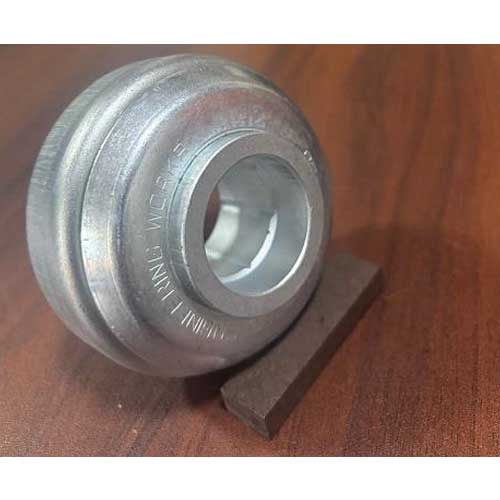
Hot Wheel Bearing
Bearings, Bushings, Wheels and Gears
SICCO Engineering Works offers a wide range of hot wheel bearing. Read more
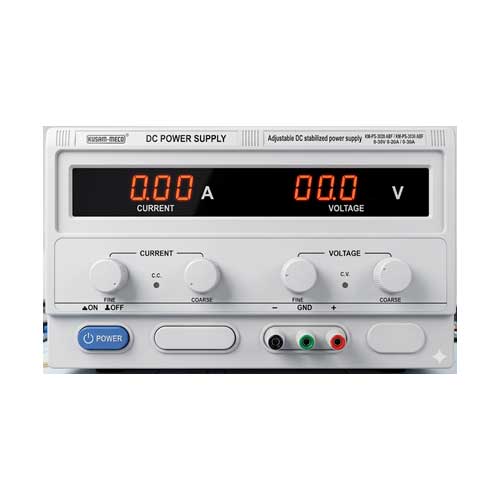
Kusam-meco DC Power Supply Model Km-ps-3020 Abf / Km-ps-3030 Abf
Power Supplies, Batteries & Accessories
<p>Kusam Electrical Industries Ltd offers Kusam-Meco DC power supply model KM-PS-3020 ABF/ KM-PS-3030 ABF</p> Read more
latest News
Subscribe to iNoW

For Industry News on WhatsApp, Give a Miss Call on: +91 84228 74016