





Schedule a Call Back


As energetic as it gets
 Technical Articles
- Jan 01,17

India’s energy demand is projected to grow at an alarming rate and this will increase its dependence on imports. However, the government’s keen focus and various initiatives in the renewable energy sector will probably provide the required balance.
First, the bad news! Nearly Rs 1.34 lakh crore worth of debt on operational and under-construction power projects are at risk, says ratings agency Crisil. As per its estimates, around 17,000 MW of operational power projects with a debt of Rs 70,000 crore and additional 24,000 MW under-construction projects with a debt exposure of around Rs 64,000 crore are poised at high risk. “These operational projects are those which are facing the consequences of aggressive bidding for coal supplies or facing huge cost overruns, and those with gas-supply issues,” says Sudip Sural, Senior Director, Crisil, adding that over the period, the credit growth to the sector will moderate to 5% over the next three years as compared to an average of 18% witnessed in the last five years.
“This is primarily because the discoms’ debt which has been the key component of this exposure is going to go out of the banking system over a period of time and move to the fold of the state government on account of the Ujwal Discom Assurance Yojana (UDAY) scheme,” he explains. Also, fresh investments in the thermal generation sector will remain muted, while on the other hand capacity addition in the renewable space will give some fillip to credit growth, he opines. Now, some good news! Bharat Petroleum Corporation Ltd (BPCL) plans to spend USD 6.75 billion through 2022 to raise refining capacity by 62% to meet rising fuel demand in the world’s fastest growing major economy, a company official said. India is replacing China as the driver of global oil demand growth as its economy expands and a rising middle class buys motor vehicles. The International Energy Agency (IEA) expects India to account for a quarter of global energy use by 2040.
Further, BPCL aims to lift its crude processing capacity to 1.18 million barrels per day (bpd) by 2022 from the current 7,30,000 bpd, its head of refineries, R Ramachandran, told news agency Reuters recently. In the fiscal year to March 2016, Indian fuel demand rose to its highest level in at least 15 years partly because of the nation’s renewed manufacturing push under Prime Minister Narendra Modi’s ‘Make in India’ drive. “We are aiming for an economic growth rate of 7-8% and so if that happens, the Indian fuel demand is bound to grow. We will see a fuel demand growth rate which will continue to remain at 6-7% at least for the next 10 to 15 years,” Ramachandran said. The refiner intends to spend about Rs 100 billion to expand its coastal plants at Kochi in southern India and Mumbai in the west.
Industry update
India’s power sector is one of the most diversified in the world. Sources of power generation range from conventional sources such as coal, lignite, natural gas, oil, hydro and nuclear power to viable non-conventional sources such as wind, solar, and agricultural and domestic waste. The demand for electricity has increased rapidly and is expected to rise further in the years to come. In order to meet the increasing demand for electricity in the country, massive addition to the installed generating capacity is required. India ranks third among 40 countries in EY’s Renewable Energy Country Attractiveness Index on back of strong focus by the government on promoting renewable energy and implementation of projects in a time-bound manner.
The Government of India’s focus on attaining ‘power for all’ has accelerated capacity addition in the country. At the same time, the competitive intensity is increasing at both the market and supply sides (fuel, logistics, finances, and manpower). As of August 31, 2016, the total installed capacity of power stations in India stood at 3,05,554.25 megawatt (MW).
lectricity generation rose 5.69% year-on-year to 486.44 BU during April 2016-August 2016. The Planning Commission’s 12th Five Year Plan estimates total domestic energy production to reach 669.6 Million Tonnes of Oil Equivalent (MTOE) by 2016-17 and 844 MTOE by 2021-22. India’s wind power capacity, installed in 2016, is estimated to increase 20% over last year to 2,800 MW, led by favourable policy support that has encouraged both independent power producers (IPP) and non-IPPs. India is expected to add nearly 4,000 MW of solar power in 2016, nearly twice the addition of 2,133 MW in 2015. India’s wind energy market is expected to attract investments totalling Rs 1,00,000 crore by 2020, and wind power capacity is estimated to almost double by 2020 from over 23,000 MW in June 2015, with an addition of about 4,000 MW per annum in the next five years.
According to an industry report, around 293 global and domestic companies have committed to generate 266 GW of solar, wind, mini-hydel and biomass-based power in India over the next 5-10 years. The initiative would entail an investment of about USD 310-350 billion. Between April 2000 and March 2016, the industry attracted USD 10.48 billion in foreign direct investment (FDI). Some of the major investments and developments in the Indian power sector are as follows:
French power major EDF Energies has announced that it plans to invest USD 2 billion in renewable energy projects in India.
International Finance Corporation (IFC), the investment arm of The World Bank, plans to invest Rs 840 crore in Hero Future Energies Limited, the renewable energy arm of the Hero Group, which will be used to fund the construction of solar and wind power plants.
GAIL India Limited plans to enter into a partnership with California-based Bloom Energy Corporation to pursue natural gas-based fuel cell power generation, which is expected to help the country move away from relying on capital-intensive fixed power infrastructure to capital light and soft infrastructure.
Power Finance Corporation Limited (PFC) has provided a financial assistance of Rs 13 crore and collaborated with National Green Highways Mission (NGHM) under National Highways Authority of India (NHAI) for plantations work on NH7 in Nagpur region under their ‘Adopt a Green Highways’ programme.
The State Bank of India (SBI) has signed an agreement with The World Bank for Rs 4,200 crore credit facility, aimed at financing Grid Connected Rooftop Solar Photovoltaic (GRPV) projects in India.
The World Bank has committed to provide USD 1 billion for India’s solar energy projects and plans to work with other multilateral development banks and financial institutions to develop financing instruments to support future solar energy development in the country.
The Ministry of New and Renewable Energy (MNRE) has signed an agreement with Germany-based KfW Development Bank to fund the Rs 300 crore floating solar project in Maharashtra and Kerala, which is expected to generate over 310 GW of green energy.
CLP India, one of the largest foreign investors in India’s power sector, has acquired a 49% stake in SE Solar, a Special Purpose Vehicle (SPV) set up by Suzlon Group for building a 100 MW solar energy plant at Veltoor in Telangana for Rs 73.5 crore.
MNRE plans to launch an integrated bio energy mission with an investment of Rs 10,000 crore from FY 2017-18 to FY 2021-22, aimed at enhancing the use of bio-fuels like ethanol and biogas and reducing consumption of fossil fuels.
Canada’s second-largest pension fund, Caisse de depot et placement du Quebec (CDPQ), has set up its office in India and committed to invest USD 150 million in the Indian renewable energy sector over the next three to four years.
SunEdison, the world’s largest renewable energy company, plans to continue its focus on ‘Make in India’ by further reducing the cost of renewable energy and developing over 15 Gigawatts (GW) of wind and solar projects in the country by 2022.
Aditya Birla Group has announced a partnership with the Abraaj Group, a leading investor in global growth markets, to build a large-scale renewable energy platform that will develop utility-scale solar power plants in India.
Sterlite Grid, India’s largest private operator of transmission systems, is joining hands with US major Burn & McDonnell for its Rs 3,000 crore power transmission project in the Kashmir valley.
Government initiatives
The Government of India has identified the power sector as a key sector of focus so as to promote sustained industrial growth. Among some of the recent initiatives, it plans to set up a USD 400 million fund, sourced from The World Bank, which would be used to protect renewable energy producers from payment delays by power distribution firms, while at the same time protecting the distribution firms from the shrinking market for conventional grid-connected power, caused by wider adoption of roof-top solar power generation. The Ministry of Power plans to set up two funds of USD 1 billion each, which would give investment support for stressed power assets and renewable energy projects in the country. MNRE, which provides 30% subsidy to most solar powered items such as solar lamps and solar heating systems, has further extended its subsidy scheme to solar-powered refrigeration units with a view to boost the use of solar-powered cold storages.
The Ministry of Shipping plans to install 160.64 MW of solar and wind-based power systems at all the major ports across the country by 2017, thereby promoting the use of renewable energy sources and giving a fillip to the government’s Green Port Initiative. Further, the Government of India and the Government of the United Kingdom have signed an agreement to work together in the fields of solar energy and nano material research, which is expected to yield high quality and high impact research outputs having industrial relevance, targeted towards addressing societal needs. There is a plan to start as many as 10,000 solar, wind and biomass power projects in the next five years, with an average capacity of 50 kW per project, thereby adding 500 MW to the total installed capacity.
The road ahead
As per press releases issued by the Press Information Bureau (PIB), the Indian government has announced a massive renewable power production target of 1,75,000 MW by 2022; this comprises generation of 1,00,000 MW from solar power; 60,000 MW from wind energy; 10,000 MW from biomass; and 5,000 MW from small hydro power projects. According to Piyush Goyal, Minister of State with Independent Charge for Power, Coal, New and Renewable Energy and Mines, the Indian power sector has an investment potential of Rs 15 trillion in the next 4–5 years, thereby providing immense opportunities in power generation, distribution, transmission and equipment trading. The government’s immediate goal is to generate two trillion units (kilowatt hours) of energy by 2019. This means doubling the current production capacity to provide 24x7 electricity for residential, industrial, commercial, and agriculture use. In fact, encouraged by such moves, a number of companies such as Mera Gao Power, SunEdison and Minda NextGen have put up several solar-powered mini or micro grids, mainly by supplying equipment to local entrepreneurs.
The primary focus is on renewable energy. Among the several recent announcements related to this industry, the India Infrastructure Fund of IDFC Alternatives is buying three solar projects in Punjab and Rajasthan from Punj Lloyd Infrastructure as part of the company’s plans to establish a presence in the renewable energy space through acquisitions. The deal on the three solar projects with a total capacity of 45 MW was signed on October 22, 2016. This is IDFC’s second investment in the renewable energy space, having acquired a 25 MW wind power plant from Jindal Steel & Power Ltd for an undisclosed valuation. The company wants to put together a renewable energy portfolio in 12 to 18 months through acquisitions with a capacity of 500 to 1,000 MW. It envisages assets with capacity of 250 MW in six months based on solar, wind and hydro energy.
Also, Inox Wind has bagged repeat orders from Malpani Group for 40 MW wind power projects in Gujarat. The two orders will be executed on turnkey basis and are scheduled to be commissioned by March 2017. The orders involve supply and installation of 20 units of Inox Wind’s latest offering, the 113 meter rotor diameter wind turbine generator. As part of the turnkey projects, it will provide end-to-end solutions from development and construction to commissioning. Suzlon Group has bagged orders for a combined capacity of 111.30 MW from corporate and SME customers in August and September 2016. This combined capacity includes orders from reputed corporate houses such as Serum Institute of India, Rajasthan Gum Group and an assortment of SME customers. “These orders include Suzlon’s latest product offerings - the S111 90m tubular tower and S97 120m hybrid tower and also the timetested S97 90m and S95 90m tubular tower models, all with a rated capacity of 2.1 MW each,” says J P Chalasani, CEO, Suzlon Group.
Tata Power Solar has successfully commissioned a 100 MW solar project for NTPC in Anantapur, Andhra Pradesh. Tata Power Solar delivered the project in record 80% of stipulated timelines, and nearly three months ahead of schedule. The key highlights of the project were the innovative design of balanceofsystem (BoS) and cabling, along with optimized selection of evacuation systems. “This is the biggest solar project commissioned using domestically manufactured solar cells and modules. The plant is expected to generate nearly 160 million units of energy per year and help offset approximately 110,000 tonnes of CO2 in the first year,” informs Ashish Khanna, CEO, Tata Power Solar.
Energy Projections
The increasing pressure of population and rise in the use of energy in different sectors of the economy is an area of concern for India. The country’s energy demand, which was nearly 700 MTOE in 2010, is expected to cross 1,500 MTOE by 2030. Its dependence on imports is expected to increase from 30% to over 50%, suggesting the need for a new way forward.
In the 2030 BAU scenario, 60% of India’s power generation is assumed to come from coal, taking coal demand up to 750 MTOE. Liquids demand, primarily for transportation, will grow at 4% per annum to 373 MTOE. Gas demand is expected to grow to 113 MTOE, constrained by high LNG prices that will compete with liquid alternatives. Hydro power will reach 21 MTOE.
Renewable and nuclear power will grow as per stated policy objectives and at similar growth rates thereafter through 2030. The balance of primary energy will therefore need to come from non-commercial sources. As such, India’s possible import dependence of above 50% of 1,500 MTOE is a clear indication that a different set of energy outcomes versus BAU will be required if India is to keep its growing economy supplied with sufficient reliable and cost-effective energy.
– HUNED CONTRACTOR
Related Stories
Other Industrial Products
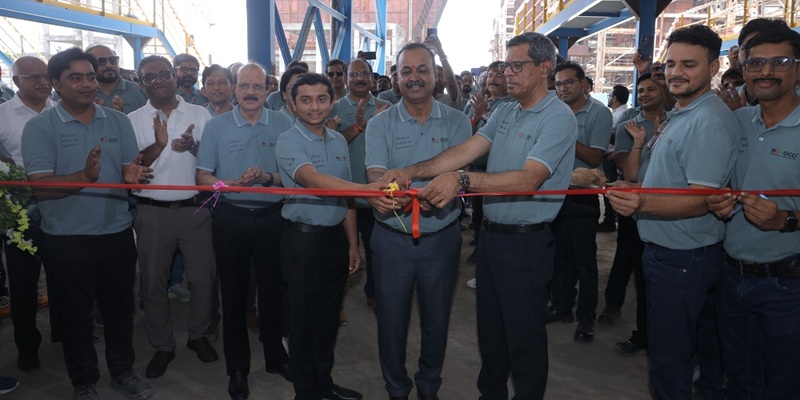
Nuvoco Vistas opens Limla cement plant, expands Western India footprint
Nuvoco Vistas opens a 2 MMTPA grinding unit at Limla, entering Gujarat and advancing its target of 35 MMTPA capacity by FY 2028.
Read moreMachine Tools & Accessories
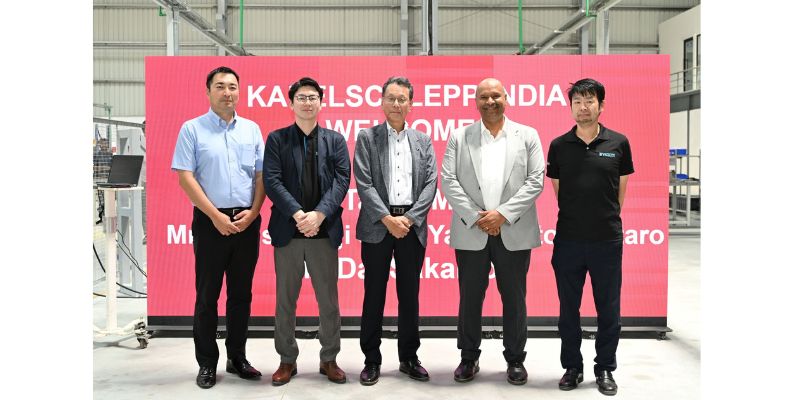
Tsubaki Leadership Reinforces India Growth Strategy during Kabelschlepp Visit
Tsubaki’s senior leadership visited Kabelschlepp India to review growth, localisation and innovation initiatives while strengthening engagement with employees, partners and customers.
Read moreAuto & Auto Components

Škoda Auto Volkswagen India Announces Leadership Transition
Piyush Arora will assume additional responsibility for Group sales and marketing in India as Jan Bures moves to a new role at Volkswagen AG.
Read moreRelated Products
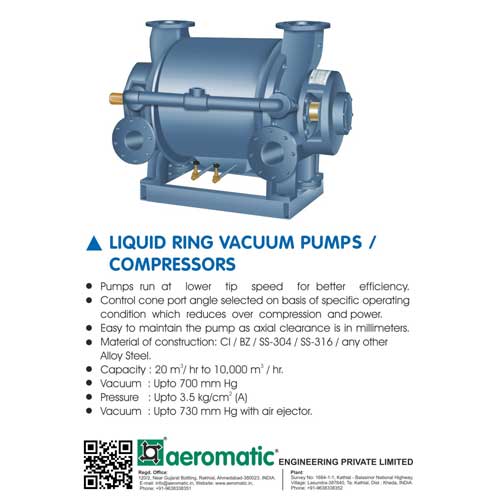
Liquid Ring Vacuum Pumps/Compressors
Compressors and Allied Equipment
Aeromatic Engineering Private Limited offers a wide range of liquid ring vacuum pumps/compressors.
Read more
Hot Wheel Bearing
Bearings, Bushings, Wheels and Gears
SICCO Engineering Works offers a wide range of hot wheel bearing. Read more
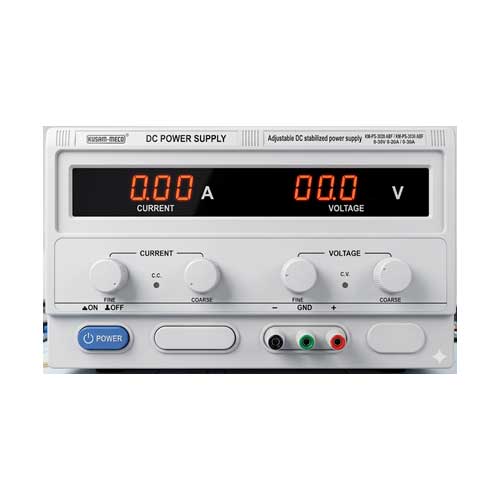
Kusam-meco DC Power Supply Model Km-ps-3020 Abf / Km-ps-3030 Abf
Power Supplies, Batteries & Accessories
<p>Kusam Electrical Industries Ltd offers Kusam-Meco DC power supply model KM-PS-3020 ABF/ KM-PS-3030 ABF</p> Read more
latest News
Subscribe to iNoW

For Industry News on WhatsApp, Give a Miss Call on: +91 84228 74016