



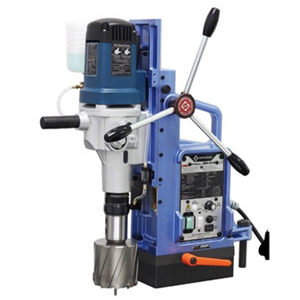





Schedule a Call Back


Air Pollution Monitoring: Emerging Requirements
 Technical Articles
- Sep 30,11
NULL

Did you know that the level of atmospheric pollution in large swathes of India is between two to five times higher* than the acceptable limit set by the World Health Organisation? What makes matters worse is the fact that air, sometimes referred to as the mad medium, recognises neither borders nor walls; factors such as wind, convection currents, land and sea breeze, all play a role in dispersing pollutants near and far. This is why it is imperative to control air pollution at the source, before any pollutant gets released into the atmosphere. And measurement is an integral part, often the first step, of any effort to control air pollution.
Recognising this, the government revised the National Ambient Air Quality Standards (NAAQS) in November 2009, in order to expand its scope. Although Ambient Air Quality has been monitored for over 25 years now, till a couple of years back the emphasis was on the three criteria pollutants, namely Respirable Particulate Matter (RSPM or PM10), Sulphur Dioxide (SO2), and Oxides of Nitrogen (NOx). The revised standards applicable across the country (see table) include several new parameters, from Fine Particulate Matter (PM2.5) to Benzene and Benzo-Pyrene. Such additions underscore the realisation that much of the urban air quality deterioration can be traced to vehicular sources.
While the revised NAAQS is a much-needed step, a lot more needs to be done. A realistic assessment of air quality across a large country like India requires a collaborative effort by governmental and private stakeholders. This is why large industries are being asked to set up Ambient Air Monitoring stations in the vicinity of their plants, mines and the like, to keep track of the potential sources that can cause deterioration in the air quality.
Industries, on their part, will need to develop a strategy in order to monitor NAAQS' expanded set of 12 parameters in a cost-effective manner. Here's a look at the tools/equipment that can help make the task easier:
Monitoring PM10 and PM2.5: The data from almost all Indian cities where particulates have been measured often shows high values and a rising trend. This makes particulate pollutants perhaps the most important concern. The inclusion of parameters such as heavy metals (lead, arsenic, and nickel) and Benzo-pyrene in the NAAQS implies that monitoring the concentration of particulates alone is not enough. It is as important, if not more so, to assess and quantify the presence of toxic constituents of the particles.
Such quantification requires a physical sample of the particles, which has to be collected and sent for detailed chemical analysis. Clearly, then, sampling instruments will have to be used, which provide a field sample of particles (PM10 and PM2.5) present in the atmosphere.
Monitoring Gaseous Pollutants: Pollutants such as SO2, NOx, and Ammonia can be easily monitored by simple instruments that absorb the pollutant in a suitable chemical reagent. Then, colorimetric lab analyses help determine the concentration of a specific pollutant, say, SO2. For a developing country like India, this is the most cost-effective and practicable method - it requires simple infrastructure and basic skill levels for equipment handling and maintenance.
Monitoring Benzene, Ozone and Carbon Monoxide (CO): These pollutants are mainly traceable to vehicular sources and are essentially an urban phenomenon. As all of them are rather toxic, their monitoring must be implemented even though the instrumentation required is expensive and, at present, needs to be imported. In addition to the analyzers, investments are required in the air-conditioned space, as well as power backup and calibration systems that require skilled handling.
A word of caution for those procuring expensive, imported equipment: Check the credentials of the supplier to ascertain whether he is equipped to provide service support for the specialized hi-tech equipment.
While the initiative taken by the Central Pollution Control Board (CPCB) to enhance the scope of NAAQS is a laudable effort they need to clarify whether ALL the 12 parameters need to be monitored at every location. Take for instance SO2, data from several years confirms that at many places in India SO2 levels are barely detectable: should we continue to insist on monitoring SO2 at these places. Perhaps our resources can be better allocated to pollutants that are at a more critical concentration or are more toxic.
* Source: Journal of Geophysical Research
(Mr Rakesh Agarwal is the Managing Director of Envirotech Instruments Pvt Ltd, (www.envirotechindia.com) an Indian company specialising in providing Air Pollution Monitoring Instruments appropriate to the country's needs)
MARG Karaikal Port Attracts Investment of Rs 200 Crore
 Karaikal Port Private Limited, a subsidiary of Chennai based MARG Limited, one of the India's fastest growing infrastructure companies, has finalised its fund raising plans for its Phase 2A Expansion. Bangalore-based Ascent Capital, a leading private equity firm has decided to invest Rs 200 crores in MARG Karaikal Port. The funds will be used for the MARG Karaikal Port Phase 2A expansion plans which will enhance the port's capacity from 21 MMTPA to 28 MMTPA and involves an additional capex of Rs 600 crores. KPPL had entered into definitive agreements with Ascent for an investment of up to Rs 200 crore to fund the development of the port. As per the terms of the definitive agreements, Ascent would invest Rs 200 crore by way of secondary purchase of promoter equity shares amounting to Rs 150 crore and by way of primary infusion of capital amounting to Rs 50 crore by subscribing to Compulsorily Convertible Preference Shares ("CCPS"). The deal values KPPL at Rs 1330 crore on a pre-money basis. Commenting on the investment, Mr GRK Reddy, Chairman and Managing Director, MARG Limited said, "MARG Karaikal Port is fast emerging as one of the finest ports in the South East Coast of India. The investment from Ascent Capital into MARG Karaikal Port comes in at an opportune time and more importantly is a testimony to the sturdy fundamentals of the port led by a high efficiency quotient and a strategic location that supports an ever increasing hinterland."
Related Products
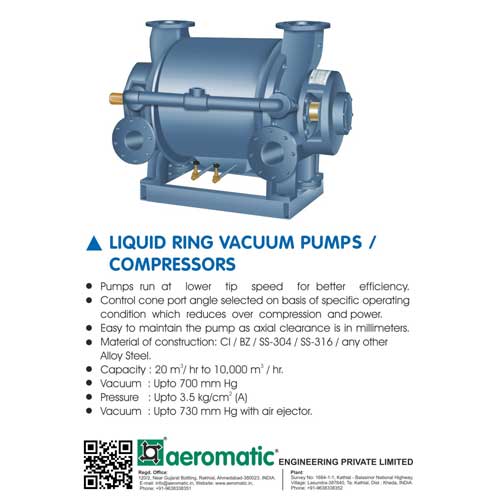
Liquid Ring Vacuum Pumps/Compressors
Compressors and Allied Equipment
Aeromatic Engineering Private Limited offers a wide range of liquid ring vacuum pumps/compressors.
Read more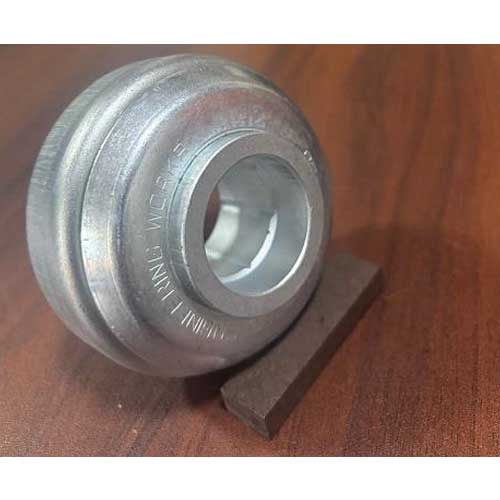
Hot Wheel Bearing
Bearings, Bushings, Wheels and Gears
SICCO Engineering Works offers a wide range of hot wheel bearing. Read more
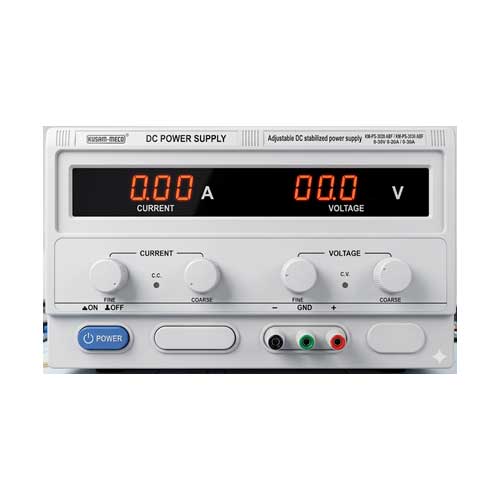
Kusam-meco DC Power Supply Model Km-ps-3020 Abf / Km-ps-3030 Abf
Power Supplies, Batteries & Accessories
<p>Kusam Electrical Industries Ltd offers Kusam-Meco DC power supply model KM-PS-3020 ABF/ KM-PS-3030 ABF</p> Read more
latest News
Subscribe to iNoW

For Industry News on WhatsApp, Give a Miss Call on: +91 84228 74016