





Schedule a Call Back


A stronger Indian value chain drives our vision: Eswararao Nandam
 Articles
- Jun 24,26
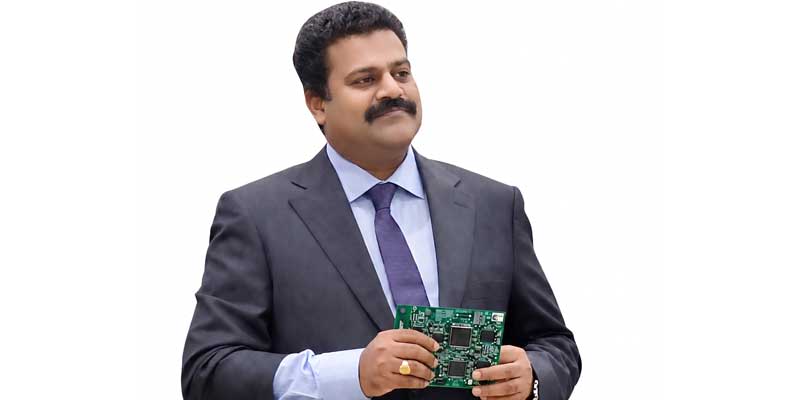
Polymatech is strengthening India’s semiconductor ambitions through automation and global capacity building. Eswararao Nandam, Managing Director, Polymatech Electronics Limited, in an interaction with Ashlin Rajan, discusses the company’s journey, its focus on building a complete semiconductor supply chain, and its vision to position India in the global semiconductor ecosystem.
Can you give us a brief overview of Polymatech’s journey so far and the mission that has guided the company’s growth?
Polymatech’s journey has been driven by conviction. In 2011, when India was still largely assembling electronics rather than manufacturing components, we believed the country had to move beyond being only a consumer of electronics. Semiconductors were not being discussed as widely then as they are today, but we felt India needed to begin somewhere in the component value chain.
By 2016, I started the company on my own, even selling ancestral property to fund it. The objective was simple: to show that India can manufacture semiconductors. We began with the basics—diodes and triodes—and have grown into an opto-semiconductor player. Today, Polymatech is among India’s foremost companies in opto semiconductors.
What is the larger vision behind Polymatech? Are you aiming to become an Indian semiconductor company, a global supplier or a full-stack semiconductor player?
A stronger value chain in India is at the core of our vision. We do not want India to only export low-value products and then import them back after major value addition elsewhere. Semiconductor manufacturing requires a full ecosystem, from materials and wafers to packaging, testing and final products.
Polymatech began with advanced semiconductor packaging because India did not have chips available locally. We then signed an MoU with ECM France to work on ingot and wafer development, acquired a US company in testing and failure analysis equipment, and set up operations in Estonia for semiconductor substrates and printed circuit boards.
We are also building a large facility in Chhattisgarh, where we have received SEZ notification and construction is underway. Over the next decade, the knowledge and capability built across the US, Estonia, France, Singapore and other locations will come back to India.
Our long-term vision is to cover the value chain from ingot to end product. By 2035, we want to build a complete semiconductor supply chain. My vision is for Polymatech to become India’s answer to global technology giants like Samsung or Apple.
How is Polymatech’s current business structured in terms of products, customer segments and industries served? Which areas are driving the strongest demand today?
We are in opto semiconductors, which means our products are linked to applications that involve light. Our technology is present in products such as laptop screens, mobile screens, cameras and specialised lights used in medical applications.
We also have products for healthcare, including vein-finding applications using near-infrared light. This helps make veins more visible, especially for older patients, people with collapsed veins, or those where vein identification is difficult.
Agriculture is another important area. Our lighting solutions can provide the spectrum required for photosynthesis, helping users grow food in controlled conditions. We are also working on applications linked to vitamin D and new spectrums such as Li-Fi, where data is transferred through light.
The key sectors we are focusing on include agriculture, medical applications, laboratories and consumer electronics.
What are the biggest challenges Polymatech has faced while building a semiconductor manufacturing business in India?
The challenge in India is not demand. Demand exists. The real challenge is ecosystem depth.
Semiconductor manufacturing requires specialised materials, precision equipment, skilled manpower, component supply chains and long-term patient capital. It cannot be built by one company alone. It needs suppliers, equipment support, a testing ecosystem and continuous government support.
Raw material availability is a major issue. In Singapore, for example, we can source certain materials very quickly. In India, the same level of supply chain readiness is not yet available. Import processes also become difficult because semiconductor materials are often highly specialised and not easily understood by customs authorities.
We have faced delays in bringing in materials such as sapphire ingots and ultra-thin gold wire. These materials are critical, but because they are unusual and expensive, they are often stopped or questioned. Such delays block working capital and slow down manufacturing.
India needs to look at entrepreneurs as the backbone of the country and create a more seamless environment for such industries.
What kind of investments has Polymatech made, or is planning to make, in R&D, automation and capacity building?
Automation is central to Polymatech. Our factory operates as a dark factory, where no one is required inside the production area. This is necessary because semiconductor manufacturing needs clean-room conditions, and frequent human movement can create problems.
We have invested significantly in automation. The manpower is not inside the production area, but people are still needed to command machines, programme them, manage sales, logistics, purchases, R&D and new product development.
Our belief is that machines must work, while humans must develop and control the machines.
In terms of investment, we are working to replicate the entire supply chain in India through our SEZ facility. We have committed a little less than Rs 12,000 crore by 2030.
How does the Singapore manufacturing hub fit into Polymatech’s global growth strategy?
Some materials and advanced chips are restricted for direct export to India. Certain equipment and materials also require approvals because of their sensitive end-use potential. In Singapore, we are able to access several such materials and technologies more easily.
The Singapore facility allows us to strengthen our Asia-Pacific presence and move beyond opto semiconductors into memory modules, DRAMs, RAMs and other advanced semiconductor technologies. For now, India will continue to manufacture basic-level chips, while advanced chips may come into India over a period of time.
How do you plan to balance domestic manufacturing growth with overseas capacity building?
We see it as a 50-50 balance between India and global operations.
We have two plants in India, in Chennai and Raipur, Chhattisgarh. We also have two plants in the US, one in California and one in Austin, Texas. In Europe, we have plants in France and Estonia. The Singapore plant strengthens our Asia-Pacific presence, and we are also planning to open an R&D centre in Fukuoka, Japan, in 2026.
We also had operations in Bahrain, but due to the recent geopolitical situation, those operations have been paused. This is one reason we expedited our Singapore operations.
Polymatech
semiconductors
opto semiconductors
dark factory
automation
semiconductor supply chain
advanced packaging
India manufacturing
Tamil Nadu
Eswararao Nandam
Polymatech Electronics Limited
Ashlin Rajan
Related Stories
Automation & Robotics
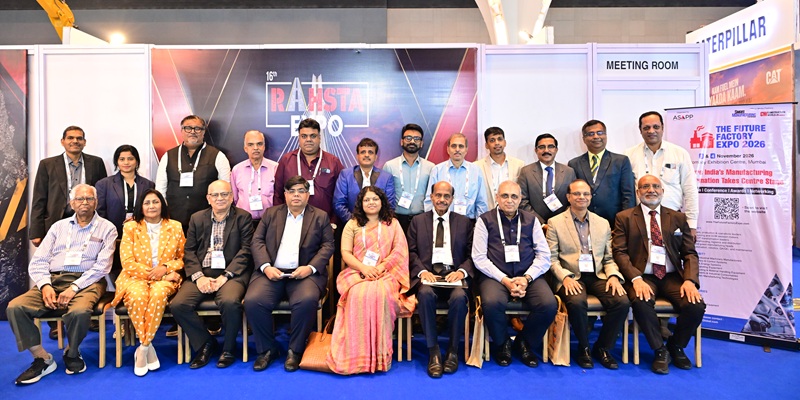
Future Factory Expo CXO Roundtable Charts Smart Transformation for SMEs
During the roundtable, hosted by Smart Manufacturing & Enterprises (SM&E) and The Future Factory Expo 2026, industry leaders outlined how SMEs can use practical digitisation, automation, skilling an..
Read moreAutomation & Robotics
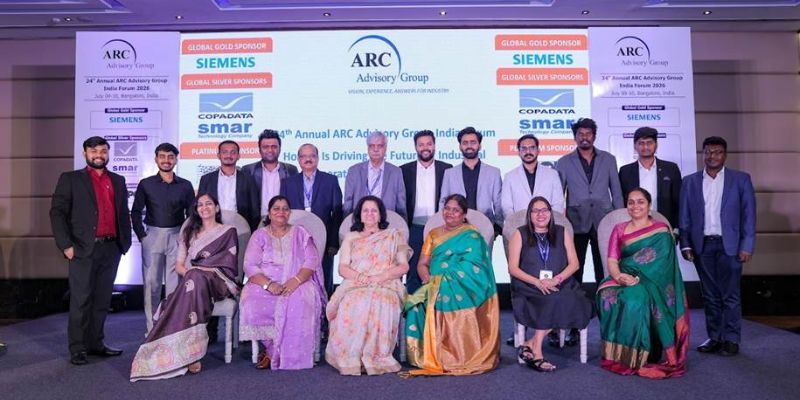
ARC India Forum Spotlights AI-Led Industrial Transformation
ARC Advisory Group’s 24th India Forum brought together 300-plus leaders to examine how AI is transforming industrial operations, manufacturing and supply chains.
Read moreSmart Manufacturing

Hitachi Vantara’s Norman Plant Named WEF Lighthouse Facility
Hitachi Vantara’s Norman manufacturing site has earned WEF Lighthouse status for using AI to reduce lead times, inventory and carbon emissions.
Read moreRelated Products

Ultra-slim Humidity/temperature Indicator With Large 4” Display
ELECTRICAL & ELECTRONIC EQUIPMENT
Countronics offers a wide range of ultra-slim humidity/temperature indicator with large 4” display – Model 7100-4W.
Read more
Integrated Electric Gripper S Series
ELECTRICAL & ELECTRONIC EQUIPMENT
IBK Engineers Pvt Ltd offers a wide range of integrated electric gripper S series.

Geared Electric Motors
ELECTRICAL & ELECTRONIC EQUIPMENT
Delco Fans Pvt Ltd offers single phase capacitor run and three
phase geared Instrument motors, totally enclosed face/foot mounted.
latest News
Subscribe to iNoW

For Industry News on WhatsApp, Give a Miss Call on: +91 84228 74016