






Schedule a Call Back


3D Printing with tribo filaments
 Technical Articles
- Dec 08,15

Igus tribo filaments offer minimum 50 times better wear resistance than conventional 3D print filaments.
 Where do tribological filaments stand in comparison with standard 3D print materials? And do printed parts made of high-performance plastics actually have a lower abrasion resistance than injection-moulded components? Now motion plastic specialist igus has tracked down these questions in their test laboratory. One result was surprising.
With high-performance plastics and additive manufacturing, two modern technologies which combined promise maximum freedom in construction and high abrasion resistance meet. In the igus test laboratory, tribological filaments of iglidur material J260 went up against conventional 3D print filaments (ABS) and injection-moulded parts of the same igus material. Intensive linear and rotating test runs were carried out and evaluated in the in-house test laboratory on hardened, ground shafts of both steel and stainless steel over a period of several months. Because additive manufacturing with lubricant- and maintenance-free high-performance plastics is still a comparatively young field, the material experts at igus GmbH encountered an open-ended experiment.
 Tribo-filament comes out ahead of ABS material
The result was surprising. It was clear that in both the linear and rotating tests, the abrasion resistance of bearings printed with tribological filament were comparable to the classical injection-molded components, even on both shafts. Thus where abrasion resistance is concerned, the printed components are almost on a par with the injection-molded components. Once again, the tests also clearly demonstrated that in comparison with conventional 3D print materials, the coefficients of friction for tribological filament are especially low. Thus in experiments pitting ABS against tribological filament, the rotating test on the stainless steel shaft even resulted in complete failure of the ABS part, while friction loss for tribological filament was still low. With these actual tests, the testers could demonstrate yet again how motion plastics play out their strengths in movement, even in 3D print. This is why it is possible for printed parts such as bearings or worm gears to be directly installed and used across industries.
 3D printing of parts with igus
For igus, additive manufacturing is one more step to give the design engineer the greatest possible freedom in construction with lubricant- and maintenance-free plastics. The motion plastics specialist igus already introduced the world’s first tribological filament for 3D printers last year, and has now expanded the series to a total of four materials. Since the Hannover Messe, igus has also offered a 3D print service. Customers can turn to igus with their 3D data and have their parts printed quickly and without complications. Delivery times for printed parts depend primarily on the complexity of the components; still, here too the goal is delivery within 24 hours.
Santhosh Jacob, Product Manager – iglidur, igubal, xiros – igus (India) Private Limited, Bangalore. Tel: 080-45127810. Mobile: 095352-00466. Email: santhosh@igus.in
Related Stories
Automation & Robotics
LTTS Launches Agenticiq AI Platform for Engineering and Manufacturing
LTTS has launched AgenticIQ, an end-to-end Agentic AI platform designed to enable autonomous, multi-agent workflows across engineering, manufacturing and industrial operations.
Read moreAuto & Auto Components

Electrogenic acquires TREMEC Electric GT, establishes US base
British EV technology firm Electrogenic has acquired TREMEC Electric GT, establishing a permanent US base in Huntington Beach, California, to support its North American expansion.
Read moreAutomation & Robotics

Honeywell expands AI and cybersecurity skilling initiative in India
Under Saksham, Honeywell Technologies aims to equip over 300,000 students with skills in AI, cybersecurity, sustainability and advanced technologies by 2030.
Read moreRelated Products
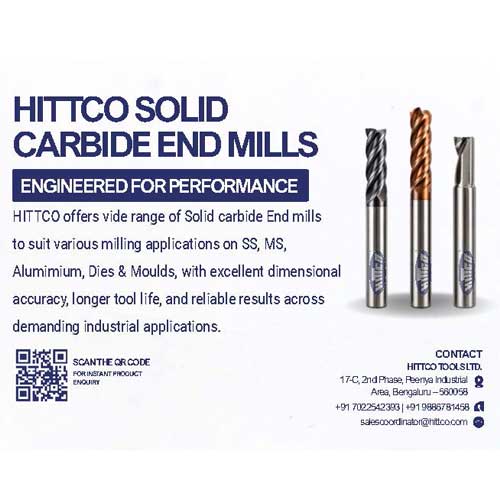
Hittco SOLID Carbide End Mills
MACHINE TOOLS, POWER & HAND TOOLS
Hittco Tools Ltd offers a wide range of Hittco solid carbide end mills.
Read more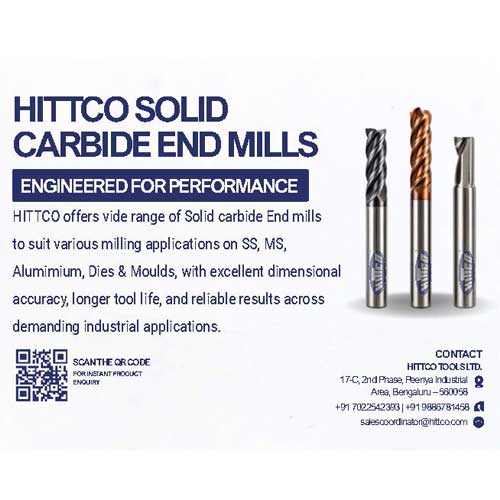
Smoke Tube Horizontal Package Steam Boilers
BOILERS, FURNACES & HEATING ELEMENTS
Hittco Tools Ltd offers a wide range of Hittco solid carbide end mills. Read more
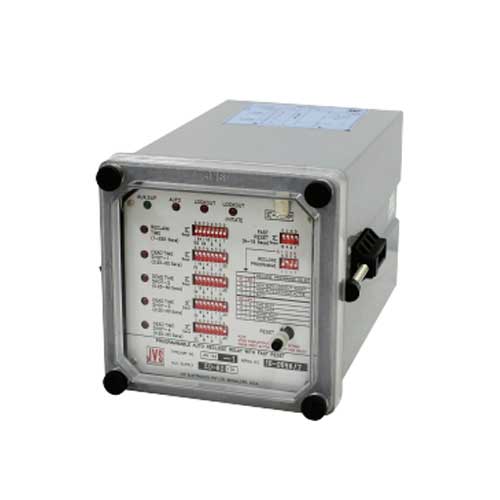
Auto Reclose Relay with fast reset
Switches and Relays
JVS Electronics Pvt Ltd offers a wide range of auto reclose relay with fast reset - JRV 142.
Read morelatest News
Subscribe to iNoW

For Industry News on WhatsApp, Give a Miss Call on: +91 84228 74016