





Schedule a Call Back


India represents a perfect opportunity for Emulate3D: John Pritchard
 Articles
- May 21,26
John Pritchard, Business Manager - Emulate3D, Rockwell Automation, spoke to Rakesh Rao about advantages of virtual commissioning and India’s manufacturing opportunity.
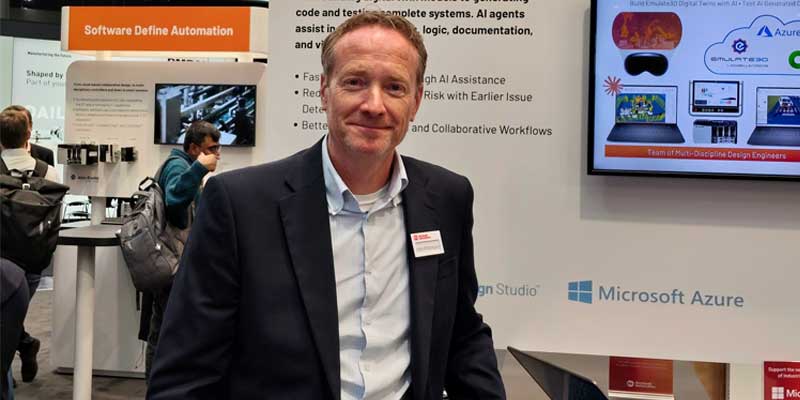
Emulate3D digital twin software of Rockwell Automation Inc, the US-headquartered global industrial automation major, offers a comprehensive and dynamic approach to improving efficiency, accuracy and confidence in industrial operations. John Pritchard, Business Manager - Emulate3D, Rockwell Automation, spoke to Rakesh Rao during Hannover Messe 2026 on virtual commissioning, AI-enabled digital twins and India’s manufacturing opportunity.
How is Rockwell Automation’s Emulate3D increasing efficiency of manufacturing companies?
Emulate3D is our physics-based digital twin software. It is used by manufacturers, systems integrators and equipment builders to create digital twins of manufacturing equipment and production systems.
The primary use case is what we call virtual commissioning. In a traditional project, control code is deployed on the physical system and then tested during commissioning. With virtual commissioning, that control code can be tested before it reaches the real-world equipment. Engineers can download the code either into a physical programmable logic controller (PLC) or into an emulated PLC, connect it to the physics-based digital twin created in Emulate3D, and test the complete system virtually.
The benefit is straightforward. Customers can identify unexpected behaviours, logic issues or operational problems early in the digital environment. These can be corrected quickly and at lower risk. By the time the system is deployed in the physical world, commissioning becomes faster, smoother and more reliable. In practical terms, it shortens the time to value because manufacturers can start production sooner and generate returns earlier.
Why has virtual commissioning not scaled faster despite its value?
There has never been much debate about the value of virtual commissioning. The question has usually been around the effort required to build and use these models. The engineers capable of creating robust digital twins are highly skilled and need a combination of competencies. They must understand 3D design, physics, software, automation and controls. That combination makes them multi-domain experts, and only a limited number of people have that range of experience.
Therefore, the main barrier has not really been the technology itself. It has been the availability of people who can build the models and use them effectively for virtual commissioning.
What makes our Hannover Messe 2026 showcase exciting is that recent developments in artificial intelligence, along with work we have done in Emulate3D, are reducing the time, effort and level of specialist expertise required to build digital twins. We believe this will unlock a much wider opportunity for manufacturers to adopt digital twin technology.
What exactly has Rockwell Automation introduced?
This is not a vision of the distant future. We recently launched software that is available to customers today. The new version of Emulate3D supports an MCP server, or Model Context Protocol server. This technology allows an AI agent to look inside a digital twin model, understand what is present and, more importantly, manipulate it.
That means the AI agent can help add components, make changes, identify problems, support troubleshooting and generate scripts that define simulation behaviour. These are areas where engineers traditionally spent considerable time building models, optimising them, resolving issues and writing code. AI can now assist with these activities, making the process faster and reducing the skill threshold required.
We still need expert users, but the tools can help them work far more efficiently. That is why we see this as a significant development for the industry.
Which sectors are likely to adopt this technology first?
Rockwell Automation serves all major industries, but some sectors are moving faster and appear more open to adopting new technologies. Life sciences is one of the strongest examples. It is an industry seeing significant investment and innovation, particularly around new therapies, while also operating under strict regulation, compliance and validation requirements. Because of this combination, life sciences companies have understood the value of digital twins quite early.
Automotive is another major area. The industry is reinventing itself as it moves from traditional internal combustion engine platforms towards hybrid and electric vehicle strategies. This shift requires retooling, new manufacturing approaches and fresh thinking across production lines. Many major automotive companies are exploring and adopting digital twin technologies.
A third area is fast-moving consumer and packaged goods, where we see strong interest from equipment providers and manufacturers. Logistics, e-fulfilment and distribution centres also represent a major opportunity. These are the facilities that support next-day delivery expectations, and many companies in this space are investing heavily in automation and simulation technologies.
How will AI affect the skills shortage in automation and digital twin development?
There is certainly a shortage of people able to do this work. My view is that those skilled people will continue to be in demand. AI does not remove the need for human expertise. You still need someone who understands the system and can judge whether the AI output is correct.
What AI can do is help experts achieve much more. Something that may previously have taken a full day to model could potentially be completed in an hour. The model can then be passed to the controls team for testing much earlier. So, the skilled engineer does not become less important; rather, their productivity improves significantly.
I can share an example from our own development work. One of our lead developers was working on our integration with NVIDIA Omniverse. He asked an AI tool to create tests and documentation. It produced 24 tests. Of those, 23 were excellent and one was completely wrong. Because he was an expert, he could immediately identify the flawed test, discard it and use the others. Those tests are now part of our quality assurance process for the NVIDIA Omniverse connector.
That example captures how I see the relationship with AI. It is like having an enthusiastic assistant. It can do useful work quickly, but the human expert must still review, validate and take responsibility for the result. It is similar to someone drafting a press release on my behalf. I would appreciate the support, but if it quotes me or describes my software, I would always review it before it is released.
You mentioned life sciences as an early adopter. How do you see the opportunity in markets such as India, especially given India’s pharmaceutical strength?
Life sciences companies are among the early adopters because they have a strong appetite for innovation and a clear need for validation, reliability and uptime. I cannot comment specifically on how many pharmaceutical companies in India are currently using this digital twin approach because I am not familiar enough with that market segment.
However, I can speak from what we have seen with pharmaceutical companies in Europe and the United States. These companies often operate manufacturing facilities continuously, 24 hours a day, seven days a week, for long production runs. They cannot easily stop production. When they do have shutdown windows, those windows are very narrow and must be used efficiently for upgrades or changes.
With digital twins, they can test proposed changes while production is still running. They can validate different strategies virtually and be ready to implement them during the limited shutdown period. This allows them to complete more upgrades, reduce risk and improve overall equipment effectiveness.
If Indian pharmaceutical manufacturers are not yet using this technology widely, these are the kinds of benefits they could expect to explore.
Is Emulate3D already being used in India?
Yes, we do have engagement in India. We have a partner in Pune working on automotive projects, and we have been supporting them. So, when I refer to automotive as an important sector for this technology, we know it is already being used in India in that context.
How do you view India as a market for this technology?
India is a very promising market. The economy is growing rapidly, and manufacturing will be central to that growth. India is already important in sectors such as pharmaceuticals and automotive, and it is likely to become even more significant in global manufacturing.
For companies looking to innovate, improve speed to market and compete internationally, digital twin technology can be extremely valuable. In that sense, India represents a perfect opportunity for Emulate3D and for the broader use of virtual commissioning. As manufacturers scale, modernise and compete with other industrial economies, technologies such as digital twins and AI-assisted engineering can play a vital role.
Rockwell Automation
John Pritchard
Emulate3D
digital twin
virtual commissioning
AI in manufacturing
industrial automation
Hannover Messe 2026
smart manufacturing
Rakesh Rao
Related Stories
Automation & Robotics
India is a vital market for Schneider Electric: Neil Elliott Smith
In this interview with Rakesh Rao, Neil Elliott Smith, Segment President, Consumer Packaged Goods, Schneider Electric, highlights the company’s solutions for CPG sector and India’s growing influ..
Read moreAutomation & Robotics

Automation to drive India’s manufacturing future: Dr Sanjeev Srivastava
In this interview with Rakesh Rao, Dr Sanjeev Srivastava, Head Industrial Automation, Delta Electronics India Pvt Ltd, highlights the changing dynamics of Indian manufacturing sector and growing imp..
Read moreSmart Manufacturing
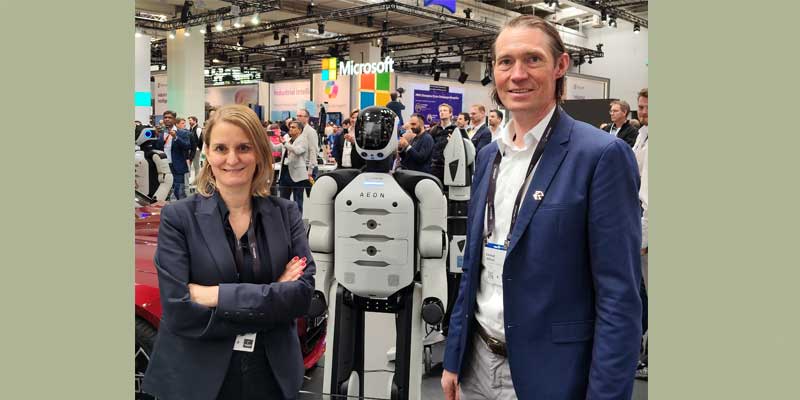
Hexagon helps in scaling efficiently with high quality
In this conversation with Rakesh Rao, Emanuel Viklund and Dr Evelin Arnold of Hexagon Manufacturing Intelligence highlight the convergence of manufacturing and quality control, growing role of AI, a..
Read moreRelated Products
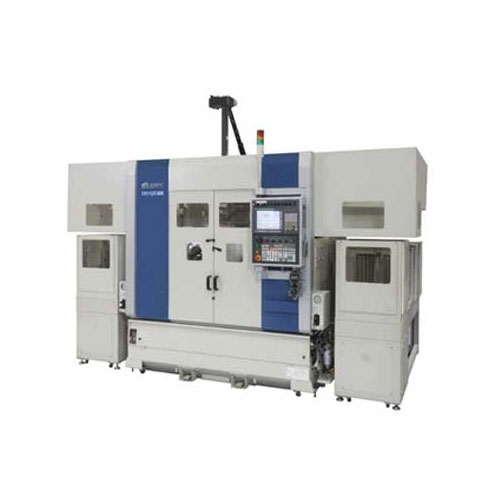
Compact Fmc - Motorum 3048tg With Fs2512
INDUSTRIAL AUTOMATION & TECHNOLOGY CONSULTANCY
Meiban Engineering Technologies Pvt Ltd offers a wide range of Compact FMC - Motorum 3048TG with FS2512.
Digital Colony Counter
INDUSTRIAL AUTOMATION & TECHNOLOGY CONSULTANCY
Rising Sun Enterprises supplies digital colony counter.

Robotic Welding SPM
INDUSTRIAL AUTOMATION & TECHNOLOGY CONSULTANCY
Primo Automation Systems Pvt. Ltd. manufactures, supplies and exports robotic welding SPM.
latest News
Subscribe to iNoW

For Industry News on WhatsApp, Give a Miss Call on: +91 84228 74016