





Schedule a Call Back


Hexagon helps in scaling efficiently with high quality
 Articles
- May 21,26
In this conversation with Rakesh Rao, Emanuel Viklund and Dr Evelin Arnold of Hexagon Manufacturing Intelligence highlight the convergence of manufacturing and quality control, growing role of AI, and the company’s plans for India.
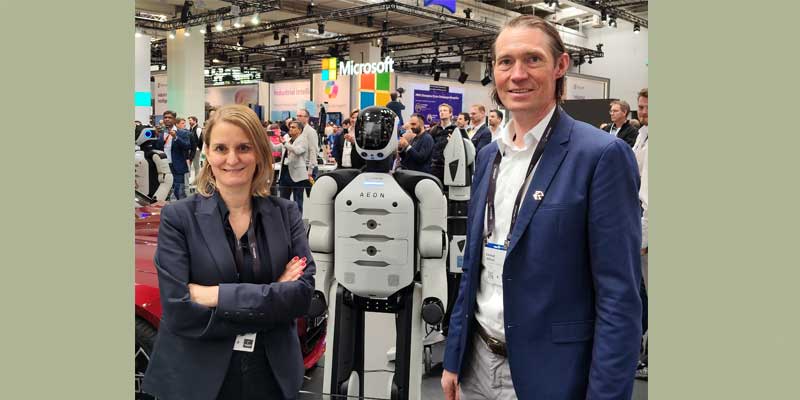
Hexagon Manufacturing Intelligence, a division of Hexagon AB, delivers software, hardware, and analytics to optimise manufacturing. Using metrology and AI-powered tools, it enables digital twins, enhances product quality, and speeds up production from design to inspection. In this conversation with Rakesh Rao, Emanuel Viklund, President, Portable Metrology division, and Dr Evelin Arnold, Director Sales Support, Stationary Metrology division, highlight the convergence of manufacturing and quality control, growing role of AI, and the company’s plans for India.
Could you provide an overview of current trends in manufacturing?
Emanuel Viklund (EV): Over the long term, manufacturing is moving from predominantly manual operations to automation, and over the next three to five years, towards fully autonomous systems. At Hexagon, we have capabilities that range from low-volume manual tasks to fully automated quality control and production lines. Our vision includes autonomous systems that can perform complex tasks without human intervention, representing a major shift in industrial processes. This trend is supported by advancements in robotics, AI, and intelligent systems, all of which improve operational efficiency, repeatability, and quality consistency.
Automation is no longer confined to high-volume production; it now spans inspection, assembly, and process monitoring. The integration of digital systems with physical operations enables more efficient data collection and real-time decision-making. These technological developments allow manufacturers to optimise workflows, reduce waste, and ensure consistent product quality, while also creating a foundation for predictive and autonomous manufacturing.
Dr Evelin Arnold (EA): I fully agree. Another key trend is the convergence of manufacturing and quality control. Customers increasingly expect not just measurement results but actionable feedback integrated into production environments. Real-time adjustments reduce scrap, improve quality, and enhance overall process efficiency, thereby reinforcing the value of automation. In essence, automation is no longer a standalone function; it is an enabler of integrated operational excellence.
Are these trends consistent across industries and regions?
EV: Trends vary significantly by industry and geography. In electronics, for example, high-volume production necessitates extensive automation. Conversely, industries such as shipbuilding, which have smaller production runs, have different automation requirements. Regionally, adoption is influenced by industrial history, workforce skills, and cost factors. Japan, with its longstanding automation culture, has seen high adoption, while skill shortages in the US have accelerated automation in sectors like aerospace. In Europe, high labour costs are offset by automation, enabling efficient production of complex components such as precision ball bearings.
EA: Cultural norms, workforce training, and regional industrial practices influence how automation is implemented. Different industries have varying tolerances for technology adoption, and companies tailor solutions to align with production complexity, labour availability, and cost structures.
In precision industries such as aerospace, how does technology meet stringent quality requirements?
EA: Aerospace components, especially for engines, are increasing in size and throughput requirements. This necessitates advanced optical systems capable of high-speed measurement, often combining tactile and optical sensors. Our metrology solutions enable manufacturers to meet strict quality standards, increase throughput, and maintain consistency across complex assemblies. These systems allow for precise monitoring of tolerances, ensuring components adhere to the highest specifications.
EV: Aerospace backlogs require faster production. Manufacturers are automating existing lines and exploring production of smaller aircraft and unmanned vehicles. The sector has been among the fastest-growing over the past 12–24 months, driven by both civilian and defense demand. Automation solutions help optimise production flow, reduce bottlenecks, and improve overall efficiency.
Beyond aerospace, which other industries are experiencing growth?
EV: Electronics is a major growth area, particularly in Asia. Countries like China, India, and Vietnam are rapidly expanding electronics manufacturing ecosystems. Major electronics companies are diversifying production footprints, establishing ambitious greenfield and brownfield facilities, and setting aggressive targets to scale production quickly. These developments create substantial demand for Hexagon’s solutions.
EA: High-value electronics, such as smartphones and flat-panel displays, require precise measurement solutions. Premium products demand flawless finishes and performance consistency. Our systems ensure repeatability, enabling manufacturers to maintain quality standards and preserve the product experience, from visual appeal to functional integrity.
How does Hexagon support the growing Indian market?
EV: Local expertise is essential for India. We provide support for aerospace, electronics, and precision manufacturing, ensuring customers have access to on-the-ground technical and service teams. This includes application engineers, service engineers, and specialised equipment to meet local market demands efficiently.
EA: India has a well-developed aerospace industry producing high-quality engine components. Our Indian team supports high-end production, helping companies ramp up operations while maintaining strict quality standards. This local capability differentiates Hexagon in emerging markets.
What makes the Indian market unique compared to other developing regions?
EA: India and China require specific local strategies to complement global offerings. Local solutions, supported by skilled engineers and application specialists, allow Hexagon to address unique industry needs while leveraging global experience.
EV: India offers a highly skilled workforce capable of supporting complex solutions that might not be feasible in other regions. Our global strategy is complemented by local adaptations, providing products and services tailored to India’s unique manufacturing environment. This includes customising machines, deploying local expertise, and integrating global technologies with local requirements.
What is the outlook for the industry and metrology in the coming years?
EV: The demand for accurate, fast, and flexible measurement solutions will continue to grow. Faster measurements and comprehensive data collection enable earlier process adjustments, supporting the transition to autonomous manufacturing. Manufacturers seek higher throughput, increased precision, and more actionable insights to enhance operational performance and quality assurance.
How is AI integrated into your technology and automation strategies?
EV: AI is embedded in several products, including AI-enabled feature detection, allowing automated identification of critical components. Robots can be trained without manual programming, enabling adaptive and intelligent operation. AI also facilitates process optimisation, predictive quality control, and overall improvements in manufacturing efficiency.
EA: Predictive maintenance initiatives are increasingly implemented, utilising AI to anticipate equipment needs and reduce downtime. Hexagon has invested in specialising AI applications for CMMS and machine tools, enabling cost savings and operational efficiency.
EV: Maestro demonstrates substantial productivity gains. Previously, calibration required eight hours per week, resulting in lost inspection time. Digital calibration and intelligent algorithms now reduce this to 1.5–2 hours, significantly improving throughput.
How does Hexagon serve small and medium enterprises (SMEs) in India and Asia?
EV: SMEs benefit from the growth of larger OEMs, which increases demand throughout the supply chain. In India and China, skilled distributors and integration partners enable SMEs to adopt advanced solutions, expanding market reach and enhancing operational capabilities. Hexagon supports SMEs directly and through local partners, ensuring high-quality implementation and ongoing support.
EA: Our support includes application engineers, service engineers, and high-end equipment. SMEs can adopt advanced technologies without building in-house capabilities, allowing them to focus on core competencies while benefiting from Hexagon’s expertise and solutions.
What are some emerging trends and opportunities?
EV: Manufacturing is evolving towards greater automation, autonomy, and data-driven decision-making. High-speed, accurate, and flexible measurement solutions are critical. AI, predictive maintenance, and localised support are essential for sustaining growth, particularly in emerging markets like India. Hexagon’s solutions enable manufacturers to increase throughput, maintain high quality, and scale efficiently, positioning the company as a leader in precision manufacturing and automation.
Emanuel Viklund
Dr Evelin Arnold
Hexagon Manufacturing Intelligence
Manufacturing Trends
Automation
Metrology
Aerospace
Electronics
AI
Predictive Maintenance
Hexagon
India Market
Digitalisation
Rakesh Rao
Related Stories
Electrical & Electronics
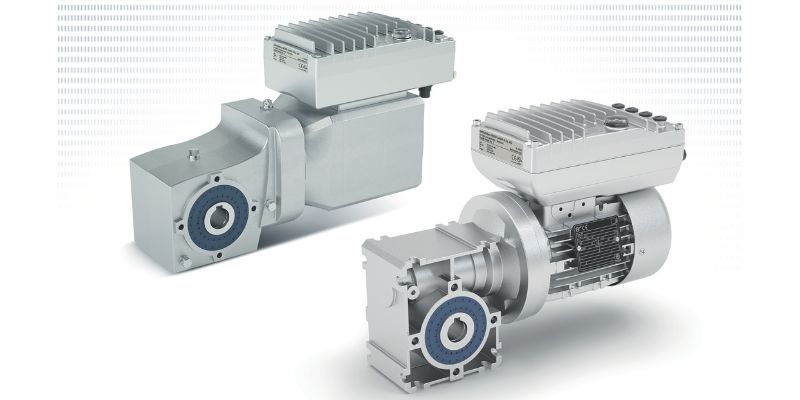
Nordac On Gains Expanded Functional Safety for Automation
Nord Drivesystems has expanded the Nordac On inverter with new safe motion functions for improved control and monitoring in automated production environments.
Read moreElectrical & Electronics
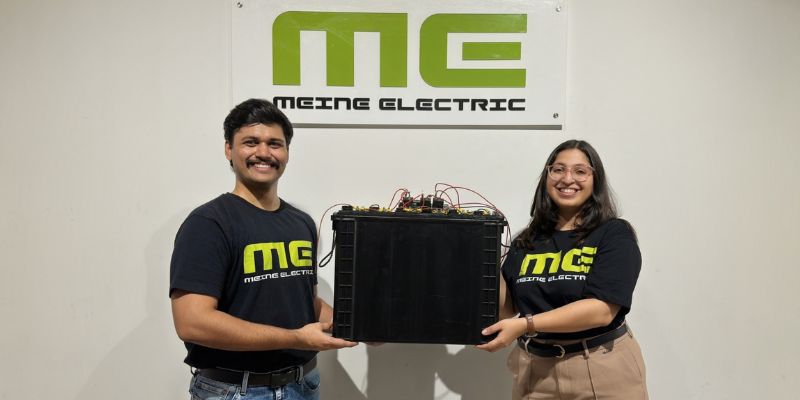
Meine Electric Develops Fast-Charging Iron-Air Battery System
The independently validated system charges in six hours and discharges over 18 hours, targeting daily renewable energy balancing and long-duration storage applications.
Read moreSmart Manufacturing
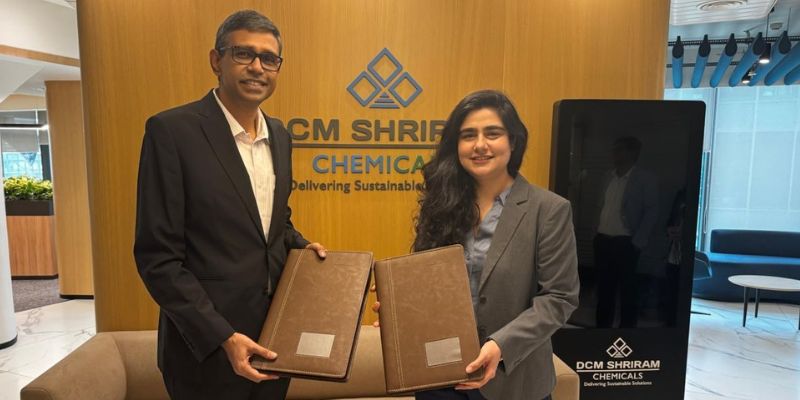
DCM Shriram Partners Serentica for 58 MW Hybrid Renewable Project
The project will supply renewable power to DCM Shriram Chemicals’ Bharuch plant and raise the company’s total renewable energy capacity to 176 MW peak.
Read moreRelated Products
Fanless Industrial Pc for Smart Manufacturing
Smart Manufacturing
CONTEC Launches BX-M4600 Series - Fanless Industrial PC for Smart Manufacturing.
latest News
Subscribe to iNoW

For Industry News on WhatsApp, Give a Miss Call on: +91 84228 74016