





Schedule a Call Back


Why Power Equipment Will Define India’s Energy Future
 Articles
- May 08,26
Satyen J Mamtora, MD & CEO, Transformers & Rectifiers India Ltd elaborates how India’s power sector is moving beyond capacity addition towards grid intelligence, where smart equipment, domestic manufacturing and real-time systems will define future reliability.
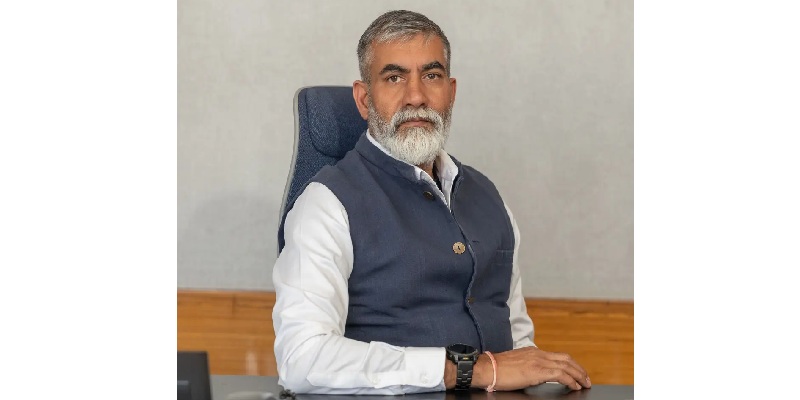
India’s power sector is at an inflection point. For decades, the focus was singular—adding capacity, building generation and keeping pace with rising demand. That paradigm is now shifting. With a target of over 500 GW of non-fossil fuel capacity by 2030 and peak demand already crossing 240 GW, the question is no longer how much power India can generate, but how intelligently it can manage it.
A grid becoming more complex
This shift is being driven by growing grid complexity. Renewable energy, while central to India’s transition, is inherently variable. Solar and wind generate power according to natural cycles, not when demand peaks.
At the same time, consumption patterns are evolving. Electric vehicles, data centres and advanced manufacturing are introducing high-density, unpredictable loads. The grid, once designed for linear, one-way power flow, is now becoming a dynamic, multi-directional system.
Globally, the transformer and power equipment sector is undergoing a quiet but significant transformation. Research and innovation are increasingly focused on digitalisation, advanced materials and grid intelligence.
From smart transformers with embedded sensors and real-time monitoring capabilities to AI-driven analytics for predictive maintenance, the industry is moving towards systems that can anticipate failures and optimise performance autonomously. Advances in high-efficiency materials and compact designs are also improving performance while reducing losses and footprint. These developments signal a broader shift—from hardware-led infrastructure to software-enabled intelligent systems. For India, aligning with these global trends will be critical to building a grid that is not just scalable, but future-ready.
Power equipment becomes the intelligence layer
In such a system, stability cannot be ensured by capacity alone—it must be engineered. This is where power equipment is undergoing a fundamental transformation. Transformers, switchgear and power electronics are no longer passive components. They are becoming the intelligence layer of the grid, enabling real-time sensing, control and optimisation of power flows.
India’s energy system is already operating at scale. Installed capacity has crossed 520 GW, with renewables forming an increasing share. Solar alone has reached nearly 140 GW and is expanding rapidly. As supply becomes more intermittent and demand more fragmented, pressure on grid infrastructure is intensifying.
Transformers today are engineered to handle fluctuating loads, manage voltage dynamically and minimise losses in real time. Advanced switchgear enables faster fault detection, while power electronics stabilise renewable output, converting intermittency into reliability.
Manufacturing and new demand centres
India is adding over 50 GW of capacity annually. But integrating this seamlessly into the grid will depend less on generation and more on the sophistication of the systems managing it. Power equipment is moving from enabling transmission to actively managing grid stability, flexibility and real-time performance. The future of the sector lies in enabling grid intelligence, not just scale.
This is also where domestic manufacturing becomes critical. Local capabilities ensure faster deployment, reduce reliance on global supply chains and enable solutions tailored to India’s grid conditions. The next phase will require a shift from scale to innovation, building equipment that is digital, adaptive and aligned with the needs of a more complex grid.
Looking ahead, demands on the grid will only intensify. Electric vehicles alone could add up to 100 GW of peak demand by 2030 if unmanaged. Emerging sectors such as green hydrogen and AI-driven data centres will require both scale and precision. Meeting these demands will require infrastructure that can respond dynamically to real-time fluctuations in both supply and demand.
The real test ahead
India’s energy transition can no longer be viewed as a capacity story. The country has already demonstrated its ability to build at scale. The real test now lies in managing complexity.
Power equipment will sit at the centre of this transformation. As it evolves into intelligent, responsive and self-optimising systems, it will redefine how the grid operates, enabling flexibility, ensuring resilience and unlocking the full value of renewable energy. The future of India’s power sector will not be decided by megawatts alone. It will be defined by how effectively the grid can think, adapt and respond in real time—and power equipment will be at the heart of that transition.
About the author
Satyen J Mamtora is the CEO and Managing Director of Transformers & Rectifiers (India) Limited (TARIL), with over 30 years of experience in the power and transformer industry. He leads TARIL’s strategy, operations, and international growth, with a strong focus on quality, innovation, and customer relationships. Under his leadership, the company has achieved record revenues, executed high-capacity transformer projects, and earned industry recognitions, including Forbes Asia’s “Best Under a Billion.”
India power sector
smart grid India
renewable energy grid
transformers India
switchgear systems
grid intelligence
domestic manufacturing
power infrastructure
Related Stories
Electrical & Electronics

India’s Grid Revolution Begins with Smarter Towers
India’s power transmission sector is shifting from scale to complexity, demanding advanced tower engineering for renewable integration, higher voltages, difficult terrain and grid stability, says ..
Read moreElectrical & Electronics
Why Power Equipment Will Define India’s Energy Future
Satyen J Mamtora, MD & CEO, Transformers & Rectifiers India Ltd elaborates how India’s power sector is moving beyond capacity addition towards grid intelligence, where smart equipment, domestic ma..
Read moreElectrical & Electronics

Bharat Electricity Summit 2026 Showcases India’s Power Sector Growth
Union Ministers inaugurate Bharat Electricity Summit 2026, highlighting India’s rapid power sector expansion, renewable growth, and Rs 200 trillion investment potential.
Read moreRelated Products

Ultra-slim Humidity/temperature Indicator With Large 4” Display
ELECTRICAL & ELECTRONIC EQUIPMENT
Countronics offers a wide range of ultra-slim humidity/temperature indicator with large 4” display – Model 7100-4W.
Read more
Integrated Electric Gripper S Series
ELECTRICAL & ELECTRONIC EQUIPMENT
IBK Engineers Pvt Ltd offers a wide range of integrated electric gripper S series.

Geared Electric Motors
ELECTRICAL & ELECTRONIC EQUIPMENT
Delco Fans Pvt Ltd offers single phase capacitor run and three
phase geared Instrument motors, totally enclosed face/foot mounted.
latest News
Subscribe to iNoW

For Industry News on WhatsApp, Give a Miss Call on: +91 84228 74016