








Schedule a Call Back


Warehousing: The Backbone of India’s Manufacturing Growth
 Articles
- Mar 23,26
India’s manufacturing push under Make in India and Aatmanirbhar Bharat is accelerating demand for organised warehousing, positioning logistics infrastructure as a critical driver of supply chain resilience and industrial growth, writes VT Chandra Sekhar Rao, Managing Director, TVS Shreshta Infracon.

Key Takeaways
Efficient and organised warehousing ensures smooth inventory flow, reduces delays and strengthens production continuity.
Modern warehousing and policy support are key to building resilient supply chains and positioning India as a global manufacturing hub.
India’s manufacturing sector stands at a defining moment. With renewed momentum under Make in India and the broader vision of Aatmanirbhar Bharat, the country is strengthening domestic production capabilities while expanding its global presence. Manufacturing currently contributes close to 17 per cent of India’s GDP, with a clear ambition to increase this share in the coming years.
However, scaling manufacturing extends beyond setting up factories. It requires a coordinated industrial ecosystem that enables the efficient movement of raw materials, components and finished goods across regions. Within this framework, warehousing assumes strategic importance.
The link between warehousing and manufacturing
Manufacturing and warehousing are closely interconnected. Production cycles depend on timely access to inventory, while competitiveness relies on efficient distribution of finished goods. Disruptions in storage or movement directly affect output, costs and delivery timelines.
Warehousing in India has evolved into a critical support system for manufacturers. Structured industrial and logistics parks provide organised infrastructure, dependable connectivity and professional management. This enables manufacturers to maintain production continuity, optimise inventory and minimise delays.
As India strengthens its industrial base, the efficiency of its warehousing network becomes a direct contributor to manufacturing competitiveness.
Importance of efficient warehousing for Aatmanirbhar Bharat
The vision of Aatmanirbhar Bharat extends beyond domestic production. It emphasises resilient supply chains that reduce fragmentation and improve reliability across the value chain.
As production scales across sectors from electronics and auto components to pharmaceuticals and e-commerce manufacturers require strategically located warehouses capable of handling raw materials and finished goods efficiently.
Efficient warehousing also supports India’s ambition to become a competitive export hub. Global buyers expect consistency in quality, compliance and delivery timelines. Organised warehousing clusters near manufacturing centres and ports help consolidate shipments, maintain standards and respond quickly to demand fluctuations.
For MSMEs, access to modern warehousing reduces the need for heavy capital investment and allows them to focus on production and innovation. In this way, warehousing acts as a backbone strengthening Aatmanirbhar Bharat.
Changing dynamics of the warehouse market
India’s warehousing market is undergoing a structural transformation. What was once concentrated around major metropolitan regions is expanding into Tier II and Tier III cities.
Industry assessments indicate that India’s warehousing stock has crossed 600 million sq ft, with Grade A facilities accounting for a significant share of supply in 2025. Emerging cities such as Indore, Chakan, Coimbatore, Cuttack and Visakhapatnam are gaining prominence as industrial and logistics hubs, supported by improved connectivity and expanding manufacturing activity.
India’s warehousing footprint is expected to expand significantly by 2030, reflecting sustained demand from manufacturing, supply chain diversification and a growing preference for organised infrastructure.
As manufacturers expand into new regions, demand for compliant, well-connected and scalable warehousing solutions is expected to remain strong.
Policy and regulatory support
Government initiatives have accelerated manufacturing and logistics development. The Production Linked Incentive (PLI) programme has encouraged investment across key sectors, strengthening manufacturing capacity.
Frameworks such as the National Logistics Policy (NLP) and the PM Gati Shakti National Master Plan aim to improve coordination across transport networks and industrial planning. Their emphasis on multimodal connectivity and industrial corridors is helping link manufacturing clusters with ports and consumption markets more efficiently.
These initiatives reinforce the importance of modern warehousing infrastructure aligned with evolving operational and regulatory standards.
Impact of market volatility and uncertainty
Global markets have experienced periods of volatility driven by geopolitical tensions, supply chain disruptions and commodity price fluctuations. Such uncertainty highlights the importance of robust logistics systems.
Manufacturers require reliable warehousing networks that allow them to manage inventory buffers, adjust production schedules, respond to demand changes and ensure operational continuity during disruptions.
Organised industrial and logistics parks offer structured operations and centralised management, enabling businesses to respond more effectively to changing market conditions. During periods of uncertainty, resilient warehousing infrastructure becomes a stabilising factor for manufacturing activity.
Challenges before Indian manufacturing and the role of warehousing
India’s manufacturing sector continues to expand, but structural challenges remain. Industry assessments highlight infrastructure gaps, fragmented supply chains, regional imbalances and productivity constraints as areas requiring continued attention.
Delays in material movement, uneven storage quality and limited connectivity integration across regions can affect cost efficiency and production timelines.
As manufacturers scale operations and integrate into global value chains, predictability and reliability become increasingly important. Inconsistent logistics networks can reduce competitiveness and limit export readiness.
Organised warehousing addresses many of these challenges: Consolidated storage networks improve coordination, enhanced connectivity reduces transit time, and modern industrial and logistics parks strengthen operational efficiency and compliance.
By reinforcing the logistics backbone, warehousing enables manufacturers to improve productivity, reduce risk and build resilience in a competitive global environment.
Emerging opportunities and future trends
Recent market reports indicate that warehousing demand remained strong through 2025, with steady leasing activity across major markets. This resilience reflects continued momentum from manufacturing, third-party logistics providers and retail supply chains.
Industry assessments also show a growing shift towards organised and Grade A infrastructure, supported by increasing institutional participation in the sector. Developers are focusing on scalable, state-of-the-art facilities aligned with evolving industrial requirements.
There is rising interest in built-to-suit and corridor-based developments that support long-term manufacturing expansion. Sustainability and compliance considerations are also influencing infrastructure decisions as companies pursue operational efficiency and responsible growth.
These trends suggest the warehousing sector is entering a more structured and investment-driven phase.
Warehousing and the future of manufacturing
As India moves towards becoming a stronger manufacturing economy, warehousing will remain a foundational enabler. Efficient storage and distribution systems directly influence production stability, cost management and market access.
The future of Indian manufacturing will depend not only on production capacity but also on the strength of its supporting infrastructure. Organised and integrated warehousing networks will help bridge regional gaps, strengthen supply chain reliability and position India as a competitive global manufacturing destination.
From Make in India to Made for the World, this journey requires systems that support scale, resilience and long-term growth. Warehousing, in this context, is not a peripheral function but a strategic pillar shaping the next phase of India’s industrial transformation.
About the author:
VT Chandra Sekhar Rao is the Managing Director at TVS Shreshta Infracon who has a long-standing and impactful career in engineering, construction, and project management. Known for his visionary leadership, he has consistently delivered excellence across complex, large scale infrastructure and industrial projects. His deep expertise in project governance, contract management, and risk mitigation has made him a trusted leader in the EPC domain. With a strong foundation in engineering and a passion for continuous learning, he blends technical expertise with people-centric leadership.
India manufacturing sector
warehousing infrastructure India
industrial logistics parks
supply chain resilience India
Aatmanirbhar Bharat manufacturing
National Logistics Policy India
manufacturing supply chain
Grade A warehousing India
TVS Shreshta Infracon
VT Chandra Sekhar Rao
Related Stories
Other Industrial Products

Warehousing: Enabling Make in India by Boosting Manufacturing Ecosystem
Efficient warehousing is crucial to strengthening India’s manufacturing ecosystem under the Make in India initiative, enabling scalability, competitiveness, and global supply chain resilience, say..
Read moreMaterial Handling Equipment
Warehousing: The Backbone of India’s Manufacturing Growth
India’s manufacturing push under Make in India and Aatmanirbhar Bharat is accelerating demand for organised warehousing, positioning logistics infrastructure as a critical driver of supply chain r..
Read morePolicy Regulation

How Indian Manufacturing Is Learning to Scale While Thriving in a VUCA World
Global manufacturing is being reshaped by a VUCA world, where resilience, adaptability and reliability outweigh efficiency, creating challenges and strategic opportunities for India’s manufacturin..
Read moreRelated Products
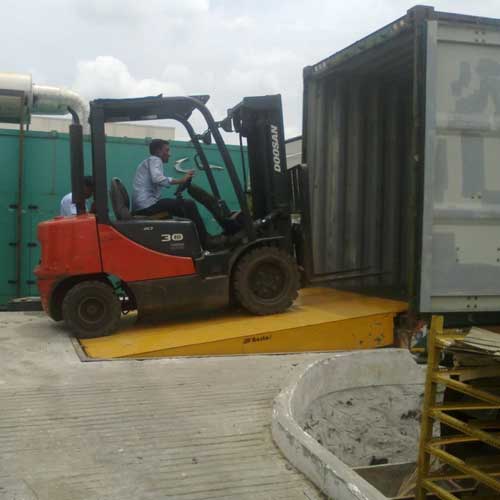
Dock Leveller
MATERIAL HANDLING EQUIPMENT & STORAGE SYSTEMS
Besto Material Handling Equipments offers a wide range of dock leveller.
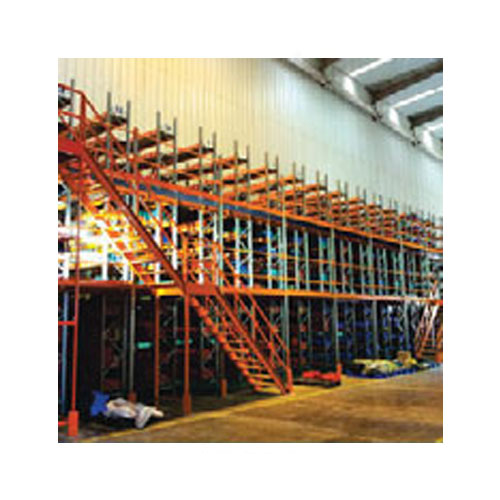
Multi Tire
MATERIAL HANDLING EQUIPMENT & STORAGE SYSTEMS
SCI Storage Solution offers a wide range of multi tire.
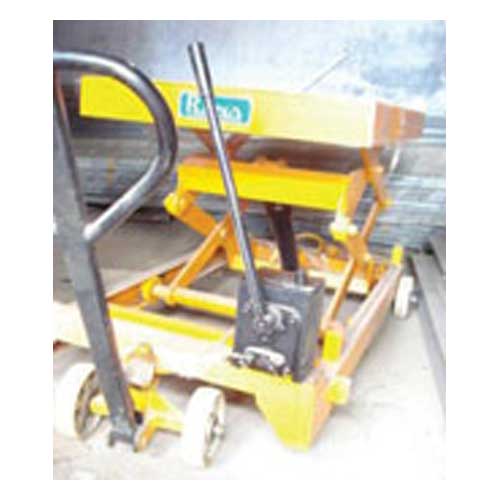
Industrial Lifting Equipment
MATERIAL HANDLING EQUIPMENT & STORAGE SYSTEMS
Rana Material Handling Equipments Pvt Ltd offers a wide
range of industrial lifting equipment.
latest News
Subscribe to iNoW

For Industry News on WhatsApp, Give a Miss Call on: +91 84228 74016