





Schedule a Call Back


Securing Factory's Piping System Against High-Speed Automation Stress
 Articles
- Mar 20,26
High-speed automation is increasing vibration-induced mechanical stress on factory piping systems, making proactive design, material selection and monitoring critical to prevent failures and costly downtime, says Emily Newton.

If the production floor is the factory’s heart, the complex network of pipes, conduits and cabling is its vascular system. Sustaining gas, power and fluid conveyance network integrity is critical for preserving the facility’s health. Following mechanical, hydraulic and pneumatic system maintenance best practices is vital for minimising downtime and ensuring business continuity.
Automation induces mechanical stress
By the decade’s end, most factories will meet modern automation standards. PwC’s Global Industrial Manufacturing Sector Outlook report estimates 65% of industrial manufacturing companies will have highly automated processes by 2030, up from a median of 29% in 2026. While deploying this technology is beneficial, installation can trigger unforeseen consequences.
Modern automation technology relies on rapid, repetitive movements to pick, pack, assemble or convey goods. These movements create vibrations, which travel through the floor and walls to reach attached conduits, cables and pipes. Over millions of cycles, these small mechanical stresses can cause small cracks or loosen fittings, leading to unexplained failures.
Machines produce oscillatory motion during normal operation. Both stationary and mobile robots — such as an automatic depalletizer and an automated guided vehicle (AGV) — can induce mechanical stresses. If left unaddressed, these vibrations will accelerate wear and lead to premature failure.
The physics of failure in factory pipes
If factories suddenly experience unexplained operational issues — such as energy spikes or equipment faults — their newly installed high-speed automation equipment may be the cause. They can trace these issues back to the mechanical stresses these systems place on critical piping infrastructure.
To achieve high throughput, robots require small motors spinning at high speeds. The gearbox amplifies torque by reducing revolutions per minute, enabling small motors to lift heavy loads. This process significantly increases mechanical stress on internal components, contributing to tooth fatigue and bearing failure.
Accelerating cycle times generates diminishing returns due to heightened calibration needs and maintenance frequency. Vibration can damage structures and machinery, reducing reliability and durability. Over time, it can cause abnormal stopping and even catastrophic failures. A company’s return on investment could easily stretch from two to four years.
Any source of vibration can produce mechanical resonance. When a system’s natural frequency matches the frequency of external vibrations, oscillations are amplified. Basically, it results in maximum energy transfer. With nowhere for the energy to go, fatigue accumulates rapidly, expediting wear and fast-tracking premature failure.
Even if engineers account for resonance, it can still happen. On startup or shutdown, the unbalanced force may excite natural frequencies existing just below the machine’s operating speed. Alternatively, a machine’s stiffness changes as components wear down or become misaligned over time, altering its natural frequency and causing resonance.
How it connects to plant-wide problems
Say the integrity of a fluid conveyance network is compromised by a fitting loosened by vibration. The factory would experience unexplained product losses. If mechanical stresses crack a compressed air line, the system would run constantly, leading to energy waste and high utility bills. These are not random events, but symptoms of a larger underlying problem.
Unexplained power consumption and equipment faults are just the beginning. A momentary pressure drop from a failing joint can cause a costly stoppage. Manufacturers already experience up to 25 hours of downtime each month. For every hour the production line is down, they could lose tens of thousands of dollars. Mitigating hydraulic pressure drops is critical.
Resonance will exacerbate such issues. All machinery vibrates at certain frequencies. If the operating frequency of an AGV, collaborative robot or robotic arm matches the natural frequency of a pipe, the pipe will begin to vibrate with much larger amplitude than the source of the vibration, resulting in rapid degradation.
The use of variable-speed drives — common in automated systems — increases the risk of resonance because the operating frequency constantly changes. The resulting extreme vibrations can crack tubing, damage bearings and loosen joints.
Depending on a company’s technology stack, issues will not be isolated to a single section of the plant. AGVs can induce vibrations into the factory floor as they move throughout the facility. Unlike humans, they can carry extremely heavy loads around the clock. The constant traffic creates a continuous source of low-amplitude, high-frequency vibration, degrading joints and fittings in piping systems.
Best practices for fortifying factories
Decision-makers must approach automation wisely. Say a factory spends tens of thousands on a new robotic arm to save 15 seconds per cycle. However, downstream machine processes and human-dependent tasks still take just as long. For instance, their conveyor still runs at 50 feet per minute. As a result, their speed-optimized machine sits idle more often. A comprehensive redesign is key to aligning upstream and downstream processes.
No redesign is complete without fortifying weak points. Joints, fittings and welds are the most vulnerable points in the piping system. Fortifying them is critical for resilience in high-vibration, high-stress environments where they will experience constant fatigue. Engineers must strategically select materials to mitigate hydraulic pressure drops and physical damage.
Strategic material choice is essential for extending the entire system’s lifespan. The metallurgical makeup of fittings, elbows, welds and joints should be engineered for durability. Heat-treated malleable iron fittings provide superior vibration resistance for industrial machinery. Their ability to withstand mechanical stresses in industrial environments is unparalleled.
Continuous oversight and recordkeeping are crucial, as they inform pneumatic system maintenance strategies. Plants should support their compliance efforts with real-time remote monitoring tools.
ISO 10816 provides guidance for machines operating in a frequency range of 10 to 1,000 Hz, including pumps, gearboxes, compressors, presses and engines. Machinery should adhere to the values provided to minimize mechanical stresses. Sensors can help them track these values in real time.
Automating factories without risk
A heart with high blood pressure must pump harder. Over time, this may damage artery walls. Vibration on the production floor does something similar to the factory’s vascular system, compromising gas, power and fluid conveyance network integrity. A small investment in pneumatic system maintenance can prevent large-scale failures.
About the author:
Emily Newton is a tech and industrial journalist and the Editor-in-Chief of Revolutionized magazine. Subscribe to the Revolutionized newsletter for more content from Emily.
Image Courtesy: www.freepik.com
Industrial Automation
Mechanical Stress
Factory Infrastructure
Vibration & Resonance
Predictive Maintenance
Hydraulic Systems
Pneumatic Systems
Industrial Reliability
Downtime Reduction
Smart Manufacturing
Emily Newton
Related Stories
Automation & Robotics
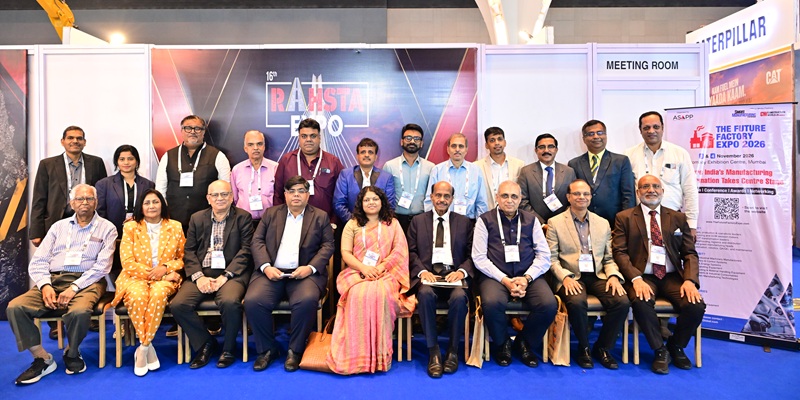
Future Factory Expo CXO Roundtable Charts Smart Transformation for SMEs
During the roundtable, hosted by Smart Manufacturing & Enterprises (SM&E) and The Future Factory Expo 2026, industry leaders outlined how SMEs can use practical digitisation, automation, skilling an..
Read moreAutomation & Robotics
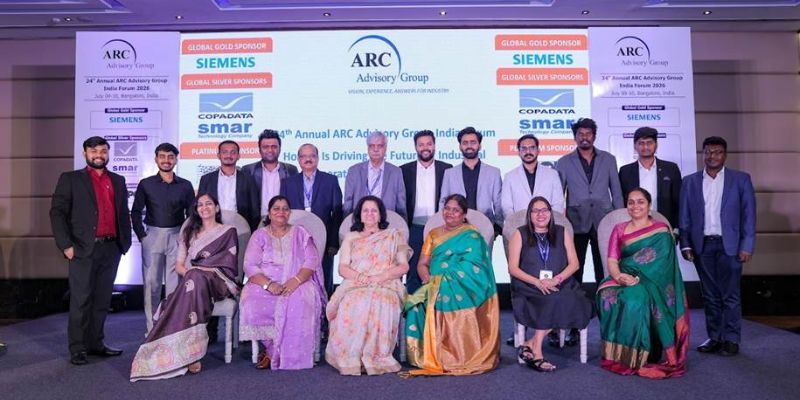
ARC India Forum Spotlights AI-Led Industrial Transformation
ARC Advisory Group’s 24th India Forum brought together 300-plus leaders to examine how AI is transforming industrial operations, manufacturing and supply chains.
Read moreSmart Manufacturing

Hitachi Vantara’s Norman Plant Named WEF Lighthouse Facility
Hitachi Vantara’s Norman manufacturing site has earned WEF Lighthouse status for using AI to reduce lead times, inventory and carbon emissions.
Read moreRelated Products
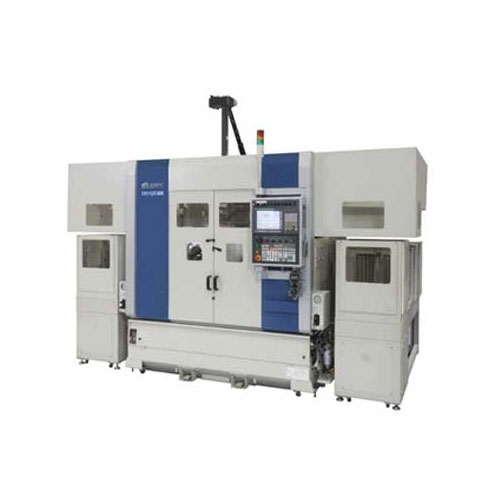
Compact Fmc - Motorum 3048tg With Fs2512
INDUSTRIAL AUTOMATION & TECHNOLOGY CONSULTANCY
Meiban Engineering Technologies Pvt Ltd offers a wide range of Compact FMC - Motorum 3048TG with FS2512.

Digital Colony Counter
INDUSTRIAL AUTOMATION & TECHNOLOGY CONSULTANCY
Rising Sun Enterprises supplies digital colony counter.

Robotic Welding SPM
INDUSTRIAL AUTOMATION & TECHNOLOGY CONSULTANCY
Primo Automation Systems Pvt. Ltd. manufactures, supplies and exports robotic welding SPM.
latest News
Subscribe to iNoW

For Industry News on WhatsApp, Give a Miss Call on: +91 84228 74016