






Schedule a Call Back




India’s Manufacturing Mission: What Make in India Got Right and Wrong
 Articles
- Jan 21,26
A decade after its launch, Make in India shows sectoral progress but structural gaps remain. As global manufacturing turns VUCA, the next phase must focus on value addition, jobs and ecosystems, says Dr Prateek Bedi, Assistant Professor, Finance and Accounting at International Management Institute.

A decade ago, India’s manufacturing sector stood at an inflection point, long constrained by fragmented supply chains, regulatory frictions and limited global integration. The launch of the Make in India campaign in 2014 was an explicit acknowledgement that India’s growth model could no longer rely disproportionately on services while manufacturing remained under-scaled and under-leveraged.
Conceived as a structural pivot, Make in India sought to reposition Indian manufacturing within global value chains, deepen domestic production capabilities and convert India’s demographic advantage into industrial strength. More than ten years later, as global manufacturing confronts a volatile, uncertain, complex and ambiguous (VUCA) environment, the evolution of India’s manufacturing sector under Make in India offers critical lessons, both for what has worked and for what must now change.
The Manufacturing Pivot: Origins and Objectives of Make in India
Launched on 25th September 2014, the Make in India initiative marked a decisive break from India’s inward-looking industrial strategies of the past. Unlike the import-substituting, licence-raj-driven model of the 1970s, Make in India was conceived as an outward-oriented programme aimed at integrating India into global manufacturing value chains and positioning it as a competitive production hub.
At its core, Make in India sought to encourage domestic and foreign firms to manufacture in India by improving the investment climate, building industrial infrastructure, fostering innovation, strengthening intellectual property protection and upgrading workforce skills. The government identified 25 priority sectors, ranging from automobiles and electronics to defence, pharmaceuticals, textiles and renewable energy, where India could develop scale and competitiveness.
The ambitions were unambiguous: raise manufacturing growth to 12–14 per cent per annum, increase manufacturing’s share in GDP from around 15 per cent to 25 per cent by 2025 and create 100 million additional manufacturing jobs. These targets reflected recognition that India’s services-led growth model, while successful in generating output and exports, could not absorb a rapidly growing labour force. With India now the world’s most populous country and youth unemployment remaining elevated, manufacturing was expected to become the engine of mass employment.
The rationale for Make in India lay in long-standing structural weaknesses. Despite liberalisation, Indian manufacturing had struggled with inadequate infrastructure, high logistics costs, regulatory complexity, skill mismatches and limited participation in global value chains. Earlier efforts, including post-1991 reforms and the National Manufacturing Policy of 2011, had fallen short of triggering a sustained industrial take-off. Make in India was therefore positioned as a reset aimed at transforming India into a global design and manufacturing export hub.
Operationally, the initiative focused on simplifying business processes, upgrading infrastructure, skilling the workforce, incentivising investment and targeting strategic sectors. Over time, related ideas such as Made in India (domestic value addition) and Make for India (manufacturing for domestic consumption) emerged. Together, they articulated a vision of building a resilient manufacturing base capable of withstanding a volatile, uncertain global environment.
The Make in India effect: Is Indian manufacturing finally moving?
Ten years after its launch, Make in India has delivered mixed but tangible outcomes. While it has not transformed India into a manufacturing superpower, it has reshaped policy orientation and created momentum in select sectors.
One clear gain has been the improvement in the investment climate. India’s ranking in the World Bank’s Ease of Doing Business Index improved from 142 in 2014 to 63 in 2020 (the list has not been released after 2020), reflecting reforms in business incorporation, insolvency resolution and tax compliance. Several sectors such as defence, railways and civil aviation were opened to greater private and foreign participation, signalling a more welcoming stance towards global capital and technology.
Electronics manufacturing stands out as a flagship success. India has become the world’s second-largest mobile phone manufacturer, with the electronics market touching about $ 155 billion in FY 2022-23. From near-zero assembly a decade ago, India now hosts over 200 mobile manufacturing units producing hundreds of millions of handsets annually. The Production Linked Incentive (PLI) scheme has played a key role in attracting global players and scaling output.
Other sectors have also benefited. India has strengthened its position as an automotive manufacturing base, expanded renewable energy equipment capacity and demonstrated pharmaceutical manufacturing strength, most notably during the Covid-19 pandemic, when it supplied nearly 60 per cent of global vaccine requirements.
Strategic manufacturing has seen symbolic and substantive gains. The commissioning of INS Vikrant and the rollout of Vande Bharat trains reflect growing domestic design and production capabilities. Defence manufacturing, once overwhelmingly import-dependent, has recorded rising indigenous output and exports.
Infrastructure development has accelerated under Make in India. Industrial corridors, port modernisation and investments in highways and rail logistics have begun easing supply-chain bottlenecks. The Goods and Services Tax (GST) has further helped create a unified national market, reducing inter-state trade frictions.
Employment gains, though below expectations, are not insignificant. Manufacturing jobs have expanded in textiles, electronics and consumer goods, with textiles alone supporting millions of livelihoods. Importantly, Make in India has reset the policy narrative by placing scale, competitiveness and manufacturing firmly back on the national agenda.
Manufacturing without momentum: Missed targets of make in India
Despite gains in certain pockets, Make in India has fallen short of its core macroeconomic objectives. Manufacturing sector’s share in GDP has remained stubbornly low, around 15.9 per cent in 2023–24, far from the 25 per cent target. Manufacturing growth has averaged about 5.5 per cent annually, well below the promised acceleration.
Import dependence remains a major concern. While smartphone assembly has expanded rapidly, value addition is shallow. Critical components such as semiconductors, displays and chipsets continue to be imported, with 70–75 per cent of electronics components sourced from abroad, largely from China. Merchandise imports have therefore grown steadily, widening the trade deficit from about $ 136 billion in 2014 to over $ 238 billion in 2024.
This imbalance has macroeconomic consequences. Rising import dependence has contributed to rupee depreciation—from about ? 61 per dollar in 2014 to over ? 90 in 2026, raising the cost of energy, machinery and intermediate goods, fuelling inflationary pressures and increasing fiscal stress.
Export performance has also disappointed. Although exports have risen in absolute terms, manufacturing-led exports have not scaled sufficiently. India’s share in global manufacturing exports remains around 2 per cent, compared to China’s near-30 per cent. Moreover, much of India’s export growth continues to come from services rather than high-value manufactured goods.
Job creation has been the most visible shortfall. Against a target of 100 million manufacturing jobs, official data suggest that only about 18 million jobs were added over the decade. Automation, capital-intensive growth encouraged by incentives and the relative attractiveness of IT services have limited labour absorption.
These outcomes reflect persistent structural frictions. Factory set-up timelines remain long due to land acquisition hurdles, regulatory approvals and legal delays. Logistics costs, estimated at 14–18 per cent of GDP, far exceed global benchmarks. Contract enforcement takes nearly four years on average, undermining investor confidence and competitiveness.
From Make in India to Make it Work: The road ahead for India’s manufacturing ambitions
For Make in India to succeed meaningfully, the next phase must move beyond incentives to deep structural reform. While PLI schemes have catalysed investment in select sectors, they cannot deliver mass employment in a labour-abundant economy.
India urgently needs a clear National Industrial Policy complementing PLI, one that prioritises labour-intensive sectors such as garments, footwear, toys, furniture, food processing and light engineering. Global experience shows that large-scale manufacturing employment requires coordinated industrial policy, not fragmented schemes.
Reducing logistics and transaction costs must be a priority. Initiatives such as PM Gati Shakti, industrial corridors and port upgrades must translate into measurable improvements in turnaround times and freight costs.
Institutional reform is equally critical. Faster contract enforcement, wider use of arbitration, predictable taxation and streamlined land and environmental approvals would significantly improve investment confidence. Skill development must shift from scale to relevance, with closer alignment between industry and training institutions.
Finally, India must move from assembly-led manufacturing to deeper value addition. Investment must bring technology, supplier development and capability building. Programmes such as Semicon India are steps forward, but success will depend on nurturing entire manufacturing ecosystems.
In summary, as part of a VUCA world marked by geopolitical fragmentation, supply-chain reconfiguration and technological disruption, manufacturing has re-emerged to become a cornerstone of economic resilience. For India, Make in India has helped arrest decades of industrial stagnation and restore manufacturing to the centre of economic policy. Yet, slogans and incentives alone cannot deliver scale, competitiveness, or employment.
The next phase of India’s manufacturing evolution must focus on greater value addition, stronger ecosystems and labour-intensive growth, rather than just expansion in output. If India can align its industrial policy, infrastructure, skills and institutional reform with the realities of global manufacturing, Make in India can still evolve from a corrective initiative into a transformative one. The stakes are high: in a turbulent global economy, the strength of India’s manufacturing sector will increasingly determine the durability of its growth story.
About the author:
Dr Prateek Bedi is an Assistant Professor in the area of Finance and Accounting at International Management Institute, New Delhi. He holds a bachelor’s degree in Business Economics from Shivaji College, University of Delhi, a master’s degree in Finance and Control, and a Ph.D in Corporate Finance from the Department of Finance and Business Economics, University of Delhi. He has cleared both levels of the FRM certification offered by the Global Association of Risk Professionals, USA, and Level 1 of the CFA certification offered by the CFA Institute, USA.
Blurbs: -- ONLY FOR PRINT
Make in India sought to reposition Indian manufacturing within global value chains, deepen domestic production capabilities and convert India’s demographic advantage into industrial strength.
The next phase of India’s manufacturing evolution must focus on greater value addition, stronger ecosystems and labour-intensive growth, rather than just expansion in output.
Make in India
Indian manufacturing sector
manufacturing policy India
VUCA manufacturing
Production Linked Incentive
industrial growth India
global value chains
manufacturing reforms
Dr Prateek Bedi
Related Stories
Auto & Auto Components

Mahindra Expands Advanced R&D and Testing Facilities at Chennai MRV
Mahindra & Mahindra invests Rs 1,960 million to expand its Advanced R&D and testing facilities at Mahindra Research Valley, creating 2,000 new jobs and reinforcing Chennai as an innovation hub.
Read moreMachine Tools & Accessories

Birla Precision Technologies Unveils New Brand Identity and Vision
Birla Precision Technologies Limited announces a new brand identity, marking its evolution into a technology-driven, diversified and future-ready precision engineering company.
Read moreAuto & Auto Components
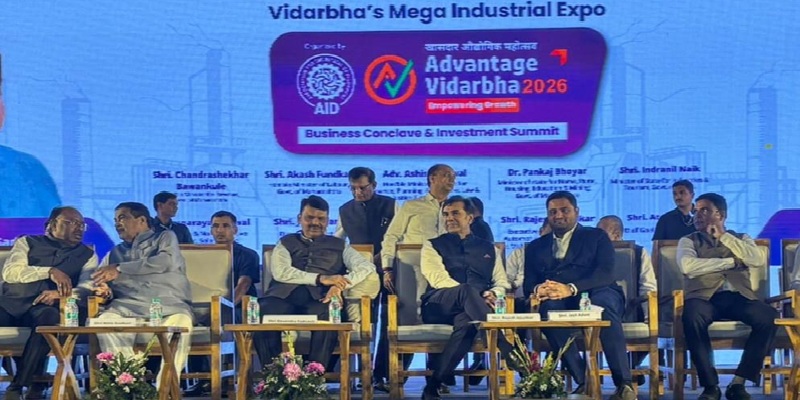
Mahindra to Set Up Largest Auto and Tractor Manufacturing Facility in Maharashtra
Mahindra Group will invest Rs 150 billion to develop its largest integrated auto and tractor manufacturing facility in Nagpur, strengthening Maharashtra’s manufacturing ecosystem.
Read moreRelated Products
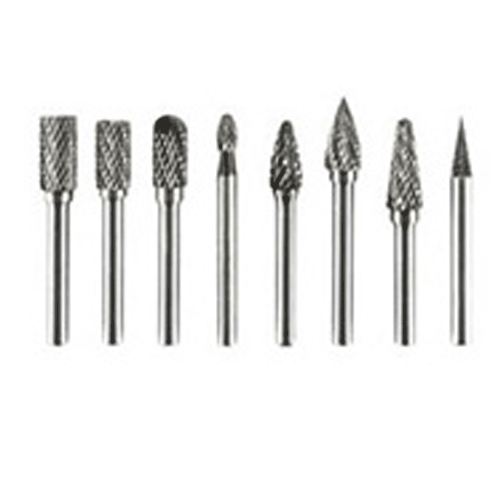
Carbide Burrs
ABRASIVES & FINISHING EQUIPMENT
SRT Industrial Tools & Equipments offers a wide range of carbide burrs.

Jamshedji Soil Compactor
ABRASIVES & FINISHING EQUIPMENT
Jamshedji Constro Equip Pvt Ltd offers a wide range of jamshedji soil compactor.
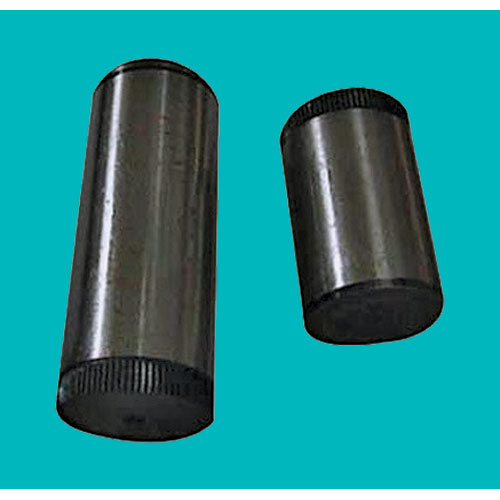
Ground Pins
ABRASIVES & FINISHING EQUIPMENT
Hans Machineries Private Limited offers a wide range of pins, hardened & ground. Read more
latest News
Subscribe to iNoW

For Industry News on WhatsApp, Give a Miss Call on: +91 84228 74016