








Schedule a Call Back


India’s Grid Revolution Begins with Smarter Towers
 Articles
- May 11,26
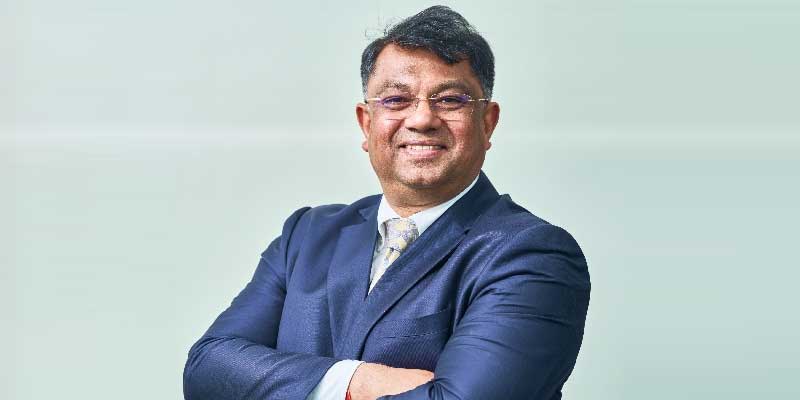
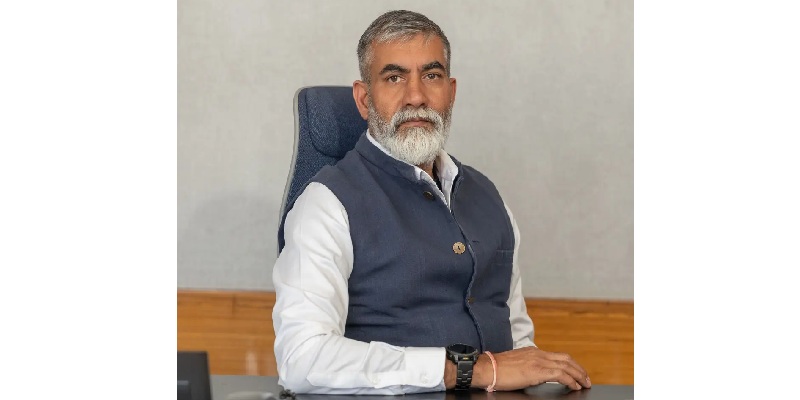
India’s power transmission sector is shifting from scale to complexity, demanding advanced tower engineering for renewable integration, higher voltages, difficult terrain and grid stability, says Shashank Agarwal, Managing Director, Salasar Techno Engineering Ltd.
India’s power transmission landscape is at an inflection point. For the last two decades, the sector’s primary mandate was scale—building enough line capacity to connect a rapidly electrifying nation. That chapter, while far from closed, now runs alongside a more demanding one: engineering transmission infrastructure for a grid that is becoming larger, more complex and more stressed.
The shift is being driven by two converging forces. First, India’s commitment to achieving 500 GW of non-fossil fuel capacity by 2030 is generating renewable energy in geographically remote locations such as the western wind corridors, Deccan solar zones and northeastern hydro basins. Evacuating this power requires long, high-capacity transmission lines across some of the country’s most challenging terrain.
Second, the national grid is moving towards higher voltage levels. 765 kV systems are now mainstream, and 1200 kV ultra-high voltage is no longer a concept. Together, these forces place extraordinary demands on the structures that form the physical backbone of the transmission network.
Moving beyond standard spans
The transmission tower, long treated as a relatively commoditised component of the power sector supply chain, is now a precision-engineered product. Higher voltage corridors require heavier conductors, particularly bundled configurations used on Extra High Voltage (EHV) and Ultra High Voltage (UHV) lines, which impose significantly greater mechanical loads on tower structures. When these loads are extended over longer spans, necessary to minimise right-of-way acquisition in congested or ecologically sensitive corridors, the structural challenge increases considerably.
Designing for these conditions is not an incremental extension of conventional tower design. It does not simply mean taller towers. It requires finite element analysis, dynamic load modelling and the use of higher-grade steel to maintain structural integrity without driving tower weights to economically unviable levels. As a result, the industry is increasingly adopting high-tensile steel and optimised cross-section geometry to create structures that are lighter and stronger despite heavier conductor loads.
Limitations of conventional solutions
Right-of-way acquisition has emerged as one of the most stubborn bottlenecks in India’s transmission expansion, with implications extending well beyond project timelines. As land availability tightens, particularly along high-demand corridors linking renewable energy zones to load centres, the physical footprint of transmission infrastructure has become a critical engineering variable.
Conventional lattice towers are increasingly difficult to deploy in corridors passing through agricultural land, forest zones or densely settled peri-urban stretches. Project developers face a structural choice: pursue lengthy, often contested land acquisition, or engineer around the constraint. The industry is choosing the latter through compact tower designs, reduced cross-arm configurations and monopoles where possible.
Longer spans offer another route around right-of-way limitations, reducing the number of tower placements and therefore the land parcels affected. However, spanning longer distances under heavier conductor loads significantly increases the mechanical demands on each structure, requiring more precise load analysis and higher-grade steel to maintain structural adequacy without disproportionate increases in tower weight. Right-of-way challenges are therefore reshaping transmission lines.
Terrain presents another challenge. Lines serving renewable energy clusters in Rajasthan must be designed for high wind loading, while alignments through hilly or forested regions introduce steep deviation angles, difficult foundation conditions and limited construction access. Each variable requires site-specific engineering responses rather than catalogue-based solutions. The ability to design towers from the foundation upward, integrating geotechnical, meteorological and structural data, has become a baseline requirement.
Grid stability and the integration imperative
The intermittency of renewable energy sources adds a further dimension to the engineering challenge. Unlike conventional power plants whose output is broadly predictable, large solar and wind farms introduce variability into the grid. Transmission infrastructure designed to evacuate renewable energy must therefore be engineered for a wider range of load conditions and bidirectional power flows. This requires not only robust physical structures, but close coordination between structural engineering, electrical design and grid planning functions.
Companies that can offer this integration—spanning structural design, fabrication and EPC execution—are becoming increasingly relevant. Salasar, for instance, has built its positioning around this integrated capability. This reflects a broader industry trend: as project complexity rises, clients are placing greater value on accountability across the full project lifecycle.
What this points to is a shift in how transmission infrastructure must be conceived. A transmission line is no longer just a mechanical system for suspending conductors across terrain. It is a component of a dynamic electrical network whose stability requirements feed back into how that line must be designed, specified and operated. Decisions about conductor type, phase configuration, span length and tower geometry all carry electrical consequences that directly influence grid behaviour, and must be made with both structural and grid-level considerations in view simultaneously.
About the author:
Shashank Agarwal is the Founder and Managing Director of Salasar Techno Engineering Ltd, bringing over 30 years of deep expertise spanning engineering, operations, manufacturing, and large-scale infrastructure development. A Mechanical Engineering graduate from the Manipal Institute of Technology (MIT), he began his career at Larsen & Toubro (L&T) as a Graduate Engineer Trainee, where he built a strong foundation in steel fabrication, complex project execution, and operational excellence.
India power transmission
transmission towers
renewable energy grid
grid stability
high-tensile steel
Shashank Agarwal
Salasar Techno Engineering Ltd
Related Stories
Electrical & Electronics
Emerson SCADA supports Adani Green’s 3.55 GWh BESS project
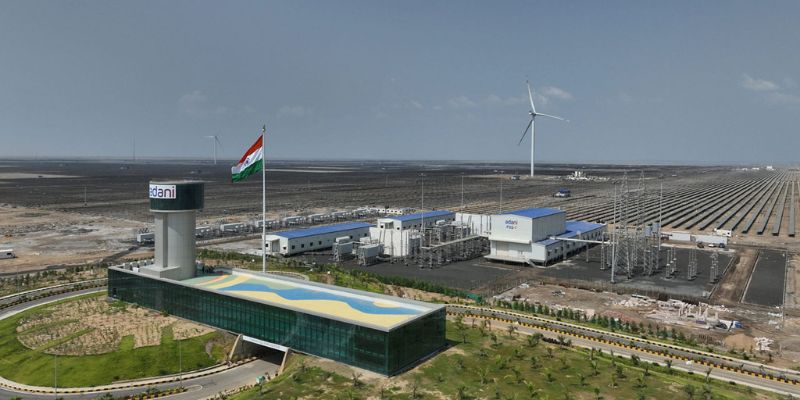
Emerson’s Ovation Green SCADA software is supporting Adani Green Energy’s 3.55 GWh battery storage project at Khavda, Gujarat, delivered within 10 months.
Read moreElectrical & Electronics
India’s Grid Revolution Begins with Smarter Towers
India’s power transmission sector is shifting from scale to complexity, demanding advanced tower engineering for renewable integration, higher voltages, difficult terrain and grid stability, says ..
Read moreElectrical & Electronics
Why Power Equipment Will Define India’s Energy Future
Satyen J Mamtora, MD & CEO, Transformers & Rectifiers India Ltd elaborates how India’s power sector is moving beyond capacity addition towards grid intelligence, where smart equipment, domestic ma..
Read moreRelated Products
Kusam-meco Handheld Thermal Camera Model- Km 300
ELECTRICAL & ELECTRONIC EQUIPMENT
KUSAM-MECO, the innovators of new products in the Test and Measurement field, have added a new Thermal Imager with Camera.
Read more
Ultra-slim Humidity/temperature Indicator With Large 4” Display
ELECTRICAL & ELECTRONIC EQUIPMENT
Countronics offers a wide range of ultra-slim humidity/temperature indicator with large 4” display – Model 7100-4W.
Read more
Integrated Electric Gripper S Series
ELECTRICAL & ELECTRONIC EQUIPMENT
IBK Engineers Pvt Ltd offers a wide range of integrated electric gripper S series.
latest News
Subscribe to iNoW

For Industry News on WhatsApp, Give a Miss Call on: +91 84228 74016