





Schedule a Call Back


India is fast becoming an HVAC growth hub: Ajit Venkataraman
 Articles
- Jun 25,26
Ajit Venkataraman, Vice President, Trane Technologies India, explains how intelligent, energy-efficient cooling is becoming central to India’s manufacturing, data centre and infrastructure growth.
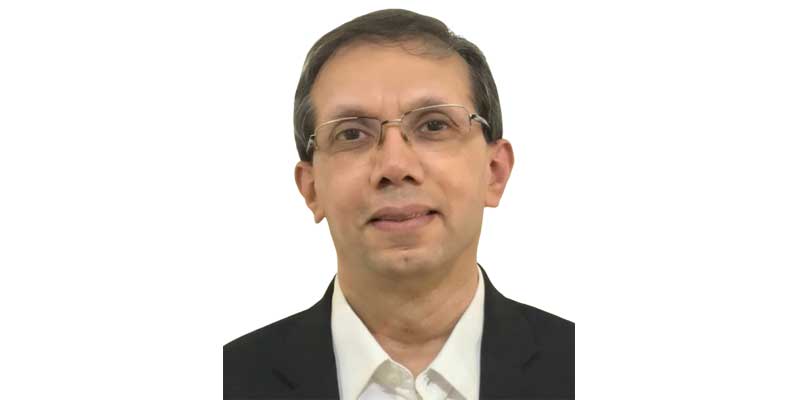
India is emerging as a priority market for HVAC and climate technologies. From an industry perspective, what are the key sectors driving this demand, and how do you see the market evolving over the next few years?
India is rapidly emerging as one of the most important growth markets for HVAC and climate technologies, driven by strong momentum across manufacturing, data centres, healthcare, pharmaceuticals, commercial real estate, and large infrastructure projects. The country's urbanisation, industrial expansion, and digital transformation are creating significant demand for climate solutions that support both operational efficiency and sustainability goals.
At Trane Technologies, we view India as a strategic market within the Asia-Pacific region. The commercial HVAC sector is expected to witness robust double-digit growth over the coming decade, supported by increasing investments in digital infrastructure, industrial campuses, healthcare facilities, and institutional buildings. HVAC systems are increasingly being viewed as critical enablers of energy optimisation, operational resilience, and compliance with evolving environmental mandates.
Looking ahead, we believe the conversation will move beyond cooling alone toward intelligent and sustainable climate management. Customers are evaluating solutions based on lifecycle value, energy performance, and decarbonisation outcomes, which will accelerate the adoption of connected systems, AI-enabled controls, and low-carbon technologies.
With manufacturing, data centres and mission-critical infrastructure expanding rapidly in India, how important is reliable and energy-efficient cooling in ensuring operational continuity and performance?
Reliable cooling is no longer simply a facility requirement—it has become a business-critical necessity. In manufacturing environments, it directly impacts equipment efficiency, production quality, and workforce productivity. In data centres and mission-critical facilities, even brief cooling disruptions can lead to downtime, service interruptions, and significant financial losses. As organisations increasingly rely on digital infrastructure and AI-driven operations, maintaining precise thermal conditions is essential to ensuring business continuity and system reliability.
At the same time, cooling systems can account for 30–50 per cent of a facility's overall energy consumption. Organisations are therefore looking for solutions that deliver both reliability and efficiency, helping them maintain operational continuity while managing energy costs and sustainability commitments. This is where advanced cooling technologies such as high-efficiency chillers, intelligent controls, and Cooling Distribution Units (CDUs) designed for high-density data centre environments are becoming increasingly important.
At Trane Technologies, we are seeing growing demand for integrated cooling solutions that help customers optimise performance, improve energy efficiency, and support long-term operational resilience. For example, our recently introduced HSAG air-cooled magnetic bearing chiller, engineered specifically for the APAC region, combines oil-free technology with ultra-low-GWP refrigerants and is designed to operate reliably even in ambient temperatures of up to 52°C. With features such as rapid restart capabilities and a built-in UPS, it helps ensure uninterrupted cooling for mission-critical environments, highlighting how innovation is enabling the industry to balance reliability, efficiency, and sustainability.
Industrial facilities today are under pressure to reduce energy consumption, operating costs and emissions. How can advanced HVAC and climate technologies support manufacturers in meeting these goals?
Manufacturers today are under pressure to improve productivity while simultaneously reducing operating costs and environmental impact. Since heating and cooling can account for more than half of a building's operating costs, HVAC optimisation presents one of the most significant opportunities for improving overall efficiency.
Modern HVAC systems leverage intelligent controls, advanced sensors, variable-speed technologies, and analytics to continuously optimise performance based on real-time operating conditions. This enables facilities to reduce unnecessary energy consumption, improve process stability, and enhance operational visibility.
What we're increasingly seeing is a shift toward integrated solutions that combine high-efficiency equipment with digital monitoring and analytics. At Trane Technologies, high-efficiency plant room solutions have helped customers achieve energy savings of over 30 per cent, while also supporting sustainability and decarbonisation objectives.
Data centres are becoming one of the fastest-growing demand drivers for cooling solutions. What are the major challenges in cooling such high-performance, mission-critical environments in a sustainable way?
The rapid growth of AI, cloud computing, and digital services is fundamentally changing the cooling requirements of modern data centres. Higher rack densities and increasingly powerful computing workloads generate significantly more heat, making cooling one of the most critical aspects of facility design and operation. As AI adoption accelerates, operators are increasingly looking for cooling solutions that can support higher computing densities without compromising reliability or efficiency.
The challenge today extends beyond maintaining temperature. Data centre operators must simultaneously address uptime requirements, energy efficiency targets, water consumption, sustainability commitments, and future scalability. Balancing these priorities is becoming increasingly complex, particularly as organisations seek to reduce their environmental footprint while supporting exponential growth in digital infrastructure.
This is driving demand for advanced cooling architectures, intelligent controls, and high-efficiency technologies specifically designed for high-density environments. The focus is shifting toward integrated cooling ecosystems that can support operational resilience and sustainability together, rather than treating them as separate objectives.
At Trane Technologies, we continue to strengthen our capabilities in this space through innovation and strategic investments. Our recent acquisitions of Stellar Energy, a leader in custom-engineered cooling and energy infrastructure solutions, and LiquidStack, a pioneer in liquid cooling technologies for high-density computing environments, further enhance our ability to support the evolving needs of AI-driven and mission-critical data centres. Together, these capabilities position us to help customers build scalable, energy-efficient, and future-ready digital infrastructure.
As regulations and sustainability mandates around energy efficiency and low-carbon operations evolve, how prepared is Indian industry to adopt greener cooling solutions?
Indian industry has made significant progress in recognising sustainability as a business imperative rather than simply a compliance requirement. Increasingly, organisations are integrating energy efficiency, carbon reduction, and ESG objectives into their long-term growth strategies, driven by both regulatory expectations and stakeholder demands.
The encouraging trend is that sustainability is now being viewed as a driver of competitiveness and resilience. We are seeing growing adoption of energy-efficient HVAC systems, low-GWP refrigerants, and electrification technologies. Globally, Trane Technologies has helped reduce customer carbon emissions by 331 million metric tons since 2019, highlighting the significant role climate technologies can play in supporting decarbonisation at scale.
Digitalisation, AI and connected systems are transforming HVAC operations. How are these technologies helping industries move from basic temperature control to smarter building and facility performance?
The role of HVAC systems has evolved significantly over the last decade. What was once considered a utility function is increasingly becoming a source of operational intelligence that can influence energy performance, occupant experience, and overall business outcomes.
At Trane Technologies, we are seeing strong demand for AI-enabled autonomous controls, connected building solutions, and digital services that provide real-time visibility into equipment health, energy consumption, and facility performance. These technologies help organisations move from reactive operations to predictive and increasingly autonomous management models.
In many applications, AI-powered optimisation platforms can deliver energy savings in the range of 10–30 per cent through continuous performance adjustments. Beyond efficiency gains, they help improve operational resilience, support sustainability goals, and enable more informed decision-making across facilities.
There is a clear shift from reactive maintenance to predictive, AI-led operations. How can predictive HVAC maintenance improve uptime, asset life and lifecycle efficiency for industrial and commercial users?
The traditional maintenance model often relies on fixed schedules or reacting after failures occur. Predictive maintenance changes that approach by leveraging connected equipment, sensors, and advanced analytics to identify performance deviations before they become operational issues. This allows organisations to move from reactive maintenance to proactive decision-making, reducing the likelihood of unexpected failures and operational disruptions.
By continuously monitoring equipment health, organisations can proactively address potential problems, reduce unplanned downtime, extend asset life, and optimise maintenance spending. For mission-critical environments, where even a single outage can have significant operational and financial implications, predictive maintenance is increasingly becoming a key enabler of reliability, resilience, and lifecycle efficiency.
At Trane Technologies, we are seeing strong interest in digitally enabled service models such as our Connected Mechanical Services Agreement (CMSA), which combines remote monitoring, analytics, and expert support to help customers identify issues before they impact operations. By providing real-time visibility into system performance and equipment health, CMSA enables customers to optimise maintenance planning, improve uptime, and maximise the lifecycle value of their HVAC assets while supporting broader energy efficiency and operational goals.
For Indian industries, how can smart HVAC systems enhance not only energy efficiency but also reliability, productivity and customer experience across facilities such as factories, commercial buildings and data centres?
Smart HVAC systems today deliver value far beyond energy savings. By combining connected technologies, remote monitoring, predictive analytics, and intelligent controls, they provide organisations with real-time visibility into facility performance and operational conditions. In manufacturing facilities, they support productivity and equipment reliability; in commercial buildings, they improve indoor air quality and occupant comfort; and in data centres, they ensure thermal stability for critical infrastructure.
The most significant shift is that organisations are increasingly viewing HVAC systems as strategic assets rather than operational utilities. Combined with predictive maintenance and digital optimisation, smart HVAC solutions can reduce downtime, lower lifecycle costs, improve customer and occupant experience, and support broader sustainability and decarbonisation goals.
For example, Trane Technologies partnered with one of the world’s leading global technology companies to optimise cooling performance across its data center operations. By combining advanced free-cooling technology and elevated chilled-water temperatures, we helped the customer achieve annual energy savings of up to 18 per cent while significantly reducing carbon emissions.
Energy-efficient cooling
smart HVAC
data centres
AI-enabled controls
predictive maintenance
low-GWP refrigerants
operational resilience
decarbonisation
Ajit Venkataraman
Trane Technologies
Related Stories
Smart Manufacturing
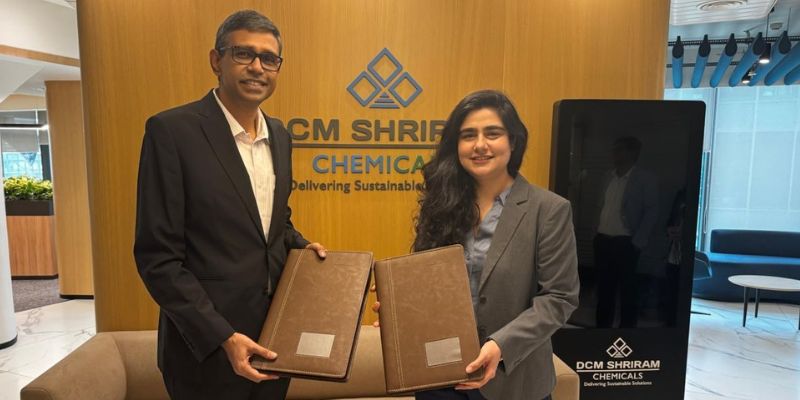
DCM Shriram Partners Serentica for 58 MW Hybrid Renewable Project
The project will supply renewable power to DCM Shriram Chemicals’ Bharuch plant and raise the company’s total renewable energy capacity to 176 MW peak.
Read moreSmart Manufacturing
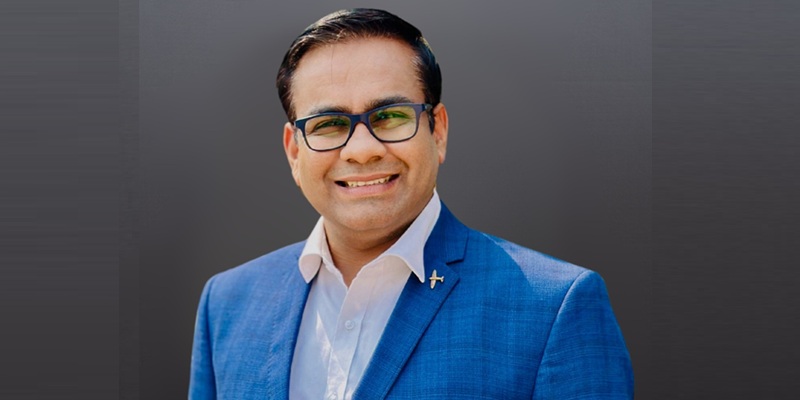
Adoption of electric material handling equipment is accelerating: Jai Sancheti
In this interview, Jai Sancheti, Vice President, Material Handling Equipment Solutions, SILA Group, explains emerging trends in material handling sector and how SILA is supporting this transition wi..
Read moreOther Industrial Products
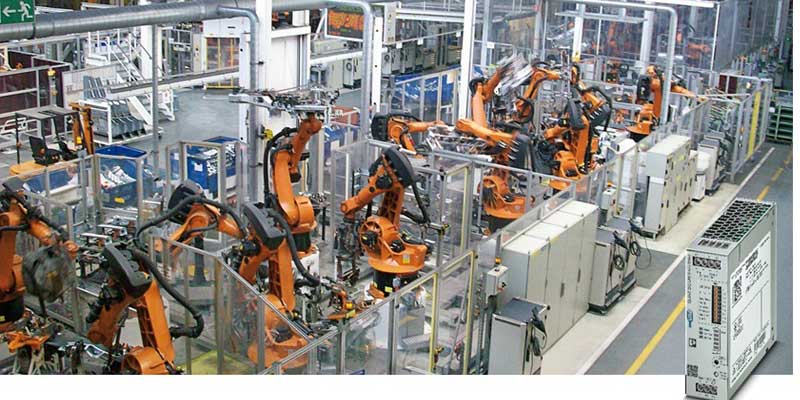
Phoenix Contact's QUINT4- DC UPS engineered for industrial automation & robotics
QUINT4?UPS is an intelligent uninterruptible power supply solution designed to ensure continuous system operation in industrial automation, robotics, and test & measurement systems.
Read moreRelated Products
Fanless Industrial Pc for Smart Manufacturing
Smart Manufacturing
CONTEC Launches BX-M4600 Series - Fanless Industrial PC for Smart Manufacturing.
latest News
Subscribe to iNoW

For Industry News on WhatsApp, Give a Miss Call on: +91 84228 74016