




Schedule a Call Back




India enters global manufacturing with relative strength: Jayant Balan
 Articles
- Jan 26,26
In this interview, Jayant Balan, Head – Room Air Conditioner Business, Voltas Limited, discusses global and Indian manufacturing shifts, Make in India risks, localisation, supply chains, sustainability, emerging trends, and strategies for resilience amid ongoing uncertainty.

Voltas Limited, a Tata enterprise, is a leading player in air conditioning, engineering solutions and services, with a strong focus on energy efficiency and sustainable technologies. In this interview, Jayant Balan, Head, Voltas Limited, shares insights on the evolving manufacturing landscape, localisation, sustainability, and the company’s strategic priorities going forward.
How would you assess the current state of the global and Indian manufacturing landscape?
Global manufacturing is in the middle of a structural reset rather than a cyclical slowdown. The era of hyper-efficient, single-source global supply chains has given way to resilience-led manufacturing, where reliability, regionalisation, and risk diversification matter as much as cost. Geopolitical tensions, climate volatility, and rapid technology shifts have made uncertainty a permanent feature.
India, however, is entering this phase from a position of relative strength. Domestic demand remains robust, policy intent is clear and initiatives such as PLI, infrastructure expansion, and digital public platforms are creating strong manufacturing tailwinds. Indian manufacturing is transitioning from being cost-competitive to capability-competitive, which is essential in a VUCA environment.
Manufacturers globally are operating amid volatile markets, trade frictions, tariff uncertainties and supply-side disruptions. Which of these challenges pose the most immediate risk to the Make in India agenda?
While tariff uncertainties and trade frictions are significant, the most immediate and tangible risk to the ‘Make in India’ agenda is supply-side disruption coupled with raw material volatility. As we saw recently with the Red Sea crisis and fluctuations in metal indices, reliance on single-source geographies for critical components whether semiconductors or specific compressors leaves our manufacturing continuity vulnerable.
Manufacturing competitiveness today depends on predictable access to components, raw materials, and logistics. Any prolonged volatility in trade rules or supply availability can impact delivery timelines and cost structures, especially for export-oriented manufacturing. Additionally, capability gaps in certain critical components still expose Indian manufacturers to external shocks. Addressing these vulnerabilities is key to sustaining momentum under Make in India.
What strategies should the government and industry adopt to mitigate these challenges?
The most effective mitigation strategy is a synchronised approach to backward integration. For the government, the Production Linked Incentive (PLI) schemes have been a masterstroke in catalysing this, and the focus must now expand to ensuring the “component ecosystem” matures as fast as the final assembly lines.
At Voltas, we have actively participated in the PLI for white goods to manufacture critical components like compressors and heat exchangers domestically. For the industry, the strategy must be ‘vocal for local’ and ‘local for global.’ We cannot rely solely on policy; we must invest in R&D to indigenise technology. By deepening our domestic value addition, we naturally insulate ourselves from global volatility. Industry, on its part, must invest in supplier diversification, local ecosystem development, and technology adoption. Stronger collaboration between large manufacturers and MSMEs can accelerate localisation while ensuring quality, scale, and reliability.
Global supply-chain realignments under the China-Plus-One strategy and new free trade agreements are opening fresh opportunities. How can India capitalise on these shifts, and what gaps must be urgently addressed?
India can capitalise on the China-Plus-One shift by offering not just capacity, but competence and compliance. Global OEMs are looking for partners who adhere to global ESG standards and possess digital-ready shop floors. To fully seize this, we must urgently address the logistics cost gap and the “employability” gap.
While our infrastructure is improving rapidly with dedicated freight corridors, our logistics costs as a percentage of GDP remain higher than our global peers. Simultaneously, while we have a demographic dividend, there is a shortage of specific technical skills required for high-precision manufacturing. Investing in vocational training and industry-academia partnerships—something the Tata Group and Voltas are deeply committed to and is non-negotiable for turning this geopolitical opportunity into an economic reality.
With rising sustainability pressures, how should Indian manufacturing balance cost competitiveness with resilience and long-term capability building?
Sustainability and cost competitiveness are no longer binary choices; they are converging. In the consumer durables space, energy efficiency is our product; therefore, our manufacturing processes must mirror that ethos. Indian manufacturers should view sustainability as a lever for efficiency—reducing water intensity, minimising waste, and adopting circular economy principles ultimately lowers operating costs.
At Voltas, our focus on energy-efficient products and green manufacturing at our new plants in Chennai and Waghodia is a testament to this. Resilience comes from future-proofing your business against carbon taxes and regulatory shifts. Investing in green capabilities now is essentially purchasing an insurance policy for future market access.
Which emerging trends do you see reshaping India’s manufacturing sector over the next five years?
India’s manufacturing sector is entering a transformative phase, and Voltas is proud to be at the forefront of this evolution. Over the next five years, we see several key trends reshaping the industry:
- First, the push for localisation and backward integration is accelerating. At Voltas, we are investing significantly in domestic component manufacturing, including compressors, to reduce import dependence and strengthen the ‘Make in India’ vision.
- Second, technology-driven innovation is redefining consumer expectations. Our latest SmartAir Inverter AC series and advanced HVAC solutions integrate IoT, AI, and energy-efficient designs, reflecting the growing demand for smart, sustainable products.
- Third, industry 4.0 adoption is transforming operations. We are embedding automation, data analytics, and digital tools across our facilities to enhance productivity and quality.
- Finally, sustainability and energy efficiency remain central to our strategy. From inverter-based systems to eco-friendly chillers, we are committed to supporting India’s decarbonisation goals.
These trends, combined with supportive government policies and robust infrastructure development, position India as a global manufacturing hub. Voltas will continue to lead with innovation, sustainability, and customer-centric solutions to shape this exciting future.
Finally, what would be your advice to Indian manufacturing fraternity (especially SMEs) to succeed amid sustained global uncertainty?
In an era of sustained global uncertainty, resilience and agility will define success. For SMEs, our advice is threefold:
- Invest in digital transformation—even incremental adoption of IoT, automation, and data analytics can significantly improve efficiency and competitiveness.
- Diversify supply chains and explore local sourcing to reduce dependency risks and strengthen operational continuity.
- Embed sustainability and energy efficiency into your business model—not just for compliance, but as a long-term cost advantage and market differentiator.
Collaboration is key. Partner with technology providers, leverage government schemes like PLI, and upskill your workforce. Those who embrace innovation and adaptability will not only survive but thrive in the new manufacturing landscape.
Manufacturing resilience
Make in India
Localisation
Supply chains
Sustainability
Industry 4.0
PLI schemes
Jayant Balan
Voltas Limited
Related Stories
Construction Equipment

Ammann India Starts ARW 65 Roller Production at Mehsana
Ammann India begins local production of the ARW 65 Walk Behind Roller at Mehsana, reinforcing localisation and expanding its compaction portfolio for India’s infrastructure growth.
Read moreOther Industrial Products
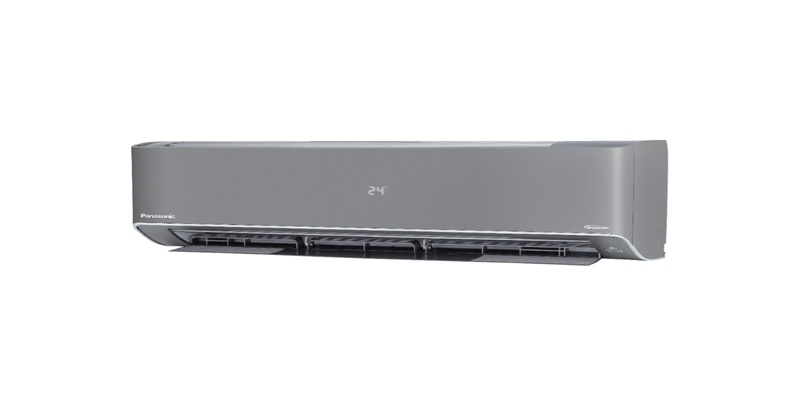
Panasonic Launches 57-Model AC Range for Extreme Indian Climates
Panasonic unveils its 2026 RAC portfolio with 57 models featuring DustBuster technology, smart connectivity and high-temperature performance, targeting 2 million unit volumes by FY28.
Read moreAuto & Auto Components
Mahindra Expands Advanced R&D and Testing Facilities at Chennai MRV
Mahindra & Mahindra invests Rs 1,960 million to expand its Advanced R&D and testing facilities at Mahindra Research Valley, creating 2,000 new jobs and reinforcing Chennai as an innovation hub.
Read moreRelated Products

Integrated Electric Gripper S Series
ELECTRICAL & ELECTRONIC EQUIPMENT
IBK Engineers Pvt Ltd offers a wide range of integrated electric gripper S series.

Geared Electric Motors
ELECTRICAL & ELECTRONIC EQUIPMENT
Delco Fans Pvt Ltd offers single phase capacitor run and three
phase geared Instrument motors, totally enclosed face/foot mounted.

“Kusam-Keco” Partial Discharge Acoustic Imager - Model - Km-pdai
ELECTRICAL & ELECTRONIC EQUIPMENT
‘Kusam-Meco’ has introduced a new “Partial Discharge Acoustic Imager Model KM-PDAI.
latest News
Subscribe to iNoW

For Industry News on WhatsApp, Give a Miss Call on: +91 84228 74016